Service Robots for Cinemas & Movie Theaters, Autonomous Operations for the Modern Entertainment Venue
At a glance: AOMAN D1 carries a full popcorn-and-drinks order on four trays through a 300-seat auditorium, and AOMAN C1 cleans at 2,040 m²/h between screenings. This guide covers in-seat delivery, continuous lobby cleaning and showtime guidance with AOMAN G1.
Illustrative example: a 14-screen multiplex in a suburban retail center generates the bulk of its revenue from concessions, popcorn, fountain drinks, candy, and the expanded hot-food menu added during a recent renovation, with ticket sales contributing the smaller share. Operating costs run at the edge of profitability, and the general manager's P&L shows three pressure points. First, concession counter staffing requires four to six employees during peak hours at a fully loaded labor cost around $18.50 per hour, which consumes a visible slice of concession revenue before food costs. Second, the third-party overnight cleaning crew handles the full sweep, and a single auditorium that misses the chain's cleanliness audit standard generates negative reviews that cost real ticket sales in the following weeks. Third, during matinee hours when staffing is minimal, customers routinely walk the wrong direction down the concession corridor looking for their auditorium, a low-grade friction that depresses repeat visits.
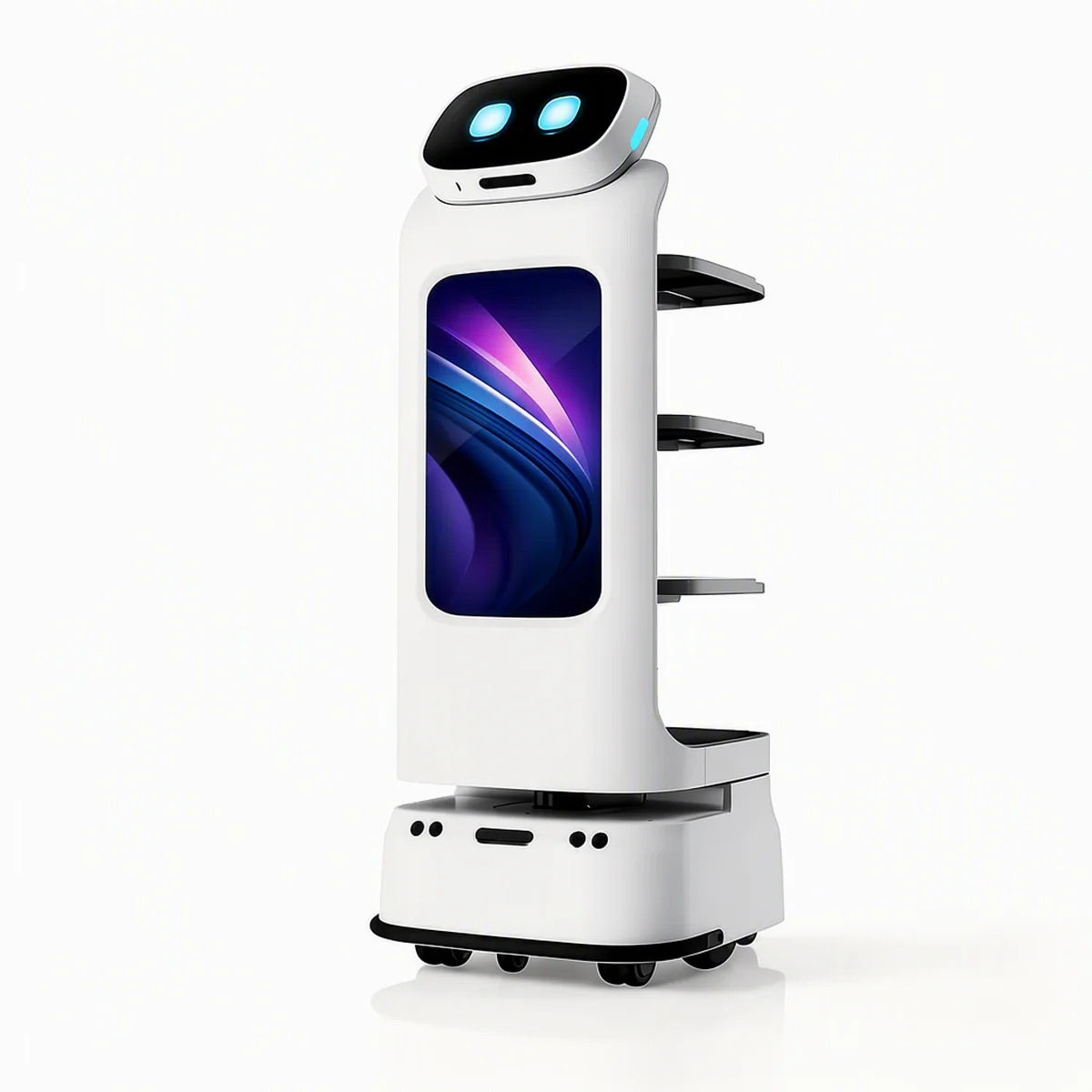
A robotics program addresses all three. AOMAN D1 units deliver concessions directly to seats in the premium large-format auditoriums; AOMAN C1 units maintain lobby and corridor floors continuously; and AOMAN G1 units handle showtime guidance and upsell prompts at the entrance.
The Cinema Profitability Equation That Robots Rebalance
Movie theater economics are uniquely unforgiving because the two largest cost categories, film rental, which commonly averages around half of ticket revenue, and occupancy, are largely fixed or outside the operator's control. The cost category large enough to meaningfully affect profitability through operational improvement is labor, and the revenue category with headroom is concessions.
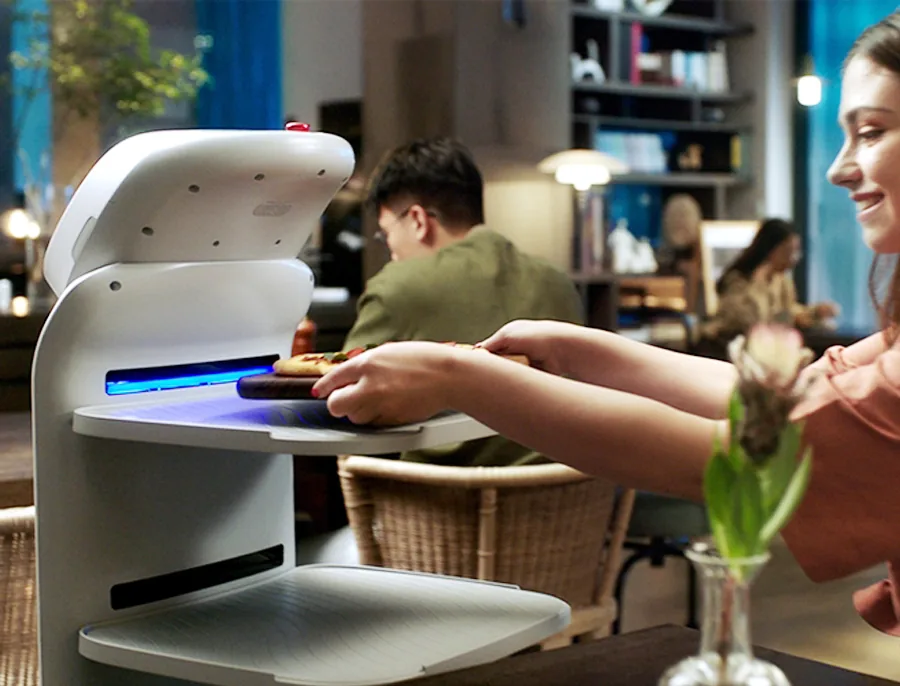
Autonomous robots address both simultaneously. A D1 delivery unit that brings popcorn and a drink to the customer's seat removes the "carrying friction" that suppresses order size: when the patron does not have to carry items across a lobby and down a sloped aisle, orders trend larger, the same behavioral pattern behind menu engineering at concession counters, and the same one documented in restaurant and food service deployments, where staged ordering without carrying-constraint anxiety lifts average order size. The robot delivers the same order-size uplift at a fraction of the labor cost of a human server, and it does so from the counter staff's existing preparation flow.
The Three Robot Roles in a Multiplex Deployment
Role 1: In-Seat Concession Delivery
D1's cinema configuration uses its four-tray system to carry a large popcorn, two large drinks, and a candy or hot-food item, a complete premium order, through the darkened, sloped aisles of an auditorium during a screening. The robot navigates with a combination of pre-mapped auditorium geometry and real-time LiDAR obstacle detection, adjusting its path around an outstretched leg, a dropped phone, or a child moving between seats without disrupting the viewing experience. The drive system is acoustically damped for near-silent operation, and the 70 cm aisle requirement covers standard auditorium risers in premium large-format houses.
The operational flow is straightforward: a customer orders through the theater's mobile app or a QR code on the seat armrest, the order prints at the concession counter, counter staff prepare the items and load them onto D1's trays, the robot navigates to the seat, the customer collects the items, and the robot returns for the next order. In the illustrative configuration, the counter-to-seat-to-counter cycle averages about four minutes for auditoriums up to 300 seats, against seven to nine minutes for a human server walking the same path while carrying a full tray.
For multiplex operators, this creates a new revenue line: premium in-seat delivery can be offered as a per-order upsell or bundled into premium-format ticket pricing, creating a differentiator that competing theaters without robot delivery would have to hire additional staff to match. Which, given the labor cost structure above, most cannot profitably do. The delivery robot selection guide provides a cross-industry evaluation framework for these platforms, and the fleet management guide covers the software layer for coordinating multiple units across different auditoriums and showtimes.
Role 2: Continuous Auditorium and Lobby Cleaning
The cleaning challenge in a multiplex is defined by the schedule, not the square footage. A 14-screen theater runs roughly 56 screenings per day, four per screen, with each auditorium turning over every two and a half to three hours. The cleaning window between screenings is 15–20 minutes, during which ushers must remove trash, spot-clean spills, and reset the auditorium to the chain's standard. In practice, the 15-minute window is adequate for trash removal but not for floor cleaning: floors accumulate popcorn butter residue, spilled soda, and candy fragments that only a deep clean addresses, leaving the thorough work to the overnight crew.
C1 operating continuously in the lobby and corridors between auditoriums changes the model from "reactive spotting between screenings plus one overnight deep clean" to "continuous maintenance cleaning during all operating hours." At 2,040 m² per hour with a 790 mm squeegee and dual 70 L and 50 L tanks, a single unit keeps the lobby and corridor network at standard; its 85 cm passage requirement covers the concourse widths between auditorium entrances, and the program runs on the schedule set from the fleet dashboard (see the cleaning robot buyer's guide for the full evaluation framework).
The labor impact is concentrated in the overnight crew, not the between-screening usher team. When the robot maintains floors throughout the day, the overnight workload shifts from "deep clean 14 auditorium floors plus lobby and corridors" to "spot-treat the three or four auditoriums that had major spills plus sanitize the surfaces the robot cannot reach." In the illustrative model, the overnight crew drops from five workers at eight hours each to two at six hours each, a substantial reduction in weekly cleaning labor, and one that concentrates human effort where it adds value.
Role 3: Lobby Reception and Showtime Navigation
G1, positioned at the multiplex entrance or box office area, performs three guest-facing functions:
Showtime and auditorium navigation. "Your screening starts in 22 minutes in Auditorium 7. Follow the blue carpet to the left corridor, it's the third door on your right. Would you like to see the concession pre-order menu while you walk?" This addresses the most common front-of-house friction: customers who arrive early, receive their ticket, and then wander uncertainly toward the concessions area. G1's six-microphone array catches the question from up to 5 m away in an active lobby, and the chest information screen shows the path to the correct auditorium, reducing the wrong-auditorium incidents that create awkward mid-movie interruptions.
Concession upsell without checkout friction. When a customer asks for showtime information, the unit surfaces bundles: "Your screening qualifies for the Premium Duo, a large popcorn and two drinks delivered to your seat five minutes before previews. Would you like to add that to your ticket?" This pre-screening upsell captures concession revenue that would otherwise be lost to the "I don't want to stand in line at the counter" decision.
Occupancy awareness. During peak periods, Friday and Saturday evenings, opening weekends, the unit's integrated sensors and 13 MP vision feed lobby crowd signals to management, who can call additional counter coverage when the queue grows. This replaces the ad-hoc "manager glances at the lobby and decides" process with a data point.
The reception function in cinemas shares operational DNA with corporate lobby deployments and retail environments, where the same platform handles visitor routing, queue management, and service education. The cinema deployment adds a showtime-synchronization layer, the unit must know the screening schedule and auditorium assignments for current and upcoming blocks, delivered through integration with the theater's existing cinema management system.

Integration with Cinema Management Systems
Autonomous robots in a multiplex must connect to the theater's cinema management system, the software that manages showtimes, ticket sales, auditorium assignments, and concession inventory. The integration requirements differ by robot role:
G1 needs read-only access to showtime data, film title, start time, auditorium number, runtime, to provide accurate navigation and upsell information. The integration is delivered through the theater's existing system, using the same access model the theater already grants its staff devices.
D1 needs real-time order data from the concession POS, which item belongs to which seat, plus auditorium schedule data to know when a screening is ending, after which delivery units should not enter the auditorium. A middleware layer translates POS order data into dispatch commands, with a human confirmation step at the counter: staff verify the order before loading it onto the trays.
For cinema chains managing multi-site deployments across dozens of locations, the integration layer standardizes so a configuration developed in one multiplex can deploy to any location in the chain running the same system, a critical factor in chain-wide ROI and the justification for the initial integration investment.
Getting Started: The Cinema Robot Pilot
A multiplex chain should pilot in a single location following a phased approach:
Phase 1 (weeks 1–4): Single-role deployment. One C1 in the lobby and corridor areas, measuring overnight cleaning labor hours, guest cleanliness feedback, and review sentiment before and during deployment. This low-risk entry point validates autonomous operation in the cinema environment without guest-facing complexity.
Phase 2 (weeks 5–8): Guest-facing deployment. Add one G1 at the box office entrance, measuring concession pre-order uptake, wrong-auditorium incident reports from usher logs, and guest interaction rates.
Phase 3 (weeks 9–12): Revenue-impact deployment. Add D1 delivery in two or three premium-format auditoriums, measuring the critical metric: concession revenue per patron in robot-served auditoriums versus control auditoriums. This phase generates the revenue data that justifies the full-program capital request.
For the financial modeling framework, the service robot ROI guide provides cost models applicable to entertainment venues, and the vendor evaluation framework covers the assessment process for selecting a provider that can support chain-wide rollout across locations with varying layouts.
Tell us your screen count, auditorium layouts, and concession flow. We will help you scope the pilot theater and the POS integration. Contact us.