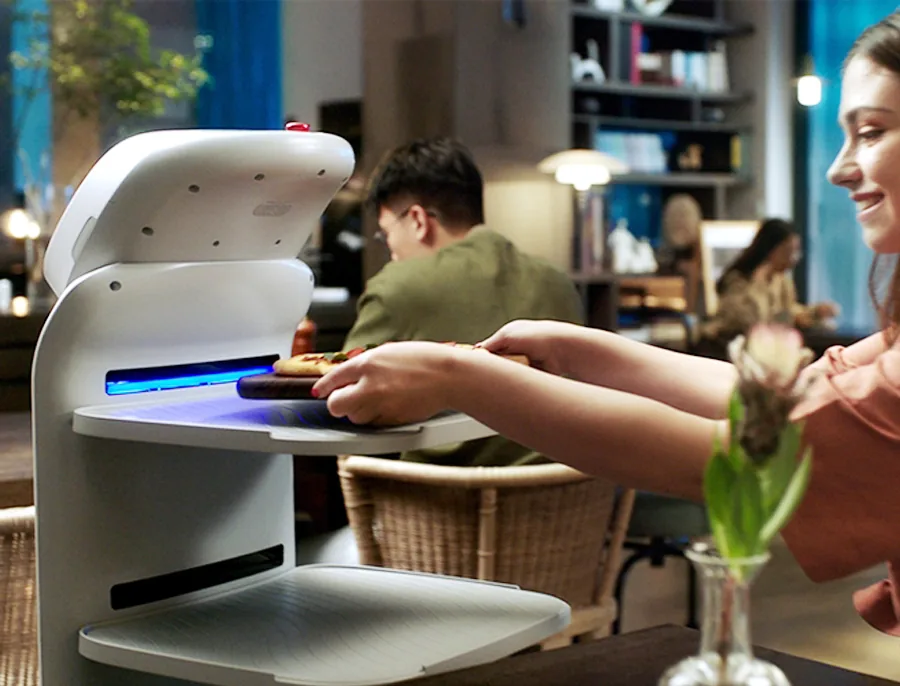
Delivery Robot Selection Guide 2026: Single Cabin vs. Dual Cabin, Which Design Fits Your Operation?
At a glance: AOMAN D1 carries 40 kg across four trays in a single run, enough for four restaurant tables in one trip. This guide covers the 70 cm clearance fit, multi-stop routing, and the cost math behind a delivery robot purchase.
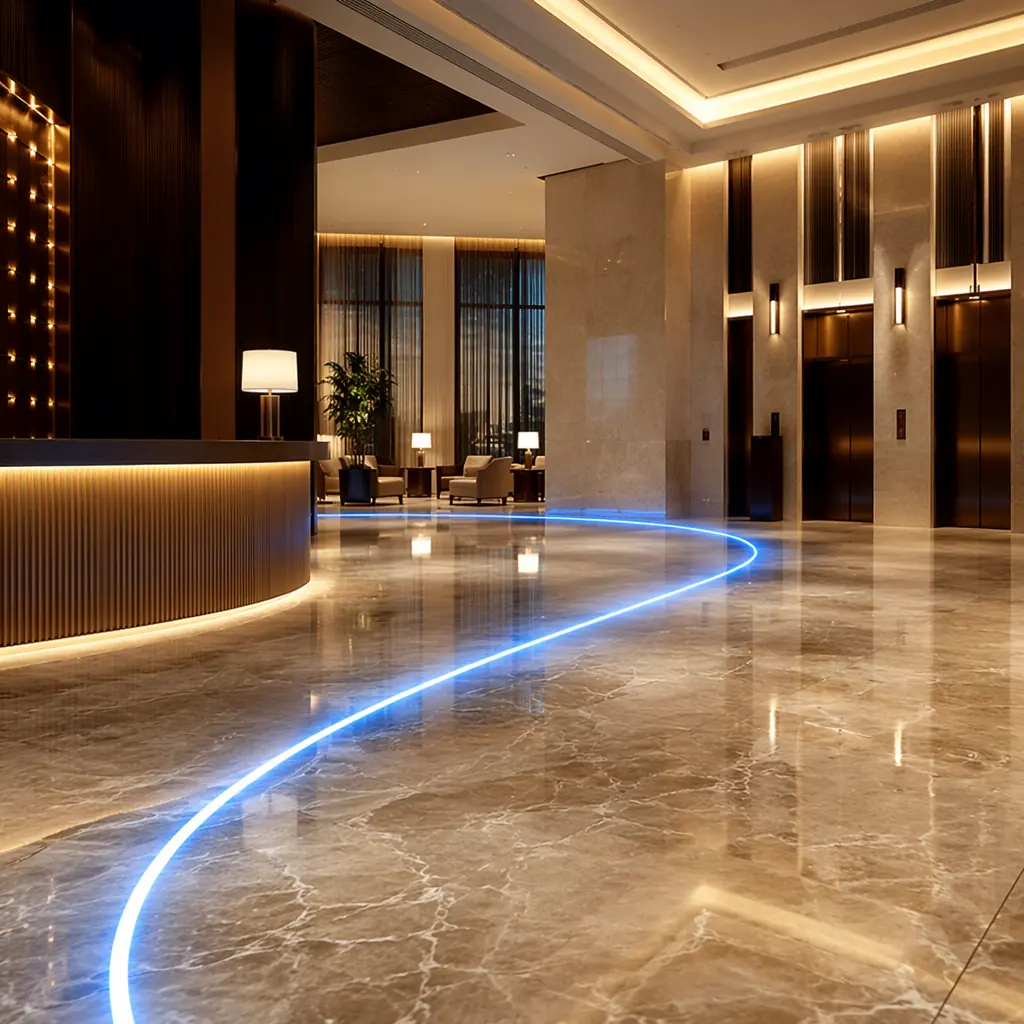
The first question in a delivery robot purchase is not which feature list looks longer. It is how many destinations one run can serve, and whether the route passes through a 70 cm service corridor without modification.
The AOMAN D1 platform answers both from a single architecture: 40 kg of payload across four independent tray positions, a 21.5-inch display for guests and promotions, and a frame sized to travel 70 cm passageways. This guide works through tray-by-tray loading, multi-stop routing, clearance planning, navigation and the cost math, then closes with a decision table.
The Four-Tray Platform: One Run, Four Destinations
Four tray positions with a 40 kg combined payload means one robot can carry a whole table's worth of meals in a single run: four tables, four orders, one trip. Staff load at the kitchen or staging point; the robot distributes and comes back empty.
The D1's tray architecture is what makes the arithmetic work. The payload splits evenly, roughly 10 kg per tray position, so one run serves four destinations the way a runner with a cart serves one. The 21.5-inch display travels with the load, showing delivery status, menus and promotions at the destination, which turns travel time into a guest-facing channel.
In a publicly documented deployment, a ramen chain in Kyushu, Japan runs D1 units between kitchen and tables across consecutive floor sections; a Korean barbecue restaurant in the Netherlands uses the same four-tray pattern for table-to-table service. Both are stop-heavy, short-run operations where every trip saves a full server walk.
When the Four-Tray Pattern Wins
| Scenario | Why the four-tray pattern fits |
|---|---|
| Restaurant table service | Four orders per trip; kitchen-to-table distance is short |
| Hospital meal trays | Several patient rooms on one floor served per run |
| Corporate cafeteria | Bulk food movement between kitchen and stations |
| High-frequency short hauls | Many trips with small loads, loading time amortizes |
Multi-Stop Routing: One Trip, Several Recipients
The same four trays can be assigned as four different destinations, a linens drop at one room, amenities at the next, or four categories that must never mix: clean linen and used linen, food and cleaning supplies, documents and equipment.
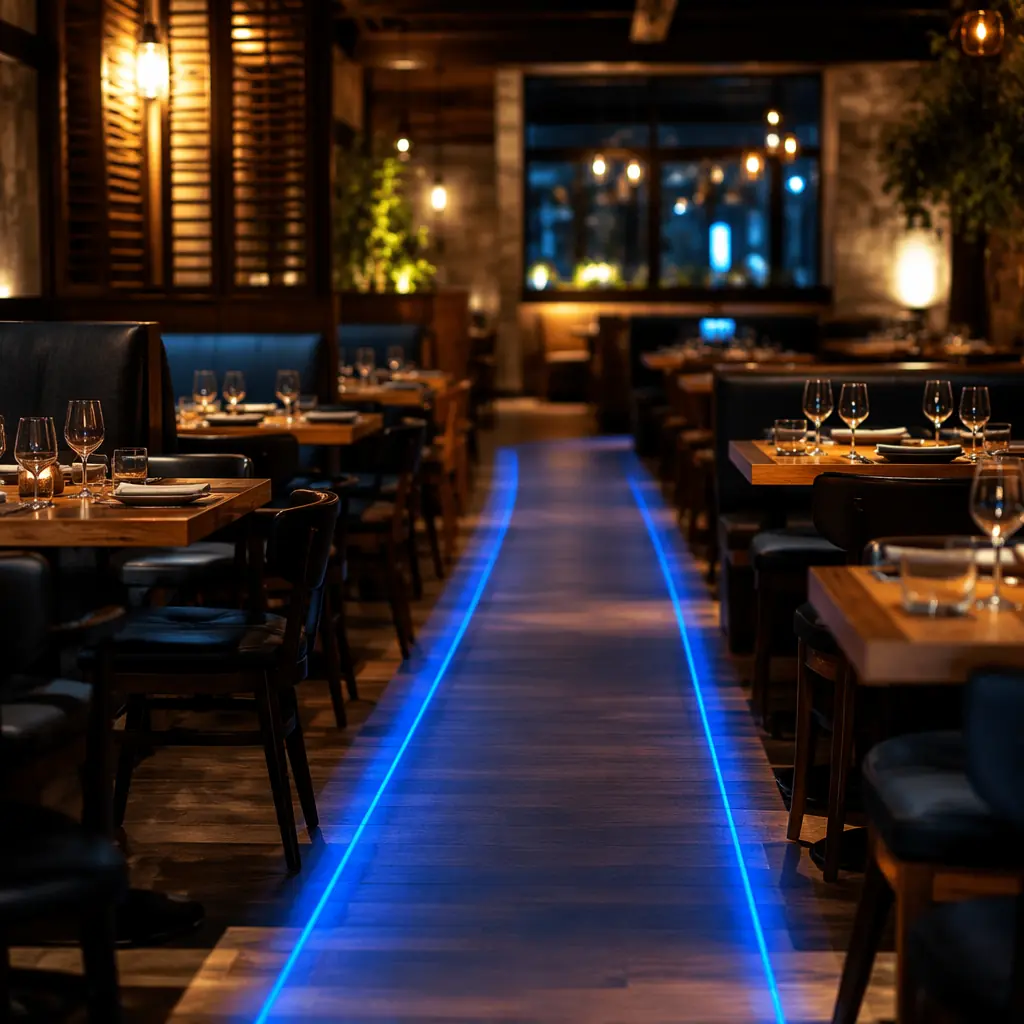
This is the routing question that shapes daily operations far more than hardware choice: does the route serve several stop points per run, keeping loads separated by tray? The D1 sequences its stops once destinations are assigned; the fleet platform manages the schedule across floors and service windows.
When Multi-Stop Routing Wins
| Scenario | Why multi-stop wins |
|---|---|
| Hotel room service | Several guest rooms on one floor served in one run |
| Hospital supplies | Clean material up, soiled returns down, never mixed |
| Multi-tenant office floors | Stops at two companies in one trip |
| Separation requirements | Food plus documents, linens plus amenities |
Clearance: The Constraint That Saves Buyers
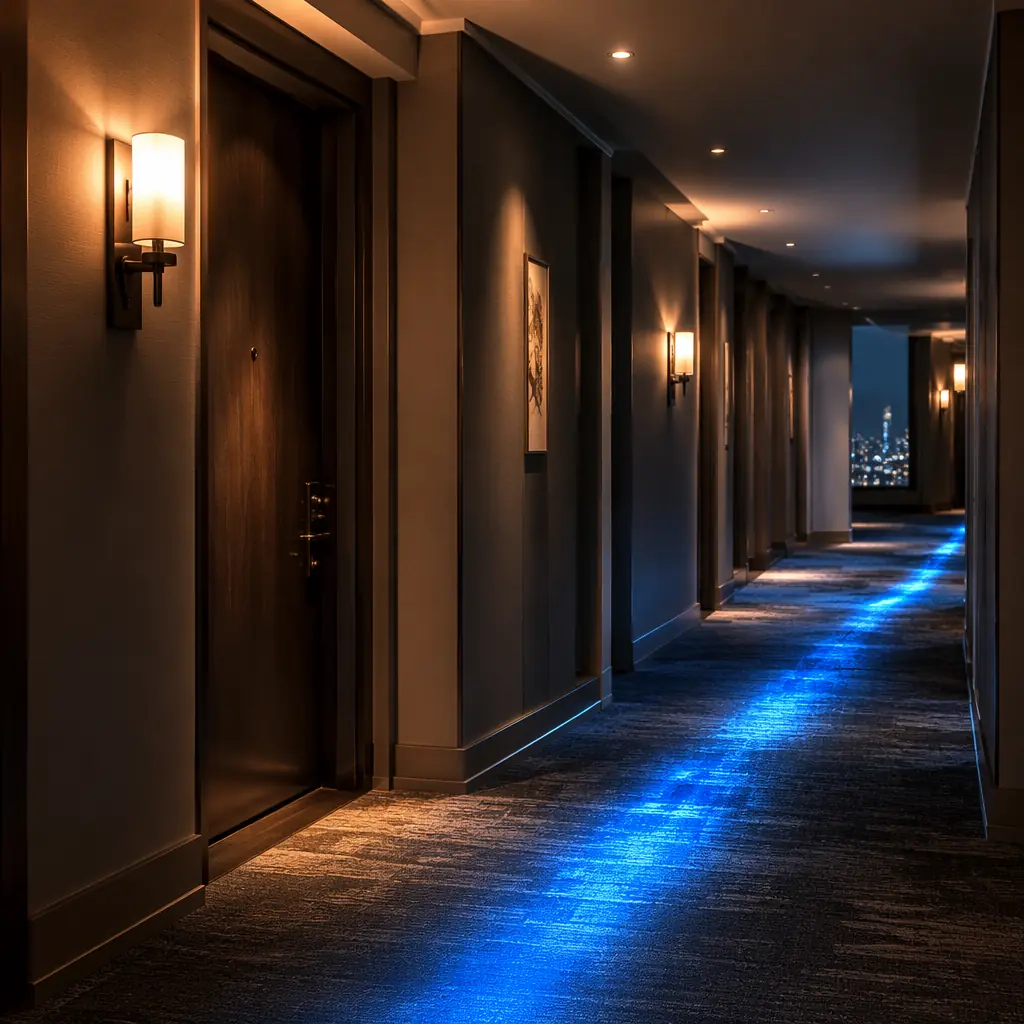
The D1 is designed for 70 cm passageways. Service corridors, older buildings, hotel back corridors with a lift that was retrofitted decades ago. That single number decides whether a deployment needs zero building modification or a door-and-threshold pass.
Before quoting, walk the route: door widths, lift interior depth, thresholds, corridor turns. Buildings built before 2000 are exactly where the D1's clearance is the difference between a one-week installation and a three-month renovation. If the route ends at every lift lobby, no amount of payload per trip compensates for a robot that cannot reach the landing. Multi-floor operation depends on the lift integration, so confirm it during the site survey rather than after delivery.
Check the floor while you are at it: thresholds, elevator sills and expansion joints are the small geometry that decides the day. If the route crosses a step or a gap, the site survey finds it in twenty minutes, and the deployment finds it in the first week.
Navigation: Same Stack, Different Patterns
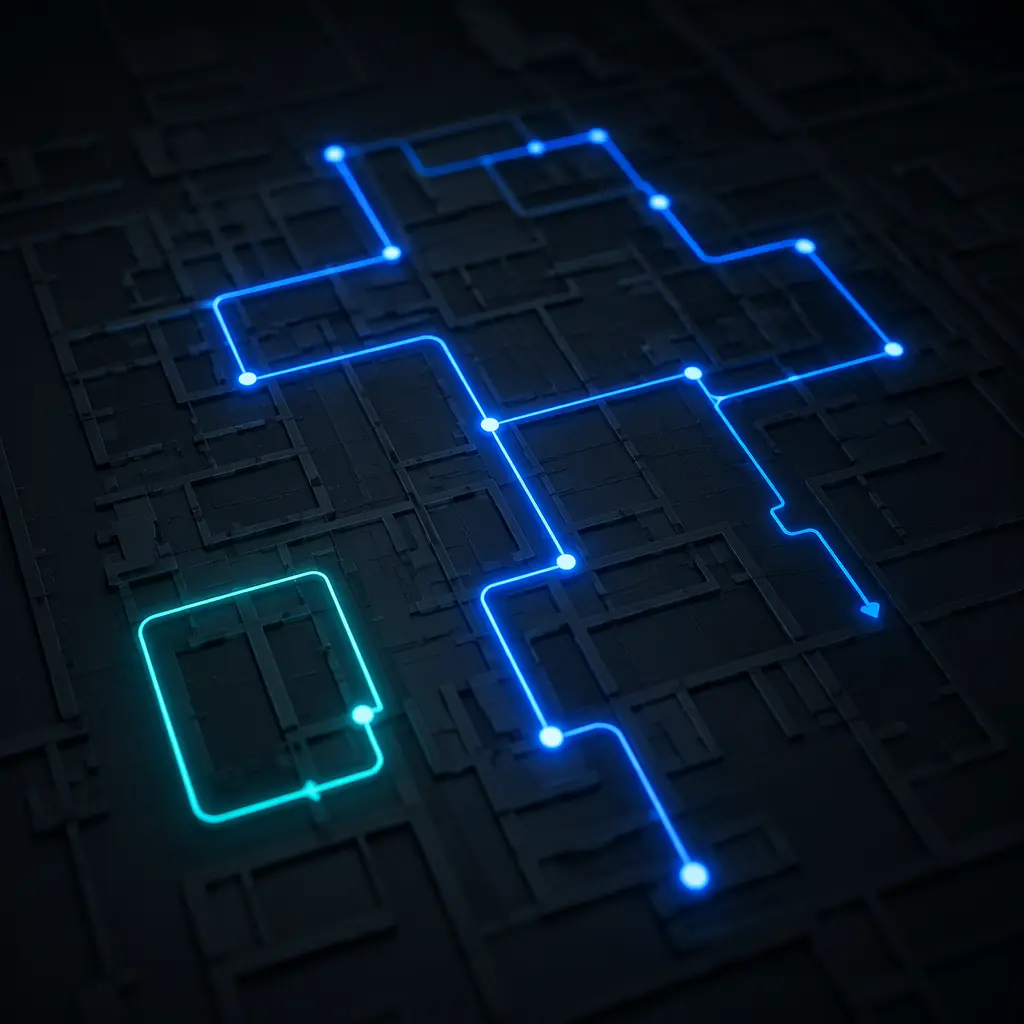
Navigation is the inheritance all AOMAN robots share, the SLAM system maps the floor once, then re-plans routes in real time with lidar and camera fusion, handling moving people, carts and obstacles without tape or markers. For the D1, the pattern matters more than the engine: short loops out and back, or multi-stop trees through a building.
Delivery routes are event-driven, an order drops, a tray assigns, a stop sequences. The fleet platform pushes the schedule and tracks completion so service windows and lift traffic can be staged. And where a runner only moves things, the D1's travel also carries a display.
The D1's navigation is also designed for the busy corridor, not the demos in a quiet lobby: the fleet console logs exceptions after each shift, and that log is where route data becomes route improvement. The third shift always runs better than the first.
The Cost Math, Illustrated
Whatever the price list says, three quantities decide value: trips per day, destinations per trip, and staff walking removed. Illustrative example: a 300-seat restaurant running two services a day with 60 table-run trips each, one D1 carrying four trays per run removes roughly two hours of server walking per service, about four hours a day. At an illustrative $20 per hour fully loaded, that is roughly $20,000 a year of walking against a D1 with dock, service plan and consumables under standard fleet pricing, the illustrative payback lands well inside 18 months, and the savings recur every year after.
Framing matters: if value equals items moved, the four-tray run wins on throughput; if value equals destinations served with separation, multi-stop routing wins on flexibility. Pick the metric that reflects your operation before you compare hardware.
Beyond Tray Count
Display and content
The D1's 21.5-inch screen shows delivery status, menus and promotional content, and the content is managed remotely. A campaign calendar on the display can replace static signage on the route the robot travels most. Nothing about the platform asks for an operator: loading is the only staff touchpoint.
Integration
Ordering-system integration means kitchen and floor staff dispatch from the terminal they already use, and dispatch points feed the same fleet console that runs scheduling. Ask for the API surface and the dispatch workflow during vetting.
Fleet and service
Multiple units negotiate routes and charging windows; one console shows the whole floor. Dock placement, spare parts and remote diagnostics are set up in the first weeks and predict a robot's third year better than its first month. Units ship with the standard compliance pack, CE, FCC Part 15, RoHS, plus battery transport documentation under UN 38.3, with ISO 9001/14001/45001 behind the platform.
Multi-unit operation
Two units on one floor negotiate the same corridors without blocking each other; the console assigns zones rather than routes, so the kitchen loop and the room loop run independently and intersect only at the dock. Start with routes that do not intersect, and the fleet grows without becoming a software project.
Buying Questions That Decide
Beyond the architecture, five answers predict the outcome better than any spec comparison:
| Question | Why it matters |
|---|---|
| What is the payload per tray, and how is it secured? | A tray that rattles through a corridor undoes the fragile part of delivery. Ask for dividers, clips and the load-service procedure. |
| How do docks and charging fit the shift? | Dock count decides whether a long service day needs one robot or two. Ask for a dock-per-route plan in the quote, not a charger per robot in the brochure. |
| What does the robot do at an unfamiliar obstacle? | Ask for the exact fallback behavior, re-plan, wait, or alert, and what the alert looks like on the floor. |
| Who owns the route data and map? | Your floor plan, your zones, your delivery analytics. The agreement should make them yours when the trial ends. |
| How are wear items priced? | Year one is hardware; year two is trays, wheels, dock contacts and pads. Get the wear list in writing before signing. |
Decision Framework
| Your operation | Pattern | Platform |
|---|---|---|
| Restaurant, 150+ table deliveries per day | Four-tray runs, short loops | AOMAN D1 |
| Hotel, multi-floor room service | Multi-stop tray routing | AOMAN D1 |
| Hospital, clean and soiled separation | Multi-stop tray separation | AOMAN D1 |
| Corporate, documents between departments | Four-tray runs with mixed loads | AOMAN D1 |
| Mixed-use property | One platform for food and rooms | AOMAN D1 |
The Bottom Line
The right answer depends on your route topology: short kitchen-to-table loops favor dense four-tray runs and multiply throughput; multi-stop routing with separation requirements favors fewer, richer trips coordinated by the fleet console. The D1 covers both patterns on one platform, 40 kg, four trays, 21.5-inch display, 70 cm passage, so the decision is about your floor plan, not the spec sheet. The cost and payback arithmetic behind those numbers is set out line by line in lead times and rollout scheduling.
Tell us your route topology, lift access and service windows, see the AOMAN D1 product page, then request pricing for a site survey.