Service Robots for Wineries, Breweries & Distilleries, Production Floor Automation & Visitor Experience at Scale
At a glance: C1 scrubs 2,040 m² per hour with dual 70 L + 50 L water tanks -- enough to keep a fermentation hall on a logged short-cycle schedule. This guide covers the visitor and production roles for beverage sites, and the seasonal procurement question behind them.
Wineries, breweries, and distilleries run two businesses on one site: a production facility with hygiene-critical floors and moving product, and a guest operation -- tasting room, taproom, tour -- that runs on hospitality. The timing is the hard part: harvest and crush concentrate production work into weeks, while visitor volume peaks in different months entirely.
Robot roles separate cleanly along that line: guest-facing units serve the tasting room and taproom; cleaning and logistics units serve the floors, barrel house, and warehouse aisles. This guide maps both sides, plus the seasonality that shapes whether an estate should lease, buy, or run a pilot through the quiet months.

Visitor experience: tasting room and tours
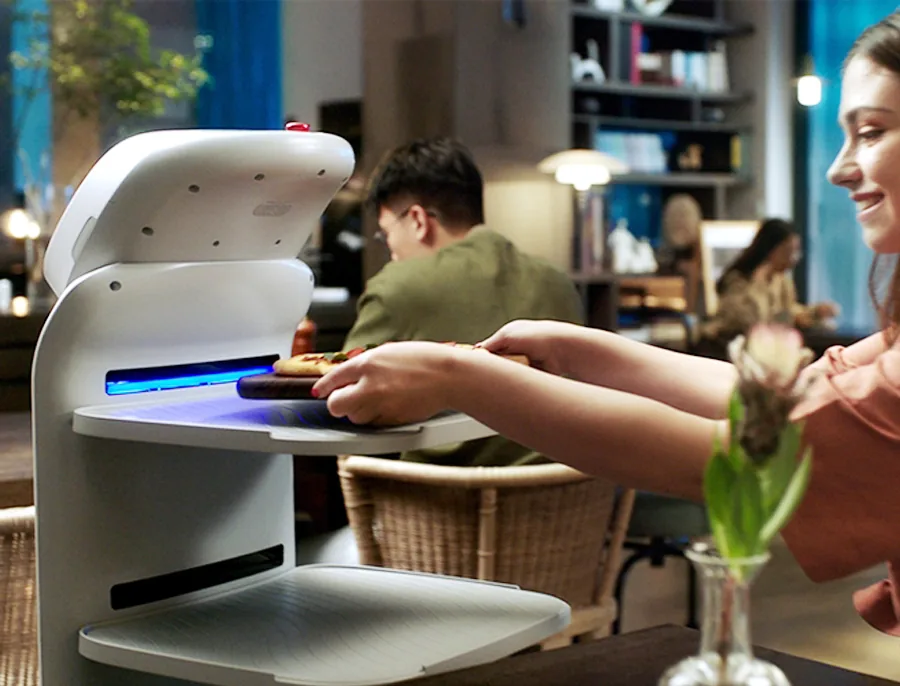
The AOMAN G1 is the unit for the guest side: 15 degrees of freedom for natural gesture, a six-microphone array with 5 m pickup for a ringing tasting room, a 13 MP camera, and multilingual welcome and orientation. Check-in triage, a short orientation brief at the entry, and a self-recharge dock keep it ready for the midday opening -- the peak window when walk-in parties arrive in bursts and the counter staff are all busy pouring.
Typical scope: welcome and orientation, wayfinding to the right experience tier, amenity and vintage-library questions. Nothing beyond a standard answer should stay with the machine -- the guest who wants to talk viticulture wants a person, and the robot's job is to make sure that person is available.
Tour coordination is a second good fit. Scheduled group visits arrive in waves, and the contact sheet that answers "which group is where, who checks in next" is the same repetitive loop the unit handles well: group check-in triage, briefing-point directions, and a polite handoff when the guide arrives. It also works with seasonal teams: a unit holds the orientation notes the seasonal hire would otherwise learn on a busy Saturday.
Production floors: hygiene on a schedule
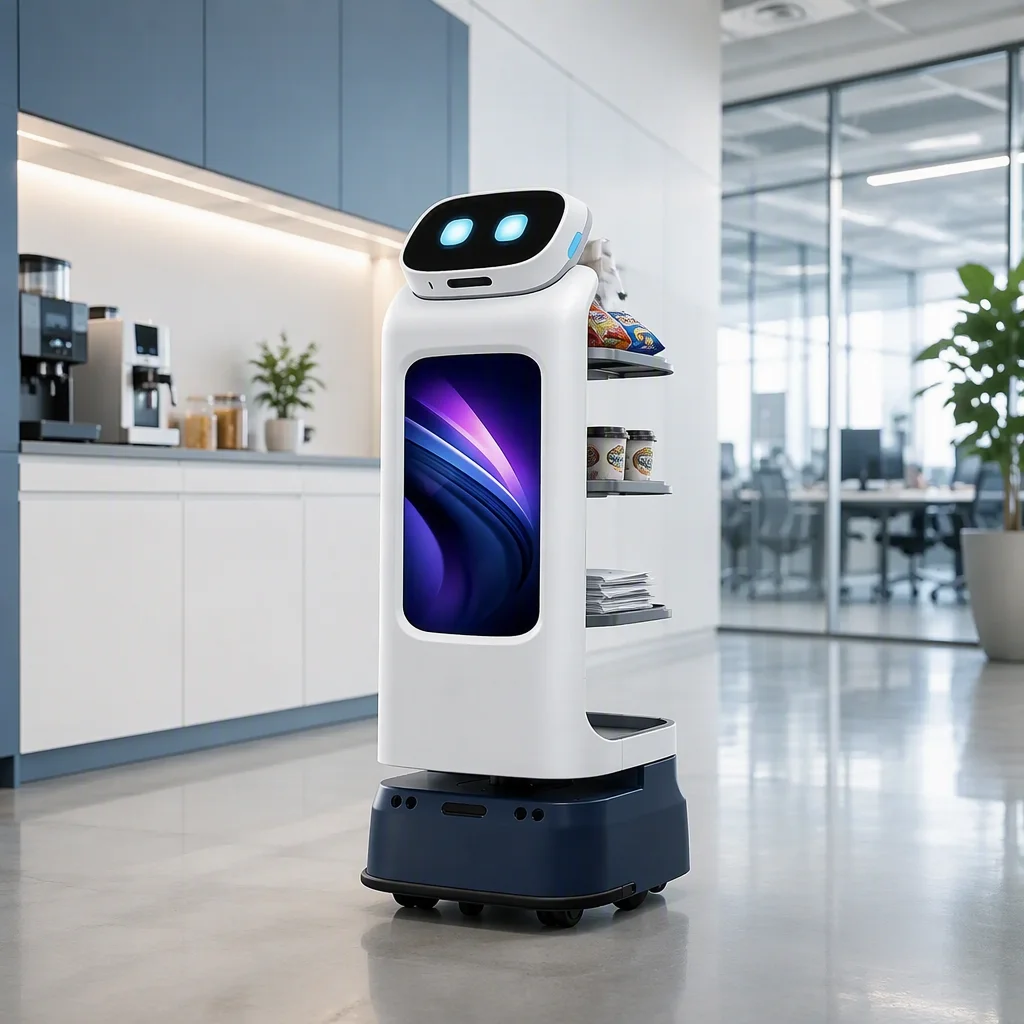
Crush floors, fermentation halls, and barrel rooms accumulate exactly what regulators and auditors look for: juice and grape must, potassium bitartrate crystals, yeast slurry, and spent grain in breweries. The AOMAN C1 scrubs up to 2,040 m²/h with dual 70 L + 50 L water tanks and a 790 mm deck -- sized for fermentation hall floors and crush pads -- and logs per-run coverage, which gives you the audit-trail artifact a HACCP-style program expects. The AOMAN C2 Pro (compact, quiet, modular tanks, 85 cm aisle) fits packaging lines, lab zones, and taproom back spaces where a large unit does not fit.
The schedule principle is frequency before depth: short passes through production areas during the day and a deep cycle after shift. Surface residue is removed before it decomposes -- which is the difference between a facility that smells clean and one that smells like a working winery after a long shift.
The audit dimension follows automatically. A logged cleaning record -- which zone, when, how many square meters, water used -- converts an audit conversation from "we clean it regularly" to a report. That is the same compliance logic that drives adoption in pharmaceutical GMP facilities and cleanroom environments, where documented cleaning replaces the paper checklist that gets signed without being performed.
Barrel house logistics: the QC walk
Barrel sampling is a walking job. In the warehouse -- narrow aisles, controlled air, low light -- the AOMAN D1 earns its keep as a sampling cart: equipment, sample bottles, and a tablet in its 40 kg payload across four trays, following the QC technician through the racks so the technician's hands and attention stay on the procedure. Proof and tasting notes logged in the field write themselves into the barrel database instead of a clipboard at the end of the aisle.
One boundary worth stating explicitly: the unit's 40 kg payload is sized for equipment and tools, not for barrel movement. Moving full barrels remains forklift and dolly work -- the robot's share of the job is the walk, the carry of kit, and the data entry along the way.
The same unit covers bottle-shop restock, bottling-line material runs, and short transfers between buildings, all within its 70 cm aisle clearance -- a comfortable match for the rickhouse aisle widths where forklifts cannot go.
Taproom augmentation
The craft question is a real one: guests come for the people and the story, so the deployment model is augmentation, not replacement. The AOMAN G1 takes the questions nobody came for -- what is on tap, merch sizes, kitchen hours -- leaving the team's time for the conversations that make a taproom memorable. The cleaning side is less controversial: short-cycle passes (C2 Pro, or C1 after close) keep spent grain residue and spillage from becoming the static smell that no brand narrative survives.

Multi-facility beverage groups
Groups with two wineries, a distillery, and a brewery end up with six different floor protocols and six visitor-experience standards unless something imposes consistency. A central fleet platform gives the facilities director cross-site status -- cycle completion, coverage, unit health, and the log exports that a TTB-style audit or a food-safety certification body asks to see. When a distillery's unit completes fewer cycles than a sister site's, the discrepancy surfaces on the dashboard rather than at the next quarterly visit. For the orchestration architecture, see the fleet management guide; for rolling this out across sites, see the multi-site deployment strategy guide.
The seasonal rhythm: matching units to the calendar
Beverage estates are seasonal in a way few operations are: the production load and the guest load peak in different months, and a unit that earns its keep in September should not be a fixed cost in March. That shapes the deployment plan more than the robot choice.
| Season | Dominant load | Unit that carries it |
|---|---|---|
| Crush / harvest | Production floors, continuous residue | C1 on short cycles; D1 for material runs between pad and cellar |
| Bottling, winter cellar work | Line zones, barrel-house QC walks | C2 Pro around lines; D1 as QC cart |
| Spring-early summer | Visitor ramp-up, tours, tastings | G1 load grows; C2 Pro taproom reset |
| Late summer / fall event season | Peak tasting room, release events | G1 + D1 front-of-house; C1 deep cycles |
Two operational notes make the calendar work. First, map refreshes should be scheduled into the season calendar, not triggered by accident -- a cellar floor layout that changes for bottling is exactly the map change a unit should not be asked to navigate blind. Second, seasonal staffing means seasonal training: the onboarding deck for a harvest hire should include the robot's basic handling in the same half-hour session as the safety tour.
Placement map
| Zone | Unit | Role |
|---|---|---|
| Tasting room / visitor entry | AOMAN G1 | Check-in assist, orientation, wayfinding |
| Crush pad, fermentation hall | AOMAN C1 | 2,040 m²/h scrubbing, logged coverage |
| Packaging lines, lab, taproom back | AOMAN C2 Pro | Compact, quiet, modular tanks |
| Barrel warehouse, bottle shop, transfers | AOMAN D1 | 40 kg, four trays, 70 cm aisles |
What the first month should prove
Three measurements make the go/no-go decision for an estate, and none of them need a consultant:
- Route completion -- what share of scheduled loops finish without human intervention, on the production floor first, then guest areas.
- Cycle math vs. schedule -- whether the set cleaning cycles fit the shift widths you actually run, especially through crush, where the evening window moves.
- Staff adoption -- whether the cellar crew uses the unit or works around it. Watch the second week; a unit parked in a corner is a message about coaching, not about robots.
Estates that measure these three in the first month routinely decide the second-stage expansion on evidence; estates that skip measurement tend to decide on the one bad day they remember.
Seasonality and procurement
Harvest and crush are the weeks that break a fixed-cost model: you need the floor capacity then, and not always in the six quiet months. That is the argument for structuring the estate's automation as a pilot in the shoulder season, then an all-inclusive service model through the crush window. For the cost-modeling structure, see budget planning for service robots and the RaaS financing guide.
For a first pilot, the two-month window between bottling and the visitor season is the lowest-risk slot: the floors are stable, the tour program is not yet at peak, and the team has bandwidth to learn the platform before it meets a crush crowd. December through March pilots are usually the honest-start version for a northern-hemisphere estate; the harvest window is the worst month to learn anything for the first time.
Send your production schedule, crush-season floor loads, and visitor numbers -- contact the AOMAN FUTURE team and we will scope the estate plan around your peak weeks, not ours.