
Service Robots for Marinas & Boat Yards — Zone Matching on a Saltwater Site
At a glance: A marina is four surfaces in one site: a hygiene-critical amenity building, continuously soiled covered walkways, a grit- and salt-bound hardstanding apron, and a quayside that nobody schedules because it is slow by hand. This guide matches machine class to zone, sets out what saltwater does to a cleaning programme, and works the seasonal duty cycle that decides whether the fleet balances across the year.

A marina is a cleaning problem with a difficult shape. It has the foot traffic and restroom load of a hospitality venue, the hardstanding area of an industrial yard, the salt and organic debris of a coastal site, and a service building that must present well because it is the first thing a visiting berth holder sees. Almost all of that cleaning is currently done by hand, in a labour market where seasonal coastal staff are the hardest category to recruit.
The operational case is stronger than it first appears, but only for the right zones. A marina is not one surface and a single machine does not fit all of it. This guide works through the zones, the machine match, the specific hazards a saltwater site introduces, and the seasonal duty cycle that decides whether the investment balances.
Four Zones With Four Different Cleaning Problems
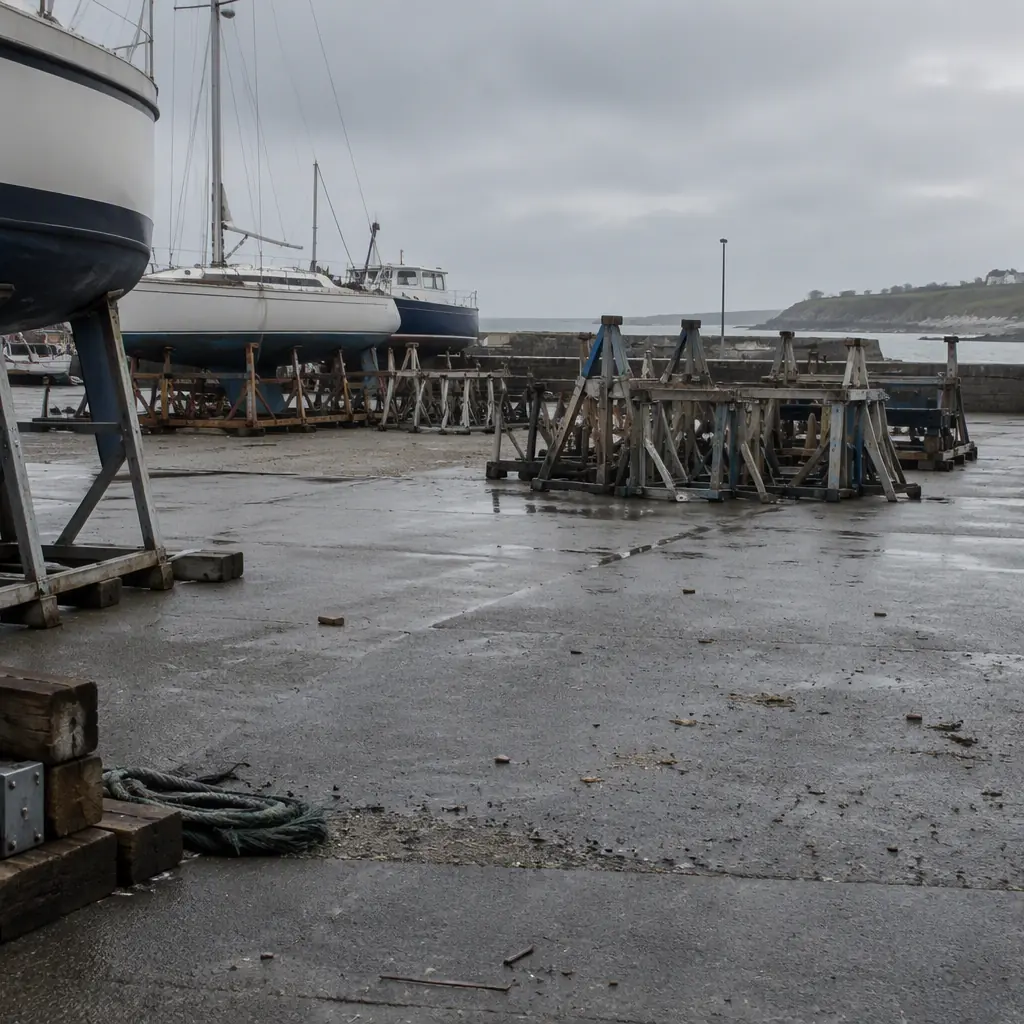
Split a typical marina or boat yard into its actual surfaces and the specification requirements diverge sharply. The table uses published AOMAN specifications to show which unit fits which zone and why.
| Zone | Surface Character | Machine | Why This Machine |
|---|---|---|---|
| Service building, restrooms, showers, laundry | Indoor, hygiene-critical, high turnover in season | AOMAN C2 Pro | 440 mm width and 700 mm narrow-aisle clearance fit restroom and locker layouts; 3-in-1 dust-mopping, vacuuming and scrubbing handles both wet shower-room floors and dry corridor debris; ≤32 dB operation allows daytime cleaning without disturbing berth holders |
| Covered walkways, clubhouse, lobby and reception | Indoor-grade hard floor, continuously soiled | AOMAN C2 Pro | Up to 11 h dust-mopping endurance and roughly 4,400 m² per run covers a large amenity building on one charge with no drain interruption |
| Hardstanding, boat yard apron, trailer parking | Wet, uneven, grit, antifouling dust, oil, sand | AOMAN C1 | 790 mm squeegee and 160 RPM disc brushes at 13.2 g/cm² working pressure clear bonded grit and organic film; 6° ramp capability and 5 cm toe-height obstacle sensing handle apron slopes and expansion joints; 2,040 m²/h rated covers a large yard in a working day |
| Access road, car park and quayside | Salt residue, tyre debris, standing water, weed growth at margins | AOMAN C1 | Large-format scrubbing is the only practical automated approach to salt and grit over large paved areas; recovery tank capacity determines how far it can work between drains |
The division is not arbitrary. The C2 Pro's role is defined by access and duration — it fits where the C1 cannot reach and runs long enough to cover a building on one charge. The C1's role is defined by pressure and rate. Specifying a compact unit for a boat yard apron is a rate failure; specifying a large-format scrubber for a shower block is a fit failure. Both are common when one machine is bought for the whole site.
What Saltwater Does to a Cleaning Programme
Coastal sites introduce three hazards that inland facilities do not have, and each one changes either the specification or the maintenance schedule.
Salt residue is not dust. Marine air deposits hygroscopic salt on every hard surface in the tidal zone, and it re-wets continuously in humid conditions. The result is a persistent tacky film that traps grit and holds it against the surface. This is why a marina apron stays dirty after a plain sweep: the salt layer binds the grit to the paving. Removing it requires working pressure and a wet scrub rather than a dry pass, and it is the strongest technical argument for a large-format scrubber at a coastal site — the same outdoor-surface reasoning set out in the outdoor and perimeter cleaning guide.
Antifouling dust and blasting residue. Boat yards that permit in-water or hardstanding hull work generate fine particulate from antifouling removal and surface preparation. This material is abrasive, chemically active, and settles onto every adjacent hard surface. Practical responses are two: schedule yard cleaning after hull-work campaigns rather than during them, and treat brush and squeegee consumption as a seasonal cost that peaks with the yard's lift-out season rather than averaging across the year.
Corrosion exposure on the machine itself. A machine operating in a coastal environment has a different service life profile from one in an inland office. Two mitigations matter at specification time: siting charging docks indoors or under cover, never in exposed quayside conditions, and shortening the inspection interval for squeegee blades, brush assemblies and electrical contacts compared with an inland site. The core maintenance structure is the same one set out in the maintenance and TCO guide, compressed into a shorter interval.
The Seasonal Duty Cycle Decides the Business Case
Marinas have one of the most extreme utilisation curves of any commercial site. In a temperate-climate marina, visitor numbers, restroom turnover and berth occupancy can swing by a factor of five or more between an August weekend and a February Tuesday. If the investment case rests on peak-season cleaning volume, it will not survive the annual review, because the capital cost continues through the quiet months while the cleaning demand does not.
The deployments that hold up are the ones that identify an off-season duty cycle before purchase rather than discovering one afterwards. Five realistic candidates exist at a marina.
Full indoor deep cleaning of the service building. Off-season is when shower blocks, changing rooms, laundry and storage get cleaned properly rather than maintained. A fleet working continuous cycles in the quiet months delivers work that otherwise gets outsourced or deferred.
Hardstanding recovery after the lift-out season. The yard apron takes its heaviest contamination during lift-out and winterisation. This is exactly the period when visitor traffic is lowest and machine availability is highest — a coincidence that works in the operator's favour.
Quayside and marginal weed control. Weed growth at paving margins and quay edges, plus accumulated silt and grit along kerb lines, is a job nobody schedules because it is slow by hand. It is a natural fit for a large-format scrubber working in low-traffic months.
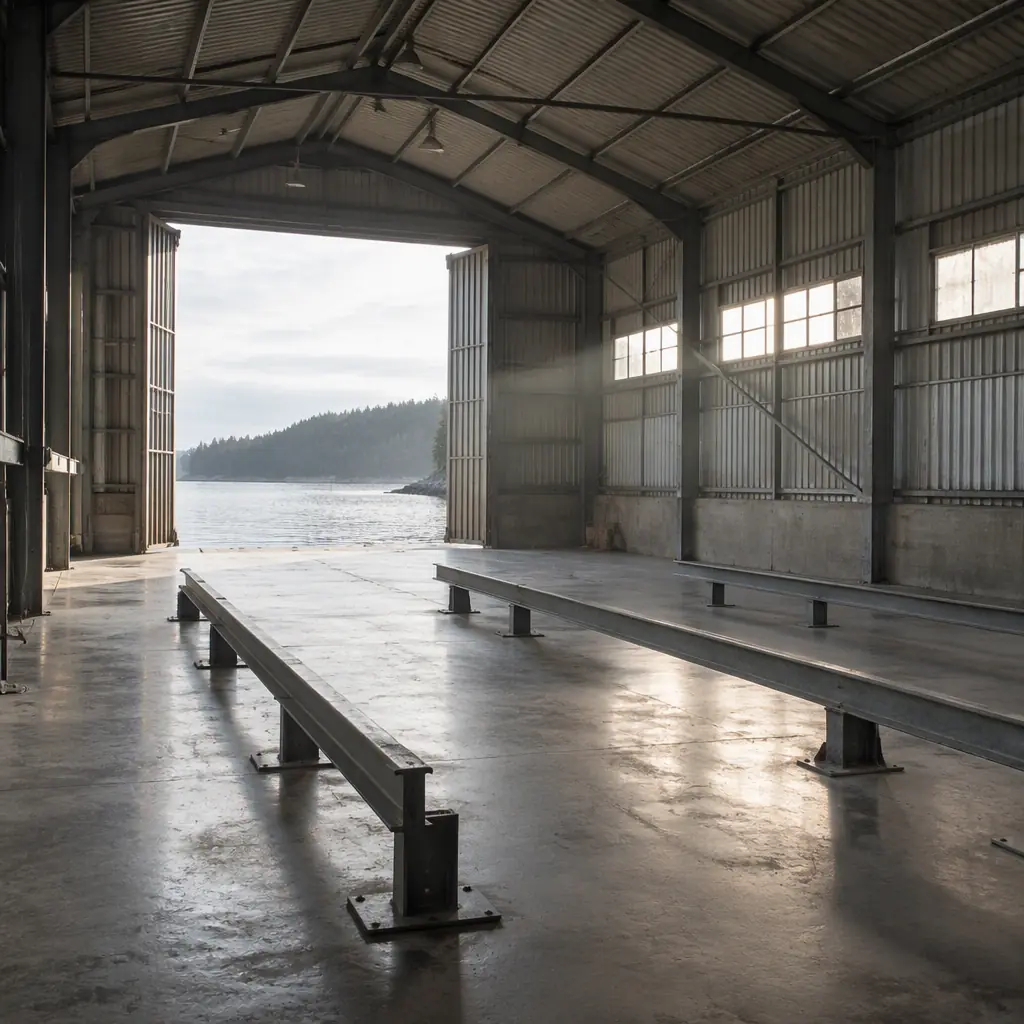
Boat shed, workshop and store floors. Covered boat sheds, workshops and chandlery storage areas are large, hard-floored and usually cleaned on an annual schedule at best. They absorb fleet capacity in the quiet months with almost no scheduling conflict.
Pre-season presentation clean. A full scrub of access roads, car parks, quayside and amenity paving in the weeks before the season opens produces a visible arrival experience for berth holders returning on contract dates. This is a customer-facing benefit rather than a maintenance task, and it is the easiest one to justify to ownership — the same arrival-experience argument that carries weight in hospitality deployments.
Amenity Buildings Are Where the Labour Hours Actually Are
Yard areas are visually dominant and draw the attention, but the amenity building usually consumes a disproportionate share of labour hours for a much smaller floor area, and it does so for structural reasons.
| Amenity Area | Why It Dominates Labour | Automation Approach |
|---|---|---|
| Restrooms and showers | Highest frequency of any space on site, hygiene standard is non-negotiable and compliant records may be required | Nightly automated scrubbing of floors frees staff hours for fixture and surface disinfection, which remains a manual task |
| Entrance and lobby | Receives every visitor and every grain of grit on their boots | Frequent light passes with a compact 3-in-1 unit; the highest-visibility zone per square metre |
| Laundry and utility rooms | Detergent residue, lint and standing water | Scrubbing cycles with attention to recovery capacity and floor drainage |
| Clubhouse and food service area | Spills, grease and furniture layout with high cleaning frequency | Scheduled passes outside trading hours; obstacle density means performance, not availability, is the binding constraint |
| Chandlery and storage | Large floor area, low frequency, heavy dust load | Periodic deep clean using the off-season duty cycle above |
The pattern across marinas is consistent with the wider sector: outdoor zones produce the labour savings and indoor zones produce the utilisation. A fleet sized only against the summer yard peak will look over-specified for ten months and under-used in twelve. A fleet sized against the annual duty cycle including the winter indoor programme is the one that still makes sense at the second-year review.
Infrastructure Checks Specific to Coastal Sites
The standard pre-deployment survey does not cover the failure modes a tidal or estuarine site presents. Five checks belong on the marina survey sheet.
- Tidal and flood exposure at dock sites. Docks must sit above the highest expected water level, not at average quay height. A dock installed at mean level will be flooded, and a flooded charging dock is a replacement cost rather than a service call.
- Surface transitions between apron and quay. The boundary is typically a drainage channel, a kerb or a slope change. The C1 climbs 6° ramps and senses from 5 cm at toe height; a channel exceeding that will stop the machine exactly where the route must continue. Measure these, do not assume they are smooth.
- Power and connectivity at the waterfront. Remote quayside positions may lack both. Dock siting should follow available power and network rather than the most convenient working position.
- Route stability across tide and season. Trailer storage, boat cradles and temporary stands move repeatedly through the year, so mapping must be a recurring task rather than a one-off commissioning step. A map six months old at a working boat yard will generate repeated interventions.
- Public safety in mixed-traffic areas. Marinas mix pedestrian berth holders, vehicles, trailers and lifting equipment in shared space. In amenity and quayside zones the machine's operating speed should be constrained below its autonomous ceiling through the scheduling layer, with a preference for lower-traffic windows.
What a Marina Should Measure
Four metrics tell an operator whether the deployment is delivering, and each maps to a cost line that already exists in the budget.
Labour hours displaced from amenity cleaning. The direct comparison against the pre-automation roster. At marinas the value concentrates in the service building, because those hours are the hardest to fill with seasonal staff and the most expensive to cover at short notice.
Passes per zone on the yard apron. Tracked by season. Salt-bound grit and blasting residue do not clear in a single pass, and knowing the true pass count prevents the fleet being judged against an impossible one-pass standard.
Off-season machine-hours. The share of fleet capacity used outside the berthing peak. Below roughly half, the fleet is oversized for the site and the sizing should be revisited rather than the deployment abandoned.
Consumable consumption per 1,000 m². Brush, squeegee and pad usage per unit area, which at a coastal site will run substantially above an inland benchmark and should be budgeted as such from the outset.
Where the capital needs to sit as operating expense so a seasonal business is not carrying year-round financing on a fleet that peaks for four months, a RaaS structure matches the payment to the utilisation curve — the same logic worked through in the financing guide. The fleet sizing arithmetic behind these decisions follows the charging infrastructure method, and the year-round utilisation logic is the same one applied in the fleet management framework.
Tell us your site layout, the split between amenity building and hardstanding, and your seasonal occupancy pattern, and we will help match machine classes to zones and build a twelve-month utilisation model before you commit to a fleet size. Contact us.