Service Robots for Hotels & Resorts, The 2026 Procurement & Deployment Guide | AOMAN FUTURE
At a glance: AOMAN D1 carries up to 40 kg across four trays per run, and a single C1 covers 12,000 m² per 2,040 m²/h of scrub rate. This guide maps the roles, the integration layer and the procurement structure behind a production hotel fleet.
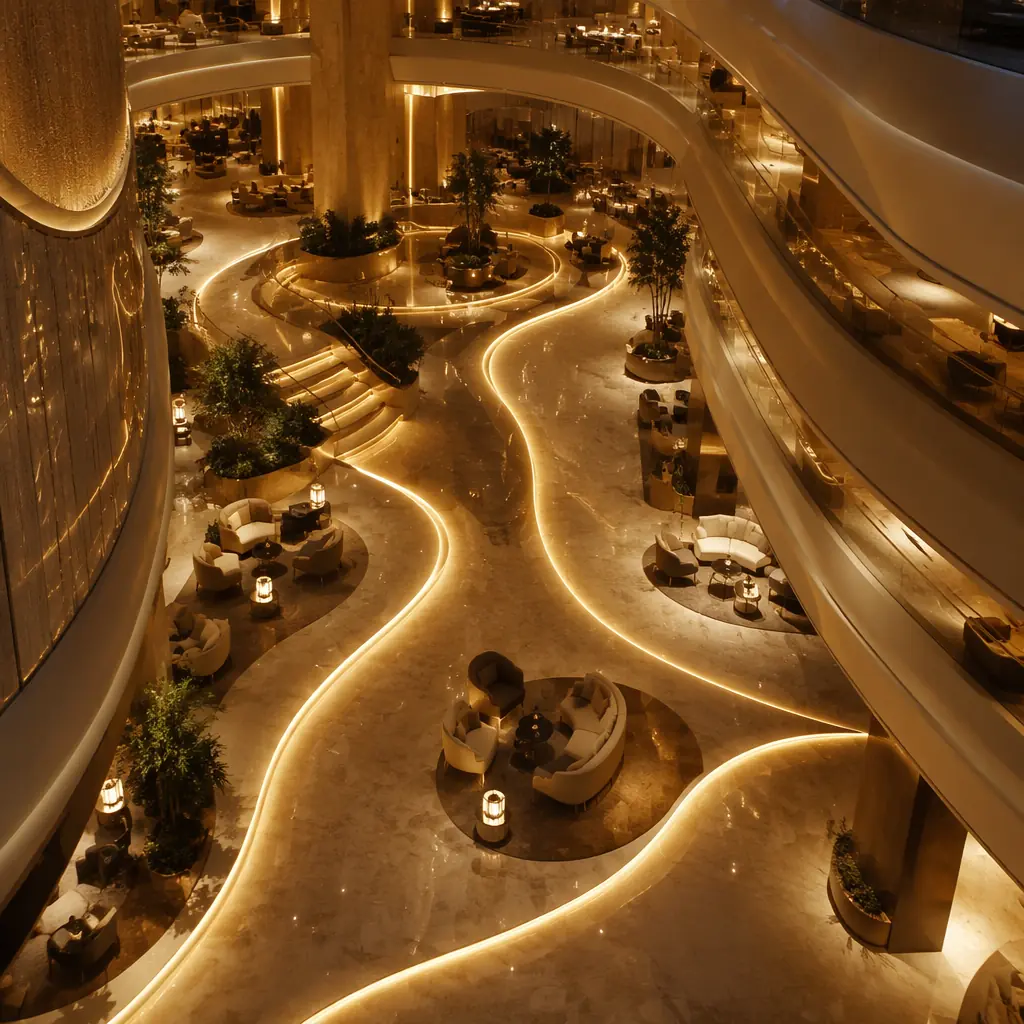
A hotel runs every robot category that matters -- delivery, cleaning, and guest-facing guidance -- under one P&L, on one property map, with one operational chain of command. That single-operator structure is what makes hotels one of the most direct automation cases in commercial real estate: no multi-tenant coordination, one budget owner, one accountable operations lead. It also means the cost of a wrong assumption is borne by one property.
This guide covers the robot roles that map to hotel workflows, the integration layer that determines whether routes actually work, the resort-specific questions urban properties do not face, and the procurement structure that separates a production deployment from an expensive pilot.
The four roles that map to hotel work
Room service and amenity delivery: the entry point
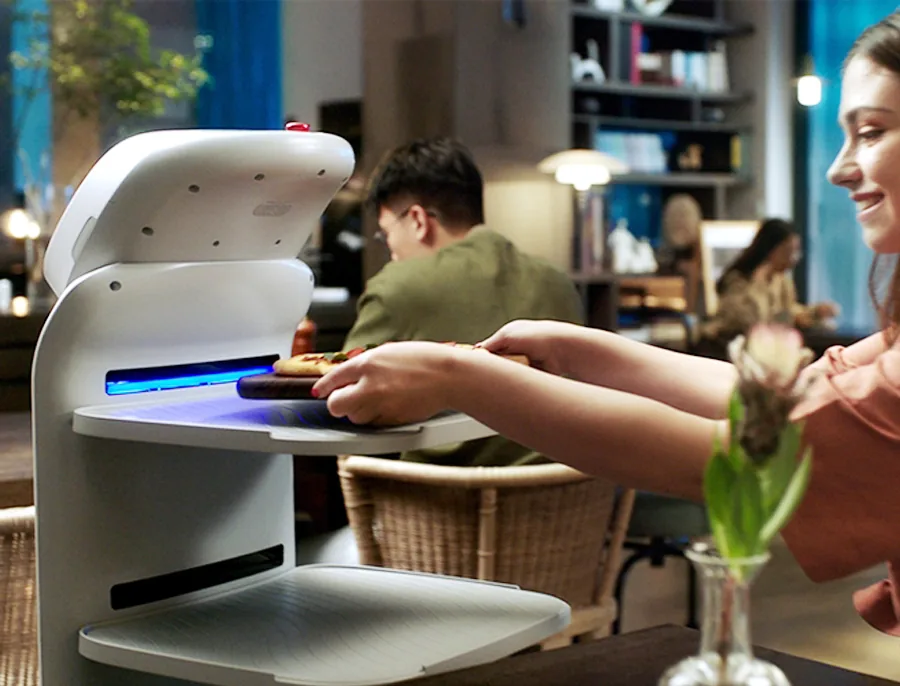
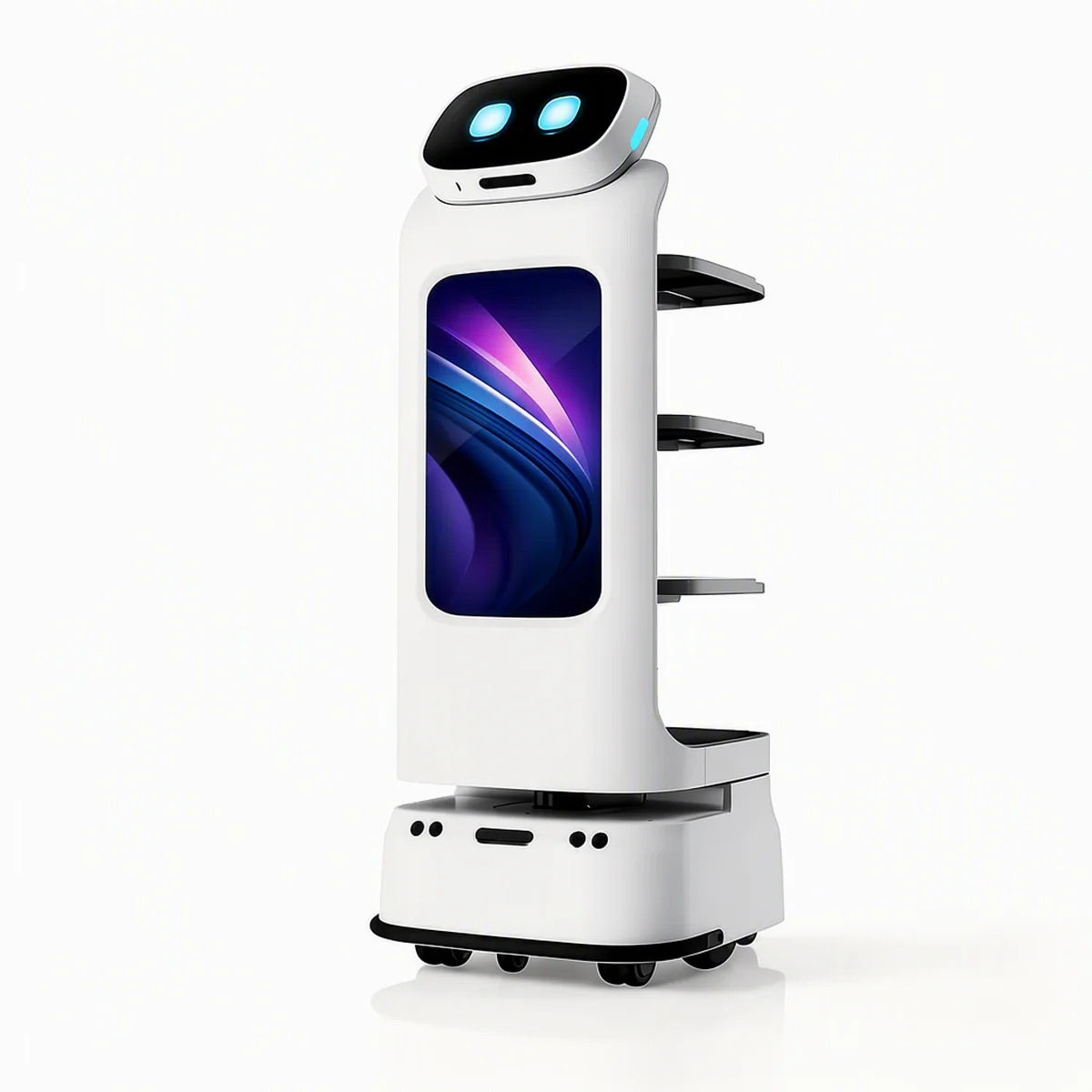
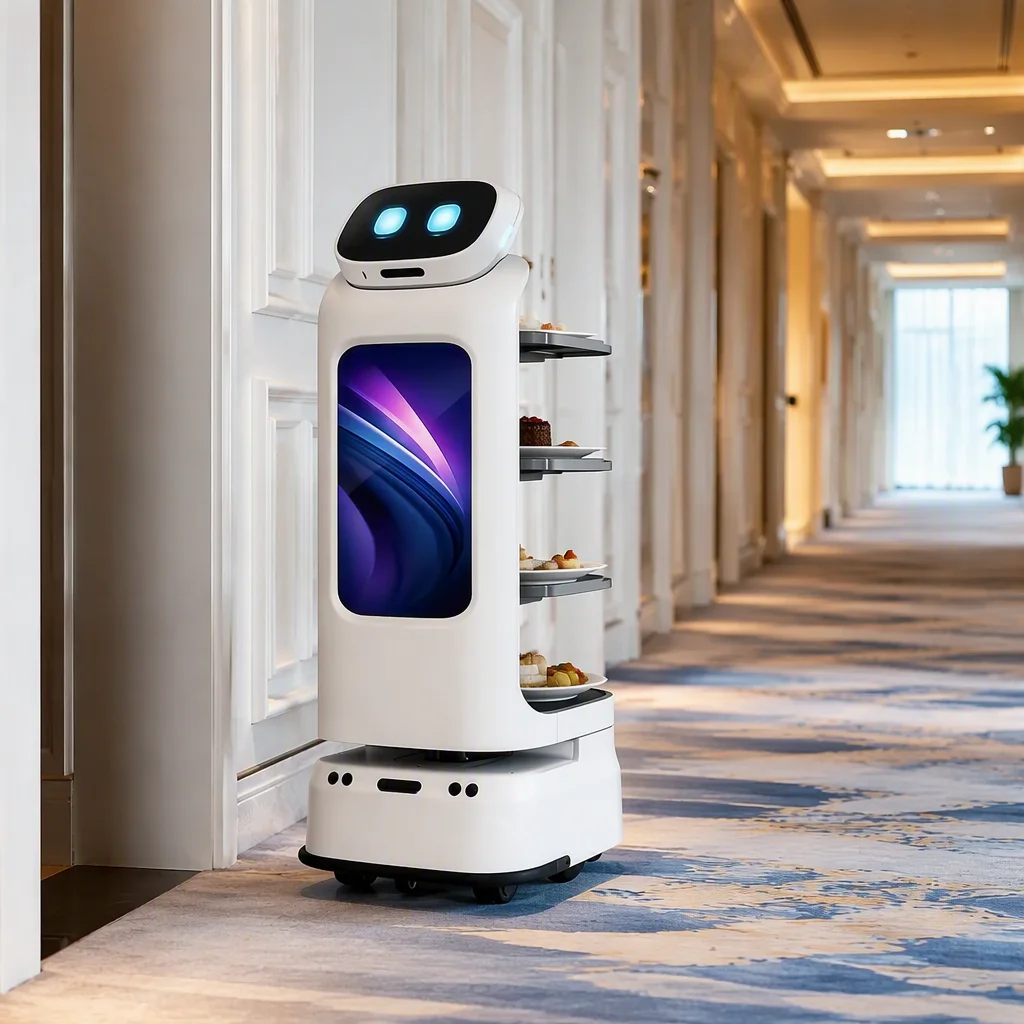
Delivery is the highest-frequency, most geometric of hotel tasks: known corridors, elevator ride, known room numbers. The AOMAN D1 carries up to 40 kg across four independent trays and clears a 70 cm aisle, so one unit can stop at four rooms per loop.
| Specification | Why it matters in a hotel | AOMAN D1 |
|---|---|---|
| Payload | A full breakfast tray plus extras per stop | 40 kg |
| Trays | Multiple deliveries per loop | 4 independent trays |
| Aisle clearance | Guest corridors and service doors | 70 cm minimum |
| Guest-facing display | Order status and property information at the door | 21.5-inch screen |
| Charging | Ready for the morning peak | Auto-return dock |
Two dependencies decide the real result: elevator integration and room-status data. A unit locked to one floor serves only that floor's volume, and a unit that cannot read occupied / Do-Not-Disturb status will knock on the wrong doors. Both are integration jobs, not robot jobs -- plan them in week one.
Public-area cleaning: consistency at scale
The AOMAN C1 scrubs 2,040 m² per hour on hard surfaces, with a 790 mm squeegee/brush deck, dual water tanks (70 L + 50 L), and 85 cm aisle clearance -- the lobby, restaurant, and corridor profile of a large property. The AOMAN C2 Pro is the second unit: modular tanks, quiet operation, a 70 cm under-desk clearance, and 85 cm aisles for banquet prep rooms, back offices, and spa corners.
| Shift | Zone | Unit | Route size |
|---|---|---|---|
| 10 PM - 2 AM | Lobby, reception, bar area | AOMAN C1 | ≈ 6,000 m² |
| 2 AM - 5 AM | Guest-floor corridors, elevator lobbies | AOMAN C1 | ≈ 8,000 m² across floors |
| 5 AM - 7 AM | Conference and banquet pre-function | AOMAN C1 | ≈ 2,000 m² |
| Afternoon lull | Pool-adjacent hard decks, back offices | AOMAN C2 Pro | ≈ 1,500 m² |
At 2,040 m²/h, roughly 12,000 m² of public area costs one C1 about six hours -- a normal overnight schedule -- including automatic re-docks for water changes. The hard part is not the cleaning; it is the record. Logs of per-run coverage and water use give housekeeping a compliance artifact instead of a floor-walk.
Guest-facing guidance: the lobby unit
The AOMAN G1 is the machine for desk-side interaction: 15 degrees of freedom for gestures, a six-microphone array with 5 m pickup, a 13 MP camera, and multilingual guidance -- welcome, orientation, check-in triage, and escorting to an executive lounge. It charges itself overnight, so it is at the door by breakfast. The operating rule is simple: transactional questions get handled; escalations (complaints, ID and payment, dietary edge cases) go straight to staff.
Two fields deserve special attention. A guest name for a personalized greeting: a G1 that knows who it is welcoming gets the strongest guest-facing result of the deployment. And maintenance tickets: when a guest reports a leak to the robot and the ticket lands in the PMS from the floor, you have cut a transcription job out of the workflow.
Resort ground: outdoor areas and long paths
Resorts add unroofed surfaces: pool decks, garden paths, dining terraces. Two requirements belong in the spec rather than in assumptions: IPX5-rated enclosures (or better) plus corrosion-resistant fasteners and conformal-coated electronics for coastal sites, and a precipitation response that sends the unit to cover. These are engineering selection criteria, not optional extras, next to salt air. Geofenced exclusion zones (spa, cabanas, treatment areas) are mapped at configuration time and enforced in the navigation stack.

An illustrative example: the year-one math for a 400-room property
Illustrative example, not a customer disclosure -- the assumptions are yours to adjust to your own baseline.
| Assumption | Value | Where it comes from |
|---|---|---|
| Daily delivery requests | ~ 1,000 | Operator baseline log |
| Stops per loop | 4 | Four trays, one stop each |
| Loops per unit per day | ~ 30 | Loading, elevator, dwell at the door |
| Coverage with 4 units | ~ 480 stops/day | 4 units x 30 loops x 4 stops |
| Public-area hard floor | ~ 12,000 m² | Site survey |
| Overnight clean time, one C1 | ~ 6 hours | 12,000 m² at 2,040 m²/h |
The useful output of the model is where coverage breaks: 480 of 1,000 stops means the 6 AM - 10 AM and 7 PM - 10 PM peaks stay a human-runner window, while the robot carries the middle of the day and the late night. That division -- not a replacement fantasy -- is what a defensible deployment looks like.
Integration: what actually makes it work
PMS and elevator data
Three data flows earn their keep: room status (occupied / vacant / DND) so the robot never attempts a vacant room; check-out scheduling so delivery priority follows the morning checkout wave; and housekeeping completion flags so supervisors see task completion without walking the floor. Most modern property management systems expose REST APIs -- mapping room status to the fleet manager is a week-one job, and the elevator bridge is its own line item.
Multi-robot coordination
With delivery, cleaning, and guest-facing units in one fleet, the elevator becomes the contested resource. Priority arbitration is the standard answer: time-sensitive guest tasks first, return-to-charge second, scheduled cleaning third, relocations last -- recalculated continuously as battery states and task deadlines change. At 7:45 AM with three destinations and one elevator bank, that ordering is what keeps breakfast moving.
The no-answer protocol
Define the guest-not-at-door path before deployment: notification at the door (T=0), a second notice at 90 seconds with a held-order note, return at 120 seconds with an "undelivered - guest unavailable" flag in the PMS, and front-desk follow-up. Without it, a unit idles outside a room for five minutes and the order queue stalls behind it.
Charging placement
Zero guest-visible docks: B1 service corridor near the service elevator for delivery units, housekeeping supply closets per floor block, and janitorial space with a floor drain for cleaning units. Docked charging is a back-of-house story -- the lobby's visual polish is the point of the whole deployment.

Procurement structure: three ways to pay
| Model | Upfront | Ongoing | Best fit |
|---|---|---|---|
| Capital purchase | Hardware + integration | Software license, maintenance, service | Owned properties, 5-year plans |
| Operating lease (36 months) | Low deployment fee | Monthly per unit incl. maintenance | Brand-managed properties, renovation cycles |
| RaaS | None | All-inclusive monthly | Pilots and seasonal resorts |
Seasonal resorts should ask about on/off-season terms -- a property that runs six months at full volume does not want a year-round fixed line. For the deeper lease-versus-buy framework, see the RaaS and financing guide and the TCO and maintenance guide.
A realistic 10-week timeline
| Weeks | Phase | Activities | Hotel involvement |
|---|---|---|---|
| 1-2 | Survey and mapping | Floor plans, elevator assessment, WiFi audit, dock locations | Engineering director, ~ 4 h |
| 2-3 | PMS integration | API connection, field mapping, test data | IT manager, ~ 6 h |
| 3-4 | Network and IoT | Robot VLAN, elevator bridge, dock power | IT + engineering, ~ 8 h |
| 5-6 | Mapping and routes | SLAM map, zone labels, geofences, cleaning routes | Operations director, ~ 2 h |
| 7 | Install | Units commissioned, test runs, elevator test | Engineering, ~ 2 h |
| 8 | Training | F&B, housekeeping, front desk, engineering | ~ 2 h per department |
| 9 | Supervised ops | Full schedule with human oversight, tune routes | Daily 15-min check-in |
| 10 | Go-live | Unsupervised operation, week-10 review | GM + directors, 1 h |
The most common mistake is compressing weeks 2-3: a customized on-premises PMS with non-standard housekeeping fields can eat the full two weeks of mapping. Deploying against wrong data produces deliveries to vacant rooms and greetings with the wrong names -- each erodes confidence faster than training can rebuild it.

Guest experience: what changes
Two questions dominate: will it feel impersonal, and what happens when a robot fails in front of a guest?
On the first, the honest reading from deployed properties is that robot-delivered room service is usually faster and more predictable than manual service -- but the gain that matters is on the human side: staff freed from running trays spend their shift on the relational work that actually drives satisfaction. The robot owns the transactional layer; the team owns the relational one.
On the second, build the recovery ladder before go-live: autonomous recovery for the common cases (wrong-room check, re-plan, path blockage), a remote operator for the camera-feed cases, and a mobile alert for on-site staff within minutes. And when a robot makes a mistake in front of a guest, it should say so out loud -- silence and pretending nothing happened are the two guest-experience failures that hurt most.
Start with one role, prove the numbers against the operator's own baseline rather than a vendor's presentation, then scale. For the change-management side of introducing robots into a human-staffed operation, see the human-robot collaboration guide.
For a site-baseline assessment for your property, contact the AOMAN FUTURE hospitality team -- we will scope the elevator integration, PMS mapping, and dock plan against your actual floor plan. The wider hospitality playbook is on our solutions page for smart catering and hotels.