Service Robots for Greenhouses, Nurseries & Vertical Farms, Commercial Horticulture Automation in 2026
At a glance: A 2-hectare commercial glasshouse runs an aisle-cleaning and tray-moving workload that swallows two labour units a day to 76% humidity and algae-prone wet aisles. This guide covers AOMAN D1 tray and plant transport, plus C1 and C2 Pro aisle cleaning in humidity, with the IP ratings, aisle widths and crop-cycle scheduling that make horticulture automation work.
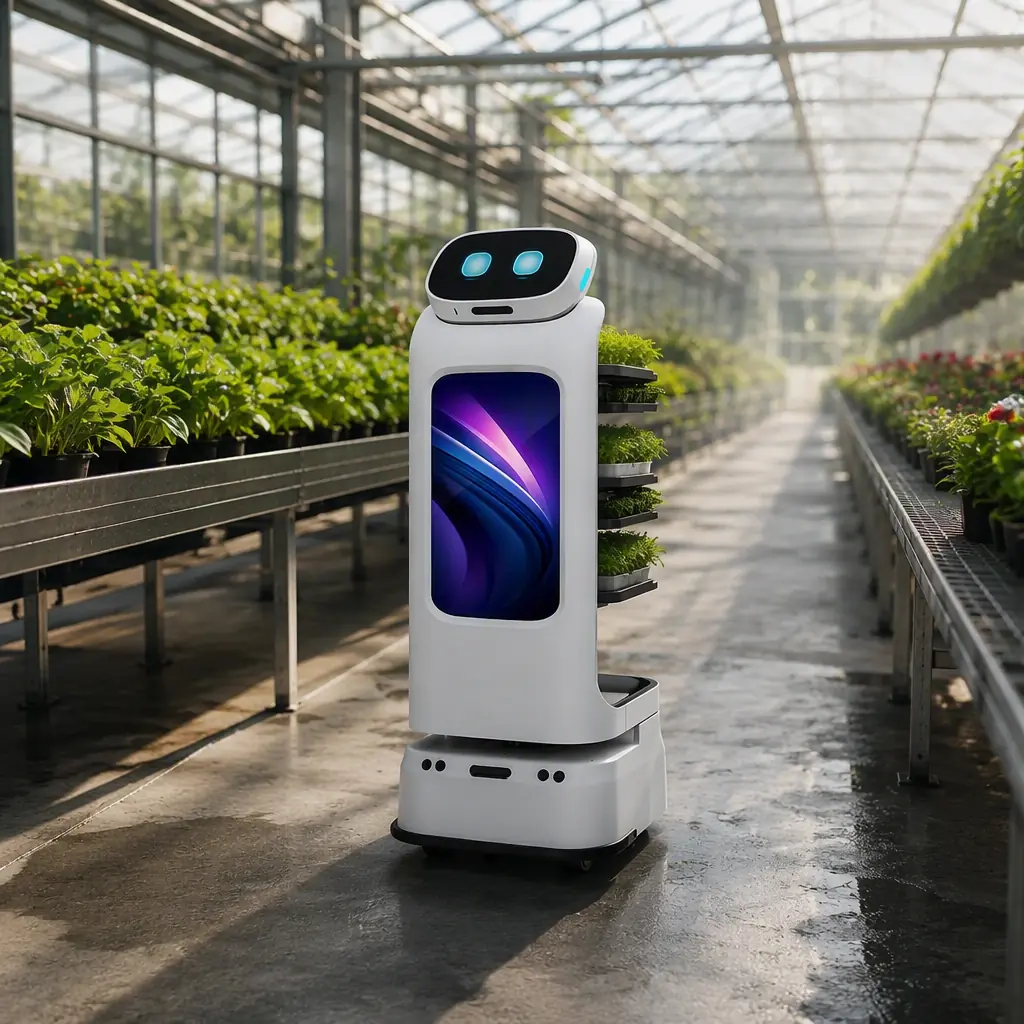
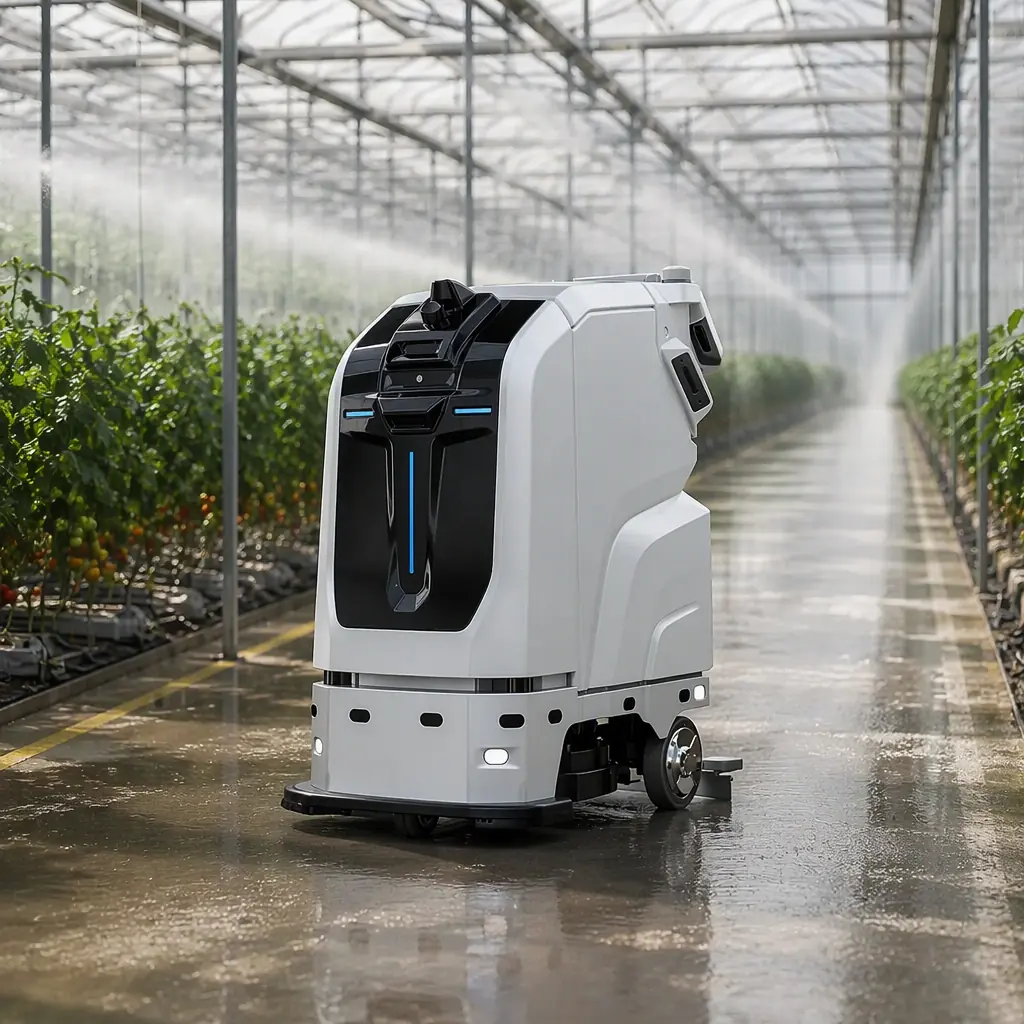
Greenhouses and vertical farms are the natural home for service robots. The work is repetitive, the paths are fixed and tidy, and the labour pool is thin. But they are also a punishing environment: humidity that can reach the high-70s, condensation on every surface, algae growing on wet walkways, and a constant wash of water, fertilizer and crop debris.
The result is a machine-selection problem most facility guides skip. The robot has to operate at near-100% humidity, tolerate sprayed water and fertiliser residue, and keep running on a mat that is deliberately kept wet underfoot. Cleaning robots have to not only clean but survive the clean.
Why Horticulture Automates
Commercial horticulture has three structural pressures. Labour is seasonal, tight and expensive; growing cycles run on a strict calendar that cannot slip; and hygiene directly affects yield, algae and pest pressure on walkways and benches reduce crop health as much as any nutrient imbalance. Robots map onto all three.
- Fixed, high-frequency aisles: benches, tables and grow channels create long, narrow runs that are ideal for a guided unit.
- Timed crop logistics: propagation to potting to finished plant is a scheduled flow a delivery unit can run on a strict loop.
- Wet-zone cleaning: walkways under mist banks and irrigation lines are the single biggest manual cleaning load.
Tray and Plant Transport with the D1
The AOMAN D1 carries 40 kg across separate trays, exactly what a propagation-to-potting loop needs. Potting sticks, rooted cuttings, plant trays, and finished pots move on a scheduled circuit between the propagation bench, potting line and dispatch area. Running the loop every 20 minutes during the workday keeps the potting line fed and removes the stop-start walking that burns whole mornings.
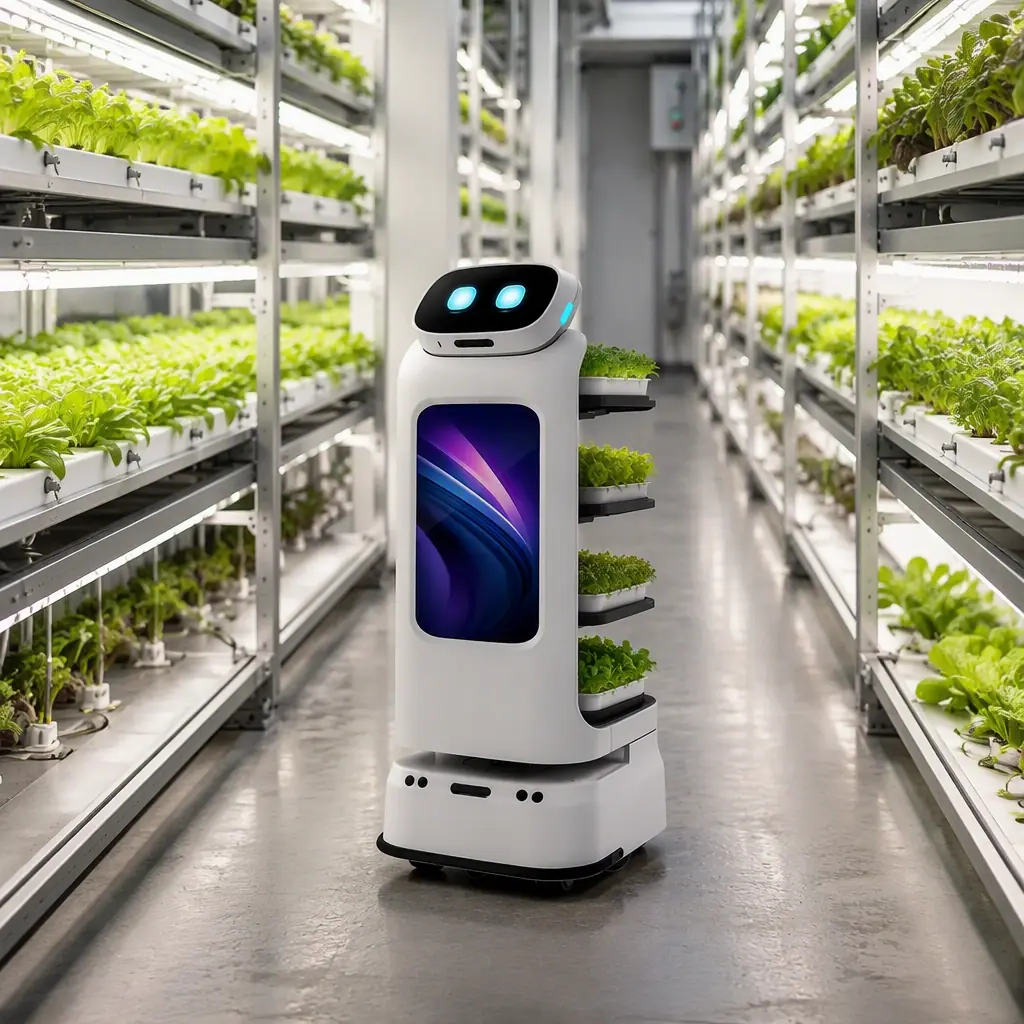
For the trade-offs between single-cabin and multi-tray designs on a horticulture route, the delivery robot selection guide is the right reference. The same logic applies whether you are moving pots or hospital samples.
Aisle Cleaning and Algae Control
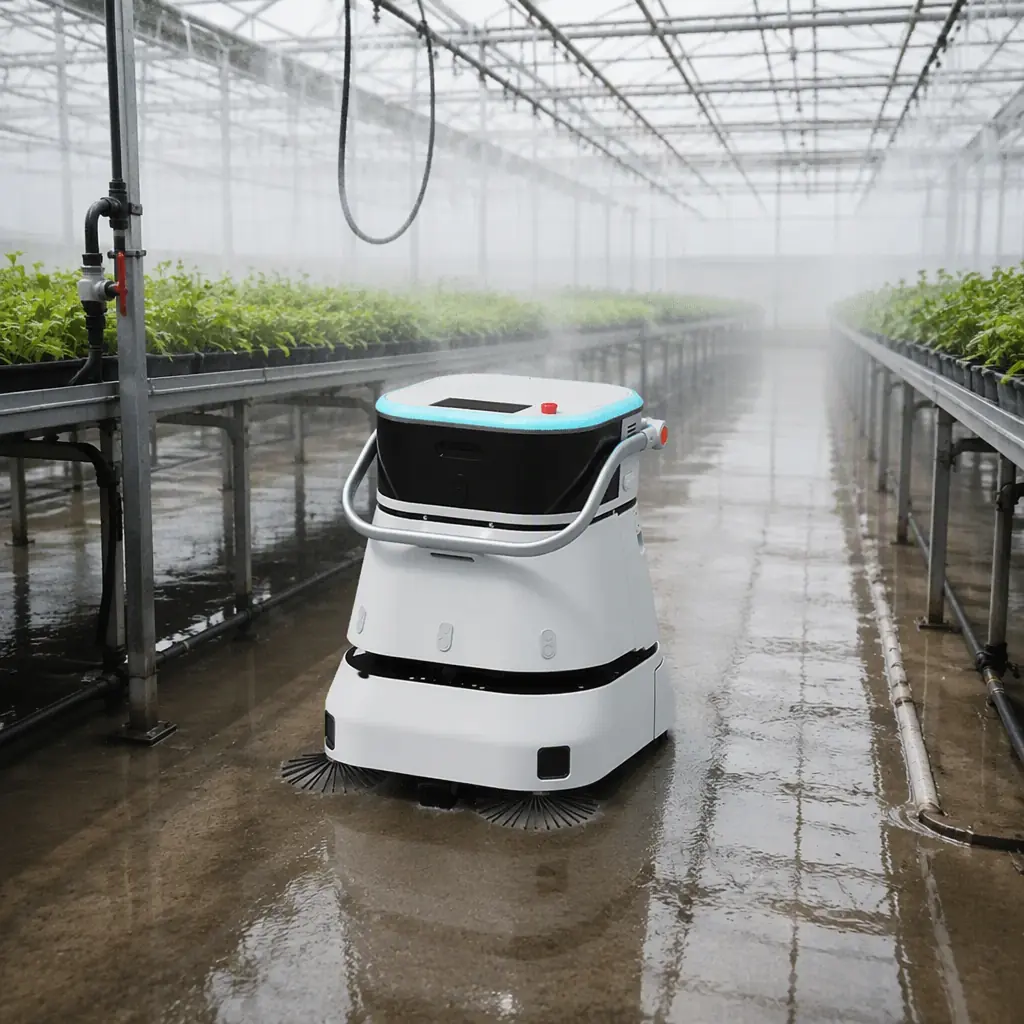
Wet walkways in a greenhouse support algae, which is both a slip hazard and a pest vector. The AOMAN C1 covers up to 2,040 m²/h with a 790 mm squeegee and separate fresh/recovery tanks. The tank separation matters here, because recovered water carries algae and fertiliser and must not be redistributed onto a clean walkway. In tighter spaces between benches and channels, the AOMAN C2 Pro fits 85 cm aisles and runs quietly during working hours.
| Growing System | Aisle Width | Wet Load | AOMAN Fit |
|---|---|---|---|
| Glasshouse benches | 70–90 cm | High (mist/irrigation) | C2 Pro |
| Grow channels / NFT | 60–80 cm | Very high (nutrient film) | C2 Pro with tank separation |
| Main headwalk / dispatch | ≥120 cm | Moderate | C1, large format |
| Vertical farm racks | 70–90 cm, tight | Moderate (hydroponic) | C2 Pro |
Environment: Humidity, Corrosion and IP Ratings
The single most common mistake in horticulture robotics is buying a machine built for an office. The requirements are:
- Shielded, corrosion-resistant construction: condensing humidity and fertiliser residue will attack unprotected metal and electronics. Specify high IP-rated housings and sealed connectors.
- Water-tolerant sensing: lidar and cameras must not fog or fail when the unit passes under an irrigation line. Downward sensing that sees through spray matters.
- Algae-aware cleaning: a scrubber that can lift algae film and carry it into a dedicated recovery tank keeps the walkway and the crop safer.
- Temperature range: units should operate from frost-protection temperatures (around 4 °C) up to summer greenhouse highs without derating.
For the robot-navigation and sensor facts behind site planning, the SLAM and navigation guide is the reference; the technology section covers the platform stack.
Build-Out by Operation Type
- Single glasshouse (up to ~1 ha): one C2 Pro for bench aisles, one D1 on the propagation loop. One unit each is a defensible first purchase.
- Multi-bay or poly complex: one C1 for headwalks, one or two C2 Pro for bench aisles, one D1 per crop-flow loop. Coordination via the fleet management guide.
- Vertical farm / propagation facility: tight racks favour C2 Pro; tray transport favours D1. Roll-out planning per the multi-site deployment strategy.
What to Verify Before Signing
Gutter and channel widths . Measure the actual pass between benches and under irrigation rails, not the aisle centre. Slope and texture . Rough concrete or perforated mats affect traction and squeegee performance. Chemical tolerance . Confirm wetted parts against your sanitiser, iron-chelate and fertiliser products. Charge docks . Place docks high and dry, away from spray, ideally under a bench cover. For cleaning-robot selection across wet environments generally, the outdoor and perimeter cleaning guide is a useful cross-check.
The ROI Picture
An illustrative 2-hectare glasshouse spending roughly $58,000 a year on walkway cleaning and tray-cart labour could trade that against a C2 Pro + D1 fleet and keep headroom, while removing the crop-calendar bottleneck. Run it on your own rates: a full-time operator on loaded carts can cover 4–6 km a shift, and every minute the potting line waits for trays is a minute off yield. Cleaning time is a yield-protection saving, not just a payroll one.
Ordering is what usually decides the outcome. Cleaning first. Visible within days, protects walkway hygiene and needs no workflow change. Transport second. Bigger labour win but needs a fixed route and a loading habit. Tell us your bench layout, crop mix and aisle widths, request pricing on a horticulture fleet and we will match unit types to your rows within 24 hours.