
Service Robots for Fire Stations, Apparatus Bay Floor Maintenance and Station Operations in 2026
At a glance: A fire station's apparatus bay is the hardest-working floor in public service. Continuously wet from hose washes, drainage, decontamination and truck runoff, and it is a real slip hazard for crews moving at full speed to a call. This guide covers AOMAN C1 scrubbing and drying of apparatus bays, turnout-gear and decon wash areas, plus C2 Pro for living quarters, kitchen and day rooms, with turnout-time, slip-liability and water-recovery detail for station chiefs and municipal procurement.
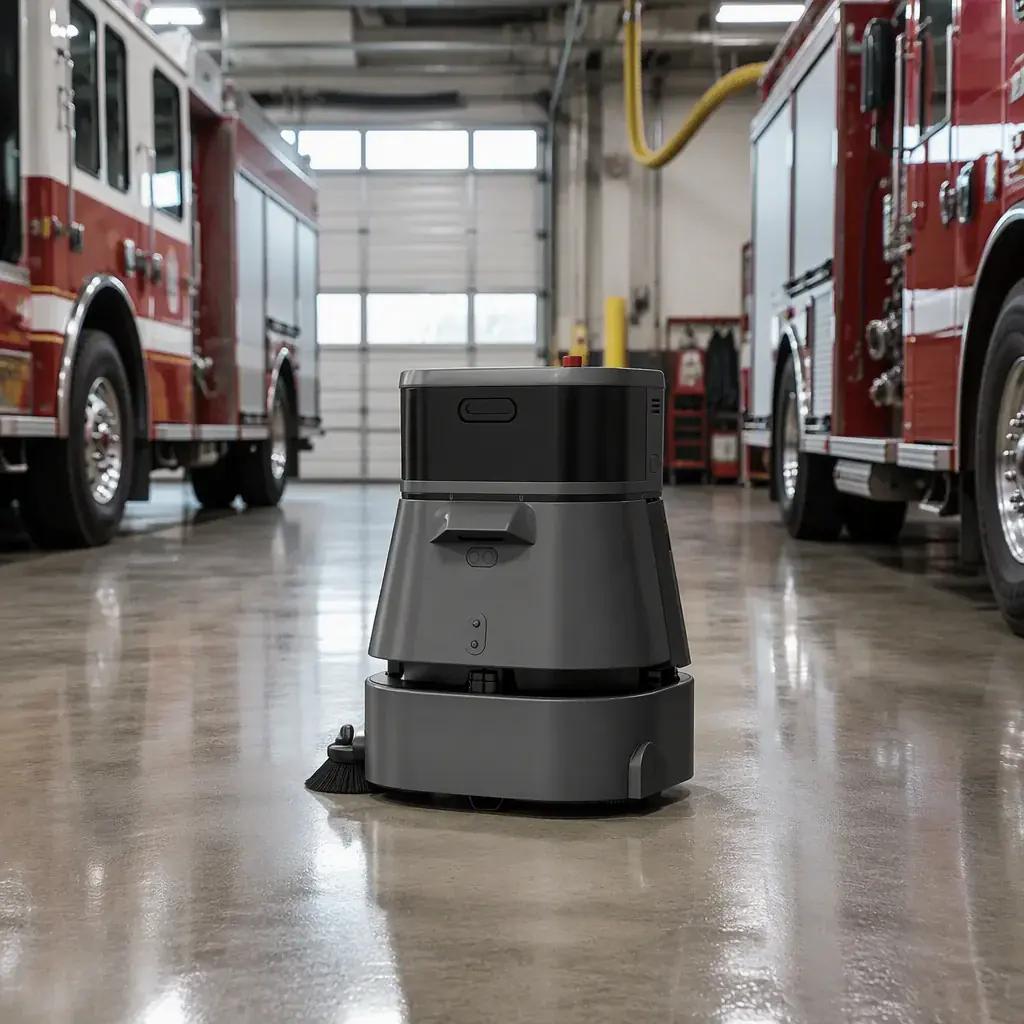
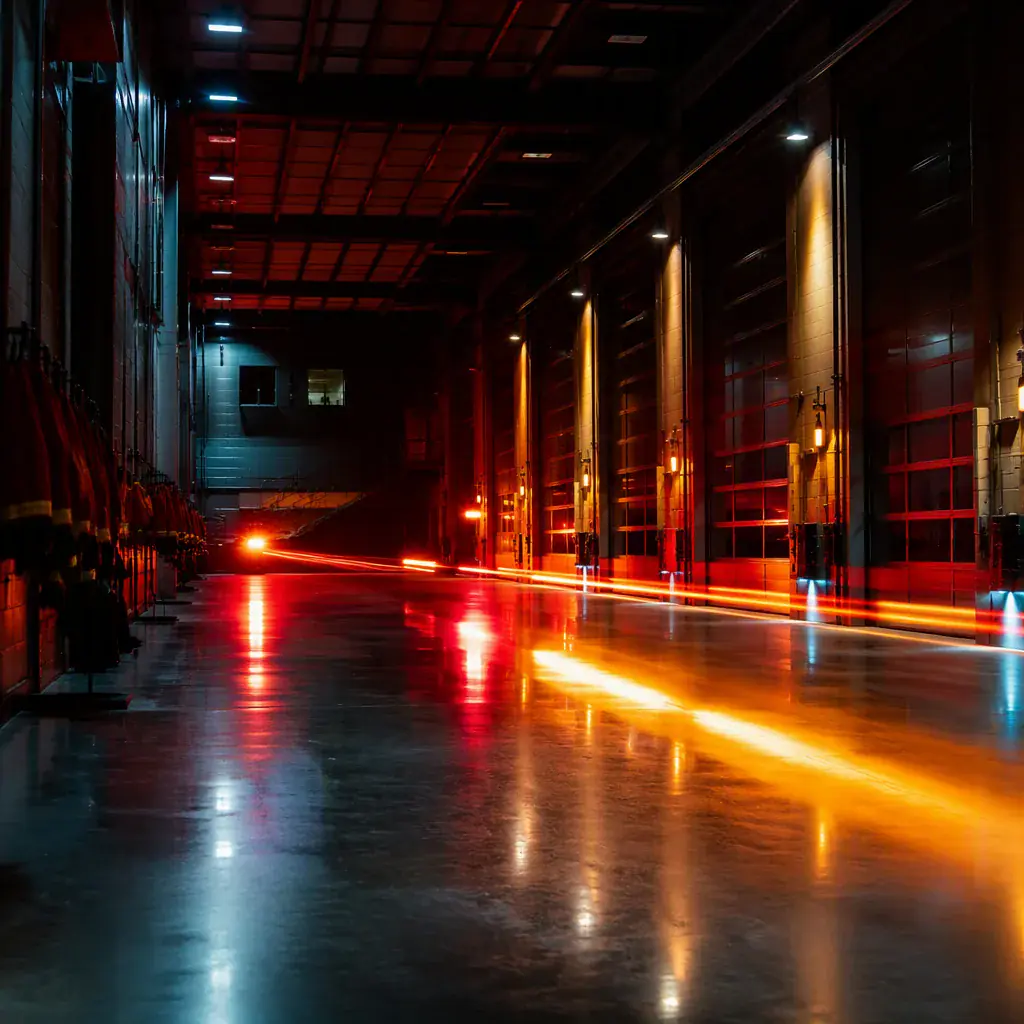
Fire stations are built for speed, not for housekeeping. The apparatus bay holds trucks that carry diesel, foam and runoff; the gear room and decon wash area hold turnout gear that comes back soaked, sooty and chemically loaded; and the living quarters, kitchen, day room, bunk rooms, are a full-time home for the crew between calls. Every one of those floors matters differently, and the bay floor in particular is a liability: a wet concrete bay where a firefighter runs to an engine in dark, cluttered conditions is a slip exposure that a department carries every single shift.
Yet most stations still clean with a hose and a squeegee, hit-or-miss between calls, and the bay floor is rarely dry. Automation changes that: a robot that runs the bay on a fixed cycle, pulls the water off and dries the surface removes the slip risk while keeping the apparatus bay ready, and a compact unit keeps the living quarters habitable around the clock.
Why Fire Stations Automate Floor Care
Four drivers. First, slip liability. A single firefighter injury on a wet bay floor is a claim that dwarfs a year of floor-care labour. Second, readiness. A station must clear the bay and be enroute in minutes; a clean, dry floor is part of being able to move at speed. Third, contamination control. Turnout gear and decon areas carry soot, PFAS-laden foam residue and biological material that must be washed down, not tracked through the station. Fourth, crew time. Firefighters are not janitors, and every hour spent mopping is an hour not spent training, maintaining equipment or resting. Each maps onto a robot.
| Zone | Surface & Load | Cleaning Need | AOMAN Fit |
|---|---|---|---|
| Apparatus bay | Concrete, standing water + runoff | Between calls, durable | C1, 2,040 m²/h, 790 mm squeegee |
| Turnout gear / decon wash | Concrete, soot + chemical residue | After each incident | C1, water-recovery tank separation |
| Kitchen / day room | Tile, food + foot traffic | Daily, occupied | C2 Pro, silent mode, 440 mm |
| Bunk quarters / corridor | Tile / vinyl, busy | Daily, quiet | C2 Pro |
| Apparatus maintenance pit | Concrete, oil + degreaser | Weekly | C1 |
The Apparatus Bay with the C1
The AOMAN C1 is the bay unit. It scrubs up to 2,040 m²/h with a 790 mm squeegee and a 510 mm brush, and its 70 L fresh / 50 L recovery tank separation matters critically in a fire station: recovered water that has picked up diesel, foam residue and soot must never be redistributed onto an already-wet bay floor. The wide squeegee takes the standing water off in one pass so the surface dries far faster than a hose-and-squeegee crew can deliver, and its lidar plus vision layers re-plan around a truck that pulls in mid-cycle instead of waiting for an operator.
Turnout Gear and Decontamination Areas
After a fire, turnout gear is brought to the decon area and washed down, which sends contaminated water straight to the floor. The C1 runs this zone on a post-incident cycle, pulling up the wash-down water and leaving the surface safe to walk on before the next alarm. Keeping decon water contained and removed, rather than sitting on a floor where it can be tracked into the living quarters, is a contamination-control win that directly supports crew safety. The broader continuity framing, what happens when a station's systems fail, is covered in our failure modes and business continuity guide.
Living Quarters, Kitchen and Day Room with the C2 Pro
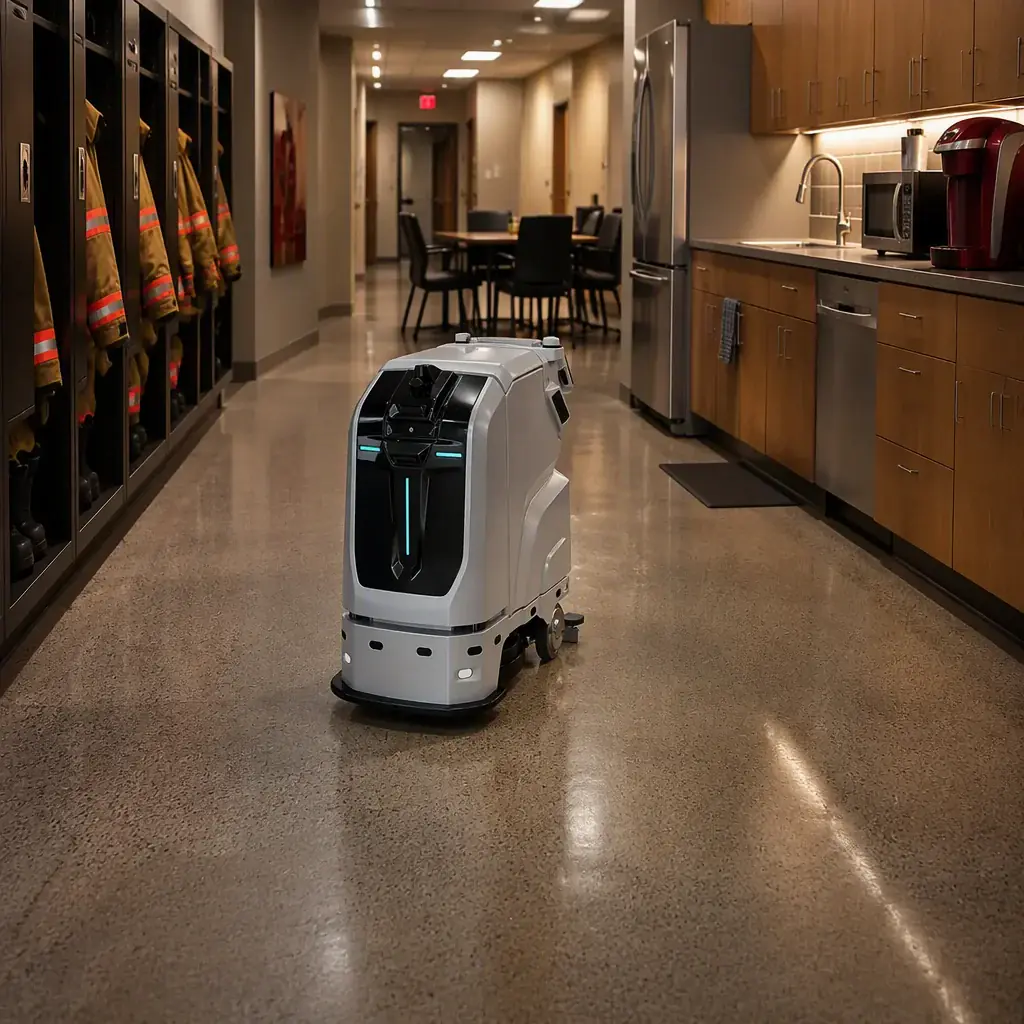
The firefighter living quarters are a home, occupied around the clock by crews who sleep, cook and train between calls. The compact AOMAN C2 Pro is the right fit here: a 440 mm cleaning width and silent mode let it clean the kitchen, day room and bunk corridors during a shift without waking a resting crew, and its 700 mm under-table clearance reaches beneath the dining tables and training benches the way a ride-on cannot. It covers roughly 4,400 m² per run and auto-returns to charge on low water or battery, so it needs no dedicated operator.
Turnout Time and Readiness
A fire station lives by its response time, and a clean bay is readier than a wet one. A crew moving to a truck at a full run over a dry, non-slip bay floor reaches the street faster and safer. The floor-clean cycle is therefore a readiness task, not a cosmetic one. Scheduling a C1 pass after each call (and a deeper clean at a quiet window) keeps the bay dry and clear without competing with the alarm. For how station managers think about the cost side, our safety standards and compliance guide frames the regulatory picture, the fleet management guide covers running more than one unit across a district, and the budget planning guide models the annual cost by station size.
Build-Out by Station Size
- Two-bay volunteer / rural station: one C1 for the bay and gear wash. A defensible single-unit first purchase.
- Four-bay career station: one C1 for the apparatus bay and decon area, one C2 Pro for the living quarters and kitchen. Two units covers the whole station.
- Multi-station district: a C1 + C2 Pro per station, centralized through the fleet platform for one schedule and one reporting view.
The ROI Picture
An illustrative four-bay career station spending about $29,000 a year on bay-floor, decon-wash and living-quarters cleaning, the equivalent of reassigning firefighter hours plus contract support, could trade that against a C1 + C2 Pro fleet and keep headroom, while removing a real slip-liability exposure and keeping the bay ready. Model it on your own call volume and crew hours: the recovered firefighter time is the payroll-side saving, and the reduced slip risk, faster turnout, contamination control and better crew working conditions are the secondary wins that push payback under 18 months. For the ongoing parts-and-service cost, the maintenance and total cost of ownership guide covers what a floor-care machine costs to keep running over its life.
Ordering matters. The apparatus bay first, it is the slip-liability and readiness win. Living quarters second, it protects the crew's working environment. Tell us your bay count, floor types, decon wash setup and call volume, request pricing on a station robot fleet and we will match unit types and cleaning cycles to your station within 24 hours.