
Service Robot Failure Modes & Business Continuity: Downtime Planning for Autonomous Operations
At a glance: The costliest service robot failure mode is not hardware: a D1 stopped by a closed fire door at 2 AM idles for hours before anyone sees the alert, while a failed sensor trips instantly and loudly. This guide maps the twelve recurring failure modes and the tiered 15-minute response protocol that keeps any stoppage from becoming an incident.
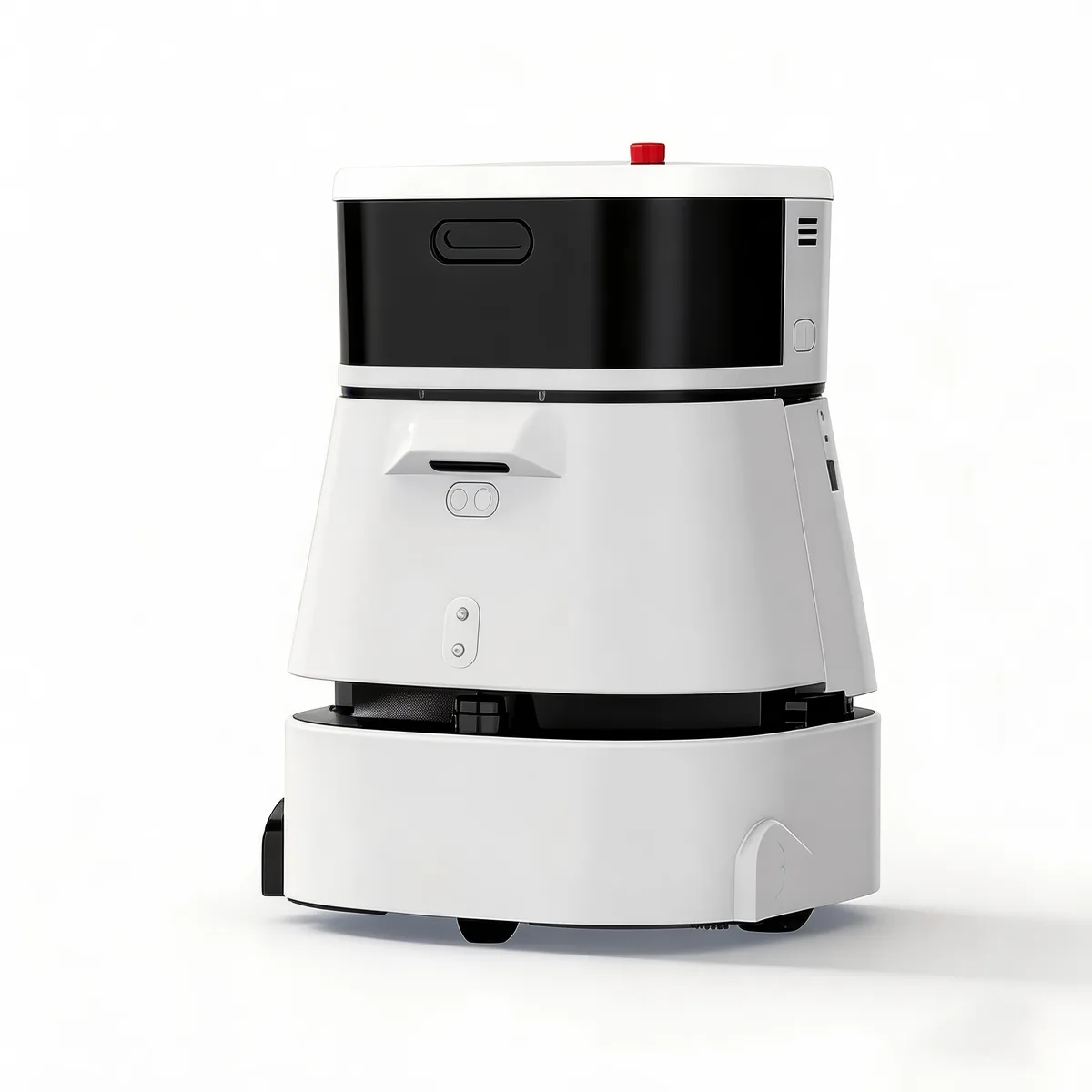
Consider the most common night-shift scenario: a delivery robot stopped in a corridor because the fire door it normally passes through has been released. The robot’s safety protocol, correctly, refuses to navigate past a closed fire door. It sends an alert to the fleet management dashboard. The only staff member on duty is elsewhere, sees the alert an hour later, and a queue of scheduled deliveries was left undone in the meantime. Comped services, rescue effort by desk staff, and the trust that the fleet “works” takes a longer hit than the repair, all from a mechanical door and an untuned alert.
Service robots fail in predictable, manageable ways. The difference between a 15-minute disruption and a multi-hour operational crisis is rarely the severity of the failure. It is whether the facility has a written escalation protocol and a designated responder. In a publicly documented deployment, a care facility in Tokyo runs AOMAN C2 Pro cleaners through shared corridors; the operators there treat unclogging and refills as scheduled tasks, not unexpected events. Which is exactly the mindset this guide is built around.

The Twelve Most Common Service Robot Failure Modes
The failure modes below recur across delivery, cleaning and guidance fleets. They are grouped by cause, not by frequency. Your facility’s own mix depends on floor plan, staffing hours and integration depth, which is why the 30-day audit at the end of this guide matters more than any industry list.
Category A: Environmental Failures
1. Path obstruction. A cart, pallet, chair or delivery box sits in the mapped route. The robot stops and waits: typically 30–120 seconds, before requesting intervention. Mitigation: designate “robot-clear zones” in facility policy and add obstruction response to the housekeeping and setup checklists.
2. Closed door / access denial. A door that was open during mapping is closed during operation. This is a high-impact environmental failure because it often happens off-hours when no staff is nearby. Mitigation: map alternative routes around doors that close on a schedule, and push door-status monitoring into the fleet alerting system. On the AOMAN D1, rated for 70 cm aisles, an unopened door is a hard stop by design, the safety system treats “cannot confirm path” as “stop.”
3. Elevator unavailability. The robot summons an elevator that does not arrive within the timeout, maintenance mode, priority override by a human operator, or IoT communication failure. In facilities where robots depend on elevators for multi-floor operation, hotels and hospitals . This can cascade: one elevator outage traps several robots on different floors.
4. Floor surface anomaly. A freshly mopped area, loose carpet edge, uneven threshold or temporary covering (event carpet, construction film). Cleaning robots are particularly exposed here. The same wet surface a cleaner is supposed to handle can trigger its safety stop if depth exceeds sensor thresholds.
5. Lighting conditions outside sensor range. Direct sunlight at a specific angle, complete darkness during a lighting schedule, or strobing from faulty luminaires. LiDAR is generally robust to lighting; camera-based detection is not. Facilities with large glass facades, airports, atriums, malls, see this most often.
6. Wi-Fi dead zone. The robot enters an area with insufficient signal for fleet communication. Navigation stays onboard. The robot does not stop, but it disappears from the dashboard until it re-enters coverage, so pending tasks queue instead of being reassigned. A coverage map plus access-point remediation is the fix; navigation-without-cloud is the assurance that it is not a safety event.
Category B: Hardware Failures
7. Battery depletion during task. The battery management system mis-estimates remaining range, or the task runs longer than planned (congested path, elevator wait). The robot diverts to the nearest charging station, abandoning the task. Prevent with a replacement cycle at 18–24 months, quarterly calibration of the battery management algorithms, and honest spec sheets on runtime, see the TCO guide for battery economics.
8. Sensor occlusion. LiDAR, camera or ultrasonic input degraded by dust, cleaning residue, condensation, or a physical sticker or insect. The safety system triggers a cautious stop because it cannot confirm the path at a confident level. Mitigation: daily sensor wipe in the robot-management checklist; deep sensor clean at monthly preventive maintenance.
9. Mechanical component wear. Wheel bearing degradation, drive motor brush wear, suspension bushing fatigue, or pump seal and brush motor failure on cleaners. These are gradual, vibration rises, noise grows, task time trends upward over days before hard failure. A fleet platform with vibration monitoring and task-time trend analysis catches them early.
10. Charging dock connection failure. The robot docks but the contacts do not engage, misalignment, corrosion or debris. The robot reports “docked” but does not charge; discovered only when the next task fails on low battery. Mitigation: weekly contact inspection, plus automated charge-rate verification (if the fleet dashboard sees less than expected charge after two hours on dock, alert).
Category C: Software and Integration Failures
11. Map drift / localization failure. Over time, the stored map drifts from physical reality, furniture rearranged, seasonal decor installed, temporary partitions raised. The SLAM system detects a discrepancy, enters localization recovery (spin-scan, re-scan), and if unresolved, stops and requests re-mapping. Budget for quarterly map refreshes and always re-map after major changes to the space. The SLAM navigation section explains why drift happens and how re-mapping is actually done.
12. Integration timeout / API failure. The robot calls an external system, elevator controller, automatic door, access control, work-order system, and the call times out. The safety protocol treats an integration failure like a closed door: stop and wait. Most common in facilities with complex integrations, such as hospitals with EHR-linked delivery routing or hotels with PMS-linked dispatch.
Business Continuity Framework: The 15-Minute Rule
Set an operational target: no stoppage exceeds 15 minutes from detection to resolution. Aggressive, but achievable with three tiers of response.
Tier 1: Automated Recovery (target: under 2 minutes)
- Path obstruction: wait 30 seconds for the obstacle to clear, then re-plan the route
- Localization uncertainty: spin-scan cycle (15–45 seconds), attempt re-localization
- Wi-Fi loss: continue the current task, reconnect when back in coverage
If self-recovery succeeds, no alert is generated; the failure is logged for trend analysis.
Tier 2: Alert + Designated Responder (target: 2–15 minutes)
If self-recovery fails, the fleet platform raises an alert, to a designated person on shift, not a shared inbox or a dashboard nobody monitors. Facilities with 24/7 staffing give the alert to the robot coordinator or shift supervisor. Facilities without overnight staffing have two working models:
- Remote monitoring service: a third party watches fleet dashboards and dispatches a local on-call responder for physical interventions, a cost that pays for itself at 6+ robots.
- Escalation to on-call staff: the alert escalates through a call tree (push → SMS → phone call) to an on-call staff member near the site.
Tier 3: Manual Override + Task Reassignment (target: 15–60 minutes)
- Delivery robot down → desk, housekeeping or nursing staff handle deliveries manually until the robot recovers
- Cleaning robot down → janitorial staff cover the robot’s zone with conventional equipment
- Guidance robot down → desk staff absorb the directional questions; a few printed wayfinding aids help in the interim
A facility that deploys robots without a documented manual-reassignment plan is running without a backup generator, everything works until it doesn’t. Document, train and drill this quarterly.
Failure Mode Risk Profile by Facility Type
| Facility Type | Top Failure Modes | Peak Risk Window | Critical Impact |
|---|---|---|---|
| Hotel | Path obstruction, elevator unavailability, closed door | 11 PM–6 AM (minimal staffing) | Missed guest deliveries → complaint volume |
| Hospital | Elevator unavailability, sensor occlusion, floor surface | 2 AM–5 AM (night shift, critical deliveries) | Delayed specimen/lab delivery → patient care impact |
| Retail / Mall | Path obstruction, Wi-Fi dead zone, lighting conditions | 10 AM–2 PM (peak traffic) | Robot stopped in customer pathway → safety hazard and negative experience |
| Corporate Office | Closed door, Wi-Fi dead zone, map drift | Evenings and weekends (no staff) | Robot idle 12+ hours → zero task throughput |
| Airport | Path obstruction, floor surface, sensor occlusion | 5 AM–8 AM (morning rush) | Robot blocking passenger flow → security incident |
In a publicly documented deployment at Paris Charles de Gaulle Airport, a G1 guidance robot serves passenger wayfinding. The failure profile that governed its design is exactly the “blocking a thoroughfare” row above: alerting is wired to the operator desk, not the robot.
Implementation: The 30-Day Downtime Readiness Plan
Week 1: Failure Mode Audit
Run the robots in shadow mode, performing tasks with human backup executing in parallel, for one week. Log every stoppage, every near-miss, every human intervention. Classify each into the twelve categories above. This audit defines your facility’s actual failure profile, which matters more than any general list.
Week 2: Protocol Design
- Automated recovery rules: which failure modes can the robot self-resolve?
- Alert routing: who receives alerts, by shift and day of week
- Manual-reassignment procedures: which staff cover which tasks for each robot type
- Escalation timeline: how long before a failure moves from Tier 1 to Tier 2 to Tier 3
Week 3: Staff Training
Train every shift on the protocols. Run failure drills, simulate a stoppage during each shift, time the response, debrief. The drill is what catches the gaps: “the alert went to the day supervisor, but she left at 4 PM and the failure happened at 5:30 PM.”
Week 4: Live Deployment with Monitoring
Deploy with alerting active, monitor closely for the first week, then transition to standard mode. Review the failure log monthly and update the protocols from actual data.
The Difference Between 15 Minutes and 4 Hours
Service robots will stop. The question is not whether, but whether a stoppage disrupts operations for 15 minutes or 4 hours, and the difference is not the robot. It is the plan. Tell us your floor plan and shift structure, and the AOMAN FUTURE team will walk you through the failure-profile audit and the alerting configuration that fits it. Get in touch to start the readiness review. The zone-by-zone routing and cycle-time side of the same decision is worked through in the cleaning labour cost model.