AMRs in Warehousing: How Autonomous Delivery Robots Cut Internal Logistics Costs by 40% in 2026
At a glance: AOMAN D1 is a 40 kg, four-tray AMR built for goods-to-person picking, line-side replenishment and finished-goods transport. This guide covers the three integration layers, WMS, physical infrastructure, fleet coordination, and the phased pilot pattern that scales without reorganizing the warehouse.
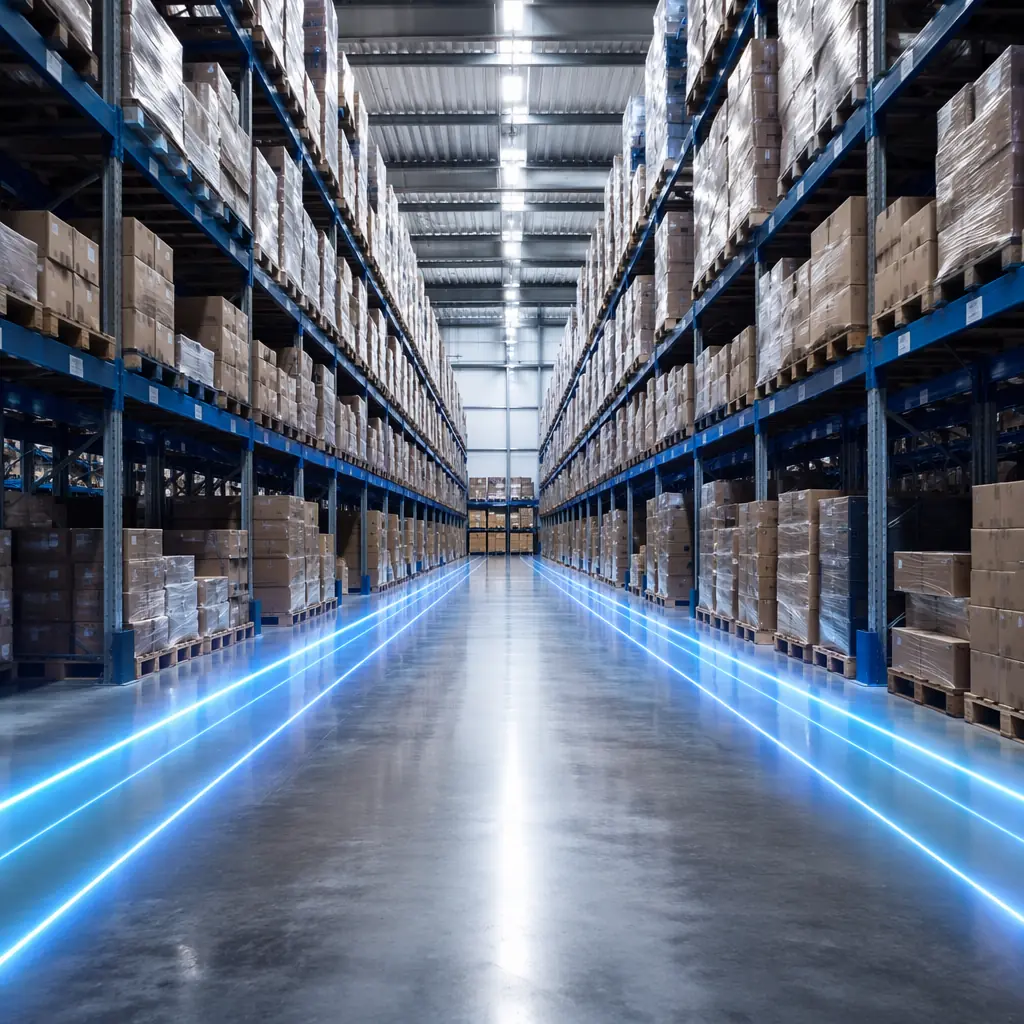
Warehouse automation usually starts at the dock and ends at the pick line. The stretch between, travel, transport, replenishment, is what autonomous mobile robots (AMRs) actually automate.
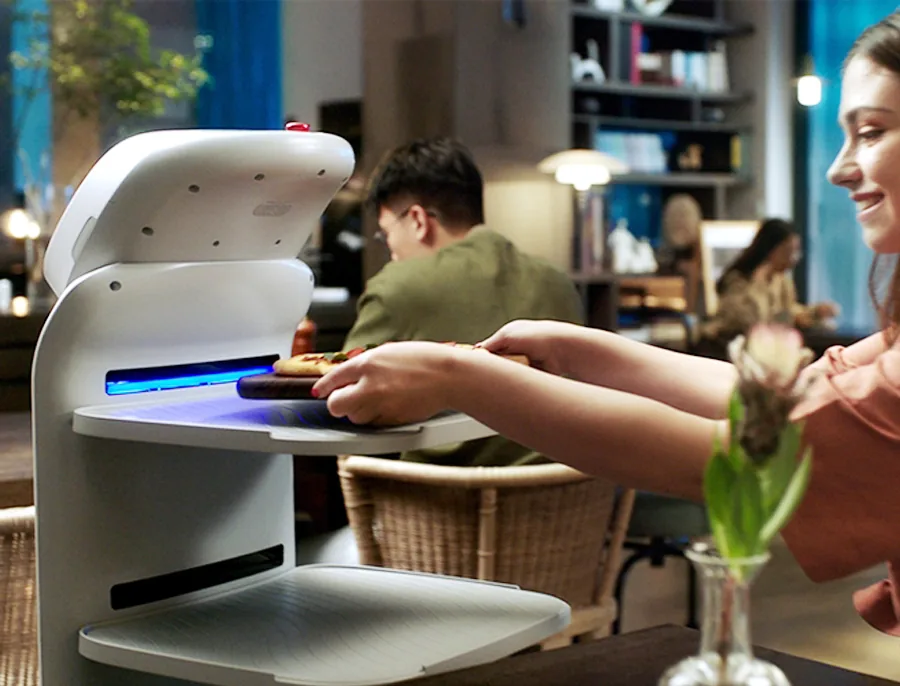
The AOMAN D1 is a 40 kg, four-tray AMR built for exactly this space. This guide covers what warehouse AMRs do, how the D1 fits the major workflows, what integration really takes, and how to pilot a fleet without reorganizing the warehouse around it.
What Warehouse AMRs Actually Do
Three workflows account for most deployments:
Goods-to-person picking. Instead of walking to the shelf, the picker stays at a station and material comes to it. Walking, the part of picking that produces no output, goes to the robot instead.
Line-side replenishment. Components move from the warehouse to the production line on a schedule, so a line never waits on a runner and delivery discipline stays on time.
Finished-goods transport. Packed orders travel from packing stations to the shipping buffer while the packing team stays on the line instead of crossing the facility. The D1's 40 kg payload and four tray positions fit the cart-sized loads of each workflow, and its 70 cm passage clearance handles the narrow gaps between racking, dock doors and office islands that larger carts block.
For a full look at the four-tray design and routing, see the AOMAN D1 product page.
Where the D1 Fits in Each Workflow
Goods-to-person. The D1 runs as the shuttle: pick totes and single-order cartons ride the four trays between the storage zone and the pick station, roughly 10 kg of order per tray position, one static picker, no walking. The robot owns the repetition; the picker owns the judgment.
Line-side. Small-batch components travel on a cadence rather than on demand, and the D1's 70 cm clearance means the unit passes through production gantries and safety walkways that would block a reach truck.
Finished goods. Packing station to shipping buffer in trays, with labels and paperwork riding the same run, a tray per shipment instead of a cart per runner.
What Integration Actually Requires
The robot is the easy part, three layers below it decide whether the deployment pays.
Integration questions are often answered at the site survey, not in the office: the WMS version, the wireless audit the robots will actually run against, the dock power location and the route half-sum are all visible in one afternoon.
WMS/ERP integration
The fleet platform should talk to the warehouse management system bidirectionally over standard API and messaging interfaces: the WMS assigns a task, the robot picks it up, the WMS gets the update. Connectors for the common platforms reduce that effort from months to days, confirm fit with your WMS version before the rollout, not after it.
Physical infrastructure
- Wireless coverage: map the route zones; the moments without signal are the moments navigation stalls. Cover the aisles robots travel, not just the offices. Dock doors, mezzanine junctions and trailer vestibules are the three places signal dies first.
- Charging: dock placement decides utilization. Enough docks at the route boundary lets the fleet rotate through the day; one dock at the far end of the building creates an entire shift of empty runs.
- Floor and route condition: sealed concrete, clear floor transitions and thresholds within the vehicle's rated traction belong in the site survey. Markers at dock doors and junctions help in high-traffic zones even with lidar-based autonomy.
Fleet coordination
A fleet is one system, not eight independent robots: traffic management keeps units from blocking each other at junctions, task priority puts rush orders ahead of routine work, and battery management rotates units to the dock before they die mid-run, all from a single console that also shows the cleaning side of the same platform family. Units ship with the standard compliance pack (CE, FCC, RoHS) and battery transport documentation under UN 38.3, with ISO 9001/14001/45001 behind the platform.
Pilot KPIs: What to Measure
Four numbers come out of the pilot period, and four facts about the site:
| KPI | Why it matters |
|---|---|
| Trip count and payload per trip | The payload-per-trip figure decides how many robots the scale-up really needs. |
| Walking hours removed | The labor line that funds the project, measure it before and during, not after. |
| Exception rate | Interventions per shift: the ratio of autonomous kilometers to logged incidents is the reliability test. |
| Dock and charge utilization | Docks, not robots, are the constraint. Measure how long units wait for a charger. |
Set the targets before the pilot starts. A pilot without agreed numbers is a demonstration with opinions attached.
Pairing AMRs with Cleaning Robots
The pairing that is consistently underestimated: the same platform that moves goods also stations cleaning machines. The AOMAN C1 (2,040 m²/h, 790 mm squeegee, 70 L + 50 L tanks) takes marshalling areas and concourses overnight; the compact AOMAN C2 Pro covers offices and welfare areas on the day shift. Same console, same scheduling. Cleaning windows set where delivery traffic is low, deliveries paused while a zone is wet and drying. See the full product line for how the platforms share one navigation stack and one service relationship.
A Phased Deployment That Does Not Fail
The pattern that works consistently is small:
- Assess: survey the site, audit the WMS, map the flows. Pick the three workflows with the most walking and the least complexity. The highest payback usually sits in the most repetitive work, not the most visible.
- Pilot: two or three units on one workflow. Measure trip counts and staff walking before and after; tune route priorities. The pilot's job is to produce numbers, not to run production.
- Scale: expand along the measured workflow, then add the WMS integration and the second and third workflows. Scale follows data, not enthusiasm.
Every phase is contractible: forgoing the pilot costs less than buying a fleet sized without one. The industry coverage shows how the sequence plays out in different facility types.
The Labor Question
The objection is predictable: the team will not accept robots. The pattern in practice is different. The robot takes the walking, the lifting, the pushing and the fetching; the people who did those tasks are the natural pool for the roles a fleet creates: operator, fleet supervisor, exception handler. That is not merely restructuring. It is why the workforce belongs in the pilot: the people who know which aisle is always crowded can program the route to avoid it on day one.
Three success factors recur in deployments that hold: one robot champion per shift responsible for loading and minor issues; analytics shared with staff so the floor sees the trips it is saving; route adjustments taken from weekly feedback rather than from the vendor's playbook alone.
Training follows the pattern of any equipment rollout: a short session on loading and tray handling for the whole shift, the fleet console basics for the supervisor, and a week of shadowing for the champion. Nobody needs a certificate to load a tray. The people who read the exception log are the ones who need the depth.
The Budget Shape
Cost structures on warehouse AMRs come in two shapes: purchase with a maintenance plan, or subscription. Each hardware unit carries a dock share, a fleet software license, integration effort and preventive maintenance in its real cost, the hardware figure is the smallest line. Illustrative example: a pilot of two robots against one walk-heavy workflow is typically compared against the walking hours and overtime that workflow absorbs; when the route is genuinely transport-heavy and the workflow stable, that arithmetic works out inside a couple of years. Your warehouse will land where its own wage and volume numbers land, get the pilot moving before building the full financial model, and let the pilot's numbers build the business case instead of the brochure's.
Getting Started
The warehouses that see the fastest payback start with two robots on one workflow, three months of data, and then scale. The navigation stack that makes it possible is documented on the technology page, and the site assessment and pilot program start from there.
Two numbers to sign off before any purchase order: the payload-per-trip of the workflow you are piloting, and the walking hours per week it represents. Everything else, dock count, software model, unit count, follows from those two. The site survey answers the practical half too: dock position, power capacity and the current aisle map, the things that take two weeks to fix after they take two nights to notice. A venue with a different traffic pattern, and how the configuration changes for it, is covered in delivery robot selection.
Send your floor plan and current picking workflow, request a warehouse automation assessment.