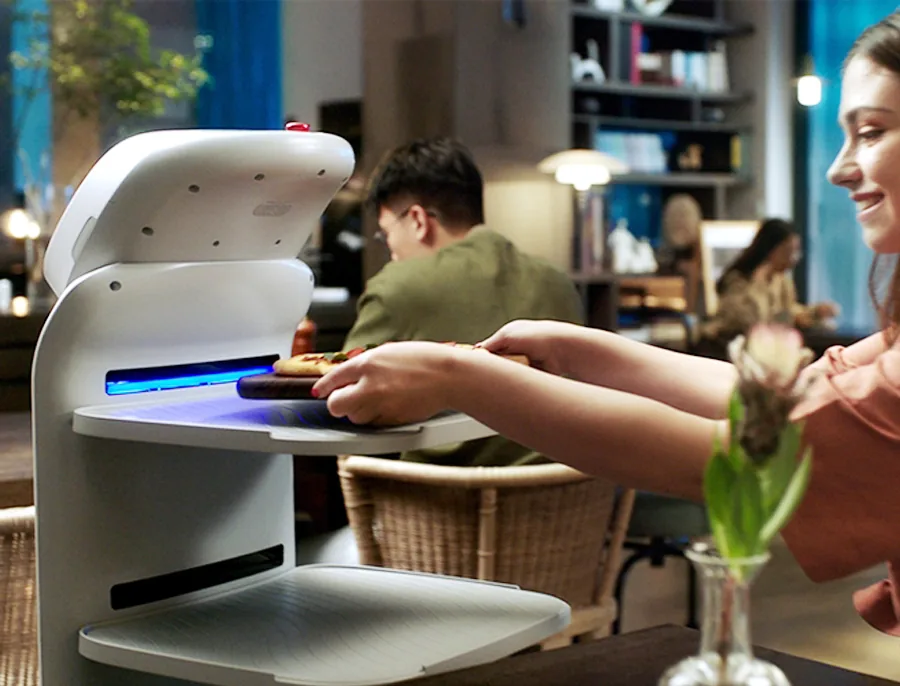
Autonomous Security Patrol Robots, The 2026 Buyer's Guide for Commercial Facilities | AOMAN FUTURE
At a glance: A 24/7 guard post needs roughly 4.2 FTE to cover shifts, weekends and leave; an auto-docking patrol robot covers the same hours on a small fraction of that. This guide covers the technology, the five integration points and the procurement checkpoints.
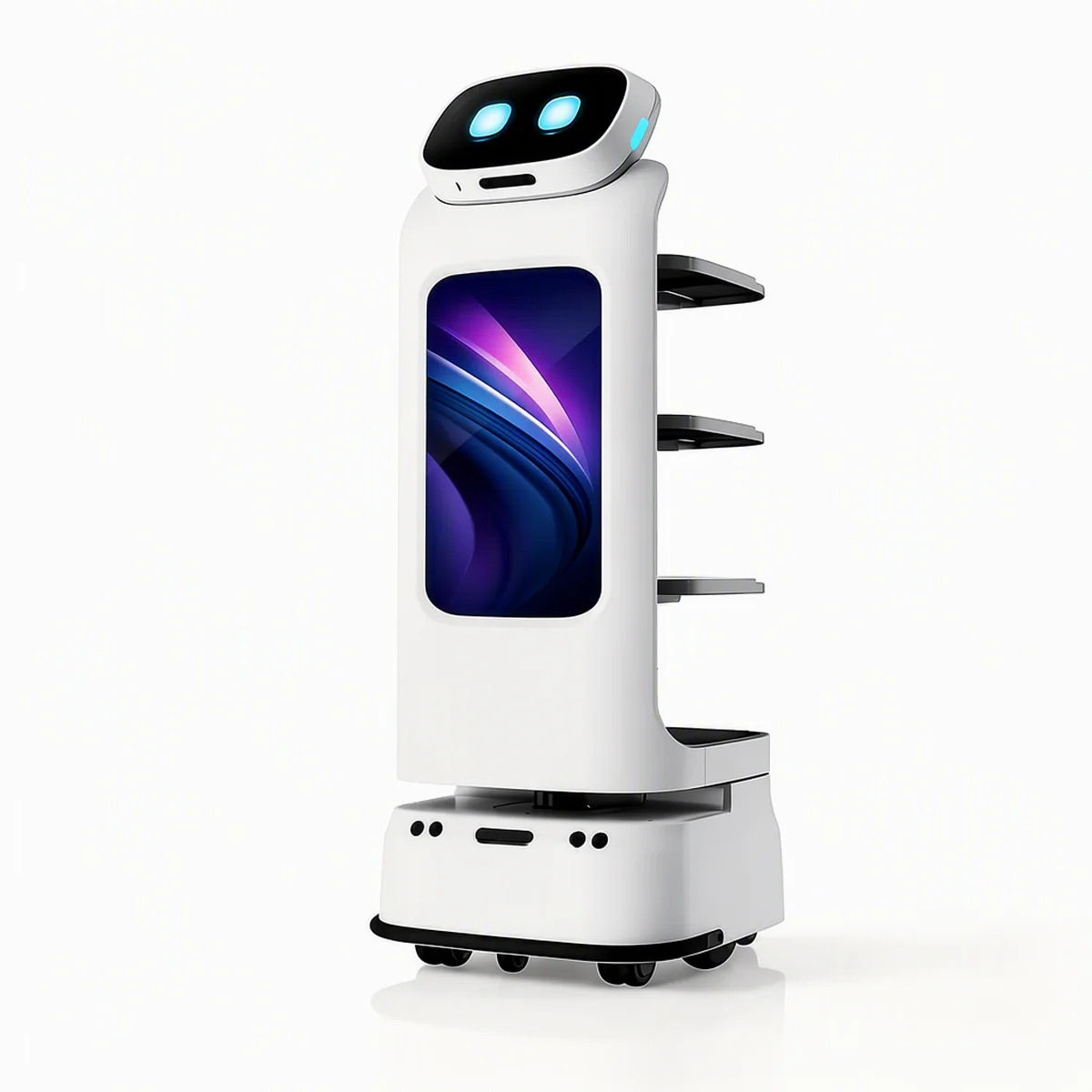
A security director covering a 500,000 ft² campus faces arithmetic that does not favour the roster: 168 hours of patrol coverage per week, against an 8-hour shift at meaningful loaded cost. The night, weekend and holiday hours are the expensive ones, and they are the ones a robot fills without fatigue. This guide is written for security directors and procurement professionals evaluating whether autonomous patrol belongs in their stack, what to look at, what to ask, and the five integration clauses that decide whether a platform helps or becomes alert noise.

Why the Category Matured
SLAM navigation crossed the "escort required" line. Early patrol robots needed a human walking beside them, which defeated the cost argument. Current multi-sensor SLAM, LiDAR, stereo cameras and inertial fusion, does multi-floor autonomous patrol without a handler, using the same architecture that powers warehouse and delivery machines, covered in detail in our SLAM navigation explainer.
VMS and access control now speak the same language. A patrol robot that sees a door open at 2 AM can query the access-control system for the credential that opened it, confirm whether the event is authorised, and only escalate when it is not. That correlation is the difference between a hundred motion-triggered alerts a night and a handful of actionable ones.
Staffing economics moved against the fixed post. Guard turnover is high everywhere and the vacancy math is unforgiving: covering one 24/7 post takes about 4.2 FTE with shift planning, sick leave and leave days, even before the overtime the schedule inevitably produces.
Core Technology: What to Look For
| Component | What to look for | Why it matters |
|---|---|---|
| Navigation SLAM | LiDAR + stereo vision + IMU; 360° field of view | Determines whether the unit patrols autonomously or needs pre-mapped paths that break when furniture moves |
| Thermal imaging | Radiometric camera, 320×240 or better, ±2°C accuracy class | Catches overheating equipment, dark-area presence and water leaks that visible-light cameras miss |
| PTZ optical camera | 30× zoom class, 1080p, wide dynamic range | Plate reading at distance and identification in backlit conditions |
| Anomaly detection | On-device edge inference, adjustable thresholds | The difference between a useful tool and an alert-spam generator |
| Battery and docking | 8-hours-plus patrol class; auto-dock; hot-swap option | A unit that charges four hours per four patrol hours covers half the day |
These are buying criteria, not manufacturer claims, verify each spec against the data sheet of whatever platform you shortlist.
Where ROI Concentrates
Warehouses and distribution centres
Large open floors with aisles and perimeter checkpoints demand walking distances of many kilometres per shift, which caps how often a human can touch each checkpoint. A patrol unit runs the same route several times more frequently and leaves timestamped video at every checkpoint. The same navigation pedigree that drives material-transport machines applies, see our product range for the platforms built on it. The checkpoint-cadence argument is worth making explicit before a demo: ask the vendor to state, per shift, how many times each checkpoint is touched by the unit versus the walked circuit it replaces. The gap is the value proposition.
Data centres
Few people, no public footfall, extreme consequence of a breach. A radiometric thermal pass every 60–90 minutes adds a capability no human guard provides: surface-temperature anomaly detection on racks and cable runs before the anomaly becomes an outage. The unit's patrol log doubles as an evidence record for the facility's own monitoring reports, and the mapping run performed during commissioning becomes a repeatable route for the facility's periodic walk-downs, with timestamps the SOC already trusts.
Corporate campuses
Multi-building campuses with parking structures and landscaped perimeters create routes that take an hour or more on foot. One patrol unit covering the exterior perimeter and parking from evening to morning can replace a meaningful slice of the night-post hours. On campuses that also run a reception robot at the lobby, the two units can share a single dashboard, see our guide on AOMAN G1, the guidance platform built for that front desk role. Corporate campuses are also the case where the machine shares floor with visitors rather than only with staff, which argues for a visible, unobtrusive unit, and for scheduling patrol hours against the building's occupancy peaks rather than against the cheapest hours.
Parking structures
Parking garages are the highest-liability asset on most commercial properties: poorly lit, structurally repetitive, high consequence if an incident goes unchallenged. Continuous documented presence, 360° video, plate recognition, two-way audio at the low-traffic hours, is precisely what these buildings lack. That is also the case for using AOMAN D1-class platforms as the internal-movement backbone: deliveries and escorts that keep a person from leaving a fixed desk.

The Integration Checklist
The most common failure mode in security-robot deployments is not hardware, it is integration. A robot in its own disconnected app adds noise. Five integration points are non-negotiable:
- VMS integration. The unit must push video and alert metadata into your existing video management system, not a separate browser tab.
- Access-control correlation. The unit queries the ACS before escalating; authorised credentials log and continue, anomalies escalate with a video clip.
- Centralised alert queue. Robot alerts join the same queue as camera motion alerts, ACS violations and fire panel events, via SMTP, Syslog or a PSIM-style API.
- Fleet-wide scheduling. One schedule for every unit across every building; three separate apps is three failure domains.
- Compliance-ready audit trails. Every checkpoint and escalation timestamped, geotagged and exportable. This is what the insurer and counsel ask for after an incident, not before.
An Illustrative TCO Comparison
Illustrative model for one 24/7 post over three years, 4.2 FTE of guards versus one patrol robot on a three-year lease:
| Cost category | 4.2 FTE guards (3-year) | Patrol robot (3-year lease) |
|---|---|---|
| Personnel (salary, benefits, overtime) | $1,140,000 | N/A |
| Training and certification | $21,000 | $3,000 |
| Equipment (uniforms, radios, vehicle) | $70,000 | Lease included |
| Robot lease (1 unit, 3-year) | N/A | $180,000 |
| Software and integration | $18,000 | $27,000 |
| Maintenance and support | N/A | $21,000 |
| 3-year total | $1,249,000 | $231,000 |
Assumptions: representative loaded guard cost at the mid-range of published contracting rates, single-post scope, three-year term, and the robot sharing the site's existing VMS licences. The honest conclusion of the model is not "guards are obsolete". It is that the repetitive patrol hours move to the machine while guards shift to verified-alert response and the SOC console, which is where human judgement is actually required. Two further effects belong outside the table: vacancy risk, a single post left open and unfilled for a month is a cost the headcount row never shows, and coverage quality, since a robot touches every checkpoint and a tired guard does not. Neither appears in a lease line, and both are worth modelling with your own turnover data.
Ten-Point Procurement Checklist
- Autonomous navigation proven in your facility class, ask for a reference deployment, not a vendor-office demo.
- Thermal camera radiometric, not monitor-only, resolution and accuracy class on the data sheet.
- VMS integration demoed live into your specific platform, not screen-shared from theirs.
- ACS API documented and matched to your access-control vendor.
- Alert-filtering demonstrated against a recorded night of data.
- Auto-dock and self-charge below 15% battery with resume at 90%, no human in the loop.
- Indoor/outdoor transitions verified if the route crosses building thresholds.
- Cybersecurity posture of the fleet platform. An audited governance standard is the floor, since the unit is a network-connected camera and microphone on wheels.
- Service-level agreement with local response presence. A platform that cannot be reached in your geography is two weeks of downtime.
- Full cost transparency: hardware, software, integration, maintenance and surcharges split line by line.
Timeline Reality
Weeks 1–2: site survey, floor-plan digitisation, coverage audit, VMS/ACS scoping. Weeks 3–4: mapping run and patrol-route definition. Weeks 5–6: supervised autonomous patrol with a human monitor, false-alarm tuning, integration testing. Week 7: go-live with hypercare. Months 2–3: route optimisation and threshold refinement. Month 6: full ROI review against the pre-deployment baseline.
The single most important success factor: the security operations centre owns the deployment. When the SOC owns it, integration compliance happens; when IT drives it without the SOC, the robot becomes an orphaned IoT device.
Where to Start
Tell us your facility type and patrol coverage . Floor area, perimeter length, hours to cover, existing VMS and ACS vendors. And we will set up a reference conversation and site assessment. Request pricing when the scope is clear; the audit-trail clauses above belong in writing before any pilot begins. The zone-by-zone routing and cycle-time side of the same decision is worked through in the commercial cleaning robot buyer's guide.