Service Robots for Data Centers, 24/7 Environmental Monitoring, Security Patrol & Asset Tracking
At a glance: Fixed sensors cannot see the physical layer of a data hall: dust in the aisle, spares on the floor, visitors at the door. An AOMAN C1 scrubs 2,040 m² per hour of raised-floor aisles while an AOMAN D1 moves 40 kg of spare modules in sealed packaging, and an AOMAN G1 handles visitor check-in.
Data centers are the most instrumented buildings on earth, and the least visited by people. Temperature, humidity, power and airflow telemetry stream into the DCIM from thousands of sensors, while the physical layer between those sensors stays quiet: dust building on cold-aisle floors, spares sitting on a staging cart, a vendor asked to sign in at 11 PM. Monitoring gap in a data hall is rarely a sensor problem; it is a physical-world problem that telemetry cannot see.
This guide covers what an AOMAN fleet does in critical facilities: the cleanliness layer, the parts-movement layer and the visitor layer, plus the integration pattern that keeps robot data inside the existing DCIM/BMS. Product figures are AOMAN FUTURE platform specifications; financial figures are illustrative examples.
What robots do that fixed sensors do not
Fixed sensors measure the air and the power rails. The physical layer, floor condition, component movement, who is inside the building, stays human-visible and machine-invisible. Three AOMAN roles address exactly that layer, and all three feed their activity records back into the same operational picture.
The cleanliness layer: C1 in the halls, C2 Pro in the offices
Raised-floor plenums are the moving finger in a data hall: dust migrates through cable openings with every airflow cycle, and gradual contamination on equipment intake surfaces degrades thermal performance over years rather than days. Cleaning in a data hall must therefore be done in a window, and it forms a physical layer of environmental control that no sensor provides.
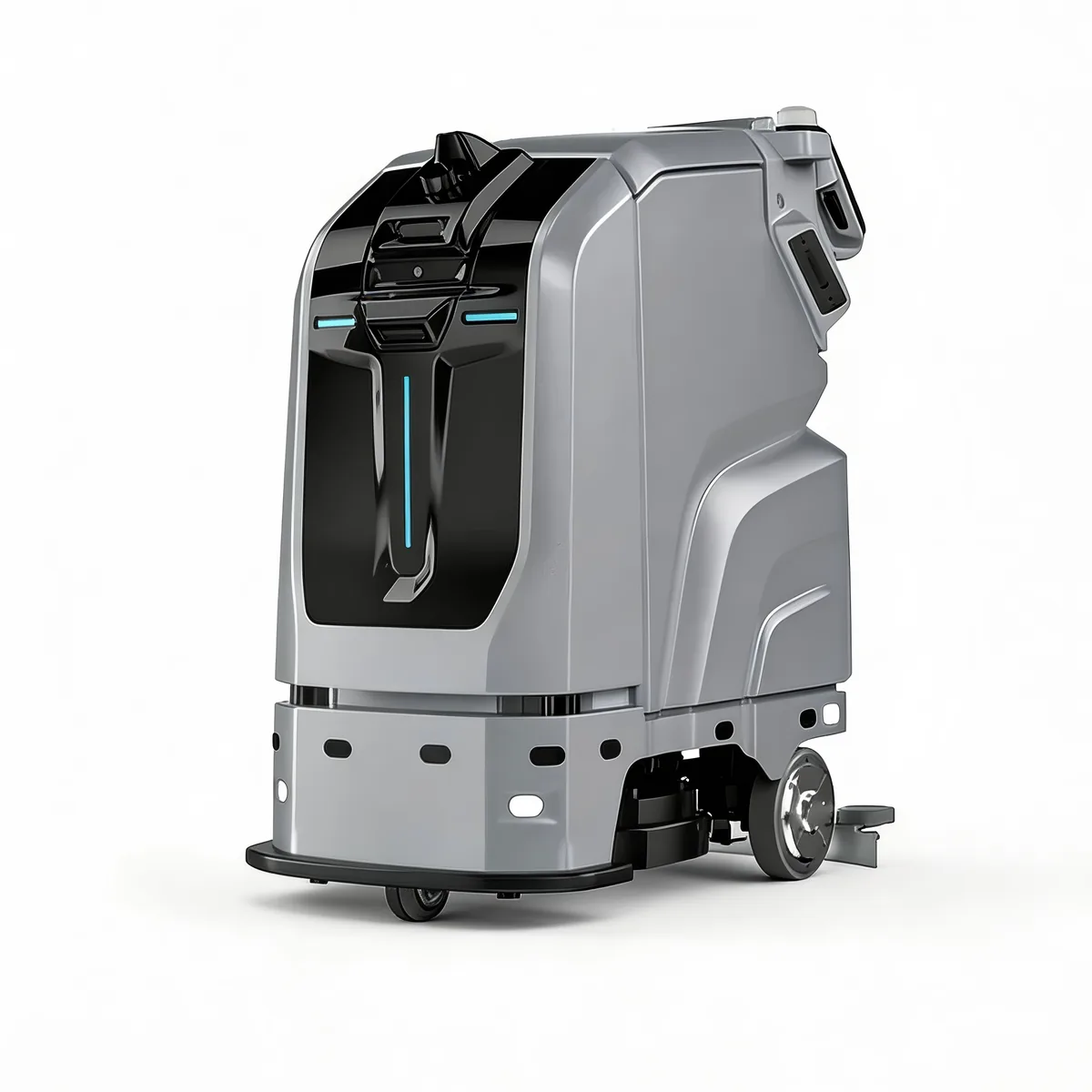
The AOMAN C1 scrubs 2,040 m² per hour on hard surfaces with a 790 mm squeegee and 70 L fresh water plus 50 L recovery tanks, so a full cold-aisle route runs without a mid-shift refill and leaves the floor dry rather than damp. Its natural window is the maintenance window, during non-peak thermal load hours, and the route is programmable per hall. In the control room, office wings and break areas, the compact AOMAN C2 Pro handles the same standard with quiet operation, 85 cm aisle clearance, 70 cm under-desk clearance and modular tanks.
Connectivity in a data hall deserves a sentence of its own: halls contain significant radio energy, and some sections are quiet by design. Robots should not depend on continuous wireless to keep navigating. The map is held onboard and the unit continues along its route, syncing activity records when it reaches coverage. The SLAM navigation overview explains how that works.
The transport layer: D1 for spares and modules
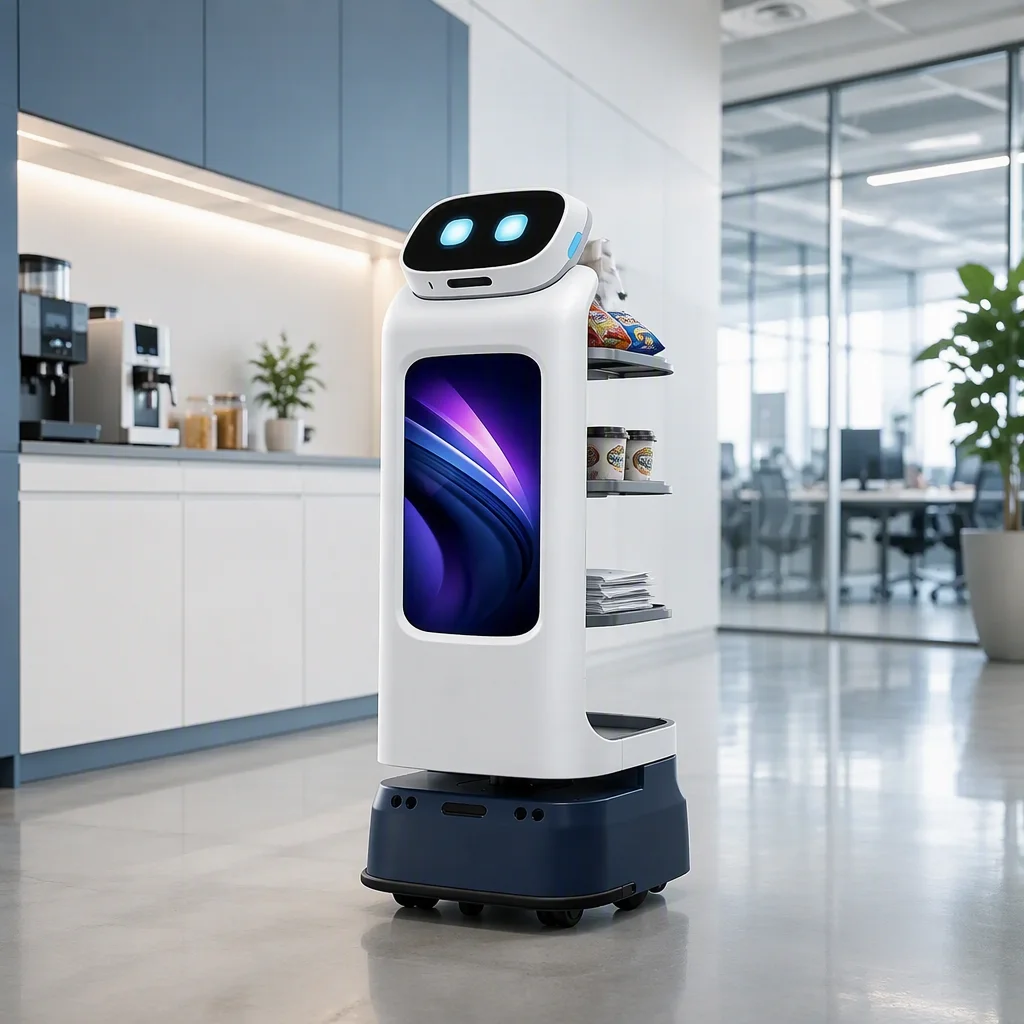
Parts movement inside a facility, a spare PSU from the staging area to a hall, a line card to a maintenance bay, test gear between rooms, is walk-intensive and error-prone: hand-carrying a module through a corridor, unpacking it too early, leaving a staging cart where it was forgotten. The AOMAN D1 takes those runs: 40 kg per trip on a four-tier tray, 70 cm aisle clearance, and route logging for every movement.
The transport protocol that keeps it safe is the one facilities teams already own. Components travel in electrostatic-protective packaging per the institution's ESD control program (the IEC 61340 family is the usual reference), and the robot moves them closed until they reach the bay. The D1's contribution is reducing the number of hands the module passes through and keeping a timestamped log of the move, which the asset base then reconciles against the DCIM record.
The visitor layer: G1 at the front door
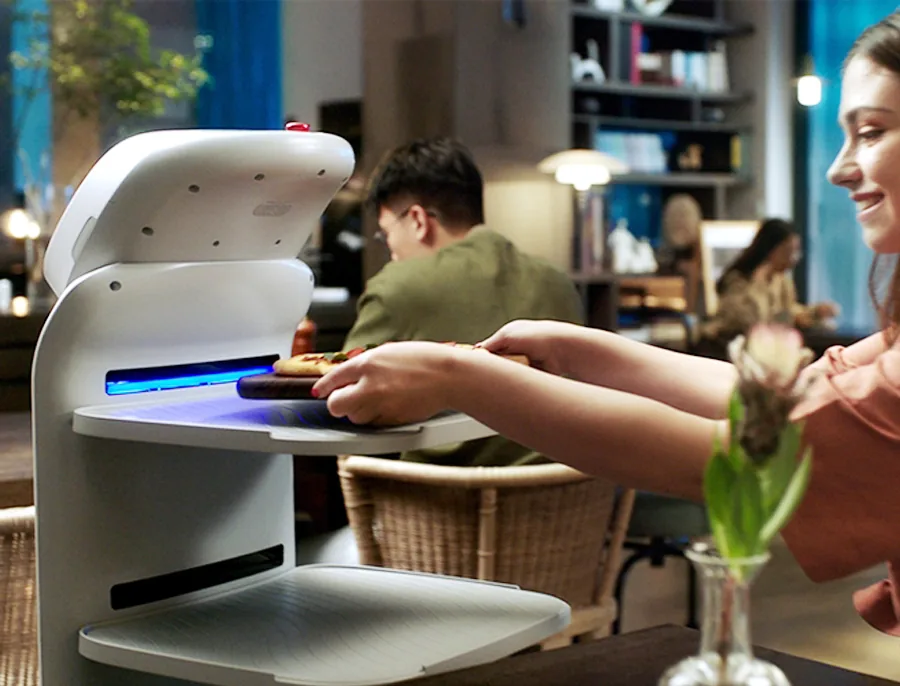
Every critical facility runs a controlled-entry front desk: who is visiting, badging, escorting to the managed area, and logging the visit. That job is staffed at a desk that never sleeps cheaply. The AOMAN G1 handles the recurring part, visitor details capture, check-in assistance, escort guidance to the presentation area or the managed-access lobby, with a six-microphone array at 5 m range, multilingual guidance for international vendor visitors, and a 13 MP camera so the security operator watches the interaction and escalates when needed. It returns to its dock automatically. Badging hardware and door controls stay where they belong. With the access control system; the G1 makes the conversation part of the door flow faster.

Complement the DCIM, do not fork it
The classic failure in facility automation is a second dashboard. Robot activity data, route completion, cleaning coverage per hall, transport logs, visitor timestamps, should land in the reporting layer the operations team already opens. The practical architecture is simple: the fleet management layer exposes event records via standard REST/API endpoints, and the DCIM or BMS vendor-side integration maps them to existing dashboards and alarm workflows. Deployments hold up best when two rules are followed: robot events are visible in the same view as sensor events, and operator commands (pause routes during change windows, send a unit to a hall) are available in the same console.
That pairing matters in another way for auditors: robot-generated route and activity records produce the statement "this hall was cleaned, parts moved from X to Y, visitors handled" as timestamped events, the kind of continuous documentation that weekly paper logs provide only on the day they happen. The platform itself also carries the standard compliance picture for indoor-service robots, CE, FCC, RoHS, and UN 38.3 for the battery pack, alongside ISO 9001 quality management in production.
Security posture at the door: what the robot does and does not do
Door security is a workflow, and the G1 takes the conversation part rather than the enforcement part. The robot captures the visitor's details, assists with check-in, guides to the meeting point and timestamps the interaction; badge issuance, door control, escorting through managed areas and any refusal stay with the access control system and the security staff behind it. That split is a design principle rather than a compromise: a reception unit that enforces nothing must not look like it will, so the honest configuration is a friendly first gate with the enforcement layer visibly behind it. The practical payoff is in the hours when the desk is thin, evenings, weekends, change-window afternoons, when vendor visitors and contractor crews make up most of the door traffic and a recorded, guided conversation is worth more than a sign-in sheet typed after the fact.
What stays with fixed sensors
Robots do not replace thermal probes, airflow measurements, UPS telemetry or power metering, and they should not be asked to. The honest division of labor is that sensors measure the environment and robots act on the physical layer that creates the environment: keeping intake surfaces clean, keeping parts moving on record, keeping the door conversation efficient. For the navigation systems that let units operate in dense rack environments, see the SLAM navigation overview; for available models across roles, see the AOMAN product line.
One habit keeps the division honest: robot events are records, sensor events are alerts. Facilities that blur the line end up paging the on-call engineer at 3 AM about a missed route; that data matters eventually, but it does not belong in the same channel as a loss-of-cooling alarm. Design the integration that way from the start, records into the reporting layer, alarms already handled by the systems that own them.

The economics: an illustrative example
Build the critical-facility case on the lines below rather than on generic productivity claims:
- Cleaning coverage . A 20,000 m² raised-floor footprint is roughly ten C1 hours per full pass at the rated rate, run inside scheduled windows. Compare that against the crew-hours the facility currently allocates to floor-cart work and the interval it currently achieves.
- Parts transport . Model the number of module movements per month, the trips they consume, and the reconciliation time they generate. An illustrative 200 movements per month of 10-minute walks each is 33 hours of walking. The D1 turns that into scheduled runs at 40 kg per trip.
- Visitor handling . The G1's case is the desk-hour offset in the evenings and weekends, when the fastest-growing visitor class, vendors, auditors, contractors, shows up.
Illustratively, a facility moving 200 module-trips a month may find the logistics and coverage math pays for the D1 and C1 units inside a two-year window; the visitor-layer unit is usually justified on coverage quality rather than payroll.
Before procurement, have answers to four facility-specific questions: hall sizes and aisle widths (which decides C1 versus C2 Pro sizing against the rated coverage and 85 cm clearance), the maintenance-window calendar the cleaning plan must respect, the packaging and ESD rules the transport plan follows, and the DCIM vendor's API surface for the event feed. Vendor-side, verify the charging depot siting satisfies the building's battery-safety expectations, certified packs and managed charge cycles, because equipment areas have their own rules about what may be parked in them. The procurement and contract route for getting there is laid out in security and data privacy.
Tell us your hall count, floor plate and movement volumes. We will size a critical-facility configuration and return indicative pricing within 24 hours. Request pricing.