
Service Robots for Chemical Plants & Petrochemical Facilities, Hazardous-Area Cleaning & Operator Safety Automation
At a glance: An AOMAN D1 moves 40 kg of sealed QC samples per trip between process units and the lab on non-classified routes, no operator spends PPE donning time on the support run. Explosion-proof-certified equipment remains the only option inside classified zones; this guide maps the boundary precisely.
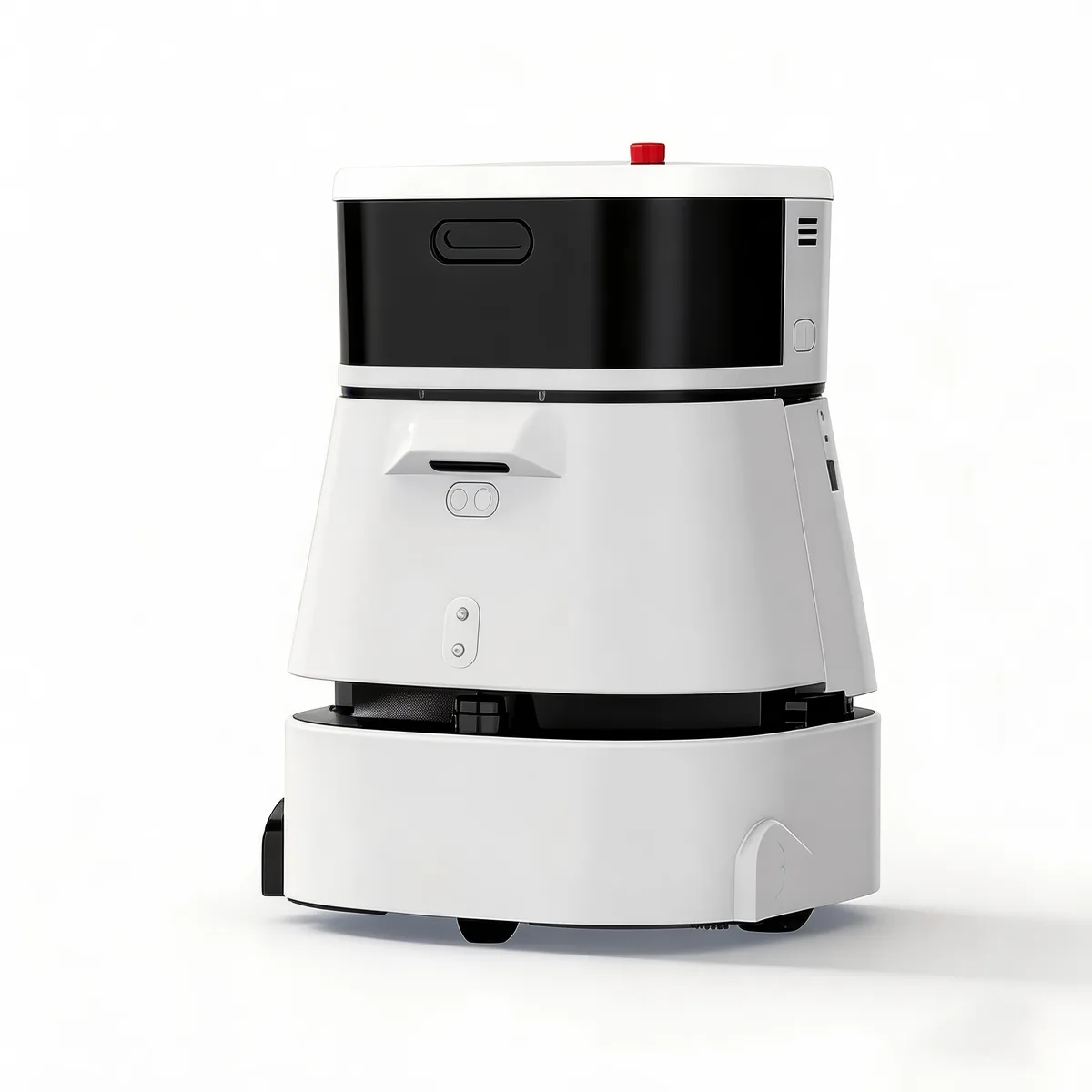
Chemical plants and petrochemical facilities operate under conditions that few other industrial sectors face: classified hazardous areas, continuous operating schedules measured in thousands of hours per year, and a regulatory stack, OSHA Process Safety Management standards under 29 CFR 1910.119, EPA Risk Management Plan rules under 40 CFR Part 68, insurer loss-prevention surveys, that makes documentation part of the job. The position autonomy occupies in this environment is specific. Autonomous service robots fit the non-classified and support side of the plant, and their contribution is measured in hours of classified-area exposure avoided, not in replaced PPE.
This guide sets out where autonomous equipment genuinely helps a petrochemical facility, and where it does not replace certified explosion-proof equipment.
The Classified-Area Reality: What Robots Can and Cannot Do
Hazardous-area classification controls equipment by area. In a Classified area, defined by the applicable classification scheme, with zones or divisions based on the type and persistence of flammable atmospheres, any electrical equipment must be certified for that classification, per the relevant ATEX, IEC or NEC scheme. That requirement extends to every component of an autonomous platform: drive motors, batteries, control electronics, sensors, charging contacts.
If a plant wants autonomous cleaning inside a classified zone, it must procure an explosion-proof-certified platform for that zone; standard service robots are electrically non-exempt and are not a substitute. The practical consequence is that most facilities deploy robots in the everywhere-but-there space: control buildings, QA laboratories, administrative floors, equipment storage, covered galleries and corridors, and outdoor staging areas that are not classified. That is not a small space. The value of the deployment is that support work, sample runs, housekeeping, reception, resupply, stops pulling operators into classified areas for tasks that do not require their presence.

Sample Transport: The Across-the-Plant Walk to the Lab
Process sample procedures have not changed much: an operator collects a sample at the unit, purges the sample line, labels the container, then walks or drives it to the QA lab and back. On a complex that spreads process units across a large site, the sample run is a significant chunk of a shift, travel time plus queuing, before any lab work begins.
The AOMAN D1 takes the travel leg. Operators place sealed, labelled samples into the locked carry compartment, chain of custody intact, with a documented handover at each side, and return to process monitoring while the robot navigates the non-classified route to the lab. The D1's 40 kg payload and four trays handle a full rack of sample containers in one trip, and its 70 cm aisle clearance lets it use the same grade-level walkways the operators use. The lab receives an arrival notification, removes the containers, and the robot returns to its staging point near the next sampling point.
The measured benefit for a plant is time-to-result on the analysis that matters. When a reactor adjustment is held for a melt-index or assay reading, the transport delay directly widens the batch window from sampling to correction. Trim the sample run and the adjustment reaches the process sooner; the value is in product made inside specification, and it is a control improvement, not only a labour saving. For planners, sample-run automation is also the cheapest entry point in a plant: the routes are fixed, the payload is light, and the delivery point is known.
Support-Area Cleaning: Floors That Rarely Get Attention
On a plant, housekeeping in non-classified areas is weak by default because every cleaning priority list ranks process areas first. The result is a control building and corridors that hold dust, chemical film and tracked residue, the same surfaces the maintenance crews walk, and the same floors that slip up staff.
The AOMAN C1 handles the large non-classified interiors: it covers up to 2,040 m²/h with a 790 mm squeegee, 70 L clean and 50 L recovery tanks, and its 85 cm aisle footprint keeps it inside the same corridors as roll cages and pallet trucks. For the control buildings, offices and cabin areas, the AOMAN C2 Pro runs the compact, quiet version of the same job, office-furniture clearance, modular tanks and low noise on a site that never stops.
Outdoor covered bays and gantry areas are the third case: they sit outside the classified boundaries but collect the same dust, and the C1's dry-scrub and wet-scrub passes run on a fixed cycle instead of a when-remembered schedule.

Visitor and Contractor Processing at the Plant Gate
Chemical sites run a constant flow of visitors, contractors and auditors, each subject to entry requirements: induction, PPE state verification, site rules quiz and badge. The AOMAN G1 at the gate or admin building handles the routine part of that flow, multilingual guidance and check-in assistance in the languages the contractor workforce actually uses, delivered through its six-microphone, 5 m pickup array, with the 13 MP camera supporting identity verification against the visitor list. The security role stays with staff; the queue management moves to the robot.
Turnaround Support
Turnarounds are the most compressed phase of a plant's year: the facility stops, thousands of work orders open simultaneously, and the site fills with contractor crews. Floor cleaning during a turnaround is not cosmetic. Walkways and access platforms carrying coke dust, catalyst residue and insulation fibres are slip hazards, and a safety stand-down in a multi-trade, compressed schedule delays cost hundreds of man-hours.
Robots deployed for turnaround support work the same non-classified surfaces as during normal operation: corridors, contractor laydown areas, cabins and the cleaned-out administrative floors. The value during a turnaround is different from steady state: crews rotate faster, the night shift is smaller, and a machine that keeps corridors passable without drawing a man from a work order is exactly what the schedule needs. The deployment model follows the same temporary, high-intensity pattern used on construction projects, bring the fleet in for the window, return it to normal duty when the plant restarts.
Compliance Records: Cleaning Logs as Auditable Evidence
PSM mechanical-integrity programs and insurer loss-control surveys both require documented housekeeping evidence. Paper logbooks have a well-known weakness: they can be completed retrospectively, and no audit can distinguish a real-time entry from one written at shift end. Robot logs close that gap. Every pass carries a timestamp, area covered, cycle duration, solution usage and any interruption, a low battery return, an obstacle stop, a manual override, and the record is generated at execution time.
The same record is the plant's incident-data source. If slips cluster in one covered bay, the log shows precisely when and how often that bay was cleaned, whether the solution type matched the contamination, and whether any pass was interrupted mid-cycle. That turns a noisy P&L line into a defensible answer.

Building the Business Case
The case for support-area automation at a chemical plant stands on three legs:
- Exposure hours avoided. Every support run, sample, resupply, cleaning, that is handled outside the classified boundary is a classified-area entry that never happens. Model it as staff-hours not spent in the environment, and treat that as the headline.
- Time-to-result. Sample transport automation shortens the gap between taking the sample and acting on the result. That is the cheapest process improvement on the site and the one most overlooked in ROI templates.
- Documentation quality. An execution-time log of housekeeping is worth its weight in an audit finding. And it produces the figure that insurers ask for when premiums are set.
Assessing the Site Before the Purchase Order
The site survey is the cheapest engineering work in the whole programme and the step most often skipped. Four checks decide whether a deployment delivers:
- Classification boundaries on paper, not from memory. Pull the current area classification drawings and confirm the corridors, cabins and bays the robots will use sit outside the classified envelope. Classifications change with process changes. A drawing that is a year old is not a drawing.
- The non-classified routes that are actually walkable. Sample runs follow pump rows and pipe racks, but a robot needs clear, level pavement and doorways wide enough for its footprint. Walk every route with the robot's dimensions in hand before promising a fixed schedule.
- Connectivity through steel and pipework. Plants attenuate Wi-Fi aggressively. A site survey should include a live connectivity map across the robot route, the docks included, because a robot that loses its command link becomes a supervised vehicle, and a supervised vehicle still needs somebody watching it.
- Battery duty at the plant's actual temperature. A covered bay in summer and the same bay in January are two different duty cycles for a robot. Confirm the cycle time at the conditions the fleet will run in, not the conditions the demo was shot in.
The output of the survey is a route map, a dock placement plan and a duty-cycle table, three documents that turn a vendor conversation into a scope. If you are planning a first deployment, start small and specific: one sample route between one unit and the lab, and one corridor inside a control building. Send us your site layout. We will mark the non-classified envelope, match the platforms and return a deployment plan and pricing within 24 hours. Talk to our solutions team or browse the platforms. A venue with a different traffic pattern, and how the configuration changes for it, is covered in security patrol deployments.