Service Robots for Commercial Waste & Trash Room Logistics, The 2026 Guide
At a glance: A 12-storey office tower generates roughly 180 kg of mixed waste a day that a crew hauls by hand from 12 floors to a dock chute. This guide covers the two automation levers that actually pay, AOMAN D1 automated waste-cart transport between floors and dock, and AOMAN C1 floor cleaning of trash rooms, chute rooms and loading docks, with the compaction, odour, load-out and ESG-traceability data a facilities director needs.
Waste handling is the least visible line item in a commercial facility, and one of the most expensive per hour worked. A crew of two or three staff push wheeled carts around service cores, load refuse into compactors, haul recycling through a freight lift, and mop a trash room that is wet, odorous and constantly being re-dirtied. In a multi-floor tower the single biggest drain is not the emptying. It is the hauling: moving loaded carts from upper floors down to the dock, often competing for the goods lift with deliveries and housekeeping.
The hours waste work absorbs are also the worst hours. Trash rooms get their heaviest use in the evening and overnight, and the dock is busiest at first drop. These are precisely the shifts that are hardest to staff and most expensive to contract. That combination, fixed, repetitive routes plus hard-to-cover hours, is why waste logistics is now the fastest-growing service-robot use case in commercial buildings.
Where the Cost Actually Sits
Before automating, most facilities mis-attribute the expense. The bins themselves are cheap; the labour that services them is not. Break a commercial waste operation into its real cost drivers and the automation picture becomes obvious:
| Cost Driver | Annual Operating Burden (typical 25,000 m² Class-A tower) | AOMAN Fit |
|---|---|---|
| Waste-cart hauling (floors → dock) | 3–4 staff-hours/day, ~$28,000/yr rotating | D1 automated cart transport |
| Trash / chute room floor cleaning | 1–2 staff-hours/day, odour & slip exposure | C1 large-format scrubber |
| Loading dock & compactor apron | 0.5–1 staff-hour/day, wet debris | C1 with tank separation |
| Recycling segregation & audit | Manual logging, +contracted haulier fees | D1 timestamped runs → ESG log |
| Service-lift congestion | Delays to deliveries & housekeeping | D1 scheduled lift windows |
Across a 25,000 m² portfolio that is often $45,000–$60,000 a year of unglamorous, hard-to-fill labour. For a wider description of how service robots change facilities economics, see our service robot ROI guide.
Automating Waste-Cart Transport with the D1
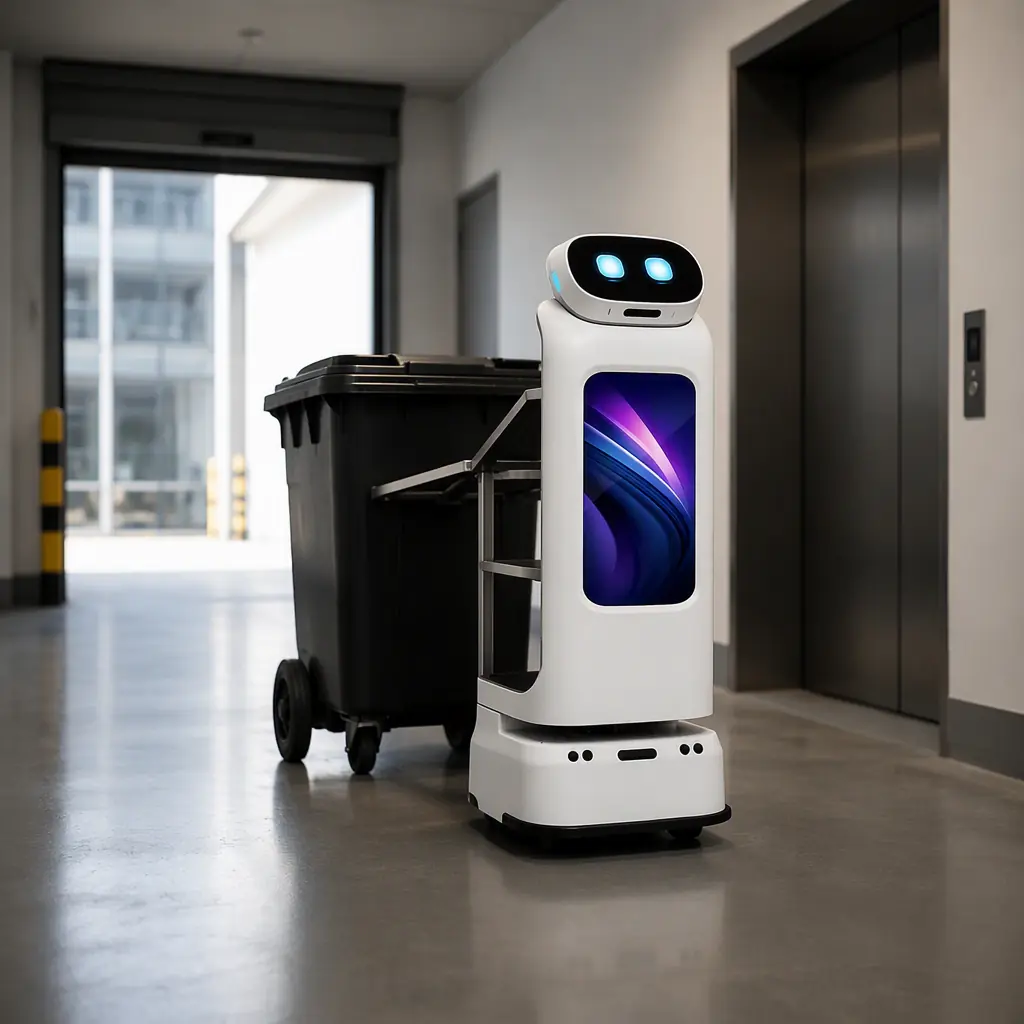
The AOMAN D1 is the transport lever. It carries up to 40 kg across separate trays, so it can move a fully loaded waste cart on a fixed, programmable route, from floor collection points to the dock or compactor, without occupying a person or blocking the goods lift. Because it runs on a schedule, the hauling moves out of the busy morning window and into the quiet hours after the last tenants leave.
For towers, the elevator is the deciding constraint: a unit that cannot call a lift and ride up eight floors is only useful at ground level. D1 integrates with elevator control to run a vertical route, which turns a single ground-floor helper into a whole-building haulier. The route plan, which floors, which carts, what time, is built in the fleet-management platform and can be tuned per collection day.
Trash Room and Dock Floor Cleaning with the C1
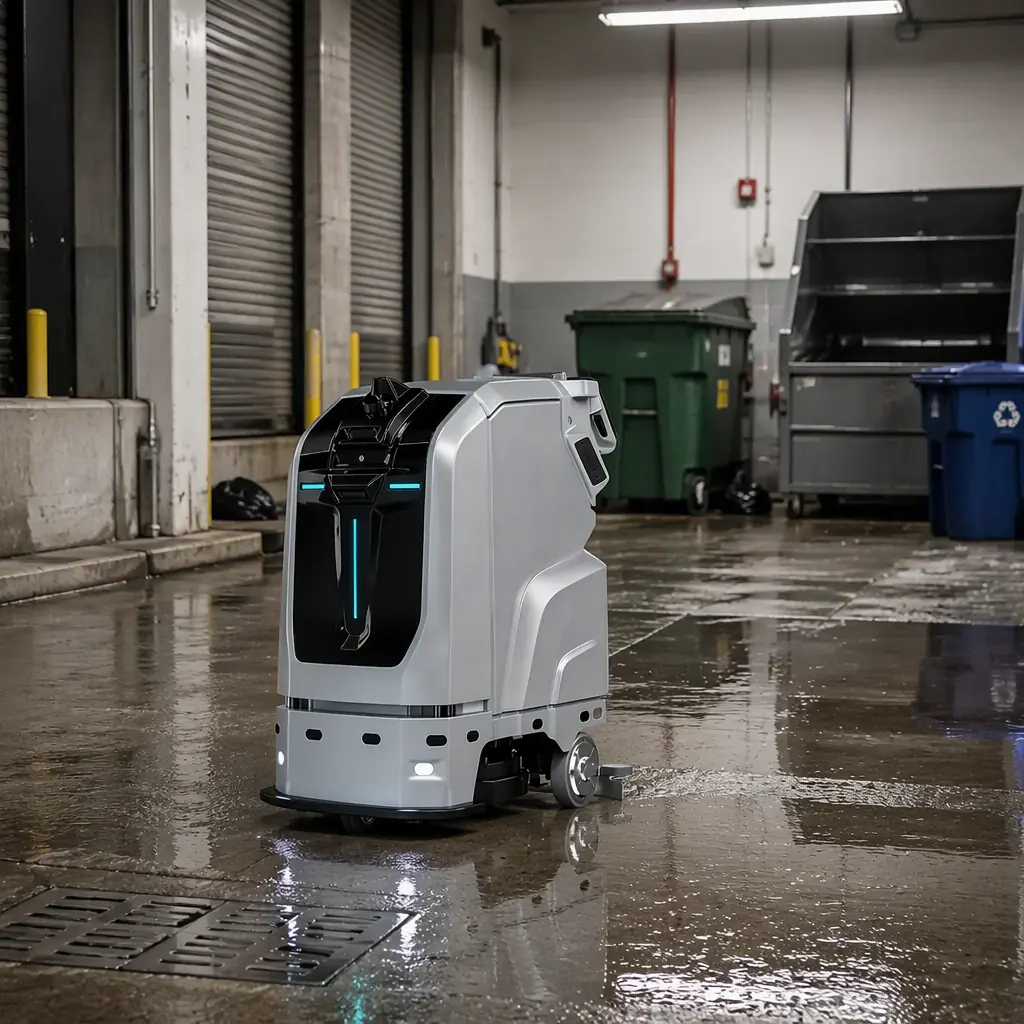
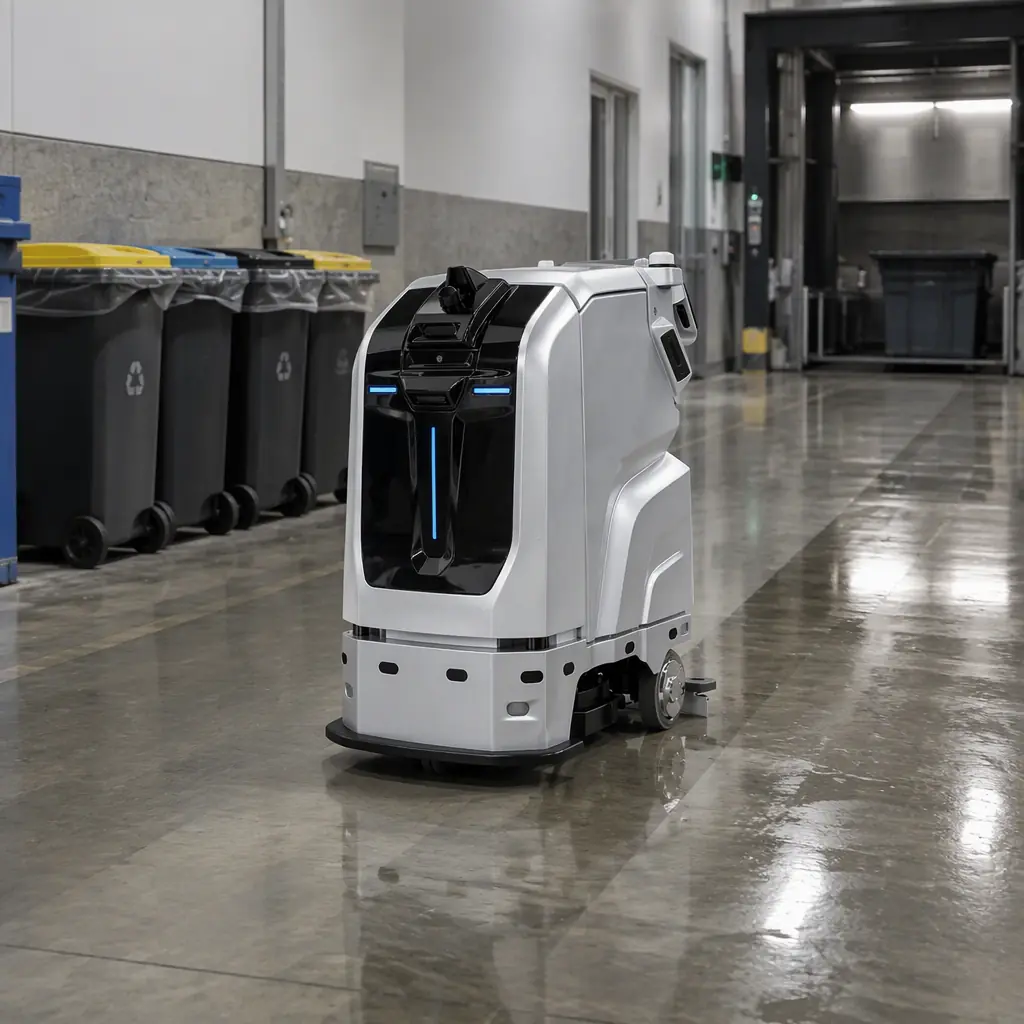
The AOMAN C1 handles the floor half. Trash rooms, chute rooms and the dock apron are wet, stained, and coated with fine debris and leakage. C1 covers up to 2,040 m²/h with a 790 mm squeegee and separate 70 L fresh / 50 L recovery tanks. The tank separation matters in waste areas, because recovered water carries suspended solids and must never be redistributed onto a clean floor. In the tighter rooms where a compactor sits, the compact AOMAN C2 Pro fits 85 cm passages and runs quietly enough for a daytime cycle.
Scheduling Waste Routes to Fit Operations
The order drives the outcome. In a mature waste-automation model the sequence is:
- Route the hauling first . Set the D1 loop on collection days so carts clear the floors before the morning churn. Tower waste peaks after lunch and after the evening commute; schedule around both.
- Clean the rooms on a fixed cycle . A C1 program that runs the trash room, chute room and dock after the last load-out gives a predictable, audit-ready result each day.
- Use the sensor log as the record . Coverage-mapped, timestamped runs replace the handwritten waste log and feed diversion reporting directly.
- Segment the carts . Keep general, recycling, compost and special-waste streams on physically separate trays or carts so contamination never rides in a shared compartment.
Fleets across more than one building need the network and map-sync approach described in our multi-site deployment strategy.
Compliance: Odour, Hygiene and ESG Traceability
Waste work has a regulatory dimension most facilities under-plan. On the hygiene side, trash and chute rooms need documented, repeatable cleaning, a C1 run log supplies it. On the sustainability side, ESG and waste-diversion reporting is now common in leases and corporate reporting, and a timestamped haul + diversion log from a robot is far more defensible than a handwritten sheet.
| Requirement | How AOMAN Robotics Helps |
|---|---|
| Odour & vector control | Frequent the room on a fixed cycle; water-recovery separation keeps slurry off the floor |
| Slip & spill safety | Cleaning during closed hours, documented completion |
| Waste diversion / ESG reporting | Timestamped cart runs + zone coverage map |
| Service-lift etiquette | Dedicated D1 lift windows, no human hauling a cart in a passenger lift |
The wider safety and regulatory context for service robots is covered in our safety standards and compliance guide; the analytics behind coverage reporting sit in the fleet management guide.
Build-Out by Building Type
- Single office tower (12–30 floors): one D1 on the floor-to-dock loop plus one C1 for trash rooms and dock. A two-unit deployment is a defensible first purchase and visible within a month.
- Multi-tenant / mixed-use campus: one C1 per dock cluster, one D1 per collection route, coordinated through the fleet platform per the fleet management guide.
- Unified remote operations: central scheduling and roll-out planning as described in the multi-site deployment strategy.
What to Verify Before Signing
Cart size and weight . Confirm the D1 payload and tray layout against your cart fleet; many operators switch to lighter, modular bins that mate with the trays. Sump and drain access . A dock apron that runs to a drain must be cleanable without the scrubber flooding; check the drain grate rating. Lift interface . Confirm the elevator control protocol your building runs, since not every lift can be integrated. Chemical compatibility . Match wetted parts to your deodoriser and degreaser list. Staff protocol . Schedule the robot into the quiet window, not against the afternoon cart-out, so cleaning runs after the last load rather than competing with it.
The ROI Picture
An illustrative 25,000 m² Class-A tower spending about $52,000 a year on waste-cart hauling and trash-room labour could trade that against a D1 + C1 fleet and keep headroom while structurally removing an evening-shift hiring problem. Model it on your own rates: cart-haul hours are a payroll saving, and the diverted reporting labour plus reduced service-lift congestion are the secondary wins that push payback under 18 months.
The order matters. Transport first. It is the bigger labour win and the fastest to show value. Cleaning second. It is visible and audit-friendly, but it is the quieter of the two savings. Tell us your floor count, collection schedule and dock layout, request pricing on a waste-logistics fleet and we will match unit types and routes within 24 hours.