Service Robots for Ski Resorts & Mountain Lodges, High-Altitude Automation for Seasonal Peak Operations
At a glance: The AOMAN C1 covers 2,040 m²/h, enough to keep a 45,000 sq ft lodge lobby under continuous zoned circuits, while the AOMAN D1 moves 40 kg per trip between the equipment warehouse and rental shop. This guide maps robotics to the compressed 120-day ski season.
Destination ski resorts run one of the most compressed operating cycles in commercial business: a 100 to 150-day season, a staffing model that must be recruited, trained and housed in advance, and guest expectations set by a sector where the on-mountain experience dominates the marketing. When the season staffing does not fill, the resort faces a choice between reducing operating hours and degrading service, both expensive. Service robotics enters this environment not as a payroll substitute but as capacity that does not depend on the housing market, the visa allocation or the onset of winter.
Seasonal Staffing and Service Continuity
The labour constraint at mountain resorts is structural. Workforce housing near the resort towns is scarce and expensive; the seasonal international work programs that historically supplied lodge and food-service staff are capped and oversubscribed; and the traditional workforce demographic, students seeking a cost-free season on the hill, is a shrinking pool facing competing remote and flexible work options. The result is documented and consistent across the sector: resorts enter the season with a meaningful share of positions unfilled, and the shortfall lands on guest-facing functions, lodge turnover, rental fitting, dining hours.
Robots do not solve the housing problem. What they solve is the exposure: the tasks that are physically demanding, low-status and repeated hundreds of times a day are exactly the ones that go unfilled. And exactly the ones a machine can hold at a consistent standard. One unit maintaining a lodge floor on a continuous circuit does not need a bed, a visa or a ski pass.
Indoor Lodge Floors: Water, Grit and the Calcium Chloride Film
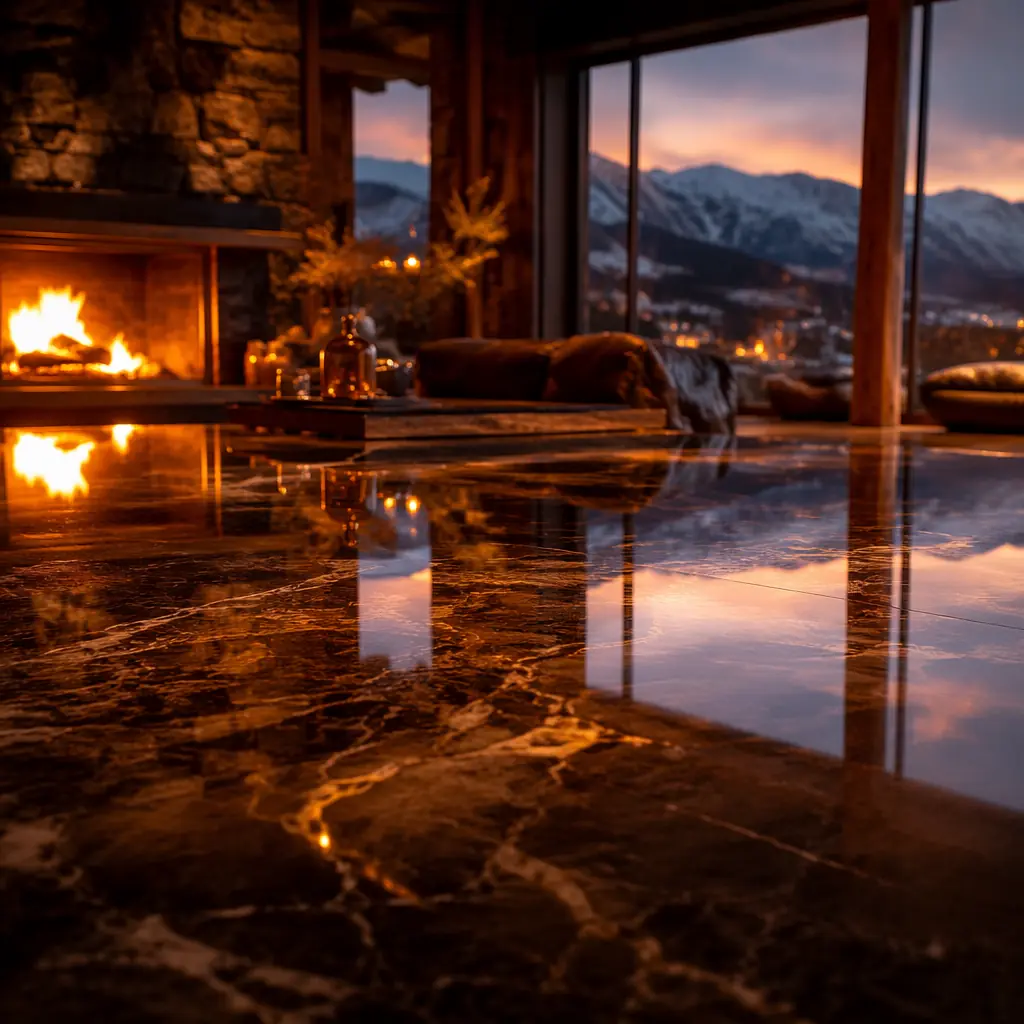
Every skier who enters a base lodge tracks in snow, meltwater and grit. The de-icing compound spread on plazas and walkways: typically calcium chloride or magnesium chloride. Leaves a white crystalline film on indoor flooring as the moisture evaporates. On a high-traffic lodge floor the film reappears within an hour and a half of cleaning, and standing water accumulates continuously during peak window hours.
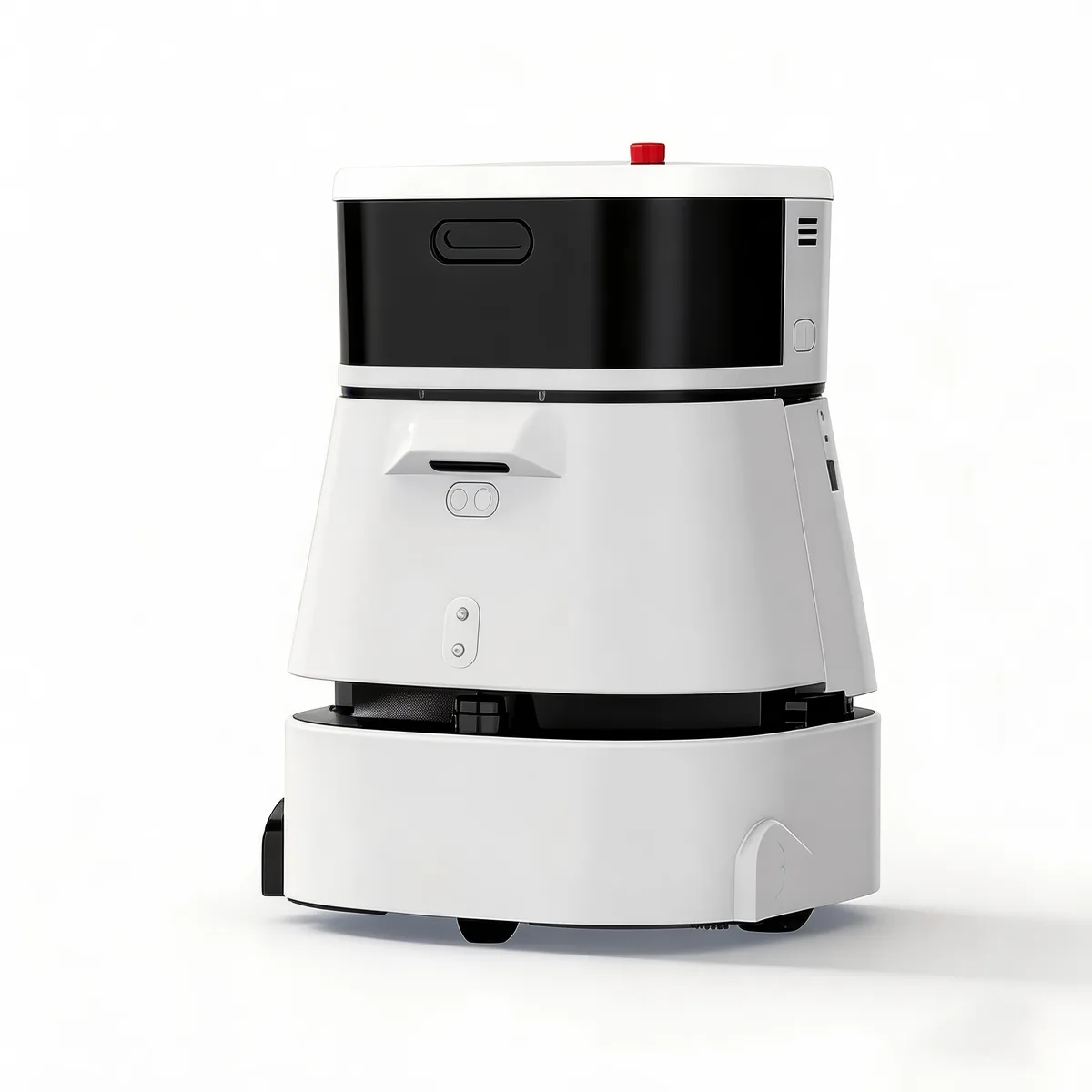
The AOMAN C1 handles the volume: 2,040 m²/h coverage across a 790 mm squeegee, so a 45,000 sq ft lobby is served by continuous zoned circuits of roughly ten to fifteen minutes each, instead of a mop-and-bucketing that runs out of time at lunch peak. The C1's 70 L clean and 50 L recovery tanks, 85 cm aisle footprint and squeegee-first action keep the floor walkable immediately after each pass. For the smaller and quieter spaces, the guest lounge seating, the day-care corners and administrative rooms, the AOMAN C2 Pro runs the compact, quiet version of the same job.
The corrective here is one conversation every operator should have before deployment: the entrance-mat system and the robot schedule are one system. Mats outside and inside the doors absorb the first 40% of the load; the robot maintains what the mats miss. Deploying one without tuning the other leaves a bottleneck no machine can clean its way through.

Outdoor Plazas: The Cold Operability Question
Plazas and walkways between parking, lifts and lodges are snow-cleared by plows and blowers; the residual problem is the de-icing layer and the fine grit that guards it. The honest engineering answer is that a scraping and scrubbing platform works on cleared, mostly dry pavement, in shoulder season, under cover, on the aprons in the morning before the crowd, and does not replace the plow in a mid-winter dump. The line of questions to your vendor for outdoor duty is: what is the low-temperature limit on the drive, the solution line and the squeegee blade; what happens to run time at an outward 15°C below zero; and are blades and wipes cold-rated or just cold-painted?
Where a resort has covered aprons, deck edges and the service yards that pavement plows keep clear, an AOMAN C1 pulls the grit and chloride residue cycle off the morning crew task list. It is the correct scope when the robot is the number-two and high-frequency worker in weather, with the plow and the payloader as the heavy-metal backup.
Ski Rental Logistics: The 7 AM Equipment Rush
The rental shop peak is brutal: hundreds of guests in a two-hour window, each needing boots, skis or a board, poles and a helmet, and the equipment sitting in a warehouse a few hundred yards up the hill. Back-of-house, the bottleneck is not the fitting; it is the resupply cadence from warehouse to shop when the floor bursts at opening.
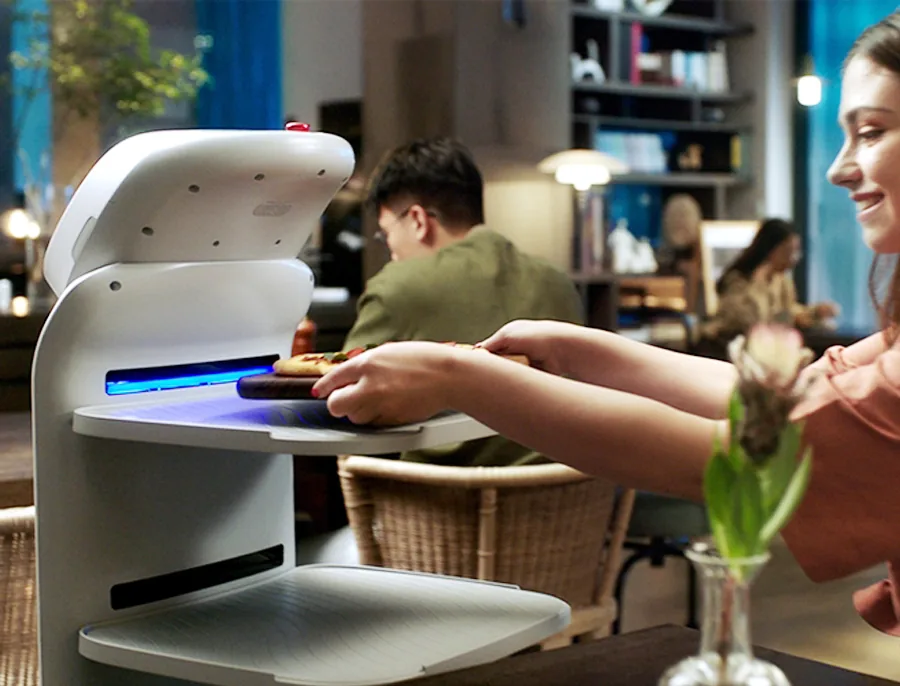
The AOMAN D1 shuttles the route warehouse-to-shop in continuous loops: 40 kg per trip across four trays, configured for ski and boot staging, running between the staging racks and the shop back door. Three units closing that loop during the 6:30-9 AM rush covers a meaningful share of the morning resupply lift, and each trip is one fewer golf-cart round-trip by a rental technician whose time belongs on the fitting bench. The loop is the first place to cut the wait time the guest actually experiences. And the wait time is where the queue forms.
Guest-Facing Service in the Lobby
Peak check-in at the slopeside hotel, 1 to 4 PM on peak Saturdays, brings a wall of arrivals through the lobby, most of them with straightforward pre-paid, pre-booked itineraries, and a hard shoulder of exceptions: room changes, wrong bed types, ski pass questions. The AOMAN G1 absorbs the queue's high-volume, low-complexity core: multilingual greeting and orientation, luggage and lift-status guidance, check-in assistance through its touch interface, with six-microphone pickup at 5 m range and automatic return to the dock when the lane runs quiet. The human hosts get the exceptions wall cut to a short, manageable queue, the queue with the hard cases, not the queue of confused arrivals.
A Seasonal Fleet Model: Paying for Function, Not for Months
The uncomfortable truth of ski-resort robotics is the season: 100 to 150 operating days, then a parking lot for eight months. A capital purchase prices per-year capacity while the resort consumes per-season, so the financing question deserves as much attention as the platform question. Leased or as-a-service agreements treat the fleet as seasonal capacity: the monthly cost counts against the revenue months, the vendor handles storage and winterization between seasons, and the resort retains the option to rebalance unit counts the following year. An illustrative example: a 320-room resort with four base lodges, a rental shop and 120 operating days, scaling toward roughly nine units, four C1 for lodge and plaza-edge duty, two C2 Pro for the lounge and admin areas, three D1 for the rental shuttle and resupply loops, at a seasonal lease cost best estimated against the three line items the alternative requires: the lodge floor-keeping crew, the rental-shop cart loop and the lobby coverage the staffing pool cannot fill. Request seasonal pricing with your operating-days figure, and the quote arrives as a per-season number, not a per-year one.
| Function | Platform | Units | What it covers |
|---|---|---|---|
| Indoor lodge floors | AOMAN C1 / C2 Pro | 4 / 2 | Lobbies, lounges and admin areas on continuous zoned circuits |
| Plaza and covered apron edges | AOMAN C1 | 1 | Grit and chloride-film removal on cleared, dry surfaces |
| Rental and resupply shuttle | AOMAN D1 | 3 | Warehouse-to-shop loops and back-of-house resupply |
| Lobby arrival guidance | AOMAN G1 | 1-2 | Multilingual check-in assistance and mountain orientation |
An Off-Season Implementation Roadmap
Robots arrive on a mountain either during the off-season or during the staffing crisis that motivates them. And only one of those is a good idea. Run the deployment in four phases, scheduled against the pre-season windows.
Phase 1, late spring: mapping and cold-rating
Map the lodge interiors, plaza edges, service roads and warehouse routes in the quiet months. Confirm the Wi-Fi coverage the units will depend on, and cold-rate the platforms that will see outdoor duty, the limits sit in the solution line, the squeegee blades and the drive materials, and all three need a documented temperature figure before autumn.
Phase 2, summer operations: the lodge pilot
Mountain resorts run summer revenue, biking, hiking, weddings, events, on the same lodge assets. That is the practical pilot: real guest traffic without the ski-season crowd. Run the C1 in two lodges through the summer season, tune the zone profiles and pass cadence, and record cleaning measurements before the snow flies.
Phase 3, shoulder season: logistics and plaza edges
Deploy the D1 rental shuttle and the C1 on the covered aprons. October days validate the cold behaviour no summer demo can. And the data that emerges decides how many units come back for January.
Phase 4, pre-season: the arrival lane and go-live
Install the G1 in the lodge lobby, connect it to the property management system for check-in assistance, train the front-of-house team, and go live at first snow. The pilot metrics, cleaning coverage, delivery loops, arrival-assistance volume, then carry the renewal decision instead of the brochure.

If your season starts in December, the planning window starts earlier than the planning season. Send us your lodge square footage, rental-shop volume and operating-days figure. We will return a platform and seasonal-financing plan within 24 hours. Request pricing or view the full platform range. A venue with a different traffic pattern, and how the configuration changes for it, is covered in hotel and resort deployments.