Service Robots for Courier & Express Logistics Hubs, Automation Guide for 2026
At a glance: An AOMAN D1 carries 40 kg across four tray positions, a sorter output accumulation in a single run, and can route a 300 m sorter-to-staging leg in about 5 minutes. This guide covers hub parcel transport, continuous cleaning, and the architecture that ties them to your WMS.
Modern express logistics hubs run sortation at high line speed for 22+ hours a day, yet the floor in between still moves on foot: parcels must travel from sorter output chutes to outbound staging lanes, including typically 80-300 m across the facility, and that leg is walked by people. The result is the classic throughput mismatch: sortation runs flat out, while floor transport paces the whole facility. This guide covers the three robot applications that close that gap, parcel transport, continuous cleaning, and inter-building courier runs, plus the orchestration layer that makes them work against existing conveyor and warehouse systems.
The Sorter-to-Staging Gap
Sorters are deterministic: tilt-tray and cross-belt systems handle thousands of parcels per hour at steady rhythm. The gap appears at the handoff. Output chutes deposit parcels, and someone must carry them to the right dock lane, in the right sequence, within the trailer-loading window. Hand-volume based transport introduces two failure modes: variability (a walker's cycle time varies with congestion, breaks, and shift change) and fatigue (the walking is hardest precisely when traffic peaks, so it goes fastest at the worst moment). As an illustrative calculation: an 8-hour sortation window with 90,000 parcels, a 250 m average leg at walking pace being roughly 6-8 minutes with human cycle overhead, and robot circuit time of about 4-5 minutes, properly sized robot counts absorb the same distance in steady, predictable intervals:
- Parcels arrive at staging in consistent intervals rather than burst-and-lull waves, so dock supervisors can plan trailer loading against a rhythm, not an estimate.
- Walking kilometers and the associated injury exposure shift from people to machines. In a facility where the floor is shared with forklifts and pallet jacks, that is a safety argument, not just a cost one.
Three Robot Applications for Express Logistics Hubs
1. Automated Parcel Transport: Closing the Sorter-to-Dock Gap
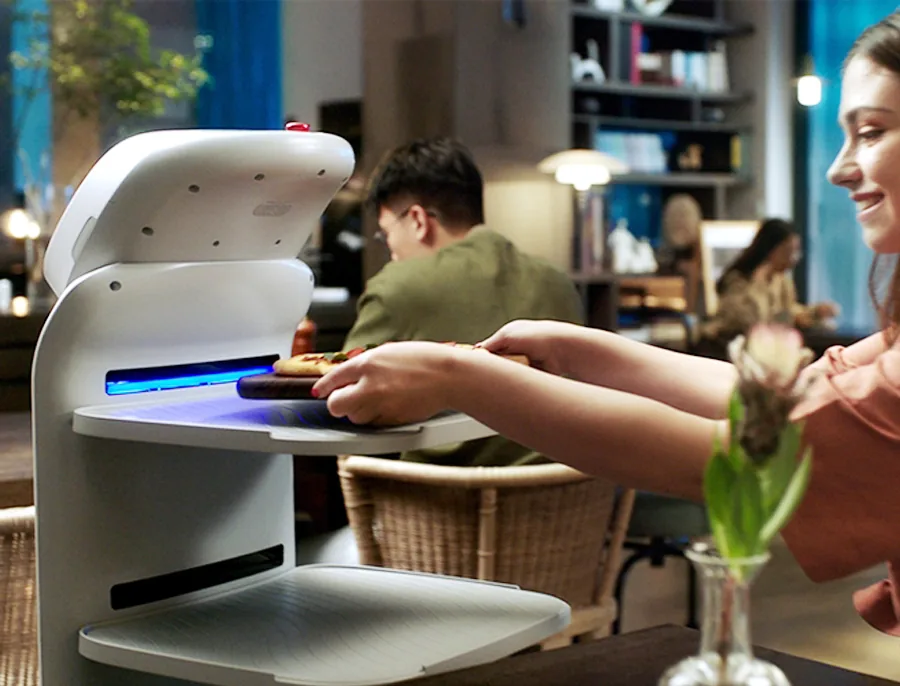
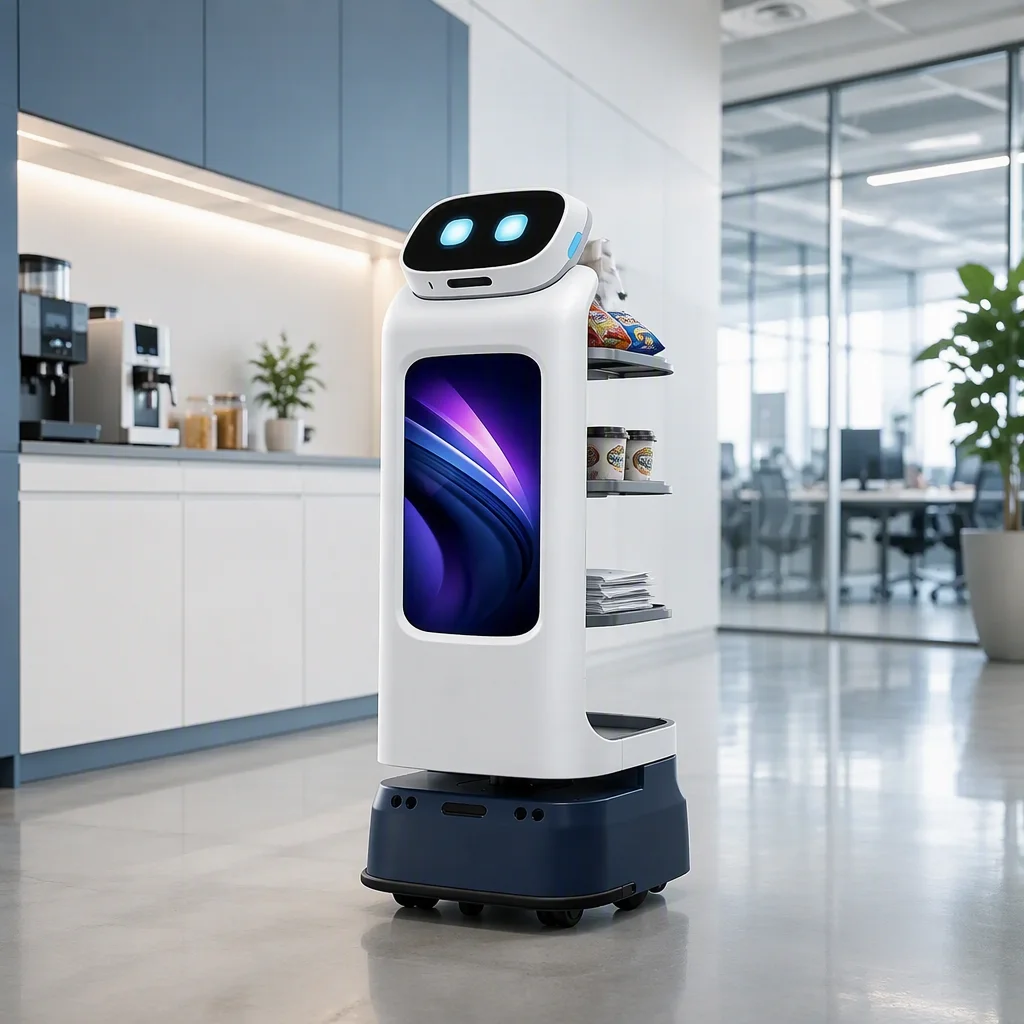
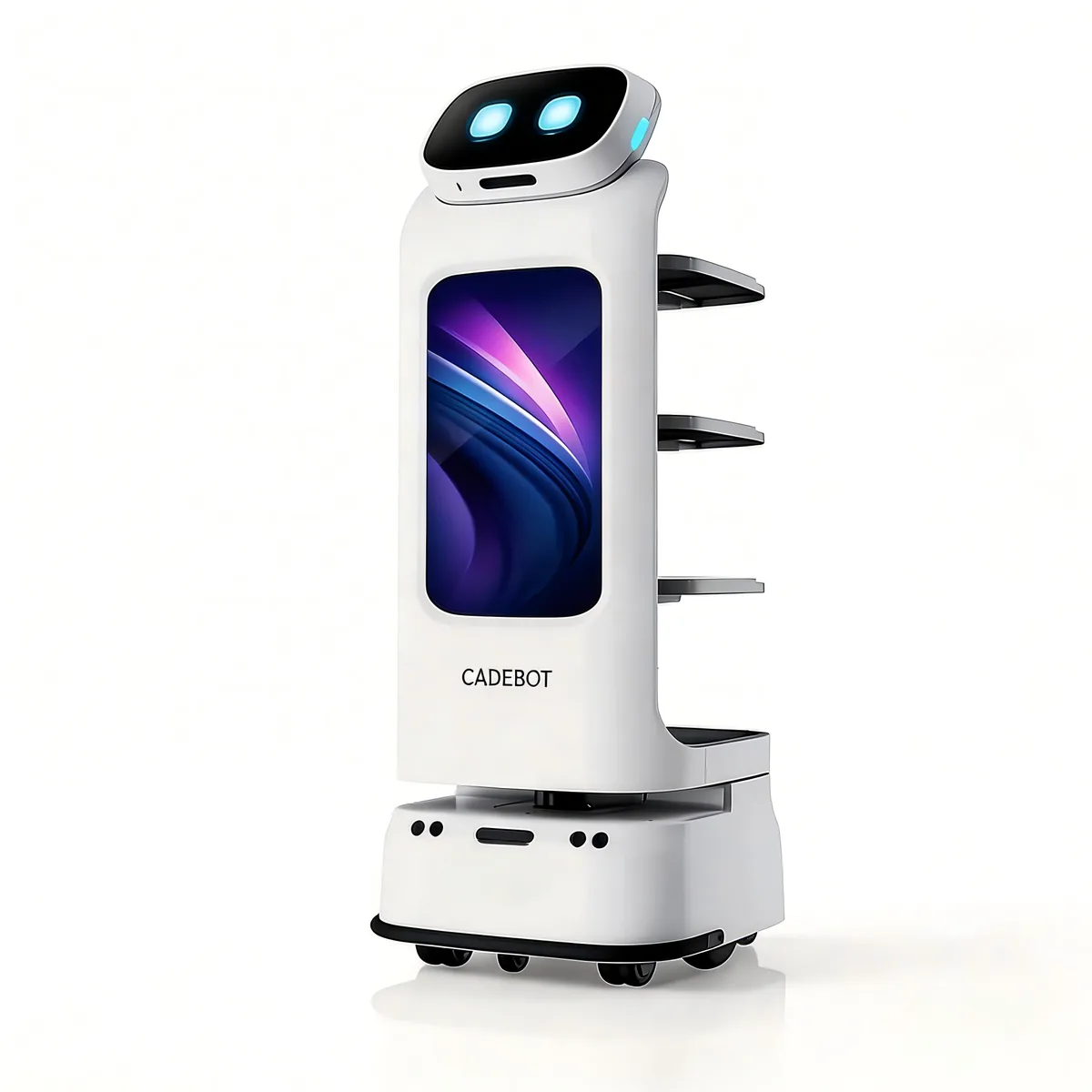
The highest-value application is moving parcels from sorter output stations to outbound staging. A single AOMAN D1, with four tray positions in an open configuration, transports up to 40 kg per trip across routes designed for its 70 cm aisle clearance, meaning it threads between conveyor legs, staging pallets, and dock walkways. At a hub processing 90,000 parcels per 8-hour sortation window, a small fleet of D1 units eliminates the equivalent of several marathon-length walking shifts per day from floor staff and removes them from forklift lanes. Each trip's tray positions correspond to different destination dock lanes, so mixed loads route to multiple staging areas in one tour.
2. Facility Cleaning in 24/7 Environments
Express hubs never truly close. The gap between the last outbound sort and the first morning receiving is only a few hours, not enough for a manual deep clean of tens of thousands of square meters of floor. Cardboard dust, pallet-jack tire marks, and spillage from damaged parcels accumulate continuously during the operating day.
The solution is cleaning alongside operations, not after them. An AOMAN C1 covers 2,040 m² per hour with a 790 mm squeegee head, a full large-zone pass within a sortation window, while the AOMAN C2 Pro (85 cm aisle clearance, quiet run, modular tanks) handles the tighter zones: mezzanines, admin corridors, and break rooms where it can operate unnoticed beside active staff. Spot detection matters as much as coverage: spill detection triggers a fast response to the damaged parcel before the leak spreads across the lane. Over a 22-hour operating day, a handful of units covers the full floor area continuously. The machine labor-hours are simply zero, and the night-shift deep clean focuses on what machines cannot reach.

3. Inter-Building Courier Runs
Logistics campuses with multiple buildings, administration, customs clearance, separate inbound and outbound facilities, require constant movement of documents, airway bills, and small high-priority items between locations. The AOMAN D1 navigates the paths between buildings, including ramps, uneven pavement, and weather, where indoor-only platforms cannot go. Same rules as the floor runs: tray positions per destination, logged at every handoff, forty kilograms per trip.
Fleet Orchestration: Integrating Robots with Conveyor Systems
The technical difference between successful hub deployments and failed pilots is real-time integration with existing material handling systems. When a sorter diverts a parcel to a robot queue, the handoff message, parcel dimensions, weight, destination dock, travels to the fleet management layer within a few hundred milliseconds of the divert decision, and the fleet server assigns the nearest available robot with sufficient capacity, generates a route that avoids active forklift lanes and congested cross-docks, and monitors progress over the facility's existing wireless infrastructure.
This integration runs over the protocol backbone the facility already uses for conveyor PLCs, scanners, and the warehouse management system. MQTT or OPC-UA. If the WMS and conveyor network already speak that language, the robot layer joins the same conversation; if the hub's material handling controls are proprietary and closed, budget integration engineering as its own line item before the purchase decision. For the orchestration architecture itself, task assignment, routing, telemetry, start with the hardware that makes it measurable: the machine room of the robot fleet is its dispatch console.
Safety Integration: Robots in Mixed-Traffic Environments
Courier hubs are among the hardest mixed-traffic environments for autonomous navigation: forklifts move well above walking pace, pallet jacks cut across pedestrian lanes, and conveyor cross-walks create pinch points. The navigation stack must process dynamic obstacles in real time while maintaining a buffer from all powered industrial vehicles. AOMAN's suite, 2D/3D lidar, depth cameras, ultrasonic proximity sensors, maintains a 360-degree occupancy grid at 20 Hz; when a forklift enters the safety zone, the robot executes a predictive stop: it calculates the approaching vehicle's trajectory and moves to the safest adjacent position, then resumes once the hazard clears. Logistics-grade navigation behaves this way; consumer-grade obstacle avoidance does not, and those are different classes of machines, do not accept the latter in a hub.
12-Month Economics: An Illustrative Model
The table below is an illustrative model with stated assumptions for a mid-size regional hub at 90,000 parcels/day with 180 sortation staff, using typical lease rates and regional wage levels: every line is a point of negotiation, and the shape of the result (not the specific figures) is what matters:
| Cost Category | Illustrative Year 1 | Benefit Category | Illustrative Year 1 |
|---|---|---|---|
| Robot fleet (6 delivery + 4 cleaning, lease) | $260,000 | Labor cost avoidance (12-14 FTE equivalent) | $500,000+ |
| Conveyor integration and facility modifications | $60,000 | Turnover reduction (fewer floor replacements) | $100,000+ |
| Staff training (operators, super-users) | $25,000 | Throughput gain (more parcels/day at same labor) | $150,000+ |
| Maintenance contract | $20,000 | Injury-cost avoidance | $40,000+ |
| Total first-year cost | ≈ $365,000 | Total first-year benefit | ≈ $790,000+ |
Break-even lands inside the first year in this model, with labor-cost avoidance the dominant driver, and the throughput gain the compounding one, because it flows from the same sortation infrastructure. Your hub's numbers depend on your parcel mix, wage rates, and lease terms.
Implementation Roadmap for Logistics Operators
Phase 1 (Months 1-2): deploy 3-4 delivery robots on a single sorter output zone. Map the facility floor, establish the conveyor-handoff protocol, and train 10-12 floor supervisors as robot operators. Focus on data: route completion times, intervention frequency, integration stability.
Phase 2 (Months 3-5): expand to all sortation zones; add 2-3 cleaning robots operating during active sortation; connect task dispatch to the WMS so delivery runs trigger off sorter output volume.
Phase 3 (Months 6-12): scale to the full fleet; add inter-building courier routes; establish KPI reporting, parcels per robot-hour, cleaning coverage, safety incident correlation with robot traffic density.
Change management note: floor workers' response follows a predictable arc. Skepticism in week one, acceptance when the robot takes the worst of the walking, and active reliance once staff focus on higher-skill sorting tasks. Facilities that run hands-on robot training with supervisors during week one see faster adoption than those that deploy without structured training; see the guidance in our change-management playbook on human-robot collaboration.
The question for courier operators is no longer whether robots belong in the hub floor. It is which of the three applications to start with, and how fast integration can be built. Tell us your sortation throughput, your floor layout, and your existing conveyor and WMS stack. We will size the D1 and C1/C2 Pro mix and quote the integration scope. Request a hub assessment, or see the broader automation picture on our smart logistics page. A comparable deployment with different traffic, dock and shift constraints is documented in airport and transit hub deployments.