Service Robots for Cold Chain & Cold Storage, Autonomous Operations at Sub-Zero Temperatures
At a glance: An AOMAN D1 moves 40 kg of picked case work per trip through freezer aisles on four trays, while the low-temperature AOMAN C1 config maintains 2,040 m²/h of ice-prone floor on continuous cycles. This guide covers cold-ready hardware requirements and a 90-day pilot structure.
Cold storage facilities operate at -18°C to -25°C, and the conditions shape every part of the labour equation: workers rotate between short freezer stints and warm-up rooms, exposure is limited per shift, and the jobs that stay inside the cold are the ones that tend to stay unfilled. Yet the facility itself cannot pause, frozen goods move on schedulers, and the floors build ice from condensation, rigging and door-seal leaks. This guide covers what a cold-chain facility should ask for when it buys autonomous robots, and how a first deployment should be structured.
Why Freezer Automation Is a Different Purchase from Ambient Automation
An autonomous robot in a freezer zone is not the same product with a fur-lined casing; it is a different configuration with specific engineering requirements. Four areas decide whether a platform works at -20°C at all:
Battery and thermal management. Lithium cells lose effective capacity at low temperature, so cold-chain configurations keep cells warmed during operation and at the dock, often with a cell chemistry selected for its low-temperature profile. Hot-swappable batteries let a depleted pack be exchanged at the dock for a charged, pre-warmed one instead of charging inside the freezer. And the swap point should be outside the cold room so staff do not enter the freezer twice.
Condensation management. The trip between freezer and ambient zones condenses moisture on electronics. Sealed and vented compartments with desiccant handling prevent internal condensation; this is a requirement to verify in the test protocol, not a feature to assume.
Drive-train materials. Standard greases stiffen at low temperature, raising motor current and wearing components. Cold-rated lubricants and seals rated below the operating temperature are part of the specification, and the lead time to verify the exact part-list temperature rating is worth the schedule hit.
Floor contact. Ice films on freezer floors reduce friction coefficient, so cold-chain units need traction-aware speed control and squeegee and brush materials that stay flexible at operating temperature. Ask to see the result, not the brochure.

The Three-Robot Model for a Cold Storage Facility
Role 1: Transport between pick and staging, AOMAN D1
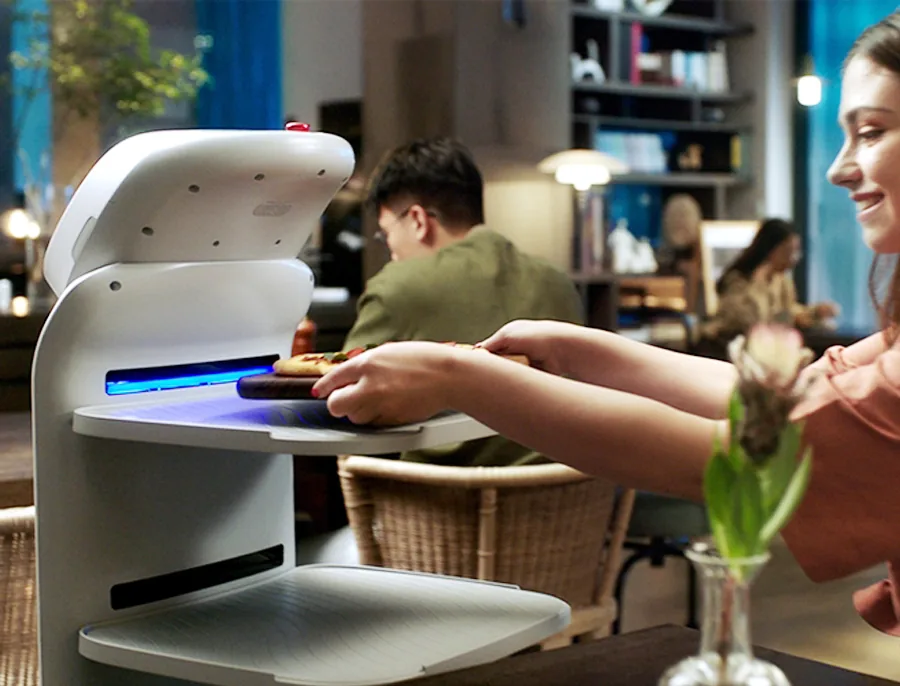
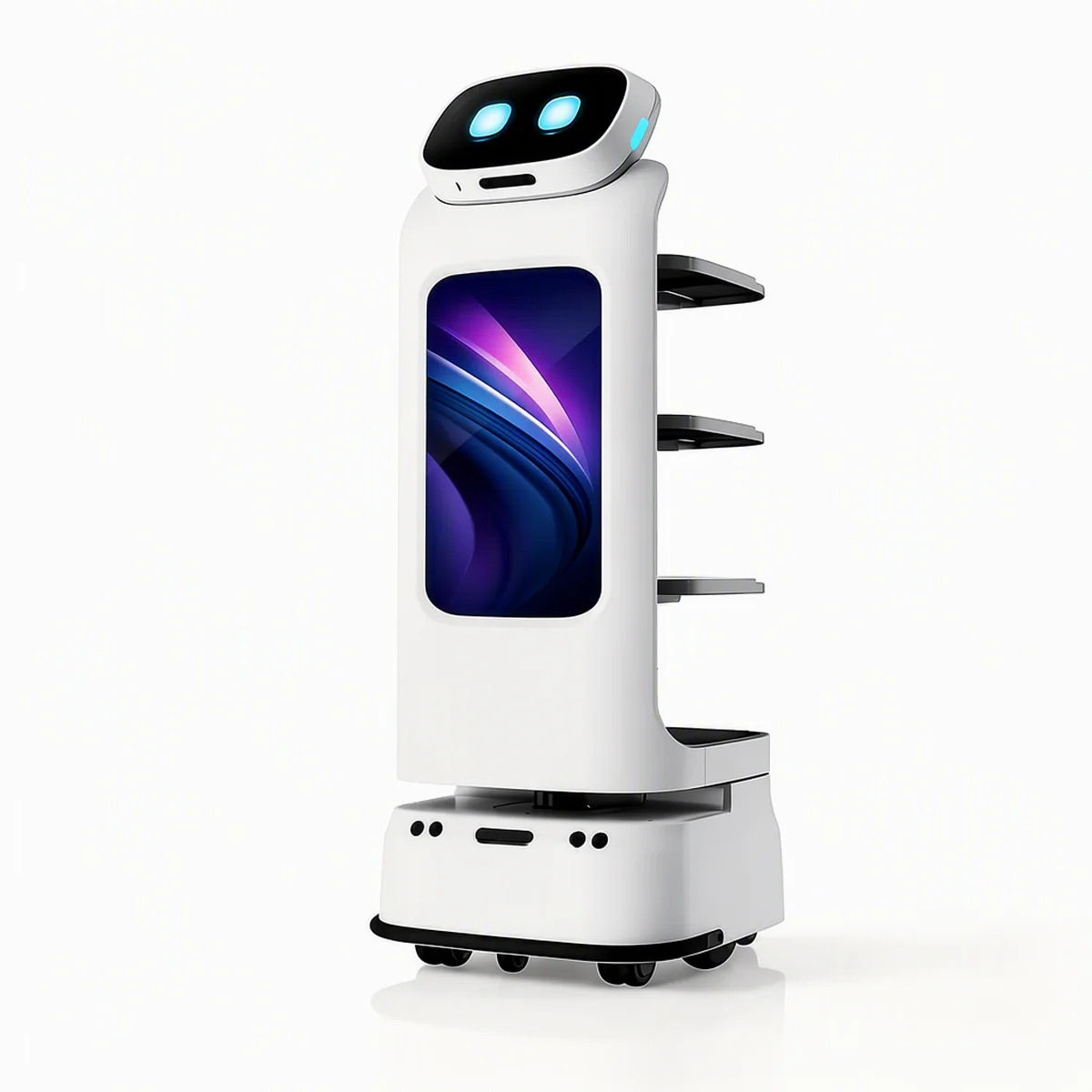
The pattern in a freezer is predictable: an associate picks into a tote or carton, then walks or drives the load to the staging point at the perimeter, where the ambient-zone crew takes over. The transport leg is the coldest part of the cycle, travel aisles get the most air movement, and it is the leg a delivery platform can take over completely. The AOMAN D1 carries 40 kg per trip across four trays, clears aisles down to 70 cm, and runs SLAM-based navigation over the racking geometry, where the consistent layout is actually easier to map than an ambient warehouse. A simple cell layout, one robot serving two to three aisles on a fixed circuit, with totes staged at the aisle ends, keeps the picker inside the warm side of the aisle line while the robot takes the exposed travel leg.
It is worth being explicit about load sizing: 40 kg covers case-work and tote loads, not full pallets. Pallet transport remains the domain of powered pallet trucks; the robot's job is to remove the repetitive, low-topology case movement that grows in a high-pick-rate operation.
Role 2: Ice-free floors on a continuous cycle, AOMAN C1
Freezing floors are a safety, productivity and compliance issue at once. OSHA's walking-working surfaces standard (29 CFR 1910.22) requires employers to keep floors in a clean and dry condition, and freezer floors fight that requirement continuously. The AOMAN C1 with a cold-chain configuration handles it on schedule: 2,040 m²/h coverage, a 790 mm squeegee for slush and meltwater, 70 L clean and 50 L recovery tanks, and an 85 cm aisle footprint that works in the truck lanes. In freezer service the practical question is not coverage rate alone but cycle discipline. One pass on a fixed interval keeps ice film from building, where a deep clean once a day does not.
Ask for the heated-fluid and cold-rated squeegee options, and confirm the run time per charge at operating temperature, since it will be below the room-temperature figure. Build the dock placement around that reduced cycle. The dock is the asset that keeps the cycle unbroken.
Role 3: Intake office and admin support, AOMAN G1 and C2 Pro
Every cold chain facility still has a warm side: the intake office, the dispatch clerks, the break areas. The AOMAN G1 covers reception and check-in assistance there, multilingual guidance and visitor logging through its six-microphone, 5 m pickup array, and the AOMAN C2 Pro keeps the office corridors and rest areas clean in its quiet, compact, modular-tank form. These two make the deployment whole: the cold side gets the hard automation, and the warm side stops being the facility the crew walks through on the way to the hard part.

Sizing: An Illustrative Freezer-Zone Example
Here is an illustrative example for a typical freezer zone, plug your own numbers into the same shape. Suppose a 2,800 m² freezer zone with 16 aisles and a pick rate of roughly 120 case-lines per hour. One D1 on a 220 m circuit, running eight trips per hour at 40 kg per trip, moves roughly 320 kg of case work per hour. And each returned trip is one less exposed travel leg for a picker. If the picking operation currently spends about a third of its skilled hours on the transport leg, a two-robot cell covers that share on a first pass, and validation over a 90-day control-aisle comparison tells you whether to expand.
On the floor side, an illustrative 2,000 m² freezer aisle area at 2,040 m²/h coverage receives a full pass roughly every hour, continuous enough that ice film never gets a shift to build. Compare that with the manual ice-scraping rounds being replaced, multiply by the slip-record history of the zone, and the maintenance line spends its budget on the machine instead of the overtime crew.
Specification Review: The Cold-Chain Question List
Cold-chain robot selection is won and lost in the specification review, because the ambient-warehouse datasheet is not the document that matters. Bring these questions to the vendor and write the answers into the order:
- What is the minimum operating temperature of the wet end, solution line, squeegee blades, brush materials? The chassis rating is not the blade rating, and a blade that stiffens at -20°C loses floor contact long before the drive does.
- What is the measured runtime at the facility's actual temperature, with the heater drawing? The figure that matters is the one measured in a cold chamber, not the room-temperature cycle time scaled down.
- Where does the robot charge, and does the dock sit inside or outside the freezer? Each minute of in-freezer charging is infrastructure cost and staff exposure; docking outside, with hot-swap packs, keeps the loop closed.
- What happens in a defrost cycle? Condensation on optics and connectors is the first failure mode in the first season, and the answer should be a sealed, vented design plus a documented test.
- Who maintains the cold-rated parts, and with what lead time? A lubricant that is back-ordered across a peak season is a hole in the floor plan.
The answers to these five questions should be attached to the order, not delivered as a follow-up. What passes on an ambient floor does not automatically operate on a frozen one.
The 90-Day Cold-Chain Pilot Structure
Cold-chain deployments should be proven in three steps before any fleet order:
- Month 1, single-aisle transport cell. One cold-configured D1 in one freezer aisle, measured against a control aisle running the manual process. Compare case-lines per labour hour and worker exposure time at the aisle end.
- Month 2, floor maintenance in the highest-traffic zone. One low-temperature-configured C1 on a continuous cycle. Measure slip incidents, manual scraping hours and floor friction readings where the instrumentation is available.
- Month 3, combined validation and expansion case. Run both robots in the same zone, reconcile the model against the measured data, and write the facility-wide business case on real numbers.
Two cautions from the field: validate the robot in the actual operating cycle, freezer doors, defrost windows, dock traffic, not in a controlled demo; and agree the KPI set before the pilot so both sides are measuring the same lines. The SLAM navigation behaviour in racking-heavy layouts, where localization is straightforward, is a good reason to keep the pilot geometry simple.

The Workforce Question
Freezer-zone turnover is the strongest argument the automation case has, if the operator frames it right. If turnover in the coldest job roles runs at levels where the warehouse is permanently understaffed, robots do not remove jobs. They carry the exposed leg that nobody can be retained to walk. The change-management piece matters: redeploy people toward ambient-zone work, keep the freeze-room rotation lighter, and communicate the plan before the first robot arrives, not after. In an environment where a warm-up room is a legal necessity, a machine that reduces the hours each shift spends below zero is a retention measure as much as an efficiency one.
If you operate a cold chain facility and want the deployment sized to your zone, send us the floor plan, aisle width and temperature profile. We will match the platforms and return a plan within 24 hours. Request pricing or view the full platform range. A comparable deployment with different traffic, dock and shift constraints is documented in hospital delivery logistics.