Service Robots for Car Wash & Detailing Centers, Bay Floor Maintenance in 2026
At a glance: A 6-bay express car wash runs five or six cars through each bay every hour, and by mid-morning the bay floors carry a film of detergent foam, road grime and standing water that is both a slip liability and a dull finish. This guide covers AOMAN C1 autonomous floor scrubbing of wash bays, drying lanes and the waiting lobby, plus C2 Pro for the detail bays, with chemical-compatibility, drainage, throughput and slip-liability data for car wash and detailing operators.
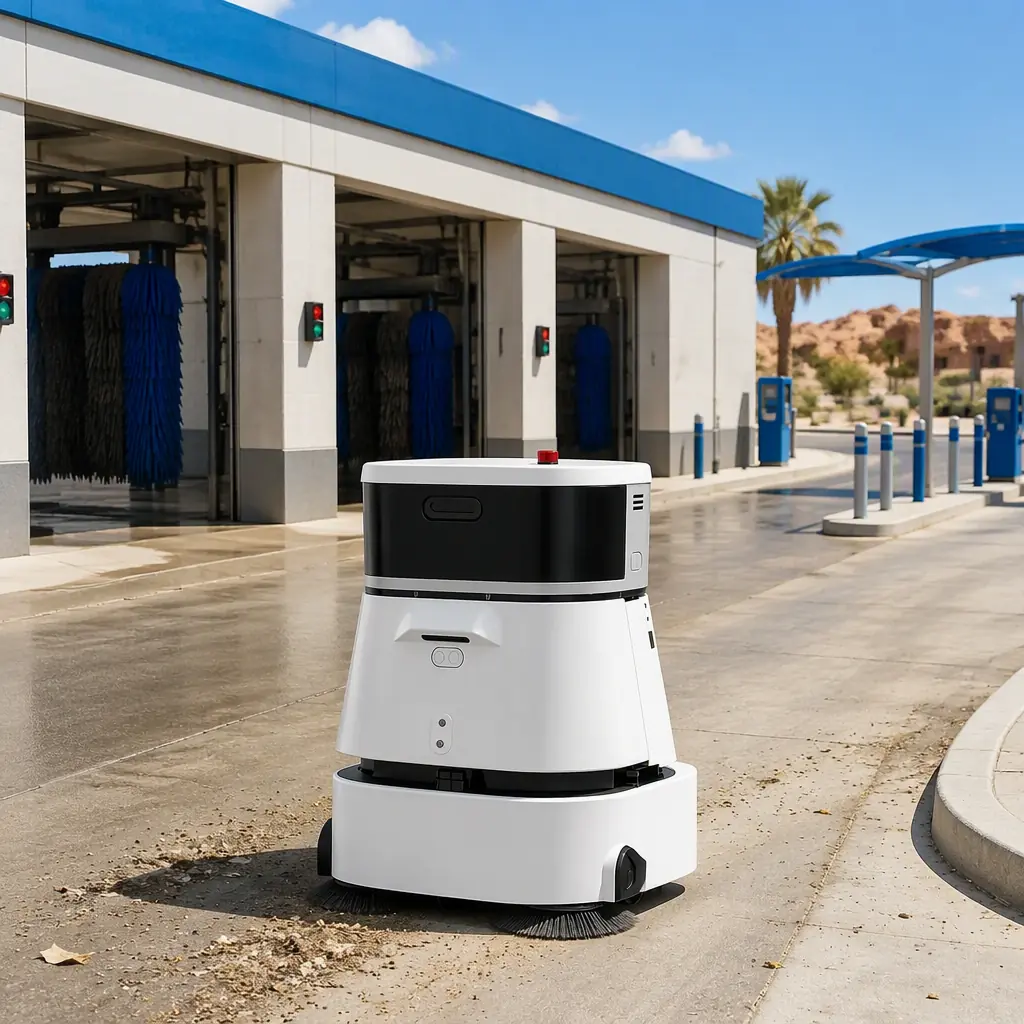
Car washes and detailing centers are the most hostile commercial floor to keep clean. Which is exactly why they are one of the best fits for an autonomous scrubber and one of the hardest to justify on first inspection. The bay floor is continuously wet, coated in a fine slurry of soap film, road dirt and tire rubber; the drying lane is a ramp that holds standing water; and the waiting lobby is tracked with customer footprint. Every one of those surfaces is a slip hazard, and slip liability in a wet auto facility is the number-one insurance exposure a car wash owner carries.
Yet most operators still clean with a hose and a squeegee, hit-or-miss between cars, and the floor is almost never fully dry. So it stays a hazard and a blemish through the busiest part of the day. Automation changes that: a robot that runs the bay on a fixed cycle between cars, dries the surface, and keeps the lobby clean all day removes the slip risk while it keeps the site presentable for every customer who pulls in.
Why Car Wash Facilities Automate
Four drivers. First, slip liability. A single claim can cost more than a year of floor-care labour. Second, throughput. The floor between cars is the bottleneck; if the bay is not ready for the next car, the line stalls. Third, labour scarcity. Nobody wants the bay-floor job, and the hours are hard. Fourth, presentation. A clean, dry, bright bay reads as a well-run business and customers notice. Each maps directly onto a robot.
| Zone | Surface & Load | Cleaning Need | AOMAN Fit |
|---|---|---|---|
| Wash bay (tunnel) | Sealed concrete, foam + grime | Every few cars | C1, 2,040 m²/h, 790 mm squeegee |
| Drying lane / ramp | Sloped sealed concrete, standing water | Continuous | C1, water-recovery tank separation |
| Detail / valet bays | Epoxy, polish residue | Per detail, tidier | C2 Pro, 85 cm, quiet |
| Waiting lobby / sales area | Tile / concrete, tracked dirt | 2–3× daily | C2 Pro |
| Equipment / utility area | Concrete, chemical drips | Weekly | C1 |
Wash Bay Floor Maintenance with the C1
The AOMAN C1 is the bay-floor unit. It covers up to 2,040 m²/h with a 790 mm squeegee and separate 70 L fresh / 50 L recovery tanks. The tank separation matters most in a wash bay, because recovered water is heavy with soap and road dirt and must never be redistributed onto an already-wet floor. The wide squeegee pulls the standing water off the bay in one pass, so the surface dries far faster than a hose-and-squeegee crew can deliver.
Detail and Lobby with the C2 Pro
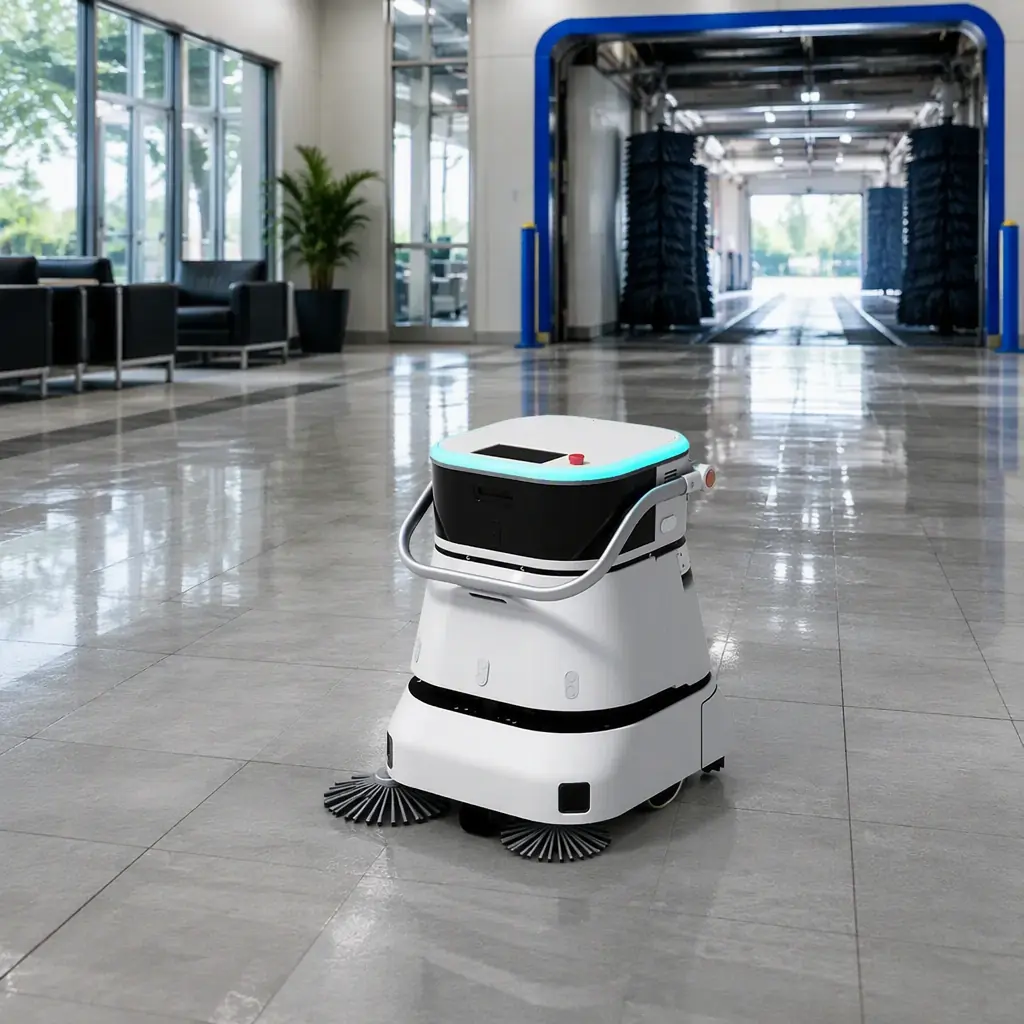
In the detail bays, where cars are hand-finished and the floor is tidier but still wet, the compact AOMAN C2 Pro fits 85 cm passages and runs quietly. It is the right unit for the waiting lobby and sales area too: it lifts the tracked-in dirt and coffee spills without disturbing waiting customers.
Chemical Compatibility and Wetted Materials
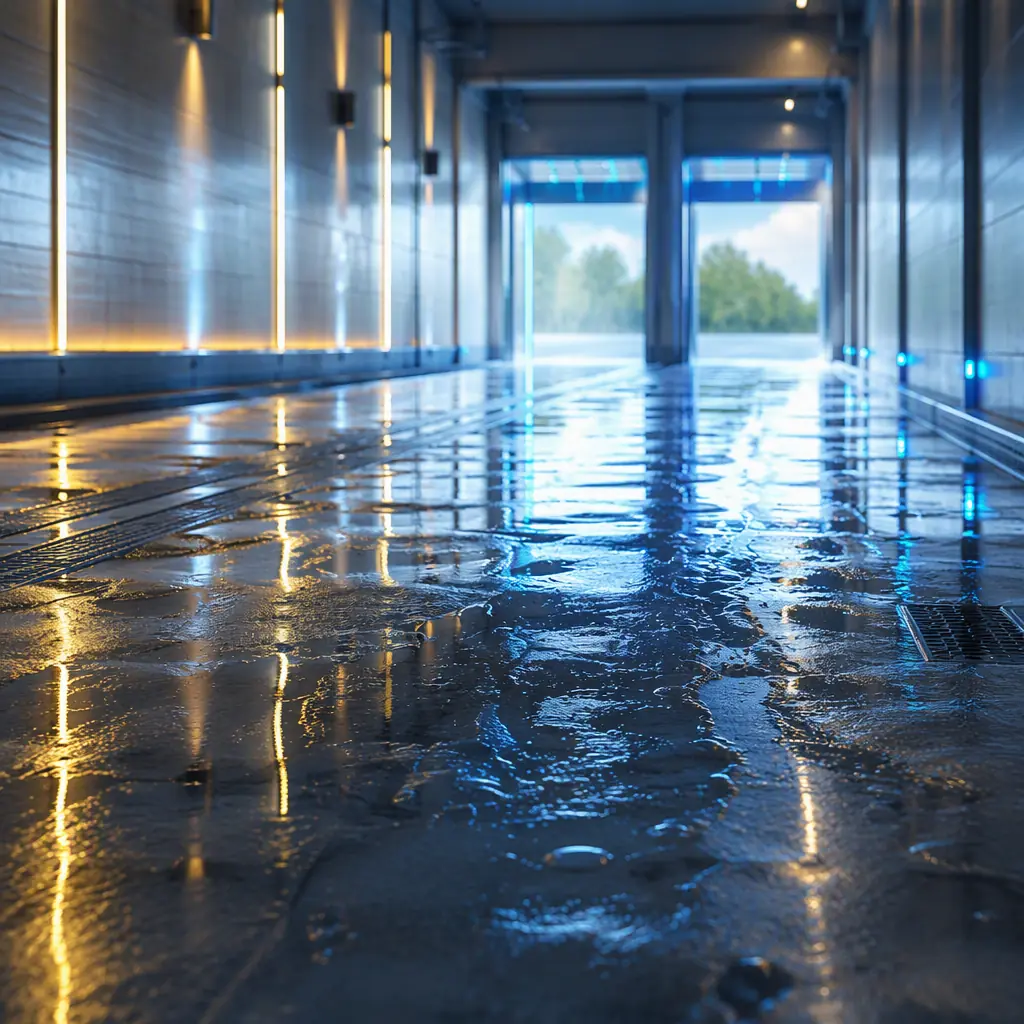
Auto-detailing and car-wash chemistry is aggressive. Foam washes, wheel and tire cleaners, degreasers, wax sealants and acid-free wheel cleaners all touch the bay floor, and a scrubber's wetted parts must tolerate them. Specify stainless or coated wetted components, and confirm the squeegee and brush materials against your active chemical list. For the wider safety and compliance picture, our safety standards and compliance guide covers the regulatory framing.
Scheduling Cleaning Around Throughput
The bay is a moving line, not a room. The correct schedule is a short, frequent cycle between cars rather than a long clean at closing time:
- Run the bay every few cars . A quick C1 pass between washes keeps the floor dry and the slip risk down throughout the day.
- Clean the lobby on a fixed cycle . A C2 Pro program in the sales area keeps the first impression sharp.
- Use the quiet window . Schedule the deeper clean overnight or early morning before the first car.
- Deploy overnight charging . Dock the unit when the site closes so it is ready before opening.
Build-Out by Site Type
- Small 2–4 bay wash (standalone): one C1 for the bays and tunnel, one C2 Pro for the lobby and detail bay. Two units is a defensible first purchase.
- Express 6–10 bay with detail shop: one C1 per bay line, one C2 Pro per detail area, coordinated through the fleet platform per the fleet management guide.
- Multi-site chain: centralized scheduling and roll-out planning as described in the multi-site deployment strategy.
What to Verify Before Signing
Slope and drain . A drying lane that runs to a drain must be cleanable without flooding; confirm the drain grate rating and the scrubber's slope tolerance. Water tolerance . The unit must operate in a wet environment and recover water, not just push it around. Chemical compatibility . Confirm wetted materials against your foam-wash and cleaner list. Grating and expansion joints . Check the squeegee won't catch. Throughput spacing . The robot's cycle must fit between cars, not block the lane. For cleaning robotics in outdoor and perimeter settings, our outdoor and perimeter cleaning guide is a useful cross-check.
The ROI Picture
An illustrative 6-bay express wash with a detail shop spending about $38,000 a year on bay-floor and lobby cleaning, the equivalent of a full-time wet-floor attendant plus intermittent contract labour, could trade that against a C1 + C2 Pro fleet and keep headroom, while removing a real slip-liability exposure and keeping the line moving. Model it on your own numbers: the floor-clean labour is a payroll saving, and the reduced slip risk, faster bay turnaround and better customer first impression are the secondary wins that push payback under 18 months.
Ordering matters. Bay floors first, it is the visible and liability-critical win. Lobby and detail second. It is tidier and quicker but quieter in savings. Tell us your bay count, lane length and chemical programme, request pricing on a car-wash fleet and we will match unit types and cleaning cycles to your site within 24 hours.