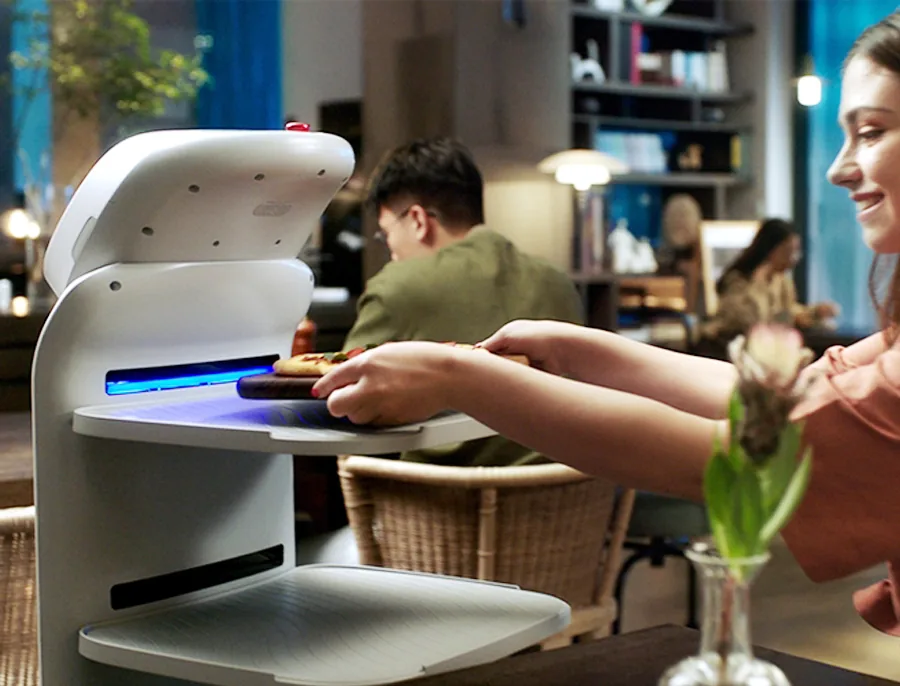
Service Robot Staff Training & Certification: Building Internal Operations Expertise for Autonomous Fleet Management, A 2026 Workforce Development Guide
At a glance: A three-tier program. Operator, supervisor, technician: typically costs $6,000–$12,000 to launch for a single site. This guide covers tier scopes, staff-to-robot ratios, and a 12-week onboarding ramp.
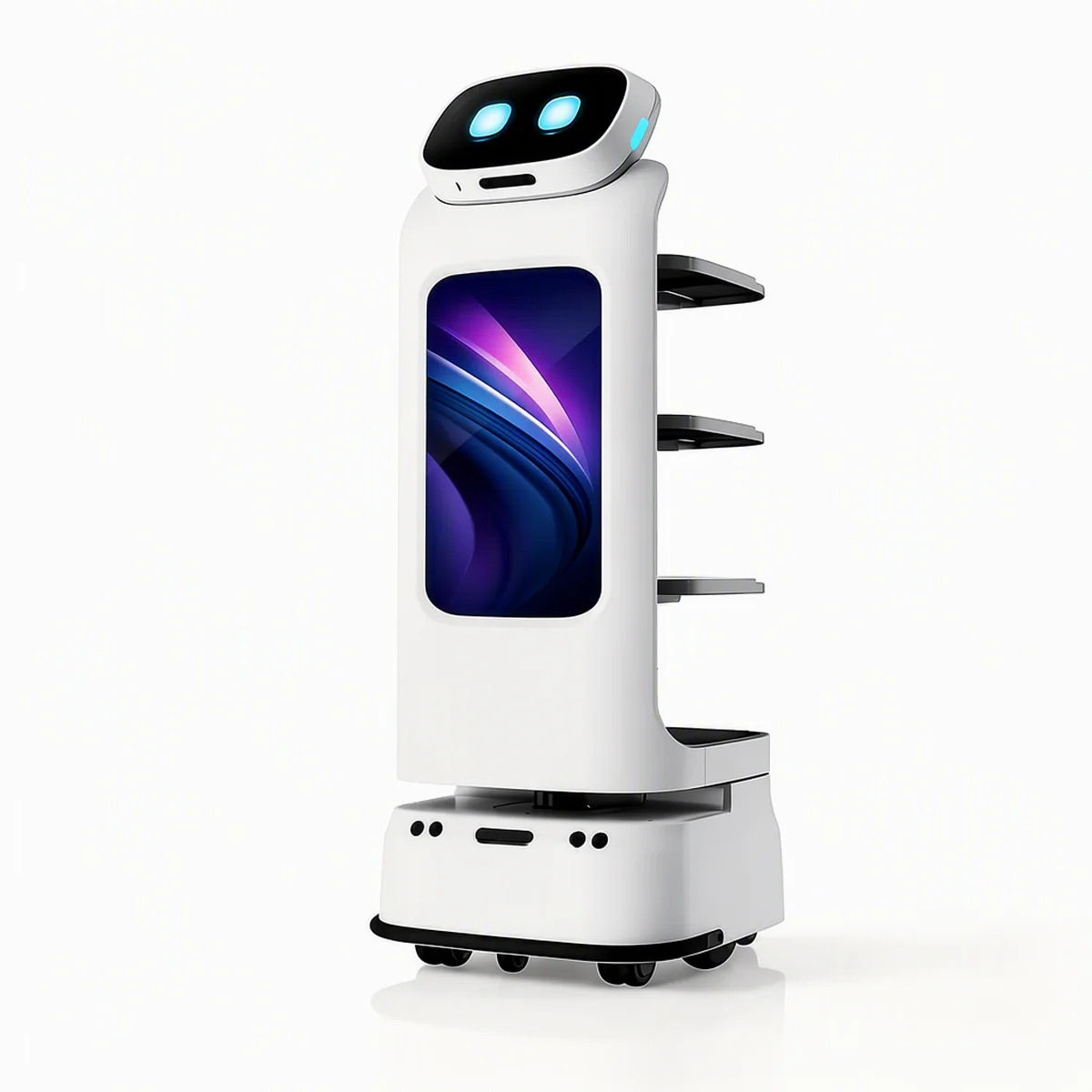
Consider a 400-bed hospital (illustrative example): four compact cleaning robots deployed in January, and by March average utilization has drifted far below the procurement case. The vendor's remote diagnostics show no hardware faults and no software errors. The discovery after a two-day audit is mundane: night-shift staff do not know how to clear a sensor-occlusion warning, so they power the robot down and call the morning supervisor. Every single time.
Training is not the footnote in a service robot procurement spreadsheet. It is the difference between a fleet that runs on plan and one that idles through significant portions of its operating window. Not because the robots failed, but because nobody on shift knew they had not.
This guide covers what facility managers, operations directors, and HR leaders need to build an in-house training and certification program for service robot operations across delivery, cleaning, and guidance platforms.
Why Internal Expertise Matters: The Vendor Dependency Trap
The first 90 days after deployment define the long-term trajectory of a robot program. During that window, facilities either build internal operational competence or become permanently dependent on vendor support, at very different cost profiles.
Facilities that open a vendor ticket for every stoppage carry a hidden tax: hours of resolution time per event, against minutes for a trained internal operator who is already on site, knows the facility's layout, knows which corridor is prone to false obstacles, and knows which door sticks when the HVAC system cycles. Contextual knowledge is the asymmetric advantage of internal training. Vendor selection only determines the first months of the program, internal competence determines the years.
Illustrative resolution math for a mid-sized deployment of 8 robots over one year:
| Resolution Source | Events/Year | Avg. Resolution Time | Outcome |
|---|---|---|---|
| Vendor ticket (remote) | 120 | ~2.8 hours | ~340 robot-hours idle |
| Vendor ticket (on-site dispatch) | 50 | ~36 hours | ~1,800 robot-hours idle |
| Internal Tier 2 technician | 170 | ~12 minutes | ~34 robot-hours idle |
Most stoppages are environmental and resolvable at the operator level; the rest are configuration or hardware events needing escalation. Keeping the bulk of those events internal requires a deliberate training architecture.
The Three-Tier Model: Operator, Supervisor, Technician
Effective service robot training programs follow a three-tier structure mapped to existing facility roles. Each tier has a defined scope, certification requirement, and escalation boundary:
| Tier | Role | Scope | Duration | Certification |
|---|---|---|---|---|
| Tier 1: Operator | Frontline staff interacting with robots daily | Daily startup/shutdown, obstruction clearing, consumable replenishment, basic error acknowledgment, safety stop | 4–6 hours | Internal, valid 12 months |
| Tier 2: Supervisor | Shift supervisors overseeing robot zones | Tier 1 plus error-code diagnosis, route reprogramming, fleet dashboard monitoring, performance reporting, new-staff onboarding | 16–24 hours | Internal + vendor co-certification, valid 18 months |
| Tier 3: Technician | Designated facility robotics specialist | Tier 1–2 plus sensor calibration, firmware updates, hardware diagnostics, battery management, preventive maintenance, vendor escalation | 40–80 hours | Vendor-certified, valid 24 months |
Training every staff member to Tier 3 is expensive and unnecessary. Training nobody beyond Tier 1 turns every Tier 2–3 event into a vendor ticket.
Staff-to-Robot Ratios: Coverage Across All Shifts
The procurement question "how many staff per robot?" is really a question of trained-tier coverage across shifts:
| Facility Size | Robots | Tier 1 (operators) | Tier 2 (supervisors) | Tier 3 (technicians) |
|---|---|---|---|---|
| Small | 3–5 | 6–10 staff (all shifts) | 2–3 shift supervisors | 1 (shared) |
| Medium | 6–15 | 15–25 staff (all shifts) | 4–6 shift supervisors | 1–2 dedicated |
| Large | 15–30 | 30–50 staff (all shifts) | 8–12 shift supervisors | 2–3 dedicated (1 per shift) |
The Tier 1 coverage ratio is roughly 2–3 trained operators per robot per operational shift, not because the robot needs multiple people, but because a shift is 8 hours and the operating window is 16–24. The physical tasks, clearing obstructions, refilling consumables, wiping sensors, still need a human inside the facility.
Skills Matrix by Robot Type
Not all robots demand the same skill profile. A delivery robot in hotel corridors needs different operator competencies from a cleaning robot following a programmed map:
| Competency | Delivery (AOMAN D1) | Cleaning (AOMAN C1, C2 Pro) |
|---|---|---|
| Daily startup | Verify charge, clear cargo trays, confirm route schedule | Fill solution tank, check brush/battery levels, verify cleaning map |
| Real-time monitoring | Completion rate, mid-shift battery, display content sequence | Solution usage rate, coverage completion, wet-floor triggers |
| Typical Tier 1 interventions | Clear path obstructions, resend failed runs, free a stuck tray | Refill solution, replace mop pad/brush, clear intake debris |
| Typical Tier 2 interventions | Reprogram route around a construction zone, adjust elevator call timing | Recalibrate pattern after furniture moves, adjust dosing |
| Key Tier 3 skills | Door/sensor alignment, tray sensor checks | LiDAR cleaning and calibration, pump pressure testing, battery diagnostics |
| Most frequent stoppage type | Path obstruction | Floor-surface anomaly; connectivity dead zones |
Where a guidance robot is deployed: for example the AOMAN G1, with 6 microphones at 5 m pickup and a 13 MP camera, add a competency set for face-to-face interaction: language switching at the entry terminal, escalation to a human for anything outside the answer set, and keeping the walk-up approach lane clear.
Certification Pathways
There is no universally recognized third-party certification for service robot operations, equivalent to CompTIA for IT or NATE for HVAC. Three practical pathways exist:
Vendor certification. Most service robot manufacturers: including AOMAN FUTURE, offer structured Tier 3 programs: hardware diagnostics, firmware management, sensor calibration, and fleet platform administration, with recertification every 18–24 months. Vendor certification typically includes priority support access and early access to admin tooling. Its limitation: it is vendor-specific, though the underlying competencies (sensor principles, motor control, battery management) transfer broadly.
Internal ladder certification. Multi-site operators build a vendor-agnostic curriculum covering the common ground, safety protocols, fleet concepts, environmental troubleshooting, then add vendor-specific modules for what differs by platform. The model scales: when a hotel chain deploys across dozens of properties, a train-the-trainer cascade beats sending every local technician to vendor training on cost and on standardization.
Emerging industry standards. Industry associations have begun exploring cross-vendor certification for service robot operations. They are not yet available for enrollment, but robot contracts worth signing include language requiring vendor support for any industry-standard certification that emerges during the term.
The Cost of Training vs. Untrained Mistakes
Training budgets are easy to cut and hard to defend, until you model what untrained mistakes cost. Illustrative annual figure for an 8-robot fleet, marked as ranges:
| Incident Category | Frequency (untrained staff) | Illustrative Annual Cost |
|---|---|---|
| Unnecessary power-cycling (loses task queue) | 3–5 per week | $2,300–6,500 |
| Wrong cleaning solution (pump damage) | 1–2 per year | $800–4,400 |
| Obstruction not cleared, idle for a full shift | 1–2 per month | $1,400–5,800 |
| Sensor damaged during incorrect cleaning | 2–4 per year | $800–6,000 |
| Safety stop overridden without cause | 4–6 per month | $2,900–8,600 |
Against that, a first-year program covering 10 operators, 3 supervisors, and 1 technician on a single site typically runs $6,000–$12,000: including vendor course fees, internal trainer time, and staff backfill during training hours. Payback is typically within a year of the first avoided incident.
Onboarding: A 12-Week Ramp to Competence
The training program is not a one-time event; it is a 12-week ramp matched to the deployment timeline:
| Weeks | Activity | Audience |
|---|---|---|
| 1–2 | Pre-deployment awareness: what the robots will do, how roles change, safety basics | All staff |
| 3–4 | Hands-on orientation and supervised operation with vendor engineers on site | Tier 1 + 2 |
| 5–6 | Independent operation with remote escalation support for edge cases | Tier 1 + 2 |
| 7–8 | Tier 2 certifications: error-code diagnosis test, dashboard proficiency, route reprogramming | Tier 2 candidates |
| 9–10 | Tier 3 deep-dive: calibration, firmware management, preventive maintenance | Tier 3 candidates |
| 11–12 | Simulated failure drills: staged obstructions, occlusions, network interruptions | All tiers |
| Ongoing | Monthly 30-minute refreshers, quarterly skills checks, annual recertification | All tiers |
The simulated failure drill is the highest-value component of the whole program. Facilities that skip it discover training gaps during a real failure at 3 AM; facilities that run it discover them during a controlled simulation with a trainer in the room.
Train-the-Trainer for Multi-Site Programs
Beyond roughly five sites, sending every supervisor and technician to vendor training does not scale. The train-the-trainer model: select 1–2 regional trainers per 10–15 sites; have them complete full vendor certification plus an instructional-design module; build version-controlled training materials updated quarterly; run 2-day bootcamps for 8–12 staff at a time at a training site; and calibrate assessment standards with all regional trainers quarterly so regions do not drift. Illustrative comparison for 20 sites: train-the-trainer at ~$45,000 versus ~$150,000 sending every supervisor direct, the difference often funds two to four additional robots.
Recertification: Training Decays
Service robot training has a half-life. Three mechanisms drive the decay: firmware updates change the interface, so staff who learned a January workflow develop workarounds for the September one; edge-case procedures fade between occurrences; and high-turnover industries continuously dilute the trained workforce. Without a structured recertification program that includes new-hire onboarding, training value erodes within 18 months.
Cadence that maintains competence: monthly Tier 1 refreshers (30 minutes, last month's top stoppage types), quarterly Tier 2 skills checks, semi-annual firmware briefings, annual Tier 3 recertification, and a standardized 2-hour onboarding module for every new hire. Documented records also matter legally: under OSHA's General Duty Clause and the EU Framework Directive 89/391/EEC, employers must ensure staff operating autonomous equipment are trained on safety procedures. Recertification records are your first line of defense in a post-incident workplace safety investigation.
Five Non-Negotiables for 2026
1. Budget training as a line item, not a footnote. If your procurement spreadsheet has no training line, the deployment plan is incomplete.
2. Never deploy on a Friday. Robots that arrive on a Friday sit untouched until Monday. Schedule arrival midweek so orientation starts while momentum is intact.
3. Designate a robot champion before the robots arrive. One named individual accountable for fleet performance, Tier 3 certified within the first 90 days, with robot KPIs in their performance review.
4. Run failure drills quarterly, not annually. Quarterly simulated failures keep response procedures in muscle memory.
5. Track training coverage as a KPI. The share of active-shift staff holding current certification at their tier. When that number drops below a healthy baseline, utilization predictably slips within weeks, coverage is a leading indicator for operational performance.
The pattern shows up in publicly documented deployments: at a nursing facility in Tokyo, the AOMAN C2 Pro runs overnight cleaning on a schedule that depends on staff who can recognize an occlusion warning at 3 AM and act within minutes. A well-trained team makes a fleet run like a larger one; an untrained team does the opposite. The zone-by-zone routing and cycle-time side of the same decision is worked through in the cleaning labour cost model.


Tell us your staffing plan. AOMAN FUTURE's deployment team can size the tier mix and certification paths for your site, for every unit from the AOMAN C1 to the AOMAN D1.