Service Robots for Ports, Cargo Terminals & Freight Hubs, Autonomous Operations for 24/7 Logistics Infrastructure
At a glance: AOMAN C1's 790 mm squeegee and 2,040 m²/h output are sized for the long hardstand runs between truck lanes and warehouse aisles. This guide covers port-specific robot roles, zone-by-zone fit, security patrol questions and procurement reality.
Container ports, bulk cargo terminals and freight hubs do not stop. Vessel arrivals, truck queues and yard moves continue around the clock, which means every contamination event, tyre wear, diesel particulate, dust from container corrosion, accumulates in real time with no quiet window for a deep clean. Labour is the binding constraint at most of these sites, and the compliance load (ISPS surveys, safety recordkeeping) makes human presence in active yard areas expensive per hour.
That combination is what service robots are structurally good at: the machines do not need credentials, rest breaks or claim costs, and they are capital assets rather than labour. This guide maps the AOMAN platform line onto port zones, and flags where the fit honestly ends.
Why Ports Are a Strong Fit
Continuous demand. A distribution centre closes at 8 PM; a terminal does not. Cleaning and logistics work has to happen beside live equipment traffic, at whatever hour the vessel schedule dictates.
Structural labour scarcity. Port-adjacent labour markets compete for the same pool of workers as fulfilment, cold storage and last-mile operations. Robots are equipment: the procurement question is capital and depreciation, not headcount and shift coverage.
Audit-heavy compliance. The ISPS Code applies security levels that escalate requirements for access control and patrol; safety recordkeeping and claims management have their own documented obligations. Equipment that reduces human exposure in active yard areas helps with both.
Measurable operations. Terminals quantify everything, moves per hour, dwell times, incident counts, so a robotic deployment can be evaluated on the same ledger rather than on softer arguments.
Zone by Zone: Which Machine Fits Where
Zone 1: Outdoor hardstands and yard areas
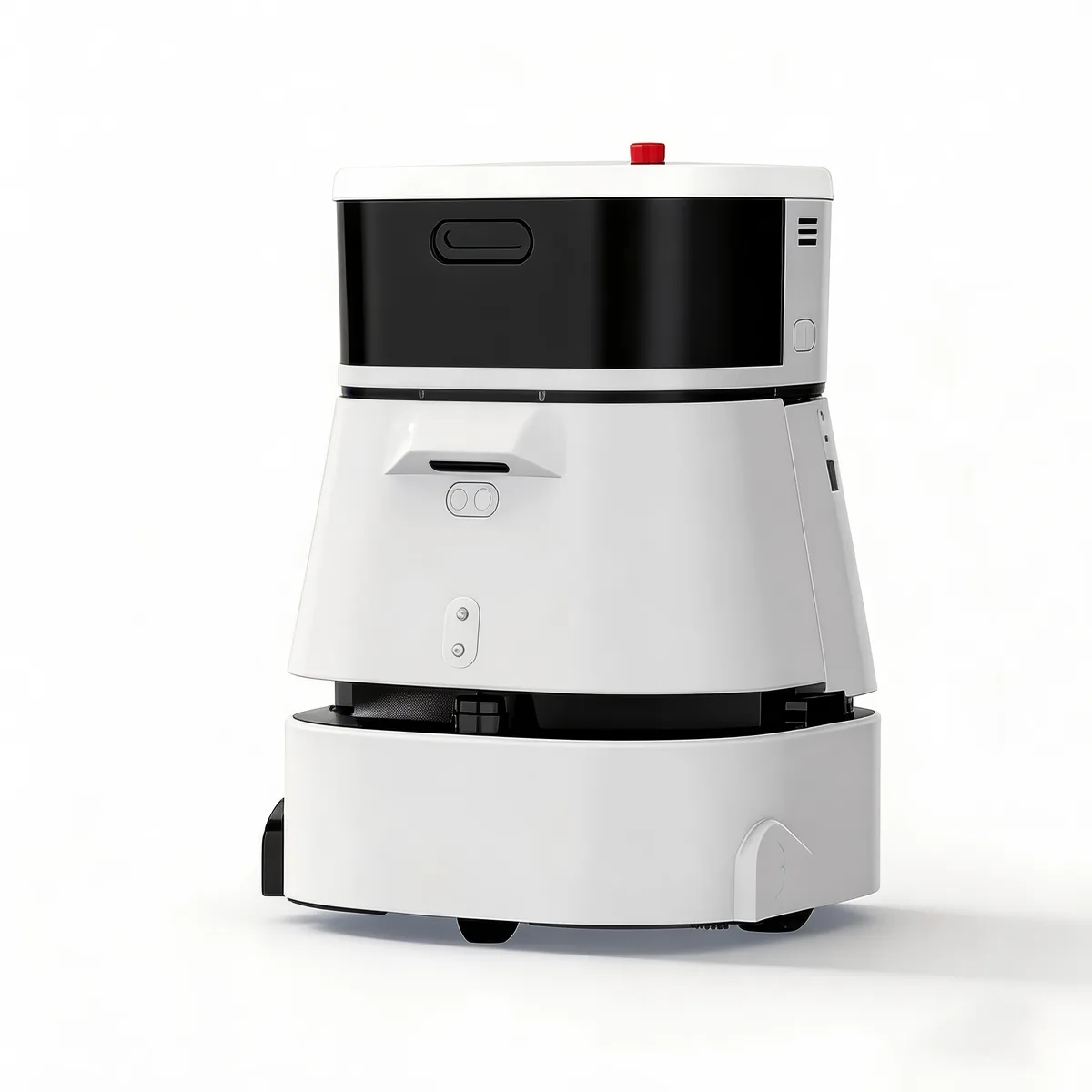
Container yards, chassis parks, truck queuing lanes and rail sidings are exposed to weather and heavy equipment. The AOMAN C1 is the right machine for these surfaces on the platform line: 2,040 m²/hour with a 790 mm squeegee and 70 L + 50 L split tanks, sized for continuous runs of hundreds of metres and passable at 85 cm.
An illustrative truck-and-chassis zone of about 12 acres, with three C1 units on staggered charging cycles, can keep every high-traffic lane and staging area cleaned several times per 24-hour period. Yard dust and coastal salt air ask hard questions of any machine: ask suppliers about documented ingress protection and corrosion treatment options, and about which variants they actually produce, weather-tolerance claims belong in the data sheet rather than the sales call.
Route design matters more than machine specification at this scale: long passes parallel to traffic lanes, sweep areas kept away from container stacking, and charging cradles positioned so a unit can return home without crossing an active vehicle corridor. A yard is not a carpet, and the routes should be planned by someone who knows the yard's traffic.
Zone 2: Warehouses and administrative buildings
Cross-dock sheds, container freight stations and offices need the same indoor cleaning any large logistics building needs. The C1 covers big open warehouse floors; the AOMAN C2 Pro . Under-70 cm desk clearance, 85 cm aisles, quiet running, modular tanks, fits offices, break rooms and plant rooms. Floor transitions such as epoxy, granular screed and diamond plate are documented at mapping time so route parameters change where the surface changes. On the office side the same machines run the night circuit the warehouse side does. And the difference between a terminal that looks professionally run at 6 AM and one that does not is usually the offices.
Zone 3: Driver reception, checkpoints and lounges
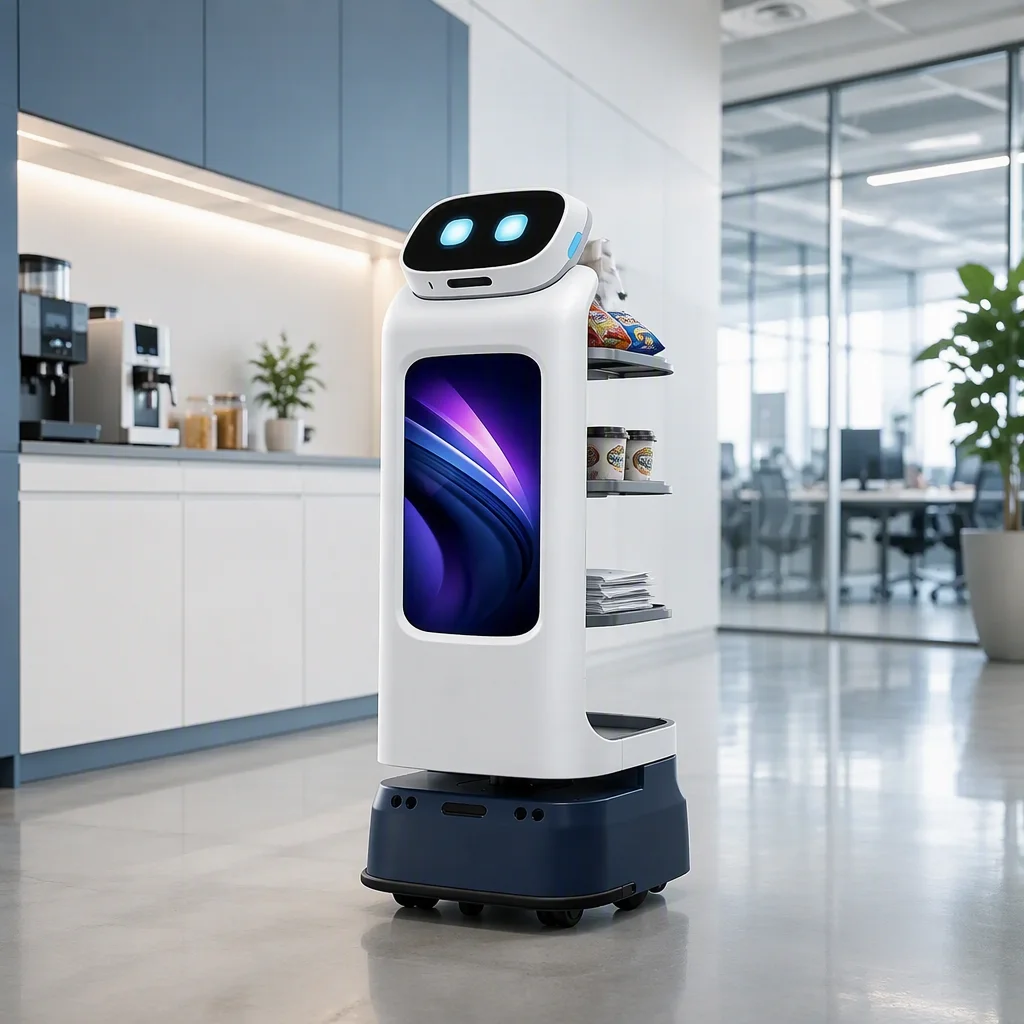
The human-facing end of port operations, trucker check-in, visitor reception, driver lounges, is where AOMAN G1 fits: 15 degrees of freedom, a 6-microphone array with 5 m pickup, a 13 MP camera, multilingual guidance and check-in assistance, and automatic return to its dock. Truckers lining up for 20–45 minutes are a captive audience for accurate information: every truck day at a yard is another chance to shorten a queue or confirm it. At check-in it can display turn-by-turn directions to a specific container location, estimated wait times coming from the yard management system, and documentation-step guidance in the driver's language. Freeing the desk staff for the exceptions that genuinely need a human: lost containers, damaged seals, customs holds.
Paperwork and small parts remain the AOMAN D1's job: 40 kg payload, four 270° trays, a 21.5-inch task screen, 70 cm aisles, and elevator and door integration for the offices stacked above the gate.
Security Patrol: The Separate Use Case
Port security is governed by the ISPS Code and its graded security levels. Fixed cameras have blind spots that are documented in every terminal's security assessment, and human patrols follow roads and paths. So whatever the fence line is doing away from those paths gets less attention.
Autonomous patrol platforms are a separate device class with their own procurement criteria. For any such platform, require ONVIF Profile S compatibility so the unit registers as a feed in the terminal's existing video management system instead of creating a second monitoring surface, and require timestamped, geotagged, exportable audit trails that the security operations centre can retrieve without the vendor's dashboard. Patrol hardware improvements reduce guard hours. And the sequence works best when the cleaning fleet is already producing its own zone-consistent records.
Environment, Honestly
Not everything at a terminal is a robot environment. Salt-spray zones, active crane radii, diesel-fume pockets and weld bays are not where a mobility robot belongs, and no deployment should force it. The honest design is indoor-plus-stable-outdoor cleaning, reception at the gate and reception buildings, and document runs on fixed service corridors. With the unprotected yard left to equipment that is not the platform line's job.
Deployment Sequence
Sequencing matters more than product choice:
1. Cleaning first. Indoor and hardstand cleaning is the fastest to measure and the least exposed to negotiating machinery, and it uses the C1 and C2 Pro where their specifications are strongest.
2. Reception second. G1 at check-in improves driver and visitor experience metrics and pulls the routine questions off the desk.
3. Document delivery third. Once service corridors are proven, D1 moves the paper and parts runs between offices, gatehouses and the document centre.
Procurement Notes for Terminal Operators
Labour agreements. Major US West Coast terminals operate under longshore collective agreements with technology-change provisions. Where such agreements apply, robots in janitorial and office-floor functions typically sit far from the classification occupied by yard-equipment operators, but verify this with counsel before scoping; the friction curve follows the job classification, not the brochure.
Grant eligibility. US port security and port infrastructure grant programs have funded technology investments including autonomous systems; European terminal operators have comparable routes. The useful framing in applications is "infrastructure technology investment" rather than labour replacement.
Timeline reality. RFI → RFP → evaluation → award can run nine to fourteen months even when the financial case is clean. The payback window on cleaning hardware is shorter than the procurement calendar; that is an argument for scoping early, not for waiting.
What to Ask Before You Buy
- Field-proven hours in outdoor and hardstand use, ask for deployments, not breadboard tests.
- Documented sealing and corrosion treatment for coastal sites.
- Charging strategy for sites with no indoor stored area for the machines.
- Where the fleet platform runs, on-premise, cloud or vendor-hosted, and what happens to your map and log data when the contract ends.
- Maintenance response within security-perimeter access rules: can a technician reach a parked unit inside a restricted zone?
What the Robot Fleet Actually Produces
Beyond labour offsets and floor quality, the fleet produces records: route logs, coverage cycles per zone, interaction timing at the reception desks. At a terminal that already measures moves per hour and dwell times, these flows sit naturally in the same ledger, and the claims function gets floor-condition evidence that used to be a photo on somebody's phone.
Nothing here replaces the terminal's committed procedures, ISPS drills, spill response, audit deadlines. The fleet makes the mundane record-keeping around them easier, and that is the strongest argument when the finance committee asks what the machines are really for.
Where to Start
Send us your terminal profile . Acreage, throughput, warehouse area, entry volumes. And we will model the first cleaning phase against your own rates. Request pricing while your site map is still open for revision; the arithmetic is cheap at this stage and expensive after procurement starts. A comparable deployment with different traffic, dock and shift constraints is documented in airport and transit hub deployments.