
Tank Cleaning Robots: Choosing Between Three Machine Classes
At a glance: A 25 m³ process vessel cleaned three times a week needs a permit, an attendant and gas monitoring every time, which is what the automation case is really built on. But three different machine classes are sold as "tank cleaning robots" and only one of them fits a given vessel. This guide sorts the classes, works the avoided-entry arithmetic, and lists what breaks in service.
Tank and silo cleaning is one of the last manual jobs inside a food, beverage or chemical plant, and it is also one of the most heavily regulated: a confined-space entry needs a permit, an attendant standing by, gas monitoring and a rescue plan. That combination of cost and risk is what makes the category worth examining. But most "tank cleaning robot" claims collapse on the same four points: the surface is vertical rather than horizontal, the residue is not dust, the interior is a wet corrosive environment, and the tank interior is where the plant's hygienic design rules apply hardest. This guide sets out what a robot can realistically do inside a vessel, the arithmetic behind a business case, and the specification questions that separate a working installation from a demo.

Why Tank Interiors Are a Different Problem
A floor scrubber works on a horizontal plane, in air, at ambient temperature, on a surface it can drive across. A tank interior breaks all four assumptions.
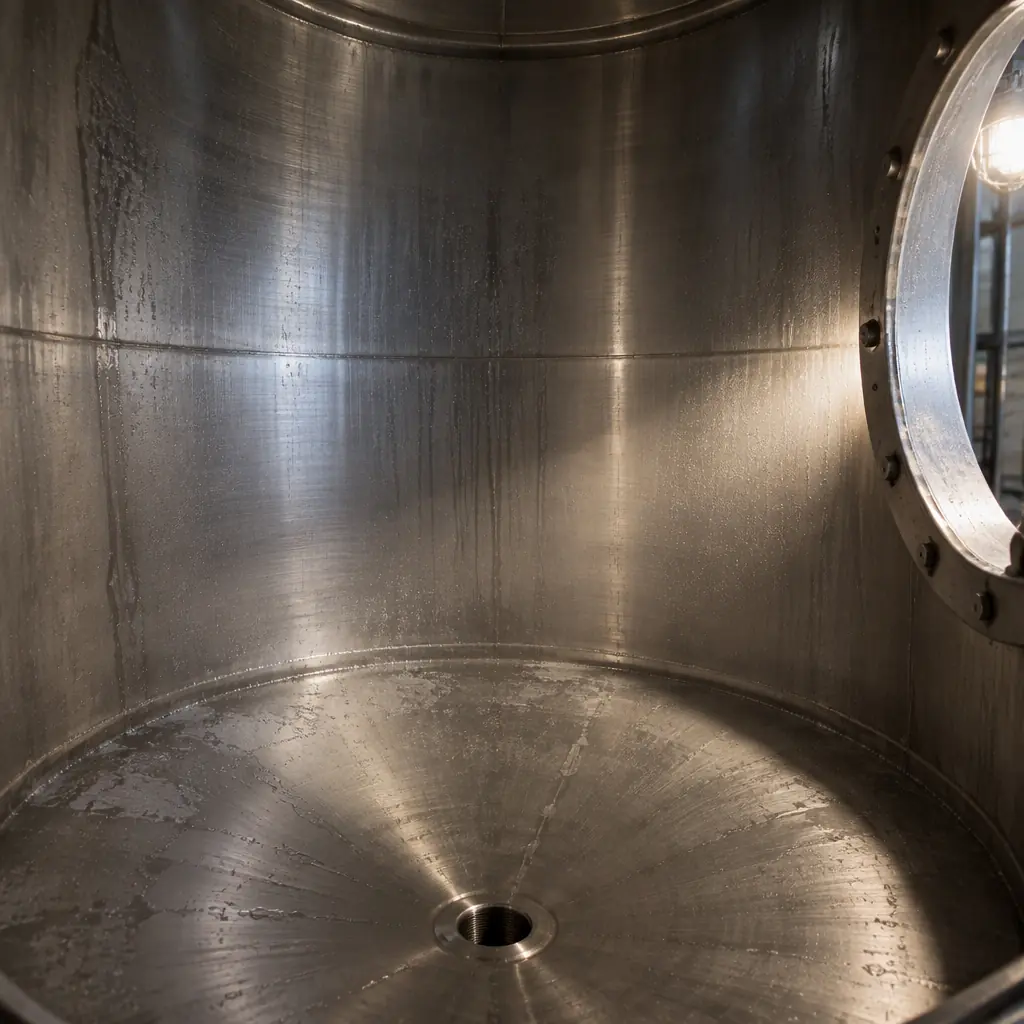
The surface is whatever is left after the product leaves. A 40 m³ fermentation vessel drains but does not empty: the crown, the upper shell, the agitator shaft and the manway ring all carry product residue, and the highest-residue area is usually the one hardest to reach. A robot that can only clean the floor of a tank has cleaned perhaps 15% of the wetted surface.
The residue is a film, not a solid. Sugar, wort, dairy protein, starch and mineral scale each behave differently against water. Protein films need a temperature and a chemical strength to break down; sugar dissolves readily but re-deposits if the rinse is inadequate. A robot carrying a fixed water-only spray cleans sugar and fails on protein.
The environment is hostile to the machine itself. Steam, caustic and acid CIP chemistry, high humidity, and temperatures that can exceed 60°C during a hot wash. Every seal, connector and cable gland becomes a failure point, and the ingress protection rating is not a marketing number but the difference between a two-year service life and a six-month one.
Access constrains the machine more than the task does. A typical manway is 450 to 600 mm. Whatever cleans the interior has to be delivered through that hole, which rules out anything that will not fold, disassemble or be inserted on a lance.
The consequence for buyers: "tank cleaning robot" describes three genuinely different machine classes, and confusing them is the most common procurement error in this category.
The Three Machine Classes, and What Each Can Do
Sort the market by how the cleaning energy reaches the surface. Everything else follows from that choice.
| Class | How it works | Realistic scope | Main limitation |
|---|---|---|---|
| Tank cleaning nozzle heads (rotary spray) | A rotating nozzle head inserted through the manway, driven by pump pressure | Closed vessels up to large volumes; the standard method for CIP in food, dairy and brewing | Not a robot in the mobile sense; coverage depends on nozzle placement and pressure, and shadowed areas remain |
| Climbing or wall-crawling units | Magnetic or vacuum adhesion, crawls the shell and crown | Large steel tanks, ship tanks, silos where the wall is the problem | Requires a ferromagnetic or smooth surface; adhesion margin collapses on scale or weld spatter |
| Insertable tracked or articulated crawlers | Folded unit inserted through the manway, deploys inside, scrubs and vacuums | Flat and gently curved floors, sumps, and lower shell in larger vessels | Access-limited; cannot reach the crown of a tall vessel |
The practical reading: for a closed process vessel under 30 m³, a rotary nozzle system is usually the correct answer and a crawler is a solution looking for a problem. For a large open-top tank, sump or pit where the floor and lower wall carry the residue, an insertable crawler earns its cost. For a steel silo or ship tank where the vertical wall is the issue, adhesion crawlers are the only category that applies.
Buyers who ask "which robot should I buy" before establishing which of these three physical situations they have will be sold the wrong class roughly two times out of three.
The Confined-Space Arithmetic Behind the Business Case
The robot does not compete against a cleaning cost. It competes against a permit, two people, a gas detector and a rescue plan. Work the avoided cost first, because that is where the case either stands up or fails.
Take a dairy plant with twelve vessels of 25 m³ each, cleaned between product runs, currently on a 5-hour manual cycle per vessel with two operators. The entry needs a permit, an attendant outside, and gas monitoring for the duration, so the labour is 10 person-hours per clean. At a $34 loaded rate that is $340 of direct labour. Add the permit administration, the gas detector calibration share and the rescue equipment inspection, and the fully loaded figure is commonly $400 to $450. At three cleans per vessel per week across twelve vessels, that is 36 cleans and roughly $15,000 of entry cost per week.
Now the robot case. An automated interior wash does not eliminate the entry in every plant, but it changes the frequency: a routine interior wash between product changes removes the majority of scheduled manual entries, leaving entries for inspection and for the problems the wash cannot fix. If it eliminates 70% of scheduled entries, the avoided cost is about $10,700 per week, before counting the value of reduced permit exposure, which many plants value separately and more highly than the labour.
Two numbers decide whether that saving is real. The first is cycle time: if the automated wash takes 3 hours instead of 5 but requires the vessel to be out of production for the same turnaround, the saving is labour, not capacity. The second is water and chemical consumption, which often rises with automated washing because coverage improves. A wash that uses 40% more water and 25% more caustic can consume a meaningful share of the labour saving, and it is the first line item that disappears from a vendor's payback model.
What Actually Breaks in Service
Reliability in this category is dominated by four failure modes, and the maintenance contract should name each one.
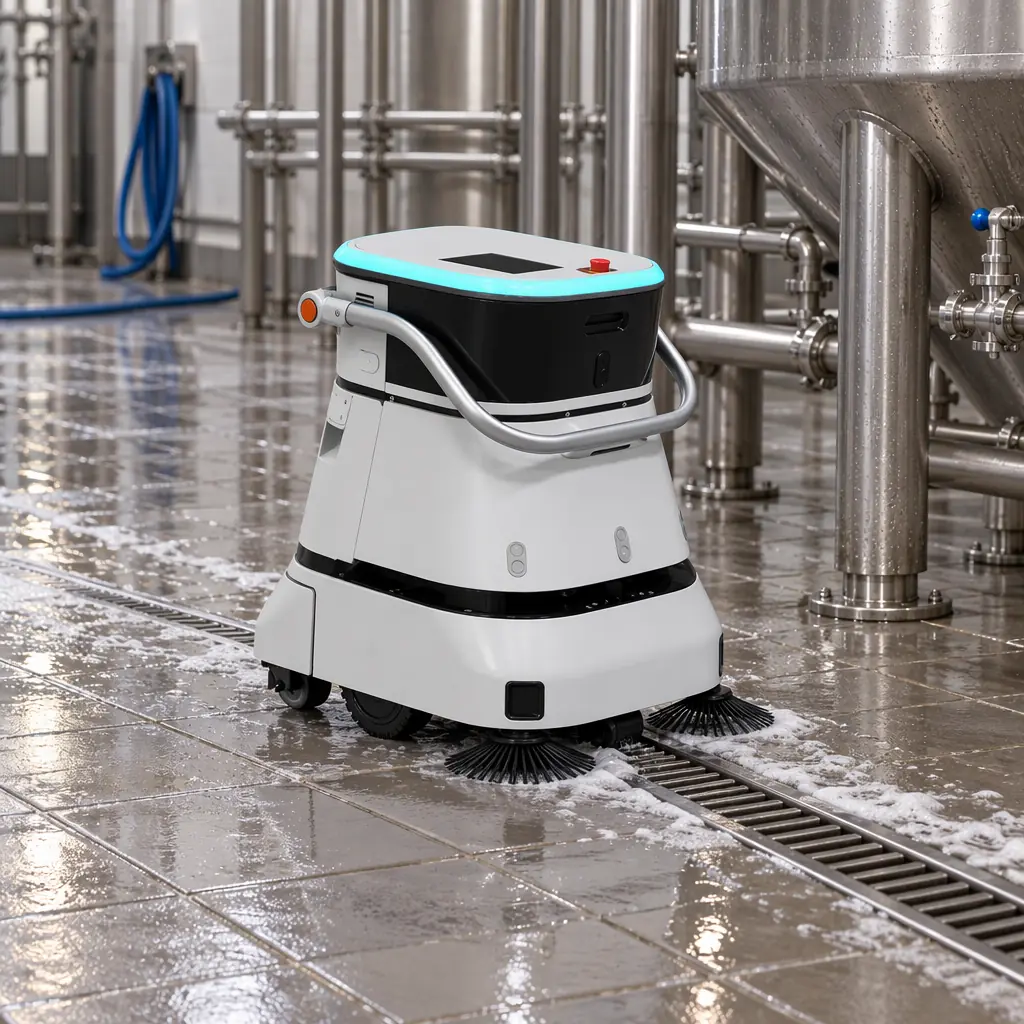
Seal and gland failure from caustic exposure. The wash chemistry that removes protein also attacks elastomers. Ask for the seal material by name and for the manufacturer's chemical compatibility data against the specific CIP chemistry at the specific concentration and temperature used in the plant. A generic "chemical resistant" answer is a red flag.
Cable and connector ingress. Cables flex every cycle and connectors are unmated by hand in a wet environment. The IP rating on the unit body is not the rating at the connector, and connectors are where water actually gets in. Specify the connector type and its rating separately.
Adhesion loss on a fouled surface. For crawler classes, the adhesion method degrades as the surface gets dirtier, which is precisely when it is needed most. A crawler that only holds on clean steel requires a pre-wash it was bought to eliminate.
Retrieval failure. A unit that stops inside the vessel is a confined-space entry to recover it, with the whole permit apparatus, which erodes the business case on the days it happens. Ask what the retrieval procedure is and how often it has been invoked in the field, not in the lab.
The pattern worth noticing: every one of these is an environmental failure rather than a control failure. The navigation and scrubbing technology in this category is mature; the survivability is not.
Hygienic Design Requirements Nobody Checks
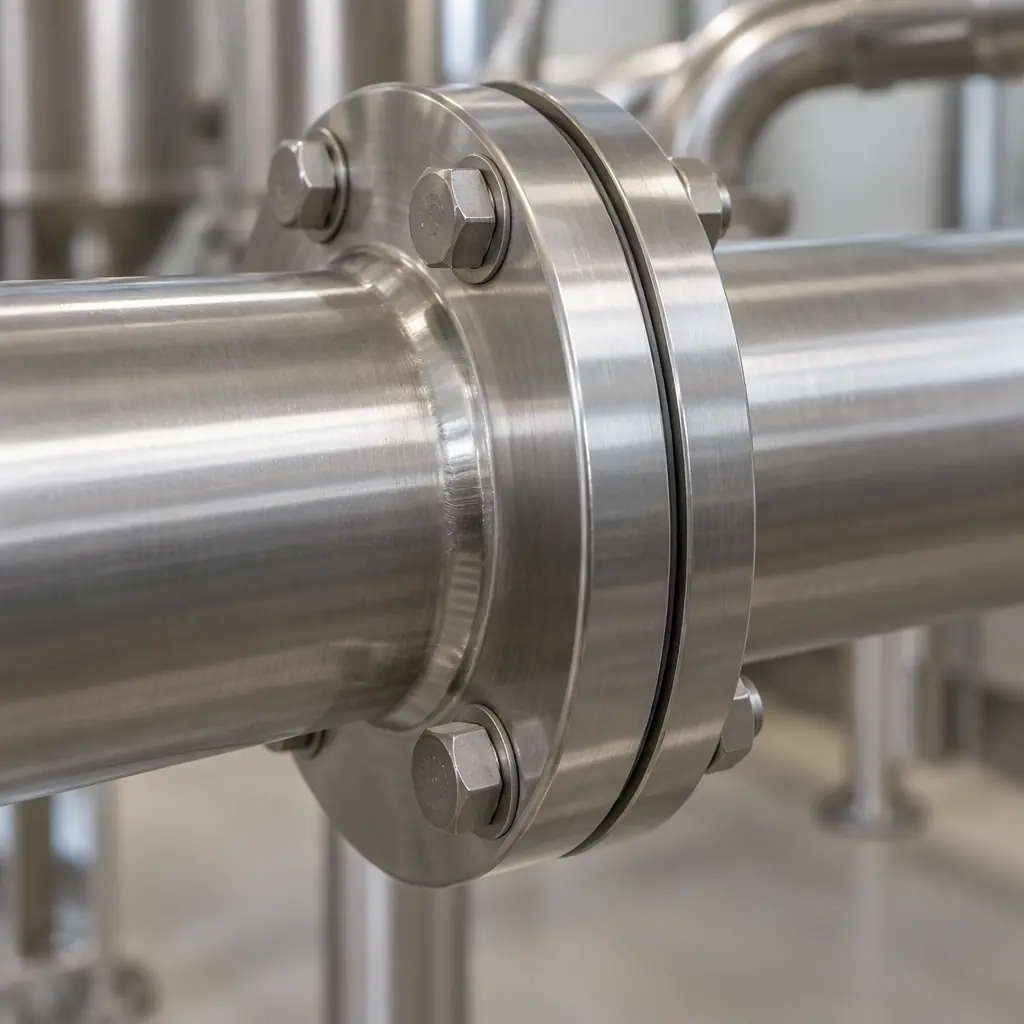
In food and beverage plants the robot is equipment in a food contact zone, and it is subject to the same hygienic design expectations as the vessel it cleans. Four checks catch most of the problems.
- Cleanability of the machine itself. Can the robot be washed down, and are there crevices, exposed threads, or fasteners where product residue collects? A robot that introduces its own harbourage site has made the plant less hygienic, not more.
- Material contact declarations. Any surface that touches a product-contact area, including the wash water as it passes through the machine, needs a declared material and a food-contact conformity statement. Wash water that has passed through an undeclared pump is a compliance question for the plant.
- Drainability. Water pools inside machine cavities. Any cavity that does not drain becomes a growth site between washes.
- Documentation of the wash as a validated procedure. An automated wash is a process step and falls under the plant's food safety plan. The robot supplier should be able to support validation of that step: contact time, chemistry concentration, temperature, and a verification method. This is where our guide to service robots and HACCP food safety compliance applies directly, and the verification logic in ATP testing and evidence-based cleaning verification translates to vessel surfaces with little modification.
For plants already running mobile robots elsewhere in the building, the hygienic zoning question is the same one covered in mobile robot qualification for GMP cleanroom environments, applied to a wetter and more corrosive setting.
Specification Sheet for a Tank Cleaning Enquiry
Send these to a supplier and compare answers directly. Vague answers on rows three and seven disqualify a vendor faster than any technical shortfall.
| Item | What to state |
|---|---|
| Vessel geometry | Volume, diameter, height, crown shape, agitator type and shaft position, manway size in mm |
| Residue type | Product, expected film thickness, whether baked-on or re-wetted, and how long it sits before washing |
| CIP chemistry and temperature | Actual concentrations and temperatures used, not the supplier's preferred chemistry |
| Access path | Manway clear opening, distance from the hatch to the farthest wetted surface, any internal obstructions |
| Required finish standard | The verification method and pass line, agreed before installation |
| Cycle time budget | Turnaround the vessel is entitled to, not the cycle time the machine can achieve in isolation |
| Ingress and seal specification | IP rating at the body and separately at every connector, with seal material named |
| Retrieval procedure | Written procedure for a unit that stops inside, and the field frequency of that event |
| Water and chemical draw per cycle | Litres and percentage concentration, so the utilities can be costed |
| Data output | Coverage and cycle record exportable per wash, for the plant's own documentation |
Where Automation Does Not Pay
Being honest about the negative cases saves a bad purchase. Three situations usually fail the arithmetic.
Infrequent cleaning. A vessel cleaned twice a quarter does not generate enough avoided entry cost to amortise a unit. The capital sits idle and the maintenance contract runs anyway.
Highly variable residue. Where the deposit changes with every campaign, a fixed wash recipe either over-cleans the easy campaigns, consuming utilities, or under-cleans the hard ones, requiring a manual entry that defeats the purpose. Complex fouling often still favours a validated manual procedure with good tooling.
Small vessels with generous access. A 2 m³ open vessel with a top hatch reachable by hand tools is faster to clean manually than to set up a machine. Automation earns its place where confined-space risk and scale are both present.
The useful screen: if the plant cannot state its current number of confined-space entries per year and the loaded cost of each, it is not ready to evaluate the purchase, because there is no baseline against which either a machine or a manual improvement can be judged.
The Takeaway
Tank and vessel cleaning automation is real but narrower than the category name suggests. Rotary nozzle systems, adhesion crawlers and insertable tracked units solve three different physical problems, and selecting the wrong class is the dominant failure. The business case rests on avoided confined-space entries rather than on cleaning labour, and it should be built from a counted baseline of entries per year and their loaded cost. Specify the chemistry, the access path, the retrieval procedure and the chemical compatibility by name before discussing price, and treat an automated wash as a validated process step with its own verification method rather than as a machine that replaces a person.
Get a Quote
Tell us about your space and workload, we reply within 24 hours.