HACCP Compliance for Service Robots in Food Production
At a glance: A service robot in a food facility is a piece of equipment that touches the production environment, which makes it subject to HACCP like every other piece of equipment. Yet most procurement teams buy on payload and battery life and then discover, at the first audit, that nobody defined which hygiene zone the robot may enter, how it is cleaned between allergen changeovers, or what evidence proves it did not contaminate the line. This guide maps the HACCP zone system to robot deployment, sets out the allergen changeover validation, and defines the swab-test record that turns a robot from a compliance question into a compliance asset.
Why a Service Robot Is an HACCP-Controlled Item
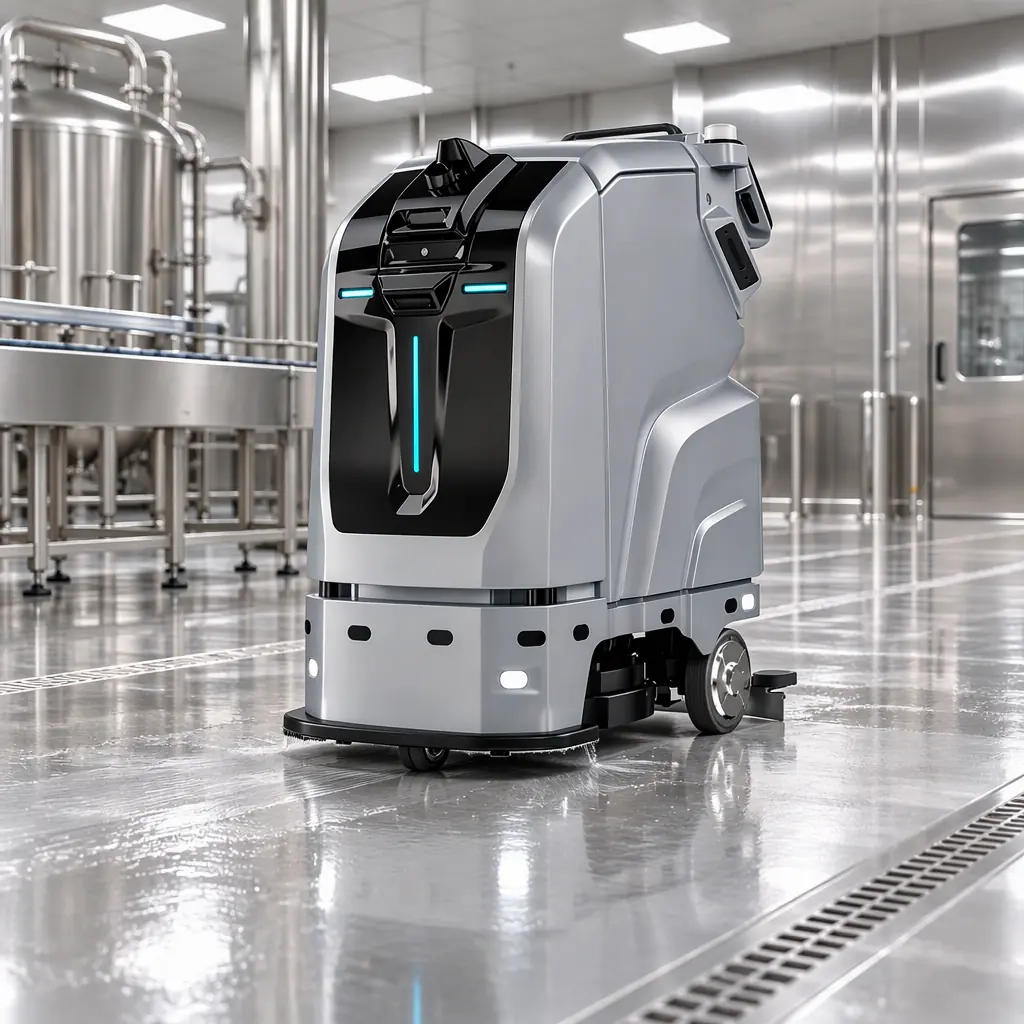
HACCP does not care what a machine is called. It cares whether the machine introduces, spreads, or fails to remove a hazard from the food contact environment. A scrubber that drives the same brush across a raw-prep floor and a finished-goods hall is a cross-contamination pathway, exactly as an unclean conveyor is. The moment a robot enters the food environment, it becomes a controlled item with a defined cleaning procedure, a defined zone restriction, and a defined verification step.
The Codex Alimentarius HACCP system is built on seven principles: hazard analysis, critical control points, critical limits, monitoring, corrective action, verification, and record-keeping. A robot deployment touches at least four of them. The hazard analysis must consider the unit itself. The monitoring must include the robot's cleaning state. The verification is the swab test. The record-keeping is the evidence pack an auditor will ask to see.
This is the same discipline that the pharmaceutical sector already applies to mobile equipment, set out in the guide to GMP-compliant mobile robots. Food manufacturing borrows the rigour but not the framework: instead of GMP cleanroom classification, the governing structure is HACCP zone mapping.
The HACCP Zone System and Robot Access Rights
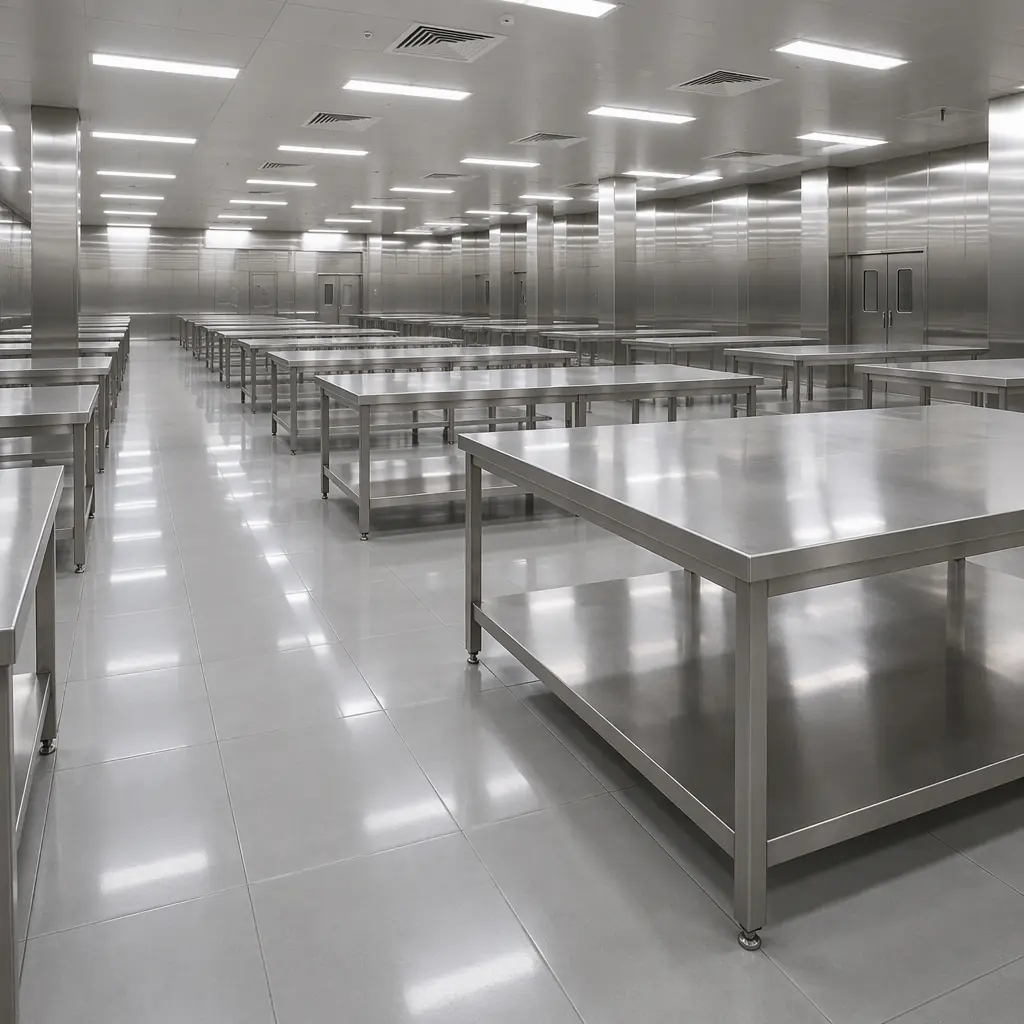
Food facilities divide the production area into hygiene zones by risk, and a robot's access rights differ by zone. Buying a robot that can physically reach a high-care area does not mean it is permitted to work there. The access decision is a hygiene decision, and it must be written into the site's food safety plan before the robot is unpacked.
| Zone | Typical area | Robot access | Cleaning requirement between zones |
|---|---|---|---|
| Zone 1, High care | Ready-to-eat packing, exposed product lines | Restricted, dedicated unit only | Full wet clean + disinfect + swab before entry |
| Zone 2, Low care | Processed raw areas, post-cook | Permitted with procedure | Wet clean after each shift |
| Zone 3, Raw | Raw meat, uncooked prep | Permitted | Rinse-down after each shift |
| Zone 4, Non-food | Warehouse, corridors, dry storage | Unrestricted | Routine schedule |
The rule that trips most projects is single-direction flow. A robot must not travel from a lower zone to a higher zone without a validated clean. If the site's layout forces a shared corridor, either assign one unit per zone or schedule a documented clean-and-disinfect at the boundary. The robot's navigation map should encode the zones as restricted regions so a programming error cannot send a raw-zone unit into a high-care hall by accident.
Where the robot has to earn its keep across zones, the routing logic matters as much as the hygiene logic, and the throughput arithmetic behind that routing is covered in the guide to deployment throughput planning.
Allergen Changeover: The Validation Nobody Plans For
Allergen control is where a robot earns its place or fails an audit. When a line changes from a product containing a declared allergen to one without, the cleaning step must demonstrably remove the allergen residue. For a robot, that means the unit that cleaned the allergen line must itself be cleaned before it touches the next product environment, or the allergen travels on the brush, the wheels, and the squeegee.
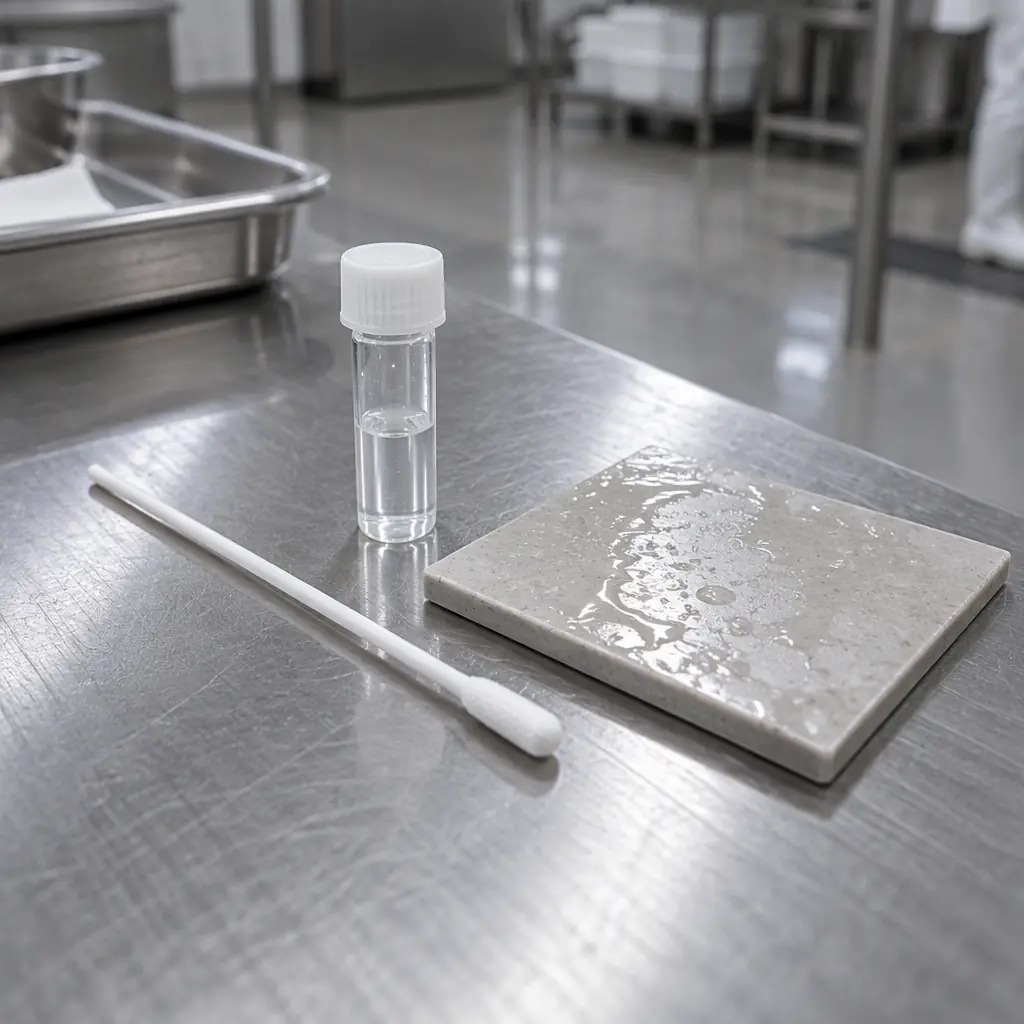
The validation is built on three measurements. First, a visual inspection of the robot's cleaning head after the changeover clean. Second, a swab test of the robot's food-contact surfaces, the brush, the squeegee, the tank lid, and the underside of the deck. Third, a swab or rapid-test of a defined sample area of the floor the robot next cleans, to confirm the allergen was not transferred. All three results are recorded against the changeover event.
Rapid-test kits make this practical within a shift. Lateral-flow allergen tests give a pass or fail in minutes and can be run by the operator at the changeover point, which is what makes the control a live control rather than a laboratory afterthought. The same verification discipline used for documented cleaning performance, covered in the guide to ATP testing and audit trails, applies here, with the allergen assay substituted for the general hygiene assay.
Wet Cleaning, Dry Cleaning, and What the Robot Tolerates
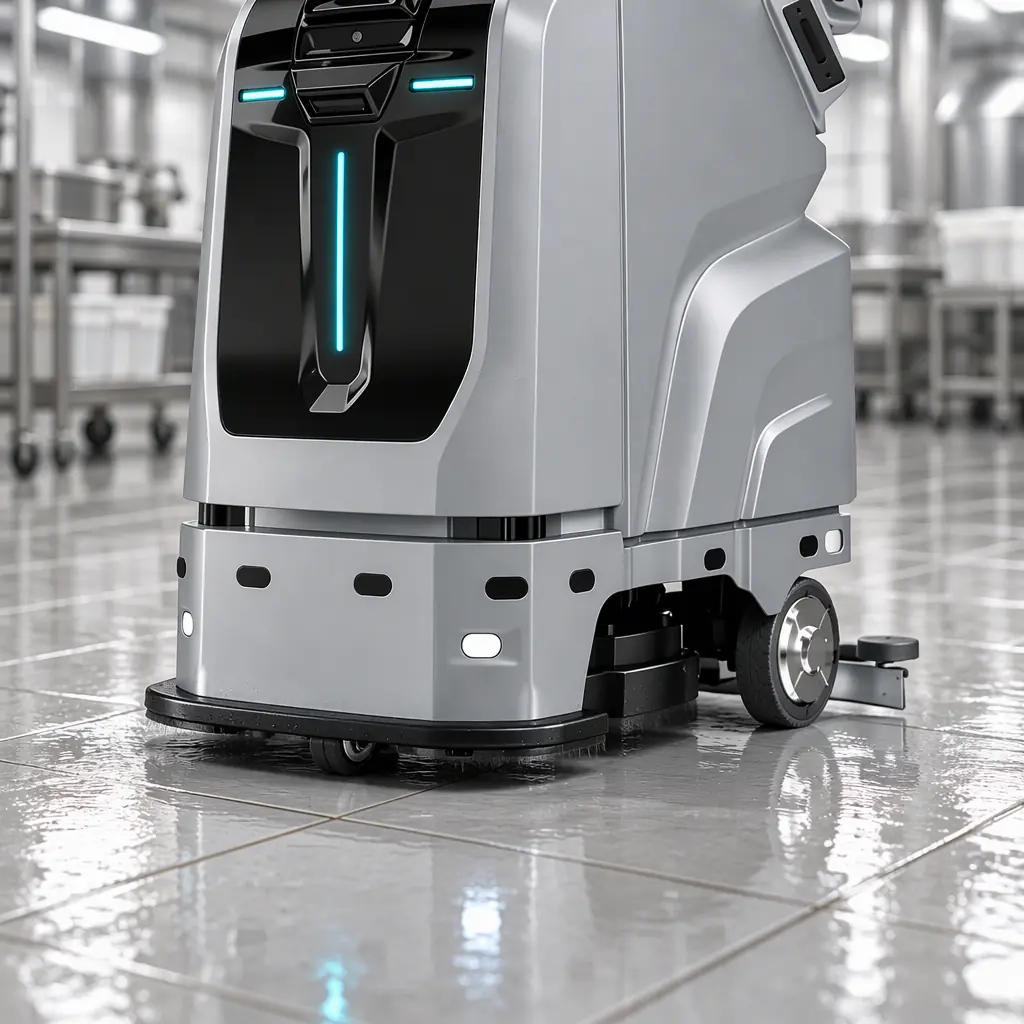
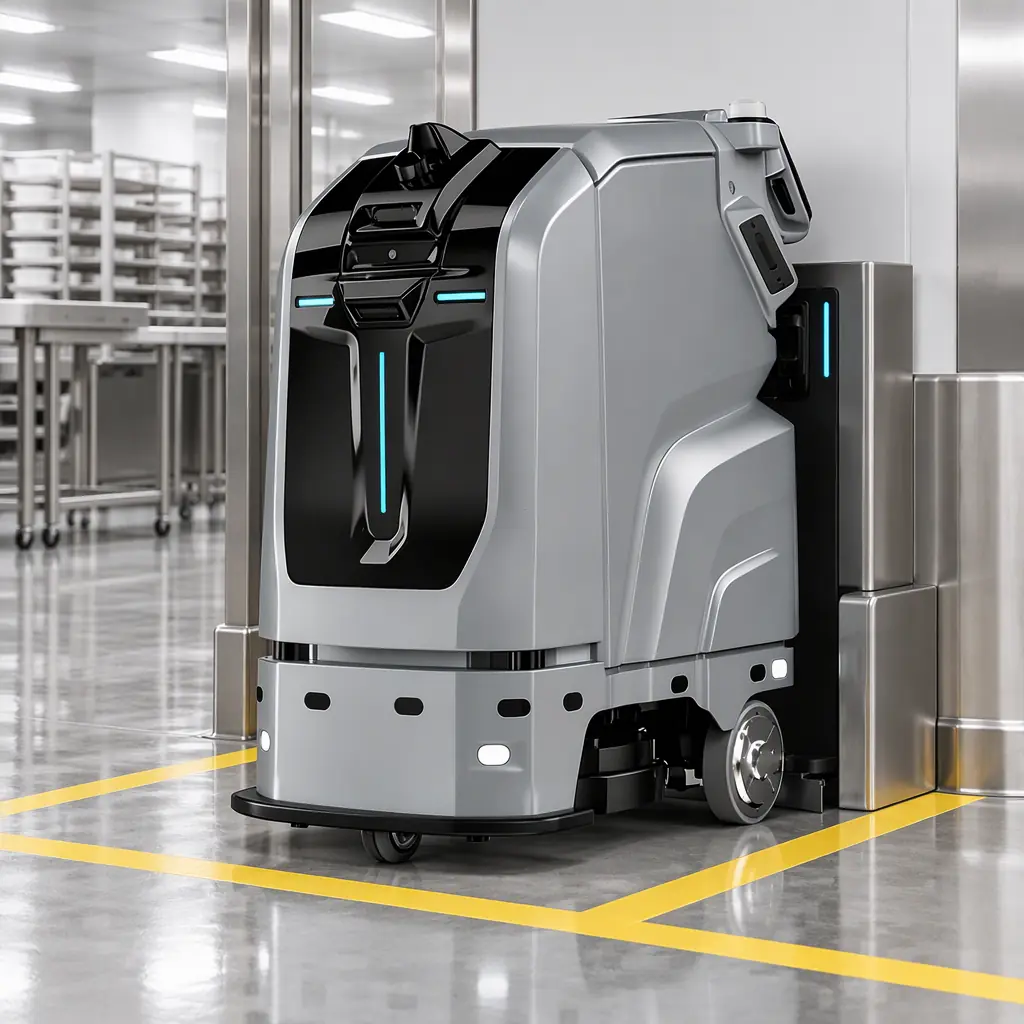
Food facilities clean wet or dry, and a robot must match the regime of the zone it serves. A wet-clean machine with an IP65 deck can be hosed down between shifts, which is what high-care work demands. A dry-clean-only unit cannot be washed at the brush; it relies on brush removal and surface wipe-down, which is acceptable in Zone 4 but insufficient for a high-care hall.
The specification that decides this is the ingress protection rating of the cleaning deck, not the rating of the drive base. A unit advertising IP54 overall may still have a brush motor that cannot take a direct spray. Ask for the IP rating of every surface the wash water reaches, and ask how the tank, the filter, and the squeegee are cleaned when they are off the machine. The water-detergent concentration and disposal rules that apply to that cleaning are set out in the guide to water and detergent cost.
Detergent choice is itself a compliance decision. A food-safe sanitiser must be on the site's approved list, mixed to the validated concentration, and given the correct contact dwell time. A robot that meters detergent automatically must be calibrated to that concentration, and the calibration becomes part of the verification record.
The HACCP Evidence Pack for a Robot Deployment
When the auditor calls, the robot must have a paper trail like any other controlled item. Build the pack at commissioning, not the week before the audit. The components are short and specific.
- Zone access register. Which unit is permitted in which zone, and the approval signature that authorised it.
- Cleaning procedure. The written, zone-specific clean step, including detergent, concentration, dwell time, and the surfaces covered.
- Validation record. The initial allergen and hygiene swab results that proved the procedure works, with the method and the pass threshold.
- Monitoring log. The per-shift record that the clean was performed, who performed it, and the swab result where required.
- Calibration record. The detergent-meter and any sensor calibration, with dates and tolerances.
- Maintenance record. Brush and squeegee replacement, tied to the preventive schedule in the maintenance guide.
The acceptance test that generates much of this evidence should be structured before the unit ships, using the gate discipline described in the acceptance testing and commissioning guide. A robot accepted without a validation record is a robot that will be re-argued at the first audit.
Common Ways Robot HACCP Compliance Slips
Failures follow a short, recognisable list. Each is cheap at the design stage and expensive at the audit.
- No zone mapping. The robot is deployed across zones without a written access rule and becomes a contamination bridge.
- Overclaimed IP rating. The drive base is sealed but the brush motor is not, so the wet clean damages the unit and the staff stop doing it.
- No allergen validation. The changeover clean is assumed rather than tested, and a residue transfer goes undetected until a customer complaint.
- Unapproved sanitiser. A detergent that is excellent elsewhere is not on the site's food-safe list, which invalidates the clean.
- Missing monitoring log. The clean happens but is not recorded, so the control cannot be verified.
- Stale map. The navigation map is not updated after a line change, so the robot takes a route through a zone it is no longer cleared for.
Handled this way, a service robot stops being a compliance liability and becomes a measurable control: a defined item, in a defined zone, with a validated clean and a test result filing itself into the food safety plan every shift.
Get a Quote
Tell us about your space and workload, we reply within 24 hours.