
Proving the Robot Actually Cleaned: ATP Testing and Audit Trails
At a glance: A cleaning robot reporting a completed route and a surface being measurably clean are two different claims, and procurement, clients, and auditors are increasingly asking for the second. The answer is not more confidence in the robot; it is an evidence chain: a measurement method that produces a number, a threshold agreed in advance, and a system log that ties the number to the run that produced it. This guide sets out how facilities verify robot cleaning with ATP testing and audit trails, and how to make the record defensible when someone challenges it.
Completion Is Not Cleanliness
Every service robot reports that it finished. The scrubber logged its route, the delivery unit logged its stops, the run terminated without a fault. None of that tells a facility manager whether the floor passed a hygiene standard, and increasingly the client on the other side of the contract knows the difference. A route-completion report answers the question \"did the machine run\"; a hygiene audit answers \"is the surface clean\". Only the second survives a client review, an insurer's question, or a health inspection.
The gap has a commercial edge. Where cleaning is delivered under a service contract, the deliverable is a standard of cleanliness, and the robot is the means. A facilities provider that can only show run logs is arguing means; a provider that can show measured results is evidencing the deliverable. Building that evidence chain is an operational task, not a marketing one, and it starts with choosing a measurement method that produces a number rather than an opinion.
The verification layer sits on top of the robot's own telemetry. What the platform logs about coverage, run time and faults — the subject of the fleet management software guide — is the raw material. Verification adds the independent measurement that says the logged run produced a clean surface.
ATP Testing: A Number Instead of an Impression
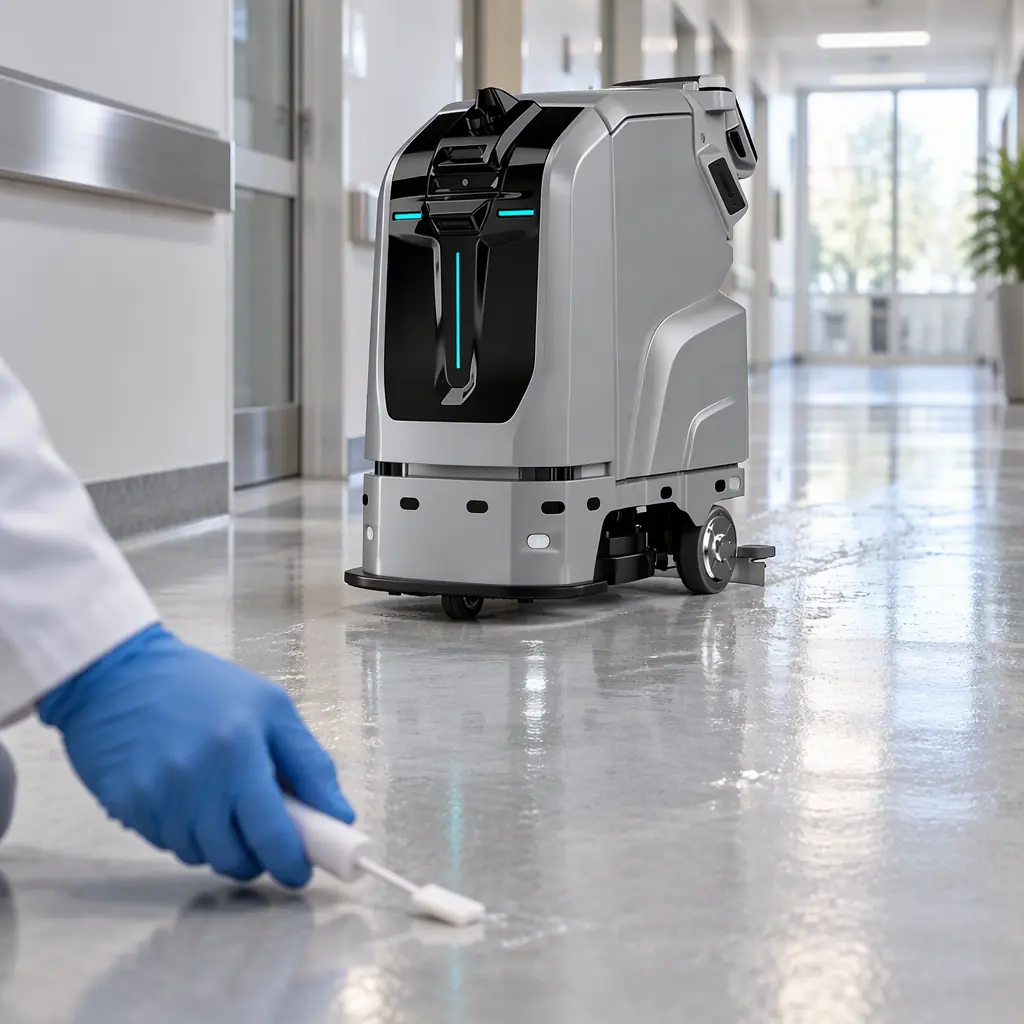
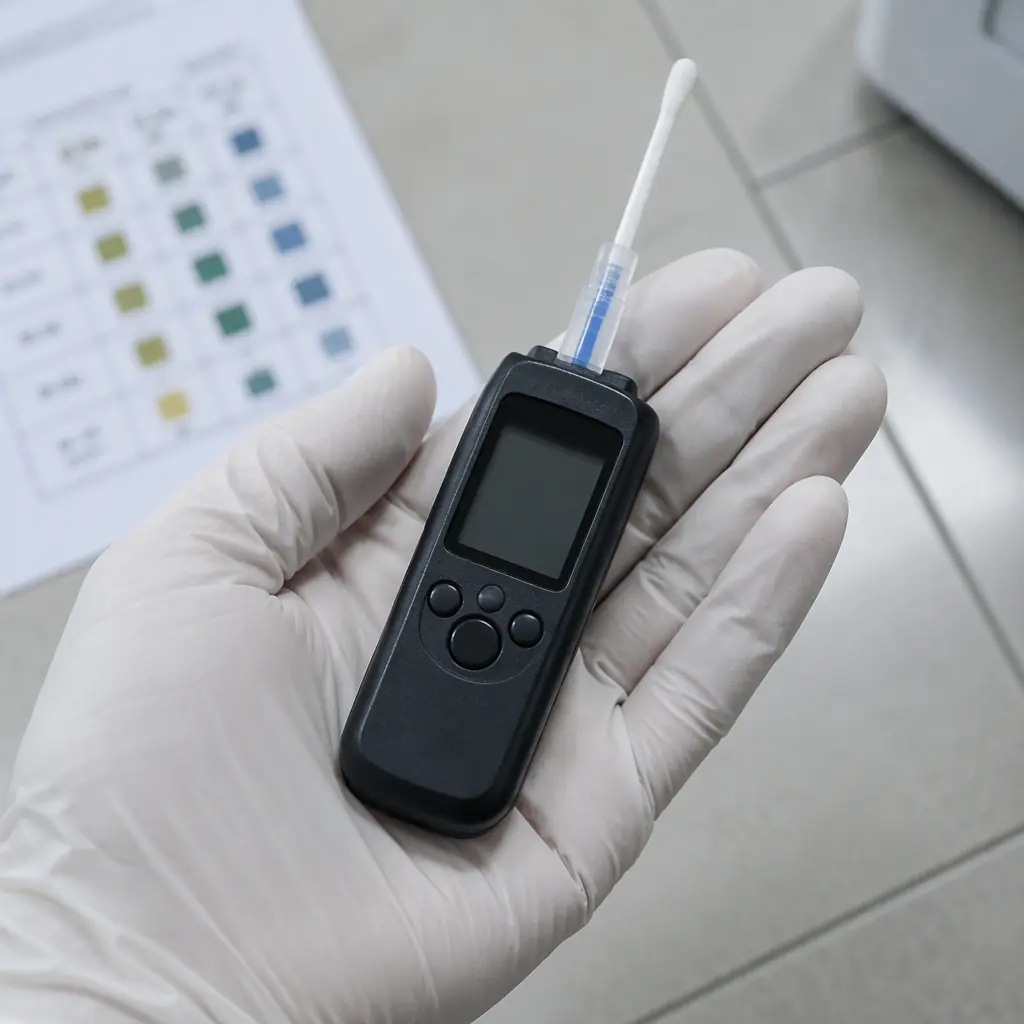
Adenosine triphosphate (ATP) swabbing is the mainstream field method for quantifying surface cleanliness, and it is the method most auditors accept because it produces a numeric reading rather than a visual judgement. A swab is taken from a defined area, the sample is read in a handheld luminometer, and the result is expressed in relative light units. The reading reflects biological residue — the organic soil that supports microbial growth — not a specific pathogen, which is the distinction that matters when the result is explained.
| Method | Output | Strength | Limitation |
|---|---|---|---|
| ATP swab (luminometer) | Relative light units, numeric | Objective, fast, audit-accepted, trendable | Measures organic residue, not pathogens; sensitive to swab technique |
| Visual inspection scoring | Rated scale | Cheap, covers appearance | Subjective; cannot detect invisible residue |
| Microbiological culture | Colony-forming units | Pathogen-specific | Slow — days to result; impractical for daily verification |
| System audit trail (robot logs) | Coverage, time, route | Automatic, continuous, granular | Proves the run, not the result; must be paired with sampling |
ATP is not a replacement for microbiological testing where regulation demands it, and it does not detect a specific pathogen. It is a rapid proxy that shows whether cleaning removed the organic soil that pathogens depend on, and it is used precisely because it can be applied daily across many points and compared against a threshold. The sampling discipline matters: a defined surface area, a consistent swab pattern, and reading within the luminometer's stated window. A sloppy swab produces noise, and noise destroys the credibility of the whole programme.
Setting the Threshold Before You Measure
The single most common failure in cleaning verification is measuring first and arguing about the threshold afterward. A pass or fail line must be agreed with the client, the auditor, or the internal quality owner before the first swab is taken, and it must be tied to the standard the contract references. Two thresholds are usually defined: one for the reading immediately after cleaning, and a stricter one for high-touch or high-risk surfaces.
The sampling plan is as important as the threshold. A verification programme that swabs the same three easy spots every week proves nothing; one that samples a defined grid including high-touch points, edges, and previously failed locations produces a trend that stands up. Record for each sample: location identifier, surface type, time since cleaning, the reading, and the pass or fail against the threshold. That five-field record is the minimum for a defensible result, and it is the same discipline a data-driven cleaning baseline follows, as set out in the productivity baseline guide.
- Fix the threshold in writing and reference the cleaning standard it implements.
- Randomise sampling points within a defined grid, and always re-test previously failed points.
- Record the negative results. A verification programme that only reports passes is not a measurement programme; it is a press release.
- Compare like with like. Sample the same surface types at the same time- since-cleaning intervals so the trend is comparable.
The Audit Trail: Tying the Run to the Result
A reading proves a surface was clean at a moment. An audit trail proves which run produced it and that the run met its parameters. The two together form the evidence chain that survives a challenge. The audit trail is generated by the fleet platform and should capture, at minimum, the route executed against the route planned, the run timestamps, any deviations or skipped zones, and the fault or intervention record for the run.
The chain is what makes the claim specific. Instead of \"the lobby was cleaned last night\", the record shows the exact route, the coverage percentage achieved, the dwell time on the high-traffic lanes, and the ATP readings taken at defined points within a defined interval of the run. When a client disputes a result, the operator can show which run covered the disputed area and when, rather than asserting that the schedule was followed. This is the same granularity that makes a fleet decommissioning or incident review tractable, because both depend on a continuous, timestamped operational record; the data-ownership and retention terms that govern it are set out in the data ownership and API guide.
| Evidence layer | Source | Answers |
|---|---|---|
| Route and coverage log | Robot / fleet platform | Did the run cover the area, and to what percentage |
| Run timing | Fleet platform | When the area was cleaned relative to the sample |
| ATP reading | Luminometer, manual | Was the surface measurably clean after cleaning |
| Exception log | Fleet platform | Was the run completed normally or interrupted |
| Trend report | Combined | Is cleanliness improving, stable, or degrading over time |
Turning Verification Into a Weekly Routine
A verification programme that runs as a one-off audit decays within a month. The workable cadence is a short weekly cycle: sample a defined set of points, compare against threshold, review any failures with the operating team, and adjust routes or dwell times where the data shows a recurring miss. The adjustment loop is where verification earns its keep, because it converts a cleanliness result into an operational change rather than a report that gets filed.
Where a point fails, the first questions are operational, not technical: was the run interrupted, was the pass schedule correct for the traffic since the last clean, was the detergent concentration within specification. The water and detergent economics that determine whether a concentration change is affordable are set out in the water and detergent cost guide, and a verification programme frequently surfaces that the issue was a consumable setting rather than the robot. Where a point passes consistently, the sampling plan can be rebalanced toward the points that carry risk.
The governing principle is simple: the robot supplies the run, the sampling supplies the result, and the platform supplies the link between them. Any one alone is an assertion; all three together are evidence. For a facilities provider, that difference is the difference between telling a client the floor was cleaned and showing them it was.
To discuss verification and audit-trail requirements for a robot cleaning deployment, send us the details through the enquiry form and we will map the sampling plan to your standards.
Get a Quote
Tell us about your space and workload, we reply within 24 hours.