
At a glance: Warranty and service contracts are usually read as legal documents and priced as a single line item. Read as economics, they are three separate bets on failure, wear and coverage window. This guide separates the three, gives defensible mid-market ranges for a full-coverage plan, a parts-only plan and the parts margin inside each, and explains why the cheapest premium is usually the most expensive contract.
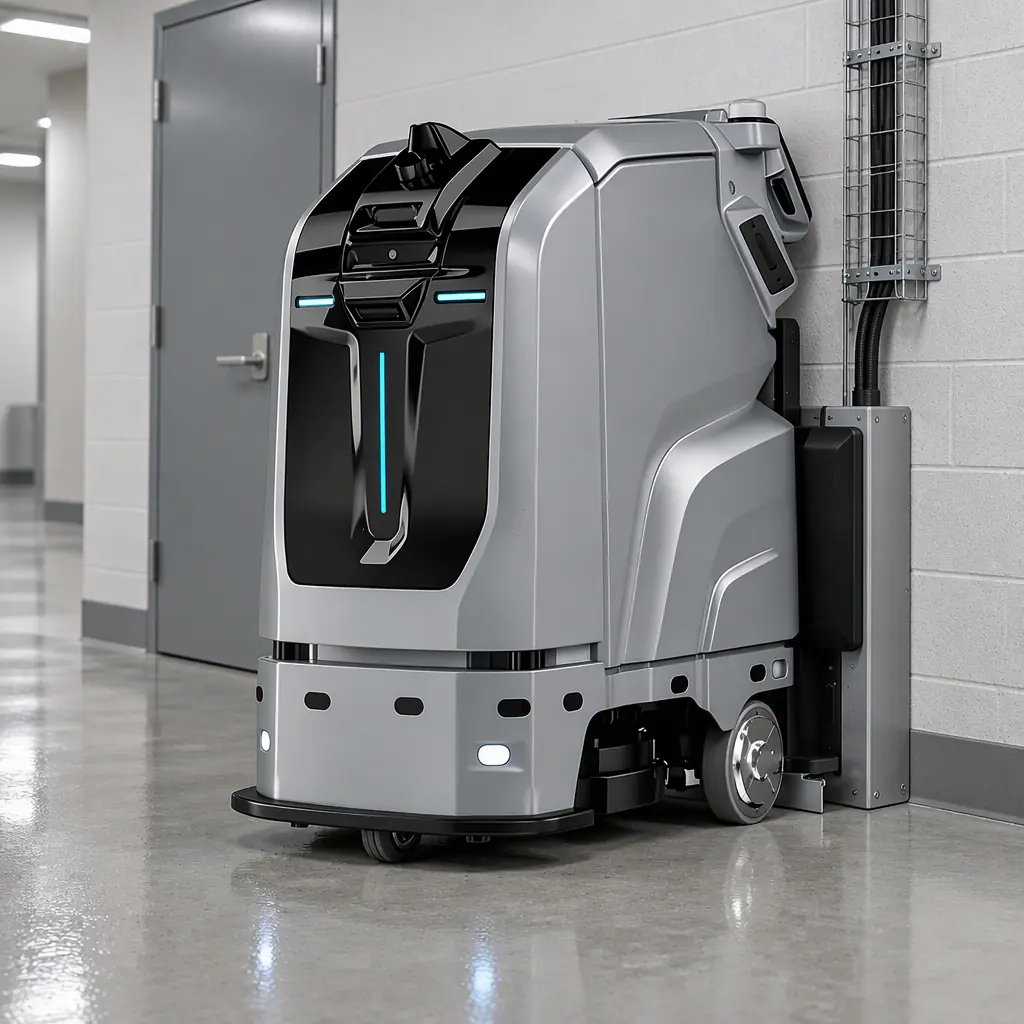
Two documents arrive with every robot fleet, and procurement teams treat them as one thing. The warranty is what the manufacturer gives you. The service contract is what you buy on top. The first has a page count and a duration. The second has a price, a response time and an exclusion list nobody reads until month fourteen.
That framing is why service contract decisions get made on the premium alone. The premium is the smallest number in the room. The three numbers that decide whether a contract is good value are the failure rate the plan implicitly assumes, the wear-and-tear liability each tier moves onto your balance sheet, and the parts margin the plan charges you for the privilege of not holding spares. All three are estimable before you sign, and this guide estimates them.
Three Different Bets Inside One Contract
A service contract bundled into a single per-unit annual fee hides three economically separate agreements. Unbundling them is the single most useful analytical move available, because each has a different risk profile and each should be negotiated on its own logic.
| Component | What You Are Buying | Who Bears the Risk | How to Price It |
|---|---|---|---|
| Failure coverage | Insulation against unexpected breakdown — parts and labour for anything not caused by you | Transferred to the vendor | Expected annual failure cost = failure rate × average repair cost. If the premium exceeds this, you are buying certainty, not savings. |
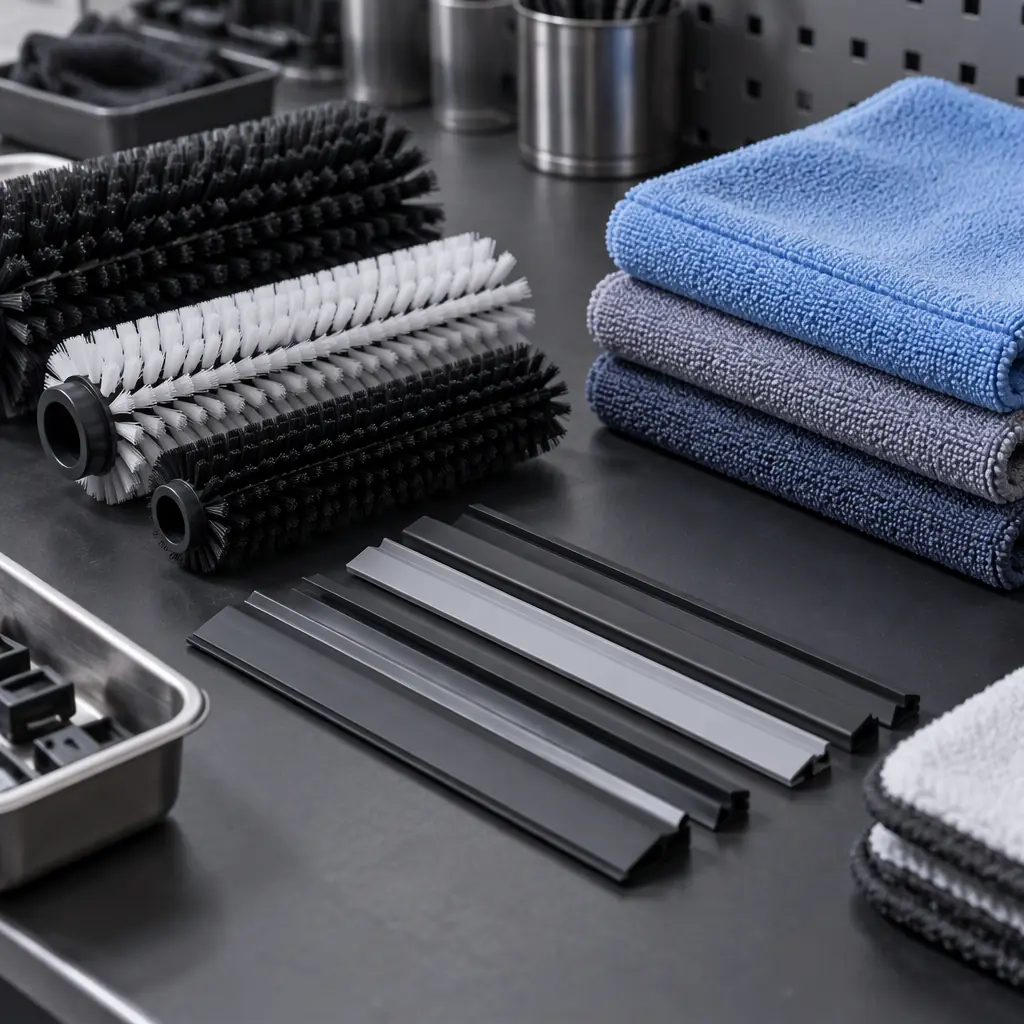
| Wear-and-tear coverage | Consumables and life-limited parts — brushes, squeegees, pads, filters, drive belts, batteries at end of cycle | Partly transferred; the tiers differ here more than anywhere else | Build the consumables schedule yourself first. Coverage is only worth paying for above what you can forecast. |
| Coverage window and response | Hours of operation covered, response-time SLA, on-site versus depot repair, loaner provision | Vendor takes an operational risk that has a real cost | Value it against your own downtime cost per hour, not against the premium. |
The failure-coverage component is the one most often mispriced, in both directions. A vendor pricing a fleet-wide contract pools the risk across all its installed units, so a plan priced at a per-unit premium can be genuinely cheaper than self-insuring when your fleet is small. At fleet scale the pooling advantage reverses: with thirty units you have your own actuarial base, and the premium stops being insurance and becomes a markup.
What Good Service Contract Pricing Actually Looks Like
The table below gives the structure and mid-market range for a commercial indoor cleaning robot with a list price in the mid-five-figure euro range, sold into Europe or North America with a local service partner. These are illustrative planning ranges, deliberately shown as ranges because the underlying labour rates differ by more than the hardware does between markets. Substitute your own labour rate before quoting any of it.
| Plan Tier | Typical Annual Premium | What Is Included | What You Still Pay |
|---|---|---|---|
| Warranty only (years 1–2) | €0 | Manufacturing defects, software faults, non-consumable parts failure | All wear items, all labour after the first year on some terms, shipping to depot |
| Parts-only extension | 6–9% of unit list price per year | Non-consumable parts including motors, controllers, sensors, drive assemblies | Labour and travel at prevailing rates, typically 3–6 hours per intervention |
| Full coverage | 12–18% of unit list price per year | Parts, labour, travel, preventive maintenance visits, firmware, defined response SLA | Consumables below the wear schedule, damage from misuse, site power faults |
| Full coverage + loaner | 18–25% of unit list price per year | Everything above plus a replacement unit during depot repairs beyond the SLA window | Consumables, site-side costs to receive and commission the loaner |
Two structural observations matter more than the numbers. First, the leap from parts-only to full coverage is roughly double the premium, and the justification is entirely labour and travel, not parts. Second, the loaner tier exists because downtime has a cost, and the vendor is exploiting the gap between your downtime cost and the cost of a spare unit. If your own arithmetic says an idle machine costs less than the loaner premium over a year, declining the loaner tier is a rational decision, not a cost-cutting mistake.
Self-Insure or Buy Coverage: The Break-Even
The decision reduces to a comparison between a known premium and an expected loss. Expected annual failure cost is the product of three quantities you can bound before signing: failure events per unit per year, the share of events that are not covered by the base warranty, and the average cost of an uncovered event including labour and travel. The break-even logic then runs as follows.
| Input | Conservative | Central | Adverse |
|---|---|---|---|
| Uncovered failure events per unit per year | 0.5 | 1.2 | 2.5 |
| Average cost per event (parts + 4 h labour + travel) | €450 | €800 | €1,400 |
| Expected annual uncovered cost | €225 | €960 | €3,500 |
| Full-coverage premium on a €45,000 unit at 15% | €6,750 | €6,750 | €6,750 |
| Verdict at that premium | Self-insure clearly wins | Self-insure wins on cost alone | Coverage wins |
The table makes an uncomfortable point. At mid-market full-coverage pricing, the pure financial case for coverage only closes in the adverse scenario. That does not mean the contract is bad value; it means you are buying something other than expected repair cost. What you are buying is the removal of a budget variance, a guaranteed response time you would otherwise have to source competitively in an emergency, and single-point accountability when a failure stops a contractually committed cleaning programme. Those are real goods. The discipline is to name them, price them separately, and decline to pay a full-coverage premium to obtain only one of them. The budget mechanics of that variance are set out in budget planning for a fleet.
The Parts Margin You Are Paying
The most opaque number in a service contract is the markup on parts. A full-coverage plan charges a premium that includes an implied parts budget, but the parts themselves are priced at the vendor's schedule when they are used, and the schedule is set by the vendor. That creates a structural conflict of interest which is worth pricing explicitly rather than arguing about philosophically.
The practical moves are straightforward. Ask for the current parts price list at contract signature and an annual indexation cap on it. Ask which parts are proprietary single-source versus commercially available standard components, because on a scrubber the squeegee blades, brush discs, filters and drive belts are frequently standard items you could source independently — and if the contract forbids that, the forbiddance has a price. Ask for the wear-item consumption record from an equivalent installed fleet, not a datasheet estimate. A vendor with a real installed base can produce twelve months of actual brush and squeegee consumption for a comparable site class; a vendor that cannot is pricing your risk from marketing material. The same discipline applies to the consumables schedule itself, which is modelled in spare parts and consumables planning.
Clauses That Move Real Money
Beyond price, four clauses determine whether a contract behaves the way its premium implies. Each has a specific thing to look for.
- Response-time definition. "Response within 24 hours" means what, exactly — acknowledgement, remote diagnosis, or a technician on site? The gap between those three readings is typically 16 to 24 hours, and it is the difference between a one-shift and a two-shift outage. Insist the SLA defines on-site arrival, and that remote diagnosis time does not consume it.
- Exclusion list, read literally. Water ingress on a floor scrubber, damage classified as site-related, and power-supply faults are the standard three exclusions on cleaning fleets, and they are broad enough to cover a large share of realistic failures. Downgrade the price, or negotiate the exclusions down, but do not sign exclusions you have not priced.
- Service credit versus termination right. Most contracts offer a service credit for missed SLA. On a fleet with contractual cleaning obligations, a credit does not solve the problem, because the credit is financial and the problem is operational. Ask for a termination right after N consecutive breaches, or a rental credit that funds a substitute machine.
- Parts availability guarantee. An end-of-life notice period and a committed spares window turn a hardware decision into a fleet-lifecycle constraint. A five-year spares guarantee on a machine with an eight-year viable life is a hidden replacement obligation in year six. This is the mechanism behind the analysis in replacement lifecycle planning.
The clause list is not long, but each item on it maps to a real line in a real budget, and each one is cheaper to negotiate before signature than after the first failure. Contracts priced without them are priced on optimism.
Firmware, Software and the Coverage Window Nobody Prices
One more component sits outside the parts-and-labour logic entirely, and on robot fleets it is frequently the largest unpriced exposure. A fleet's value depends on navigation and dispatch software that receives updates, and on a cloud service that stays available. Neither is a wearable part, neither appears in a consumables schedule, and both can be excluded from a service contract while being contractually required for the machine to work.
Three questions close that gap. Is firmware and navigation software support included in the coverage window, and for how long after end of sale? If the cloud dispatch service is discontinued, does the machine continue to operate in a degraded but functional mode, or does it stop — and who bears that risk? If the vendor is acquired or discontinues the line, what happens to the licence and the spares window? A useful contract answer treats these with the same specificity as a motor replacement, because functionally they are the same class of event: something the vendor controls that determines whether your asset is productive. The security and data side of the same dependency is covered in security and data privacy for robot fleets.
What AOMAN's Coverage Structure Does Differently
AOMAN FUTURE supplies the D1 delivery platform, the C1 large-format scrubber and the C2 Pro compact cleaner, and structures coverage in tiers rather than as a single bundled plan, which is what makes the three-bet analysis above usable in practice. The base warranty runs two years on non-consumable parts and covers manufacturing and software faults. Wear items — brushes, squeegees, pads and filters — are documented with a consumption schedule per site class at commissioning, so the consumables budget is a known quantity rather than an annual surprise, and those items are purchasable independently rather than through a locked single-source channel.
The area where AOMAN is deliberately specific is the software dependency. Fleet navigation and dispatch run on a platform whose support window is stated at the point of sale, and units are designed to continue operating in mapped zones if the cloud layer is unavailable, which removes the single hardest risk to price in a coverage negotiation. What AOMAN does not do is provide a loaner tier on tier-one plans or cover site-side power faults and water ingress, both of which are quoted separately when a deployment requires them. The honest framing is that the tiers make the trade-off visible instead of burying it: you can see exactly what you are self-insuring and what you are transferring. For a side-by-side of the capital structure decision that sits above the contract, see lease versus buy, and for the wider framework see the maintenance and total cost of ownership guide.
Running the Negotiation in the Right Order
The sequence matters, because each step produces an input the next one needs. Running it out of order is how fleets end up paying for coverage against a risk they never quantified.
- Build the consumables schedule first. Site class, area, shift count and floor type determine brush, pad and squeegee consumption. This is the one component you can forecast accurately, so it should never be insured.
- Bound the uncovered failure rate. Ask every shortlisted vendor for the failure-event rate on a comparable installed fleet, and ask for the definition of an event. Compare the definitions before comparing the rates.
- Price your own downtime hour. Use the machine's committed cleaning obligation to derive cost per idle hour. This number is the ceiling on what response-time coverage is worth to you.
- Ask for the parts list and the indexation cap. Get both in writing at signature, with the current price schedule attached.
- Decide the tier per site, not per fleet. A high-visibility site with contractual obligations justifies full coverage plus a loaner. A low-traffic site with tolerant schedules frequently does not, and the same contract tier across a mixed portfolio is almost always wrong in one direction or the other.
- Re-run the arithmetic annually. Failure rates fall as a fleet matures and consumables knowledge improves, so a contract that was correct at year one is often overpriced by year three. The renewal is a new decision.
Do that and the service contract stops being a percentage of list price that nobody can defend, and becomes a priced transfer of three named risks with a documented residual. That is a defensible line in a budget review, and more importantly it is one you can revise when the data comes in. For the procurement context around it, see writing a robot RFP.