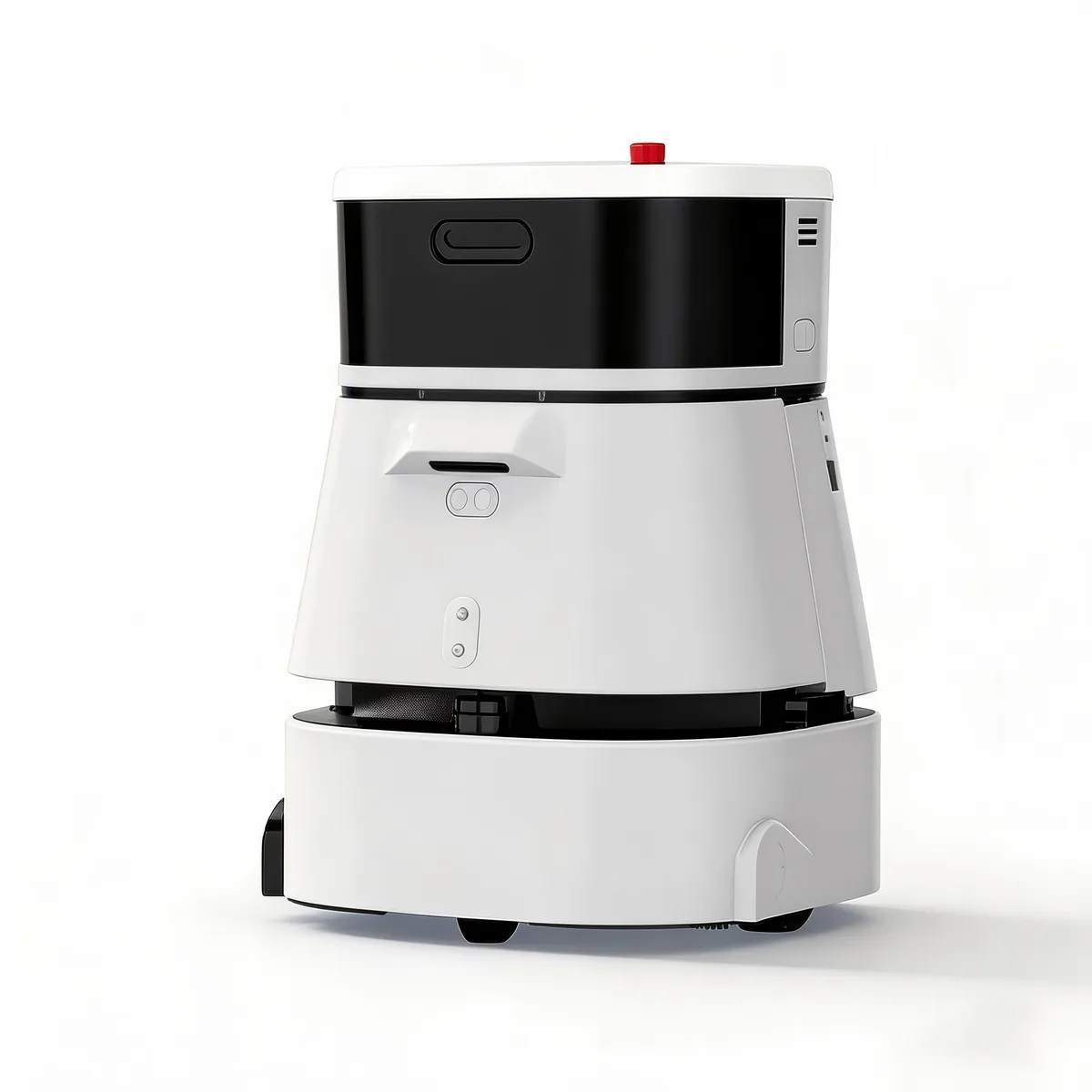
A 40-suite pet boarding facility with an attached grooming salon ran its 2025 operations audit and found its hygiene bottleneck in the turnover window: each kennel suite required a full disinfect-and-dry cycle between boarders — 25 minutes of staff time per suite, and the facility turned 18–22 suites a day during peak season. The second finding was the floor: the grooming station floors were swept four times a day but the hair-and-dander load — the single most common allergy complaint from both staff and boarding clients — tracked from the grooming area into the kennel corridor and the lobby, and the facility's EPA-compliant disinfectant log showed the corridor floors were being cleaned less often than the protocol required because the manual schedule simply could not keep up with the grooming traffic. The third was the supply run: staff members walked an average of 3.1 miles per shift fetching food, medication, towels and grooming supplies between the storage room, the kennel wing and the grooming stations.
Pet care facilities are a hygiene business with a logistics layer, and the veterinary clinics guide documents the adjacent animal-care pattern; this guide covers the boarding-and-grooming-specific version, where kennel-run disinfection, outdoor yard maintenance and supply logistics are the three highest-value robot roles — the indoor floors that carry the hair-and-dander load, the outdoor yards that no indoor vacuum can reach, and the delivery loop that keeps staff with the animals instead of walking supply runs.
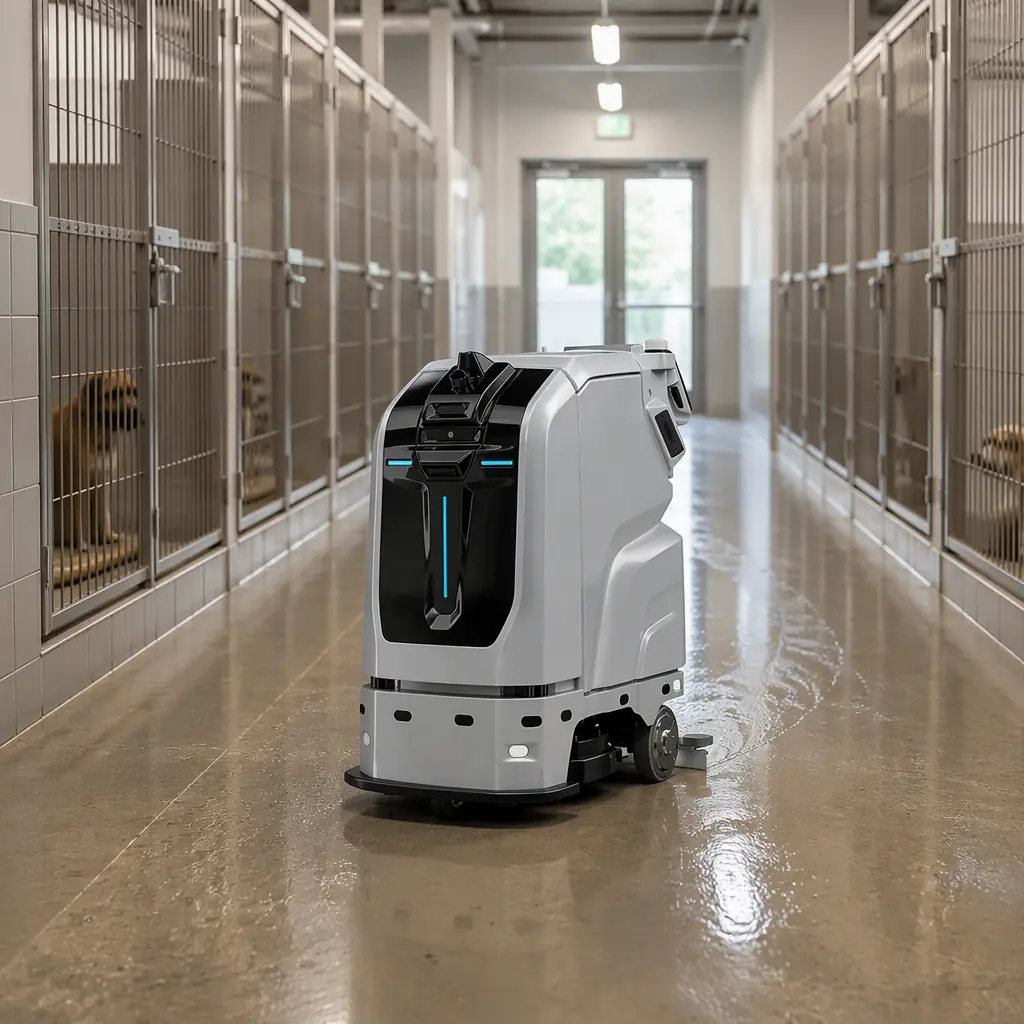
Kennel Corridors & Grooming Stations: The Disinfection Cycle
Pet care floors carry a specific contamination profile — hair, dander, tracked outdoor debris, and the biological residue that makes disinfection a protocol rather than a preference — and the turnover window between boarders is where hygiene is won or lost. The CLEINBOT M79 scrubber covers the interior loop: single-pass scrub, vacuum and mop at up to 2,000 m²/h — a 600 m² kennel corridor and grooming block in about 20 minutes — with a 45L tank, adjustable water output for the transition from sealed kennel floors to tiled grooming areas, and auto-return docking that lets it run between-turnover passes without a dedicated operator. The specification framework in the commercial cleaning robot buyers guide applies; the pet-care-specific rule is the disinfection cycle: the M79 runs a short kennel-corridor pass after each suite turnover, and the facility's disinfectant log now records machine passes with timestamps instead of relying on manual completion — the documented-hygiene pattern the safety standards guide covers from the liability side and the cleanrooms guide documents for controlled environments, applied to a facility where the "contaminant" is hair and dander rather than particulates.
The hair-and-dander design rule is the one facility owners ask about first: the M79's route is sequenced to clean the grooming stations first and the kennel corridor second, so the hair load is picked up at its source before it tracks into the boarding wing — the same "clean the source before the sensitive zone" logic the correctional facilities guide documents for controlled-movement facilities, applied to the allergy and hygiene problem instead of the security problem.
Outdoor Yards: Where Indoor Vacuums Stop
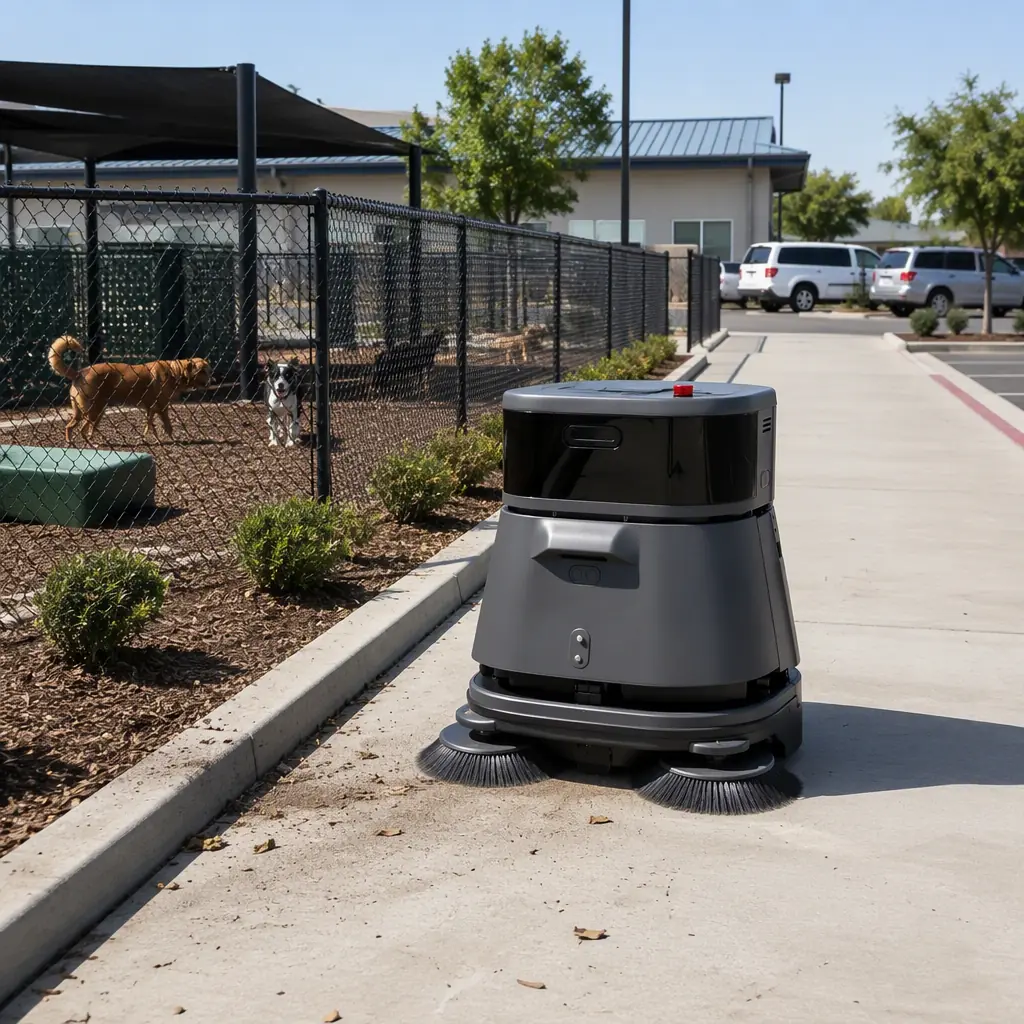
Boarding facilities and dog daycares run outdoor yards — exercise runs, waste-collection zones, parking lots and the transition strips where outdoor debris gets tracked inside — and no indoor vacuum reaches them. The CLEINBOT CC201 outdoor sweeper covers the yard loop: a 1,020 mm sweeping width at 3,000 m²/h, a 130L dust container that auto-empties into an 800L docking station, IP67 sealing with a rain sensor for all-weather yard duty, and GPS + LiDAR + IMU navigation that follows the approved yard loop between exercise runs. Its 10-hour battery runs the off-peak program against the morning and evening yard schedules, and its -10°C to 50°C range covers both northern winter boarding and desert summer daycares.
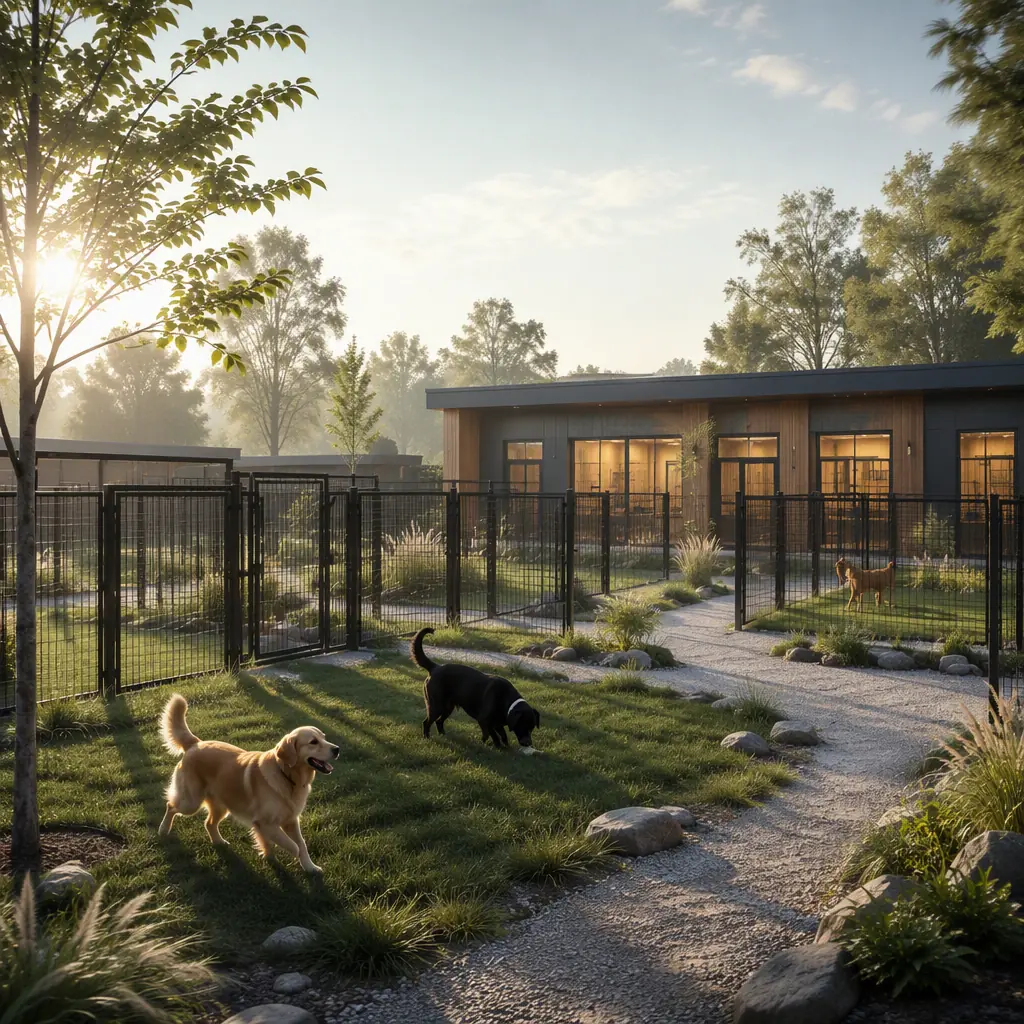
The outdoor pattern the outdoor autonomous cleaning guide documents for parking lots and public spaces applies directly: the CC201 runs the yard loop on a documented schedule, the waste-collection zone is cleaned first so the yard debris does not track into the kennel wing, and the facility's outdoor hygiene — the surface that clients see when they drop off their pets — is maintained without a staff member spending two hours a day on a push broom.
Supply Logistics: Staff Stay With the Animals
The most expensive walking in a pet care facility is done by the people whose job is animal care: staff walking food, medication, towels and grooming supplies between the storage room, the kennel wing and the grooming stations. The CADEBOT L100 covers the delivery loop: a 400 mm-wide platform that clears standard doorways and kennel-gate widths, four independent trays rated for 15 kg each, and a 40 kg total payload that carries a full supply run in one trip — 6–8 deliveries per hour across the facility, including the medication run that used to cost a staff member a 15-minute round trip per kennel wing. The same pattern the hospital delivery robots guide documents for pharmacy and lab runs applies at pet-care scale: the robot runs the route, the staff stays with the animals, and every delivery is logged by the fleet dashboard — including the medication handoffs that the facility's care records require.
Multi-Site Facilities: One Dashboard, Every Kennel
Boarding chains and combined daycare campuses run multiple facilities with the same hygiene standard and the same supply pattern, and the multi-site deployment guide documents the fleet pattern: every M79, CC201 and L100 reports to one cloud dashboard, routes and schedules are configured remotely by the regional operations office, and a chain with eight facilities runs the same disinfection cycle, the same yard loop and the same supply routes everywhere — with the fleet management guide covering the operational layer and the staff training guide documenting how pet-care teams build the internal expertise to run the fleet. The RaaS financing guide covers the subscription structure that fits pet-care budgets: most facilities start with one M79 on the kennel-corridor loop and one CC201 on the yard, run one peak-season cycle with the documented hygiene logs, and add the L100 when the supply-run walking time becomes the staff-productivity bottleneck.
Deployment Table for Facility Types
| Facility type | Interior fleet | Outdoor fleet | Monthly cost (RaaS) | Staff hours returned |
|---|---|---|---|---|
| Grooming salon (4–8 stations) | 1 × M79 (grooming floors + lobby) | — | $1,200–1,900 | 60–100/month |
| Boarding facility (20–60 suites) | 1–2 × M79 (kennel corridors) | 1 × CC201 (yards + parking) | $2,600–4,200 | 180–320/month |
| Daycare campus / combined facility | 2 × M79 (kennel + grooming + lobby) | 1 × CC201 (exercise yards) | $3,400–5,600 | 300–500/month |
| Multi-site chain (5+ facilities) | 1–2 × M79 per site | 1 × CC201 per site | $14,000–26,000 | 2,200–4,500/month |
A pet care facility's reputation is measured in hygiene and attention, not square footage. The M79 holds the kennel corridors and grooming floors on a documented disinfection cycle, the CC201 keeps the outdoor yards clean so outdoor debris never tracks inside, and the L100 keeps food, medication and supplies moving so staff stay with the animals — all on schedules that become part of the facility's care records. That is the automation pattern that fits a pet-care budget, and it starts with the same step every successful deployment starts with: a walk-around audit of where the turnover minutes, the yard hours and the supply trips actually are.