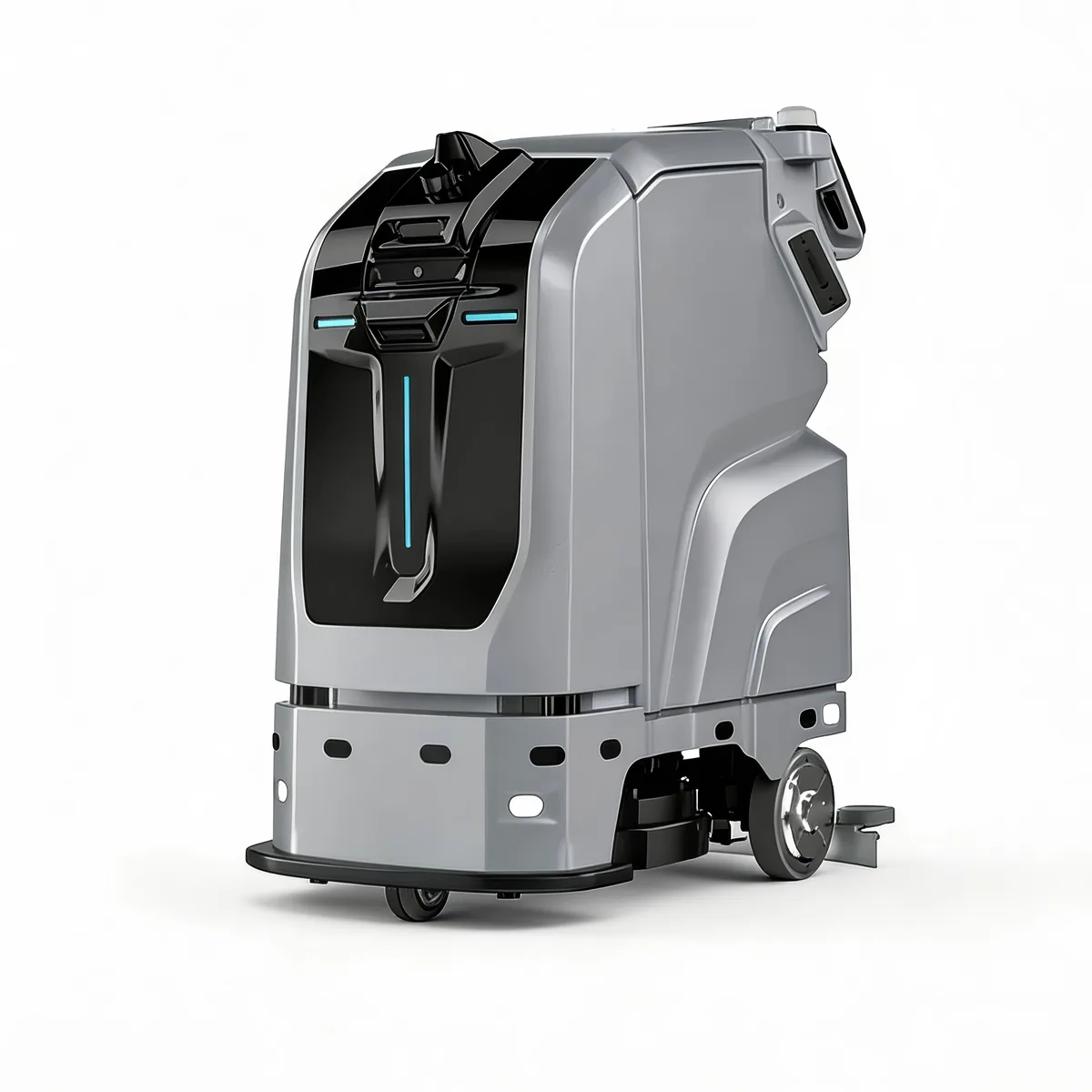
A 900-bed county detention center in the Southeast ran its 2025 facilities audit and found that janitorial consumed 2,300 staff-escort hours a year: every cleaning crew movement between housing units required an escort, every mop bucket and chemical cart had to be inventoried and logged, and the yard sweeping schedule — a 4,000 m² exercise yard plus perimeter roads — absorbed two officers and a trustee crew for three hours, three times a week. The audit's second finding was the cleanliness ledger: the facility's accreditation inspection flagged the dayroom floors in two housing units and the shower-room corners in a third, because the documented schedule said "daily" but the escort-constrained reality was "whenever a crew was available."
Correctional facilities are a controlled-movement environment first and a cleaning problem second, and the government & public sector guide documents the public-facility procurement pattern; this guide covers the corrections-specific version, where escort hours, contraband control and auditable cleaning logs are the three highest-value robot roles — the yards outside, the dayrooms and corridors inside, and the visitor lobby where the robot meets the public.
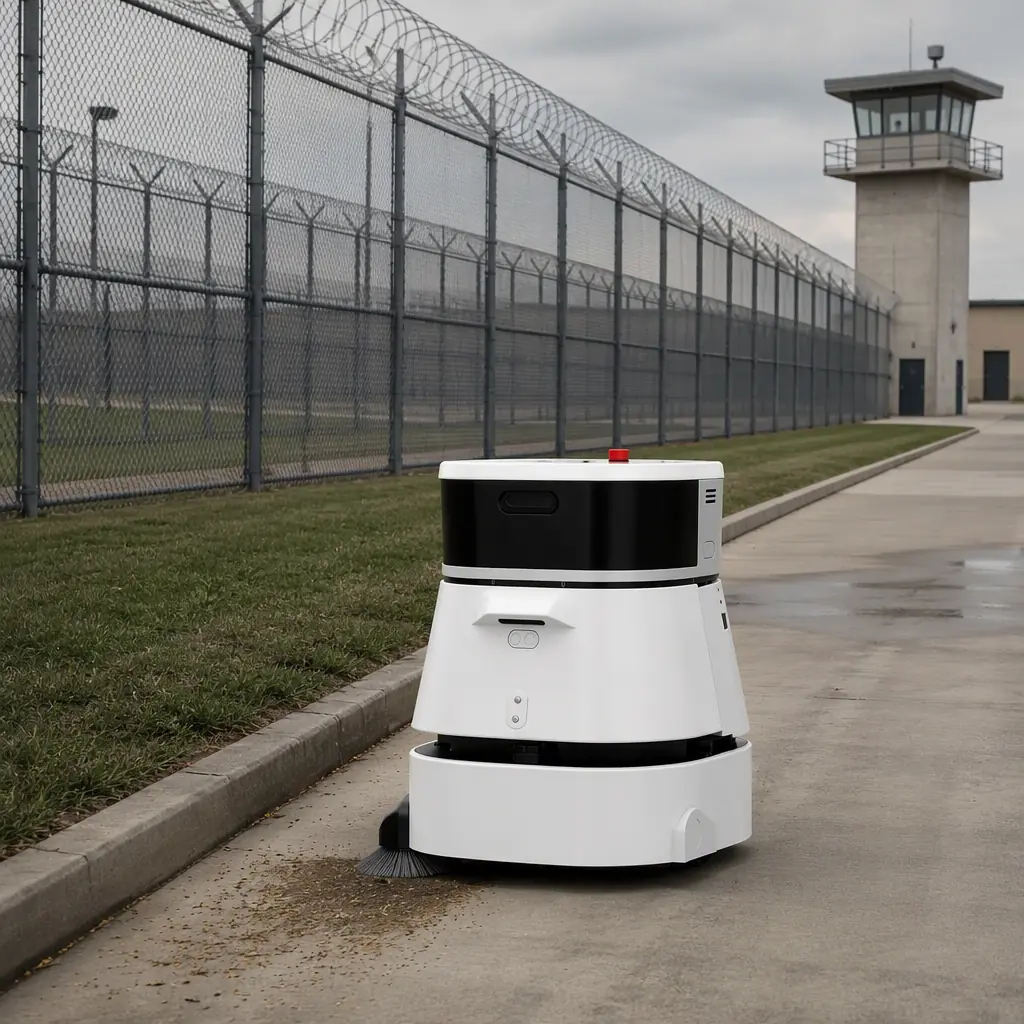
The Yard & Perimeter: Sweeping Without a Trustee Crew
Exercise yards and perimeter roads collect the same debris as any industrial yard — leaves, gravel, litter, windblown trash — but with an extra constraint: every task in a secured area requires escort coverage, tool control and movement passes. The CLEINBOT CC201 outdoor sweeper removes the escort load from the yard program: a 1,020 mm sweeping width at 3,000 m²/h, a 130L dust container that auto-empties into an 800L docking station, IP67 sealing with a rain sensor for all-weather yard duty, and GPS + LiDAR + IMU navigation that follows a pre-approved yard loop with no improvised routes. Its 10-hour battery runs the full yard program between lockdown windows, and its -10°C to 50°C operating range covers northern winters and desert summers alike.
The county facility's math: the yard program cost 936 officer-escort hours a year (three sessions weekly at 6 hours each, with two officers per session) — at loaded officer cost of $52/hour, roughly $48,700 of supervision spent on sweeping. The CC201 runs the same approved loop on a documented schedule, and the pattern the security & surveillance guide documents for commercial perimeters applies in a secured context: the robot works the approved route, the movement passes are filed once for the route instead of for every task, and the escort hours return to their actual job — supervision.
Dayrooms, Chow Halls & Corridors: The Escort-Hour Ledger
Interior janitorial is where correctional cleaning costs concentrate, because every interior task inherits the escort burden: the dayrooms and chow halls of a 900-bed facility total roughly 6,000 m² of hard flooring, cleaned daily under ideal scheduling and half as often in practice. The CLEINBOT M79 scrubber covers the interior loop: single-pass scrub, vacuum and mop at up to 2,000 m²/h — a 600 m² dayroom wing in about 20 minutes — with a 45L tank and auto-return docking that lets it run the housing-unit circuit between movement windows. The specification framework in the commercial cleaning robot buyers guide applies; the corrections-specific rule is the log: every M79 pass is timestamped, geo-tagged and stored in the fleet dashboard, producing the documented cleaning record that accreditation inspections ask for and that the safety standards & compliance guide covers from the liability side.
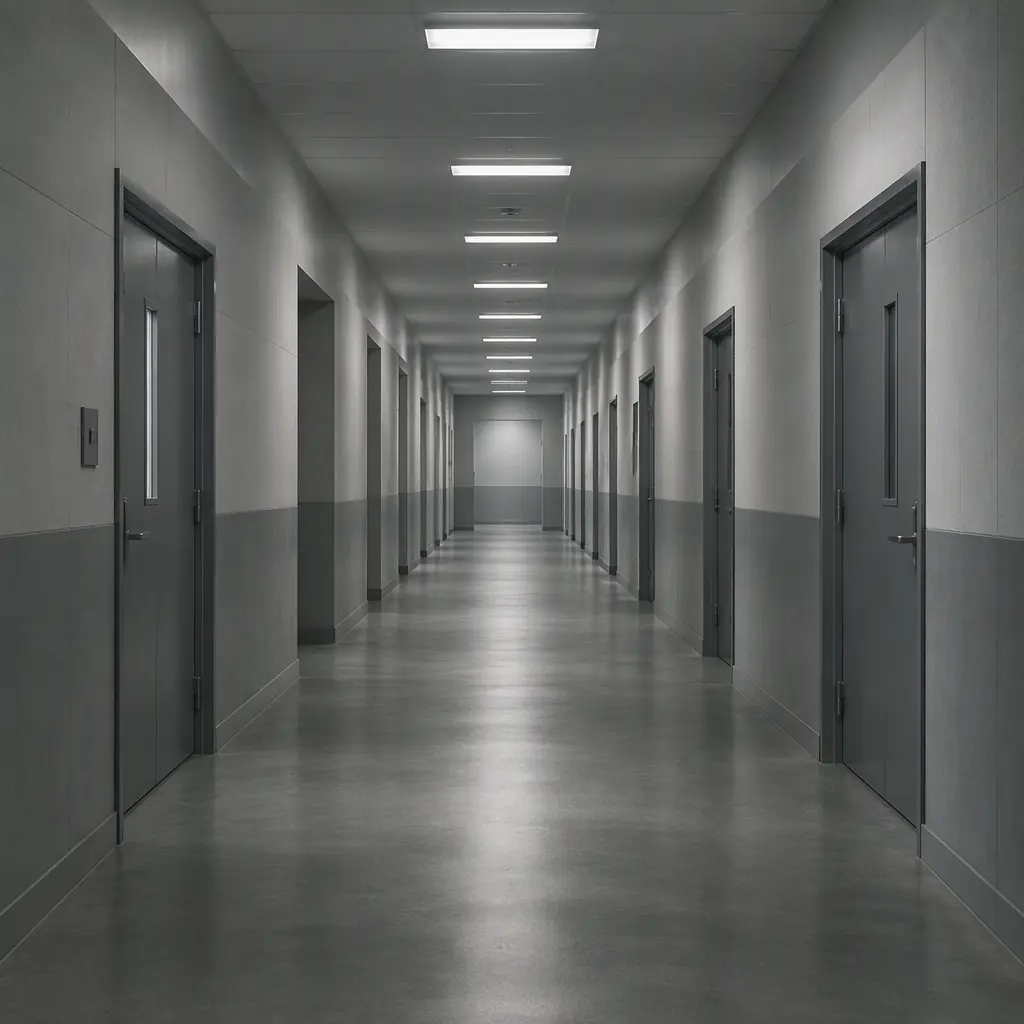
The contraband-control argument is the one administrators raise first: an unmanned cleaning robot carries no pockets, no hiding spaces and no personal movement history. Every square meter it covers is covered without a staff member needing to transport chemicals, buckets or tools into a housing unit — the laboratories & cleanrooms guide documents the same "controlled-access cleaning" logic in a different security regime, and the principle transfers directly: the robot is the only cleaner that can be logged, locked and accounted for at every moment of its shift.
The Visitor Lobby: Reception Without a Security Trade-Off
The visitor lobby is the one public-facing space in a correctional facility, and it carries a double load: greeting and directing visitors while the officer at the desk handles identification, screening and movement coordination. The CRUZR concierge robot works the lobby loop: 50+ languages for the visitor population, a 14-inch facial LED array that displays the visitor information queue, and 0.3-second face recognition that lets returning visitors (attorneys, chaplains, approved family members) complete the check-in preamble without holding the desk. It answers the three most common questions — where to wait, what to bring, when visiting hours start — and hands off to the desk officer at the moment of identification, the same engagement pattern documented in the reception & concierge guide, applied to a security-conscious lobby.
Multi-Site Agencies: One Dashboard, Every Facility
State corrections agencies and private detention operators run multiple facilities with the same cleaning standard and the same inspection regime, and the multi-site deployment guide documents the fleet pattern: every CC201, M79 and CRUZR reports to one cloud dashboard, routes and schedules are configured remotely by the central facilities office, and an agency with ten facilities runs the same approved loop and the same cleaning log everywhere — with the fleet management guide covering the operational layer and the fire stations guide documenting the adjacent public-safety pattern for emergency-response facilities. The RaaS financing guide covers the subscription structure that fits public procurement: most facilities start with one CC201 on the yard and one M79 on the housing-unit circuit, run one inspection cycle with the documented logs, and add the lobby robot when visitor throughput becomes the bottleneck.
Deployment Table for Facility Types
| Facility type | Outdoor fleet | Interior fleet | Monthly cost (RaaS) | Escort hours returned |
|---|---|---|---|---|
| County jail (200–500 beds) | 1 × CC201 (yard + sally port) | 1 × M79 (dayrooms + corridors) | $1,900–2,900 | 300–500/year |
| State facility (500–1,500 beds) | 1–2 × CC201 | 2 × M79 + 1 × CRUZR (lobby) | $3,800–6,200 | 1,000–1,800/year |
| Multi-facility agency (5+ sites) | 1–2 × CC201 per site | 1–2 × M79 per site + CRUZR at visitor hubs | $15,000–28,000 | 5,000–9,000/year |
A correctional facility's cleaning standard is measured in the inspection log, not the mop closet. The CC201 holds the yard without the escort overhead, the M79 produces the timestamped floor-care record that accreditation asks for, and the CRUZR keeps the visitor lobby moving without a security trade-off — all on documented schedules that become part of the facility's operating file. That is the automation pattern that fits a corrections budget, and it starts with the same step every successful deployment starts with: a walk-around audit of where the escort hours, the floor conditions and the lobby wait actually are.