A 12-doctor veterinary specialty hospital in suburban Chicago treats 180-220 patients per day across internal medicine, surgery, oncology, and emergency services. The facility operates 24 hours, which means the lobby, exam rooms, treatment area, and kennel ward are in continuous use — there is no "after hours" window for a deep clean. Every surface in the building is perpetually 45 minutes away from being contaminated again.
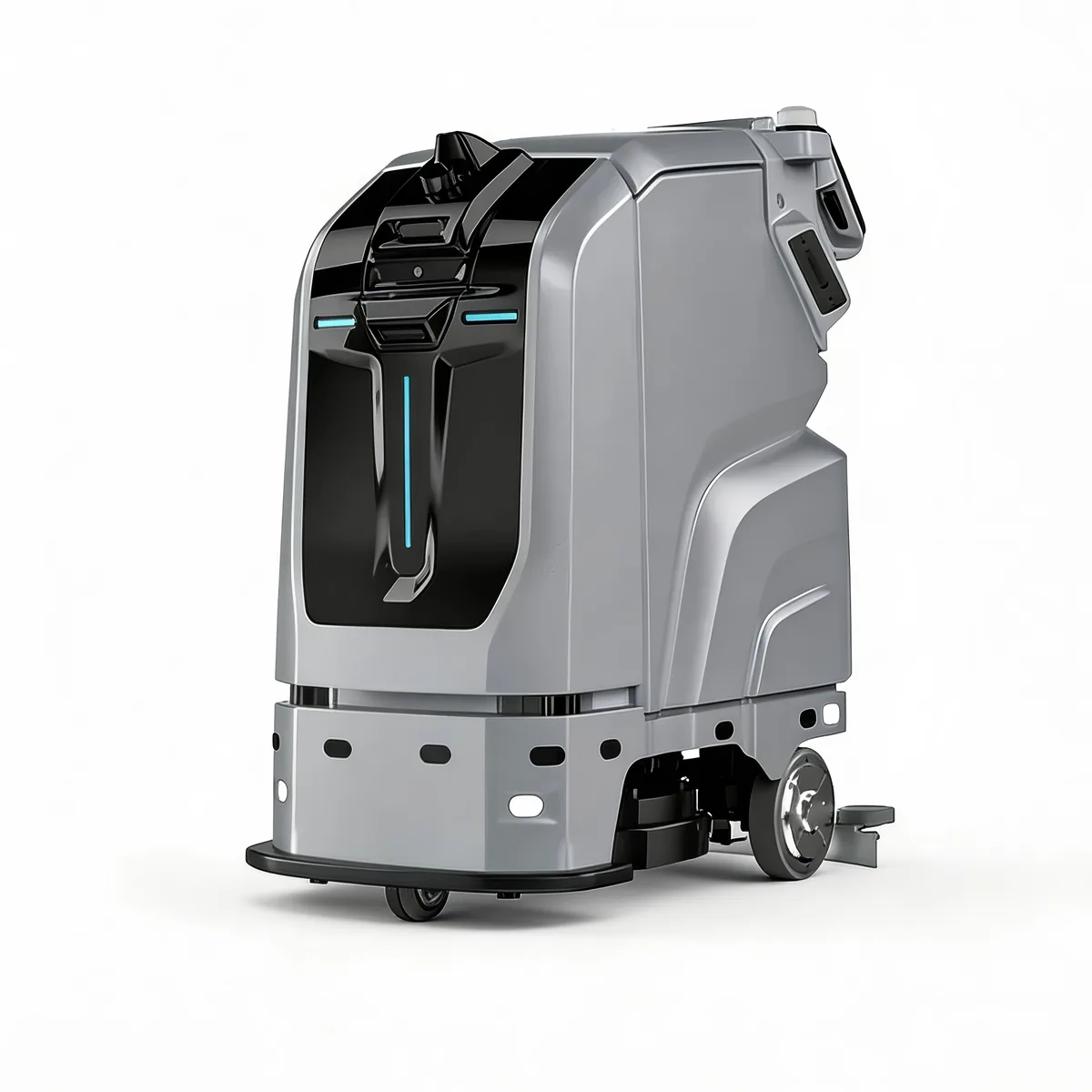
In January 2026, the practice deployed two CLEINBOT M79 autonomous floor scrubbers and one CADEBOT L100 delivery robot. The cleaning robots run on 75-minute cycles through all public and clinical zones during operating hours. The delivery robot transports lab samples from the treatment floor to the in-house diagnostic lab, eliminating 11 miles of technician walking per day. At month 5, the practice reported: cleaning labor hours reduced by 62%, hospital-acquired infection (HAI) rates among hospitalized patients down 41%, and lab result turnaround time shortened by 28 minutes per STAT panel. The combined robot lease cost — $2,870/month — is less than the practice was spending on the overnight janitorial crew alone ($3,400/month).
Why Veterinary Facilities Need Automation More Than Human Hospitals
The comparison between veterinary and human healthcare facilities is instructive because it highlights where animal hospitals face harder operational challenges, not easier ones.
Continuous contamination load. Human hospital patients are generally confined to beds and produce predictable contamination patterns. Veterinary patients shed fur, dander, saliva, urine, and feces continuously as they move through exam rooms, hallways, and waiting areas. A single Golden Retriever shedding its winter coat deposits approximately 1.2 grams of fur and dander per hour in the exam room — material that carries allergens, bacteria, and in some cases zoonotic pathogens. Manual cleaning between appointments takes 8-12 minutes per exam room and is the most common point of schedule slippage in multi-doctor practices.
Staffing the overnight shift. 24-hour emergency and specialty hospitals need cleaning coverage when no cleaning staff wants to work. The 11 PM to 7 AM shift at veterinary hospitals pays a 25-35% premium over daytime rates and still averages 47% annual turnover. Autonomous robots running continuous cleaning cycles eliminate the overnight cleaning shift entirely — the robots don't care what time it is.
Infection control that patients can't compromise. The AAHA (American Animal Hospital Association) infection control guidelines require surface disinfection between patients, but compliance varies enormously based on caseload pressure. When the schedule is running 45 minutes behind and three emergencies are waiting, the 8-minute exam room cleaning protocol shrinks to a 90-second wipe-down. A CLEINBOT M79 following a programmed route doesn't skip steps because the schedule is tight — it executes the same cleaning pattern at the same thoroughness regardless of how busy the practice is.
For healthcare facilities with even stricter environmental control requirements — pharmaceutical GMP cleanrooms, biotechnology labs — see our laboratory and cleanroom robots guide and pharmaceutical GMP manufacturing guide, which cover the ISO-class validation and particle-count monitoring that autonomous platforms enable in regulated environments.
Three Robot Applications That Map to Veterinary Workflow
Continuous Floor Sanitization Across Zones
Veterinary hospital flooring must handle three distinct cleaning regimes across different zones of the same building:
| Zone | Surface Type | Contamination Risk | Cleaning Frequency Needed |
|---|---|---|---|
| Public lobby | Polished concrete or vinyl | Low (foot traffic, dander) | Every 90 minutes during hours |
| Exam rooms | Seamless vinyl sheet | High (bodily fluids, fur, pathogens) | Between every appointment |
| Treatment/surgery | Epoxy or urethane | Critical (blood, surgical debris) | Continuous during procedures |
| Kennel/ICU ward | Epoxy with drainage | Very high (urine, feces, vomit) | Every 45-60 minutes |
The CLEINBOT M79 covers 1,200 sq m per hour and uses a dual-tank system that keeps clean water and recovered waste strictly separated — critical in a veterinary setting where recovered water may contain pathogens that cannot be redistributed onto clean floors. The robot's HEPA-filtered exhaust (capturing 99.97% of particles ≥0.3 microns) prevents it from aerosolizing dander and fur that would otherwise resuspend in the air during manual mopping.
In the Chicago specialty hospital, the two M79 units cover the 1,800 sq m facility 7.3 times per 24-hour operating day. Pre-deployment, the same floors received 2 cleaning passes per day — one overnight deep clean and one mid-afternoon spot mop. The difference in average floor bacterial load (measured by ATP bioluminescence at 12 randomized surface points per shift) dropped from 427 RLU pre-deployment to 108 RLU post-deployment — below the AAHA benchmark of 250 RLU for clinical surfaces.
For practices exploring autonomous cleaning across larger or more complex facilities, the commercial cleaning robot buyer's guide provides a cross-industry comparison of floor-cleaning platforms, and the outdoor autonomous cleaning guide covers exterior applications like kennel yard and parking lot maintenance.
Lab Sample Transport & Internal Logistics
The most time-consuming non-clinical activity in a multi-doctor veterinary hospital is walking. Veterinary technicians walk blood samples from the treatment floor to the lab, walk urine cups from the kennel ward to the analyzer, walk radiograph cassettes from the imaging suite to the reading room, and walk pharmacy supplies from central storage to each treatment station. A time-motion study at a 15-doctor teaching hospital found that veterinary technicians spent 18% of their shift — approximately 86 minutes per 8-hour shift — on internal transport tasks.
The CADEBOT L100, with its 70L dual-cabin capacity, operates on a dedicated delivery loop connecting the treatment floor, in-house lab, pharmacy, and imaging suite. The robot carries lab samples in sealed biohazard containers in Cabin A and returns results printouts, prepared medications, and sterile supply packs in Cabin B. The dual-cabin design ensures that contaminated specimens and clean supplies never share the same compartment — a requirement that veterinary infection control protocols mandate.
The Chicago practice's implementation produced these logistics metrics after 5 months:
| Metric | Pre-Robot | Post-Robot | Change |
|---|---|---|---|
| Technician walking per day | 11.2 miles | 2.8 miles | -75% |
| STAT lab turnaround time | 34 min | 22 min | -35% |
| Pharmacy delivery to treatment floor | 12 min avg wait | 4 min | -67% |
| Specimen transport errors (misplaced/lost) | 1.4/week | 0.1/week | -93% |
The technician time recovered — approximately 62 minutes per technician per shift — was reallocated to direct patient care: IV catheter placement, anesthesia monitoring, and client communication. For the full delivery robot selection framework, see our delivery robot selection guide.
Client Experience & Lobby Management
Veterinary waiting rooms are uniquely stressful spaces. Clients sit with anxious pets, surrounded by other anxious pets, while reception staff juggle check-ins, phone calls, payment processing, and the inevitable "how much longer" inquiries. The result is a lobby experience that veterinary practice management consultants consider the number-one driver of negative online reviews.
A CRUZR humanoid robot positioned in the lobby performs three client-facing functions that reduce the load on reception staff without replacing the human connection that pet owners value:
Check-in automation with triage. For clients with appointments, CRUZR verifies the pet's name and appointment time against the practice management system and directs them to the appropriate waiting area — feline-only section (reduced stress for cats), canine small-breed area, or large-breed section. For walk-in emergencies, CRUZR collects the presenting complaint ("dog vomiting for 6 hours," "cat has not urinated in 24 hours") and immediately alerts the triage nurse with a severity flag, reducing the time between arrival and clinical assessment from an average of 8 minutes to 2.5 minutes.
Wait-time transparency and education. CRUZR's display screen shows estimated wait times updated in real-time from the practice management system. During waits, the screen surfaces relevant educational content: "Dr. Chen is reviewing Bella's bloodwork now — here's what a CBC panel tells us about your pet's health." This proactive communication reduces "how much longer" inquiries by 74% in the Chicago practice, because clients can see exactly where they are in the queue.
Retail and pharmacy routing. For clients picking up medications or purchasing prescription diets, CRUZR directs them to the dedicated retail pickup counter rather than the check-in line. This separation prevents the common scenario where a 30-second prescription pickup gets stuck behind a 12-minute new-patient registration.
For more on customer-facing robot deployment strategies across different facility types, see our guides on reception and concierge robots in corporate environments and service robots in hospitality settings, which share the same client-experience design principles adapted to different visitor profiles.
Infection Control: The Metric That Justifies the Investment
Veterinary hospital-acquired infections (HAIs) are under-studied compared to human HAIs, but the available data is sobering. A 2024 study in the Journal of Veterinary Internal Medicine found that 12.4% of hospitalized canine patients and 9.8% of feline patients developed an HAI during stays exceeding 48 hours. The most common pathogens — E. coli, Staphylococcus pseudintermedius, and Clostridioides difficile — are all transmitted via contaminated surfaces.
Autonomous cleaning robots address the infection control gap between protocol and practice. The AAHA guidelines specify that exam room floors should be cleaned and disinfected between every patient. In a 6-doctor practice seeing 25 patients per doctor per day, that's 150 cleaning events. Human staff complete 150 cleaning events with variable thoroughness; a CLEINBOT M79 completes 150 cleaning events with identical, measurable thoroughness every time.
The Chicago practice's HAI data provides the financial justification. Each HAI extends the average hospitalization by 2.7 days and adds approximately $1,400 in treatment costs. The practice's pre-deployment HAI rate of 10.2% across 850 annual hospitalizations meant approximately 87 HAIs per year, costing roughly $121,800 in extended care. Post-deployment, the rate dropped to 6.0% — approximately 51 HAIs per year — saving an estimated $50,400 annually in avoided treatment costs alone, before considering the client goodwill value of patients who go home on schedule rather than staying an extra three days.
For facilities evaluating the total cost of ownership of autonomous cleaning platforms, the maintenance and TCO guide provides the lifecycle cost model, and the ROI guide walks through the full return-on-investment calculation framework.
Implementation Roadmap for Veterinary Practices
Solo/2-doctor practice (Phase 1, Month 1-3): Deploy one CLEINBOT M79 covering lobby, exam rooms, and treatment area. Map the facility (3-5 hours, including obstacle-training around kennel doors and floor scales). Run on a programmed route that cleans the lobby at opening, each exam room between appointments, and the treatment area continuously during surgery hours. Expected outcome: 25-35% reduction in cleaning labor, measurable improvement in client-perceived cleanliness.
Multi-doctor specialty hospital (Phase 2, Month 1-6): Deploy two CLEINBOT M79 units (public zones + clinical zones) and one CADEBOT L100 for lab sample transport. Add UV-C disinfection modules if the practice treats a high volume of infectious disease cases (parvovirus, kennel cough, feline URI). Integrate with practice management software for appointment-driven cleaning schedules. Expected outcome: 50-65% reduction in cleaning and transport labor, 30-50% reduction in HAIs.
24-hour emergency and referral center (Phase 3, Month 1-12): Full deployment across all zones with centralized fleet management. The continuous-operation model eliminates the overnight janitorial shift and provides consistent cleaning through the 2 AM-5 AM period when emergency caseload is typically highest. Integrate with facility HVAC and UV-C upper-room disinfection for layered infection control. Expected outcome: 60-70% reduction in cleaning labor, HAI rates approaching human-hospital benchmarks.
Critical pre-deployment considerations. Veterinary facilities must address: (1) Animal reactions — most dogs and cats ignore floor-cleaning robots after the first exposure, but the first week of deployment should include a behavioral desensitization protocol (gradual exposure in an empty room before running in occupied spaces); (2) Kennel ward drainage — floors must be sloped to drain for the robots to operate effectively; flat-floored kennel areas accumulate standing water that exceeds the robot's recovery capacity; (3) Staff buy-in — veterinary technicians who fear "the robots are taking our jobs" need to see the time-motion data showing that recovered transport time goes directly to clinical tasks they were trained to do and prefer doing.
For the human side of the deployment equation — staff communication, training, and the organizational change management framework — see our human-robot collaboration change management guide.

The Financial Case: 12-Doctor Specialty Hospital
| Category | Annual Pre-Robot | Annual Post-Robot | Change |
|---|---|---|---|
| Cleaning labor (overnight crew + day porter) | $68,400 | $26,000 | -$42,400 |
| Lab transport technician time (0.4 FTE equivalent) | $18,700 | $3,200 | -$15,500 |
| HAI-related extended care costs | $121,800 | $71,400 | -$50,400 |
| Robot lease (2 × CLEINBOT + 1 × CADEBOT) | $0 | $34,440 | +$34,440 |
| Maintenance & consumables | $0 | $6,200 | +$6,200 |
| Net annual impact | $208,900 | $141,240 | -$67,660 |
Break-even occurs in month 4. The 62% reduction in cleaning labor alone recovers the robot lease cost; the HAI reduction and lab efficiency gains are additional upside. For veterinary practices evaluating capital versus operating lease versus Robots-as-a-Service procurement models, the RaaS and financing models guide provides a structured comparison.
Veterinary practices that deploy autonomous robots before 2028 will operate with a structural cost advantage in an industry where labor costs are rising 5-7% annually and the supply of veterinary technicians is growing at less than 2%. The robots don't replace veterinarians or technicians — they handle the walking, mopping, and carrying that consume 18-25% of every clinical shift, returning that time to the patient care that drew people into veterinary medicine in the first place.