Facility managers evaluating commercial cleaning robots face a deceptively simple question: scrub, disinfect, or both? The answer depends on floor surface, traffic patterns, hygiene requirements, and shift schedules — and getting it wrong means either overspending on unnecessary features or under-deploying where it matters most.
This guide breaks down the three cleaning robot categories dominating commercial deployments in 2026, with real coverage rates, surface compatibility data, and total cost of ownership comparisons.
The Three Categories of Commercial Cleaning Robots
Category 1: Dedicated Floor Scrubbers
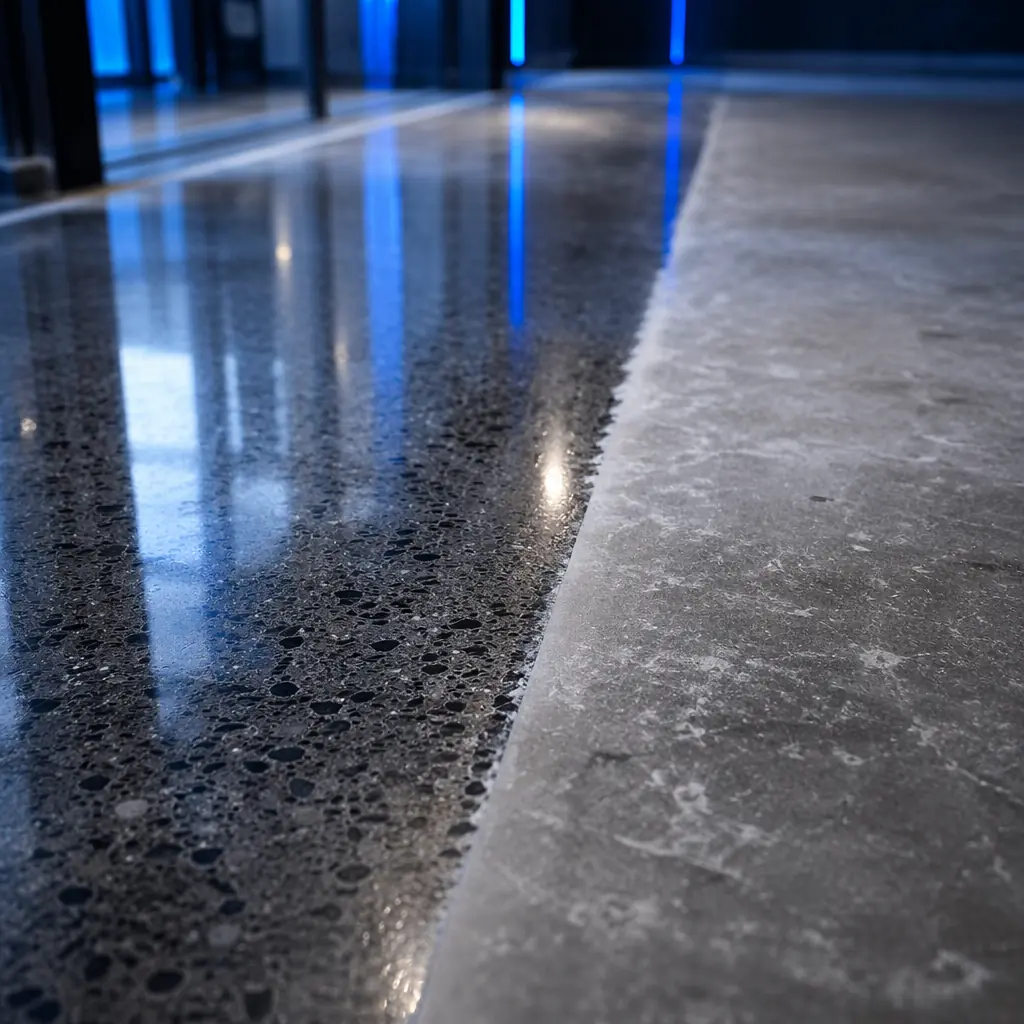
These are the workhorses. Purpose-built for hard floors — polished concrete, epoxy, tile, vinyl — they scrub, squeegee, and dry in a single pass. The CLEINBOT C2 Pro typifies this category: 500–800 m²/hour coverage, auto water exchange, and autonomous docking for refill and recharge.
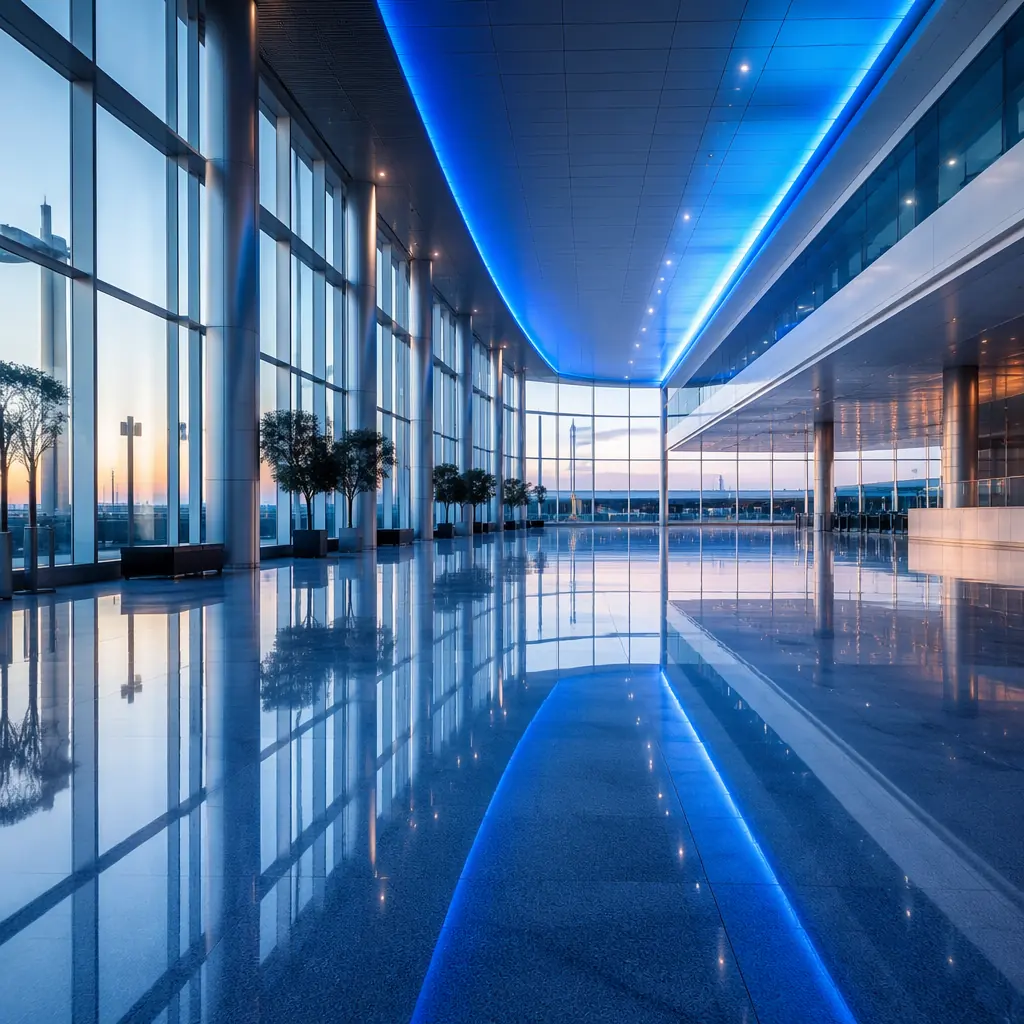
Best for: Airports, shopping malls, warehouse floors, convention centers — any facility with large, open hard-floor areas.
Coverage benchmarks:
- CLEINBOT C2 Pro: 500–800 m²/hour (scrub + dry)
- Manual mopping equivalent: 150–200 m²/hour (one worker)
- Labor displacement: One robot replaces 2.5–3.5 cleaning staff per shift
Surface compatibility: Polished concrete ✓, epoxy ✓, tile ✓, vinyl ✓, terrazzo ✓. Carpet ✗. Uneven stone ✗.
Category 2: UV-C Disinfection Robots
These robots use ultraviolet-C light to deactivate pathogens on surfaces and in the air. They don't clean — they disinfect. The CLEINBOT CC201 delivers 254 nm UV-C at intensity levels that achieve 99.9% pathogen reduction on direct-exposure surfaces within 5–10 minutes per zone.
Best for: Hospitals (operating rooms, patient rooms), pharmaceutical cleanrooms, food processing facilities, senior care centers — anywhere that pathogen control is a compliance requirement, not an option.
Performance data:
- Effective range: 2.5 m radius from robot center
- Disinfection cycle: 5–10 minutes per 25 m² zone
- Pathogens targeted: MRSA, C. difficile, E. coli, influenza A, SARS-CoV-2 surrogate
- Limitation: UV-C requires line-of-sight — shadows protect pathogens
Category 3: Multi-Mode Machines
These combine scrubbing, sweeping, and mopping in one platform. The CLEINBOT M79 switches between modes based on floor type and cleaning requirement — sweeping for loose debris, scrubbing for embedded dirt, mopping for finishing.
Best for: Hotels, office buildings, retail stores — facilities with mixed flooring (carpet in offices, tile in corridors, hardwood in lobbies) that need a single robot to handle all surfaces.
Multi-mode advantage: One robot vs. three separate machines. Lower capital cost, simpler staff training, single maintenance contract.
Decision Framework: Which Robot for Which Facility
| Facility Type | Sq. Footage | Primary Need | Recommended | Why |
|---|---|---|---|---|
| Regional airport | 50,000+ | Hard floor scrubbing | C2 Pro × 2–3 | Coverage rate, continuous operation |
| Hospital | 10,000–50,000 | Disinfection | CC201 × 2 | Compliance-driven, patient safety |
| Shopping mall | 80,000+ | Mixed floor cleaning | M79 × 3–4 | Multi-surface, quiet operation |
| Hotel | 5,000–20,000 | Daily maintenance | M79 × 1–2 | Mixed surfaces, guest-facing |
| Warehouse | 30,000+ | Dust/debris control | M79 × 1 + C2 Pro × 1 | Scrubbing + sweeping combination |
| Pharma cleanroom | 2,000–10,000 | Sterilization | CC201 | GMP compliance requirement |
Total Cost of Ownership: Robot vs. Manual
Over a 3-year period for a 30,000 sq ft facility:
| Cost Element | Manual Cleaning | Robot (C2 Pro × 2) |
|---|---|---|
| Labor (annual) | $96,000 (3 FTE) | $32,000 (1 FTE supervisor) |
| Equipment (3-year) | $18,000 (scrubbers, mops) | $36,000 (2 robots) |
| Consumables (3-year) | $12,000 (chemicals, pads) | $9,000 (lower chemical use) |
| Maintenance (3-year) | $6,000 | $10,800 ($150/mo/robot) |
| 3-Year TCO | $312,000 | $119,800 |
| Annual Savings | — | $64,000 |
Breakeven for the robot investment: 6–8 months. After that, the robot fleet generates $64,000/year in savings — indefinitely.
What to Look for in a Cleaning Robot Vendor
Navigation Intelligence: Lidar + depth camera fusion is the gold standard. Robots should map facilities autonomously, handle dynamic obstacles (people, forklifts, carts), and re-plan routes in real time. Avoid magnetic-tape-based machines — they're AGVs, not AMRs, and can't handle dynamic environments.
Fleet Management: Can the vendor's platform manage 10, 20, or 50 robots from a single dashboard? Does it support zone-based scheduling (lobby 2–4 AM, corridors 4–6 AM)? Can you see cleaning completion maps, battery status, and maintenance alerts in real time?
Service and Support: Robots break. When they do, what's the response time? AOMAN provides on-site service within 24 hours across 70+ countries, with remote diagnostics resolving 60% of issues without a site visit.
Certification: For healthcare deployments, CE marking and FDA registration matter. For food facilities, NSF certification. For general commercial, CE + FCC + ISO 13482 (safety) are table stakes.
Integration with Your Broader Automation Strategy
If your facility already uses delivery robots (like the CADEBOT L100 in warehouses) or humanoid service robots (like CRUZR in hotel lobbies), cleaning robots should share the same fleet management platform.
This eliminates the overhead of multiple vendor dashboards, simplifies staff training, and enables coordinated scheduling — cleaning robots automatically pause when delivery traffic peaks, then resume during off-hours.
Read how service robots are transforming hospitality for context on multi-robot deployments.
The Bottom Line
Commercial cleaning robots reached maturity in 2025–2026. The technology is reliable, the ROI is proven (6–8 month payback), and the labor savings are permanent. For facilities over 20,000 sq ft, the question isn't whether to deploy cleaning robots — it's which type and how many.
AOMAN FUTURE offers free facility assessments — we'll analyze your floor plans, traffic patterns, and cleaning requirements, then recommend the right configuration with a written ROI projection.
Contact us to schedule your facility assessment.