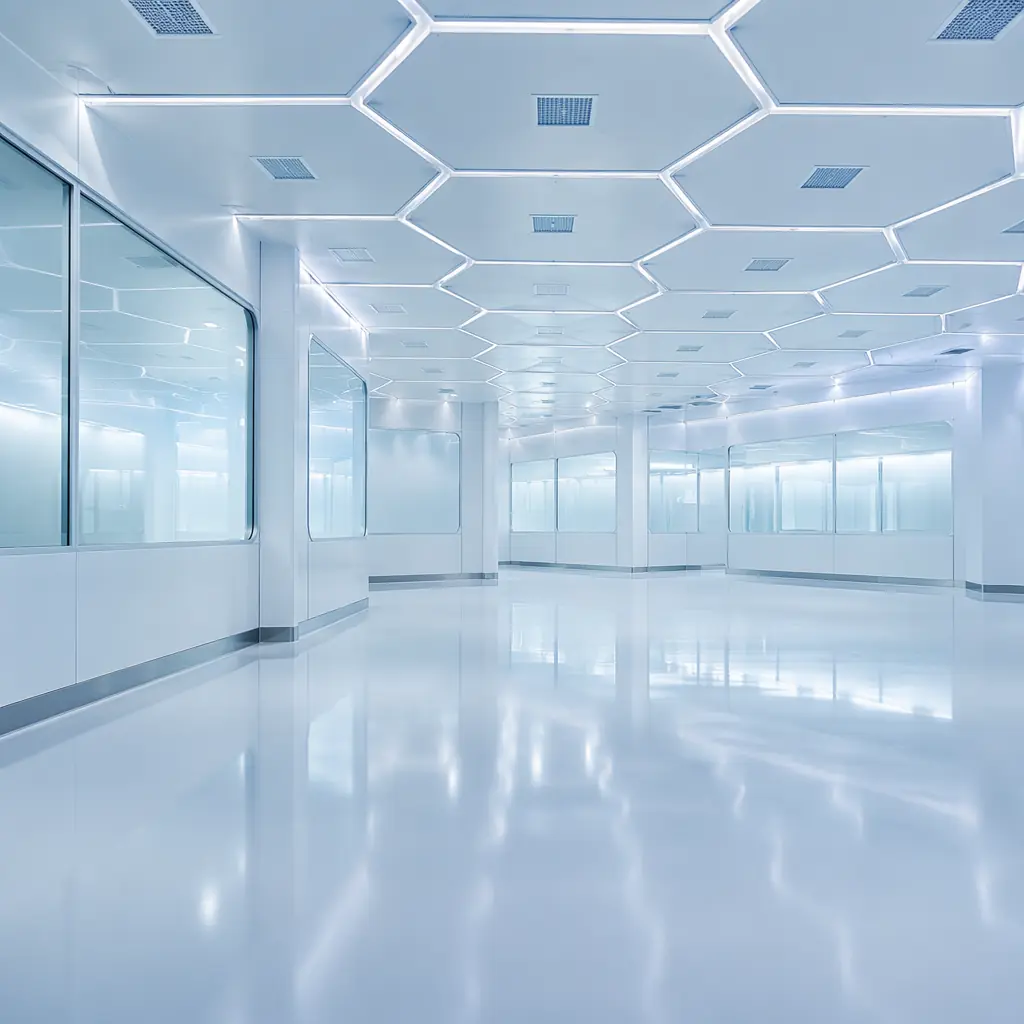
Pharmaceutical laboratories lose an estimated 4.2% of revenue annually to contamination-related batch failures. In semiconductor fabs, a single airborne particle larger than 0.3 µm on a 3 nm wafer can destroy a $50,000 chip. Biotech R&D labs process 300–500 sample movements per day, each one a potential contamination or chain-of-custody event. In these environments, automation isn't a cost-saving measure — it's a quality and compliance requirement.
Yet most laboratory automation discussions focus on liquid handlers, robotic arms bolted to benches, and fixed conveyor systems. The 70% of lab workflows that happen between workstations — sample transport, surface decontamination, supply replenishment — remain overwhelmingly manual. That's where service robots enter the picture.
Here's what lab directors, facility managers, and quality assurance leads need to know about deploying autonomous service robots in regulated cleanroom and laboratory environments in 2026.
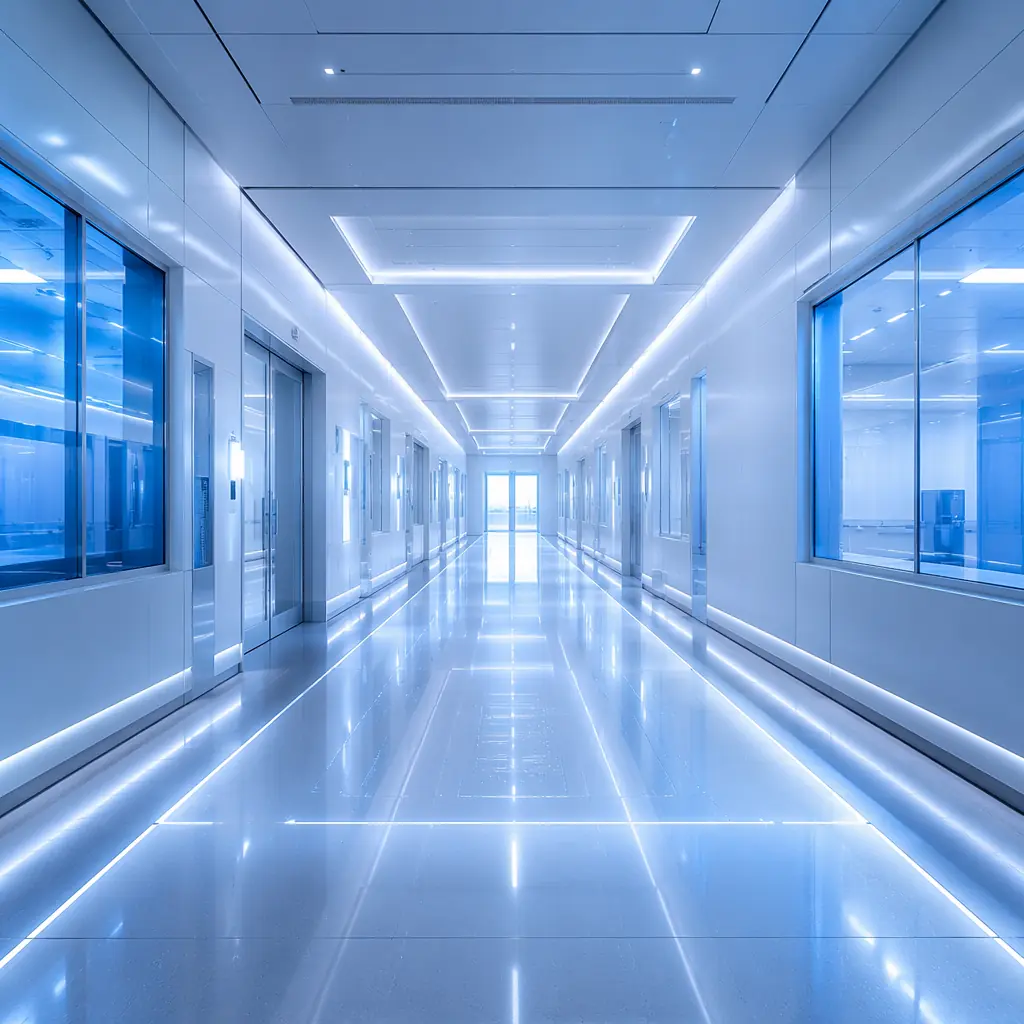
Why Laboratories Need a Different Class of Service Robot
A service robot that works flawlessly in a hotel corridor or warehouse aisle can be a contamination disaster in a GMP Grade B cleanroom. The requirements are fundamentally different — and the bar is set by regulatory bodies, not by operational convenience.
Cleanroom Classification: What the Robot Is Walking Into
| ISO Class | GMP Grade | Max Particles ≥0.5µm/m³ | Typical Environment | Robot Feasibility |
|---|---|---|---|---|
| ISO 5 | Grade A | 3,520 | Aseptic filling, open vial handling | Fixed automation only — mobile robots not suitable |
| ISO 6 | — | 35,200 | Semiconductor photolithography | Specialized cleanroom AMRs with HEPA-filtered enclosures only |
| ISO 7 | Grade B/C | 352,000 | Background to Grade A, biotech processing | Viable with particulate-certified mobile robots |
| ISO 8 | Grade D | 3,520,000 | Less critical pharma steps, lab corridors | Standard service robots with cleanroom modification package |
For most laboratory applications, ISO 7–8 (GMP Grade C–D) is the sweet spot. This covers sample transport corridors, media preparation areas, equipment washrooms, and R&D lab spaces — all areas where automation delivers the highest labor savings but where the cleanroom classification can't be ignored.
Three Reasons Standard Service Robots Fail in Cleanrooms
Particulate Emission. Every moving part on a robot — wheels, motors, joints, fan vents — generates particles. A standard service robot with brushed DC motors and unsealed bearings can emit 50,000+ particles ≥0.5µm per minute, instantly violating ISO 7 limits. Cleanroom-rated robots use brushless motors, sealed bearings, and HEPA-filtered enclosures that keep emissions below 3,520 particles per minute — the same standard as the room itself.
Electrostatic Discharge (ESD). Semiconductor cleanrooms and explosive-atmosphere pharma areas require ESD-safe equipment. A standard robot accumulating charge on synthetic wheels can discharge 2,000V into a sensitive wafer or ignite solvent vapors. Cleanroom robots need conductive wheels, grounding straps, and ESD-certified housings — tested to ANSI/ESD S20.20.
Outgassing. Standard plastics, adhesives, and lubricants release volatile organic compounds over time. In a sealed cleanroom with 20–60 air changes per hour, these VOCs circulate and deposit on surfaces. Robots deployed in pharma cleanrooms must use low-outgassing materials — PTFE-based lubricants, stainless steel exteriors, and medical-grade seals — that don't contribute to the facility's VOC burden.

Three High-Impact Lab Automation Workflows
1. Specimen and Sample Transport
Sample logistics in a mid-size clinical lab: 400–600 blood tubes, biopsy specimens, culture plates, and reagent vials moving between collection, processing, analysis, and storage each day. Each movement logged. Each tube tracked. Each transfer a potential contamination point.
Manual transport means a lab technician walks an average of 7–9 km per shift just moving samples between stations — time spent not analyzing, not processing, not doing work that requires their expertise.
The CADEBOT L100 with a cleanroom modification package (sealed bearings, HEPA-filtered exhaust, ESD-safe wheels) handles sample transport in ISO 7–8 laboratory corridors. Its 40 kg payload capacity carries up to 120 standard vacutainer trays or 8 biohazard transport containers per trip. Navigation uses SLAM 3.0 — no floor tape, no ceiling markers, no infrastructure changes — mapping a 2,000 m² lab floor in under 3 hours.
Biobank deployment data: A European biobank facility handling 15,000 samples monthly deployed 4 CADEBOT L100 units for inter-department specimen routing. After 6 months:
| Metric | Manual Baseline | With AMRs | Change |
|---|---|---|---|
| Sample transit time (collection → processing) | 18 min | 4 min | −78% |
| Technician walking distance per shift | 8.2 km | 2.1 km | −74% |
| Sample ID scanning errors | 12/month | 1/month | −92% |
| Temperature excursion events (cold chain) | 5/month | 0/month | −100% |
The critical detail: each CADEBOT integrates with the lab's barcode scanning system, logging every sample pickup and delivery to the LIMS with timestamp and robot ID. Chain of custody becomes automated and auditable — a 21 CFR Part 11 requirement for any lab supporting regulated drug development.
2. Cleanroom Surface Maintenance
ISO 7–8 cleanrooms require surface cleaning at prescribed intervals — typically every 4–8 hours in active production areas. Manual cleaning introduces variability: an operator misses a corner, uses a contaminated mop, or simply can't distinguish between a cleaned surface and one that looks clean under ambient light.
The CLEINBOT M79 with a cleanroom configuration scrubs 1,200 m² per hour using HEPA-filtered exhaust and ISO-certified cleaning solutions. Its 7-sensor contamination detection array identifies residue that human eyes miss — protein films, salt deposits, and solvent residues invisible under standard lighting — and spot-treats them immediately rather than waiting for the next scheduled cleaning pass.
For higher-grade areas (ISO 6–7), the CLEINBOT C2 Pro adds UV-C surface decontamination as a secondary pass, achieving 4-log reduction on common laboratory pathogens (tested against S. aureus, E. coli, and P. aeruginosa per ASTM E3135).
Pharma facility data: A contract manufacturing organization (CMO) with 4,500 m² of ISO 7 cleanroom floor deployed 3 CLEINBOT M79 units across 2 shifts. Results:
| Metric | Before | After | Change |
|---|---|---|---|
| Surface contamination events (quarterly) | 14 | 3 | −79% |
| Cleaning labor hours/week | 180 | 60 | −67% |
| Cleaning consistency (ATP swab pass rate) | 82% | 99.2% | +17.2pp |
| Robot fleet utilization | — | 93% | — |
The ATP swab pass rate improvement is the metric that matters most to QA directors. Manual cleaning produces variable results because it depends on individual technique. Autonomous cleaning produces repeatable results because it executes the same validated protocol every pass — a concept that aligns with the process validation principles at the core of GMP.

3. Lab Logistics and Inventory Management
Research labs stock 2,000–5,000 unique consumables — pipette tips, microcentrifuge tubes, reagent kits, gloves, culture flasks — scattered across satellite storage points. Restocking these points is a full-time job for at least one lab assistant. Running out of a critical reagent at 2 AM during a time-sensitive assay isn't an inconvenience; it can invalidate weeks of work.
The AOMAN DOUBLE serves as a dual-cabin logistics robot for lab supply chains. Its 70L split payload carries consumables outbound to satellite storage stations while simultaneously returning spent materials, empty containers, and biohazard waste inbound — eliminating empty-return trips entirely.
Paired with RFID-tagged inventory bins and a simple REST API connection to the lab's inventory management system, the DOUBLE autonomously executes replenishment runs when bin levels drop below threshold. No one radios the stockroom. No one walks 400 meters for a box of tips. The robot handles it while researchers stay at their benches.
Regulatory Compliance: What Lab Robots Need to Prove
Deploying an autonomous robot in a regulated environment means answering questions from QA auditors, not just operations managers. Here are the compliance touchpoints that matter:
ISO 14644 Particulate Compliance. The robot must demonstrate — with third-party test data — that its operational particulate emission does not exceed the cleanroom's classification limits. This isn't a one-time certification; it requires ongoing monitoring. Cleanroom-rated service robots should provide real-time particle counter data via their fleet management dashboard, giving QA teams continuous visibility rather than waiting for quarterly environmental monitoring reports.
GMP Annex 1 (EU) and 21 CFR Part 211 (US). These regulations govern pharmaceutical manufacturing. While they don't specifically mention robots, they require that all equipment in classified areas be "appropriate for its intended use" and not "present a hazard to the quality of products." For a mobile robot, this means demonstrating: (a) materials of construction don't leach or outgas, (b) cleaning validation for the robot's exterior surfaces, and (c) documented standard operating procedures for robot deployment, maintenance, and emergency recovery.
21 CFR Part 11 — Electronic Records. If the robot logs sample chain-of-custody data — which lab transport robots should — that electronic record system must comply with Part 11 requirements: secure, computer-generated audit trails; authority checks; device checks; and electronic signatures where applicable. This is why LIMS integration matters: the robot's data should flow into an already-validated system rather than creating a standalone electronic record that needs independent validation.
IEC 61010-1 (Lab Equipment Safety). Service robots operating in laboratories should meet the same electrical and mechanical safety standards as other lab equipment. This includes protection against ingress of liquids (IP rating), EMC compatibility so the robot doesn't interfere with sensitive analytical instruments, and fail-safe braking systems that engage on power loss.
For a deeper dive into the broader regulatory landscape, see our Service Robot Safety Standards & Compliance Guide.

Integration with Laboratory Information Systems
A robot that transports samples without logging the transport is a robot that creates a data gap — and data gaps in regulated labs become audit findings.
Cleanroom service robots integrate with Laboratory Information Management Systems (LIMS) through REST APIs that are already standard in platforms like LabVantage, STARLIMS, and LabWare. The integration workflow:
- Sample pickup: Robot scans the sample barcode at origin → LIMS receives timestamp, robot ID, and geolocation within the facility
- In-transit monitoring: For cold-chain samples, the robot logs temperature at configurable intervals (typically every 30 seconds) and sends alerts if the sample exceeds 2–8°C
- Sample delivery: Robot scans the sample barcode at destination → LIMS closes the transport event with delivery timestamp and recipient confirmation
- Audit trail: Every transport event is recorded as an immutable entry in the LIMS audit log, satisfying 21 CFR Part 11 audit trail requirements
The integration cost is modest — typically 2–3 API endpoints to configure, 3–5 engineering days for a standard deployment. The compliance value, however, is substantial: automated chain of custody eliminates the paper logbooks and manual data entry that are the most common source of FDA 483 observations in laboratory operations.
Selecting the Right Robot for Your Cleanroom Classification
Not every robot belongs in every cleanroom. The selection matrix:
| Environment | ISO/GMP Class | Recommended Robot | Key Modification |
|---|---|---|---|
| Lab corridor, media prep, equipment wash | ISO 8 / Grade D | CADEBOT L100 | Sealed bearings, HEPA exhaust |
| Biotech processing, cell culture support | ISO 7 / Grade C | CADEBOT L100 + CLEINBOT C2 Pro | Full cleanroom package + UV-C |
| Aseptic fill background, semiconductor litho | ISO 6 | CLEINBOT C2 Pro | Custom HEPA enclosure, ESD certification |
| Aseptic fill zone, open vial handling | ISO 5 / Grade A | Not suitable | Fixed automation only |
The decision tree is straightforward: above ISO 7, standard service robots with a cleanroom modification package are viable. Between ISO 6–7, specialized cleanroom configurations are required. Below ISO 6 (Grade A/B), mobile robots are generally not suitable — fixed automation handles these ultra-clean environments.
The ROI Case for Lab Automation
Laboratory directors evaluating service robots typically focus on two numbers: technician hours saved and contamination risk reduced.
Labor reallocation. A mid-size clinical lab with 25 technicians spending a collective 120 hours/week on sample transport and surface cleaning can recover 70–85 of those hours with a mixed fleet of CADEBOT and CLEINBOT units. Those hours shift from walking and wiping to analyzing and processing — activities that require licensure and expertise, which is exactly what the technicians were hired to do.
Batch failure reduction. The contamination-related batch failure rate in pharma manufacturing averages 3–5% of total production volume. At $200,000–500,000 per failed batch (materials, labor, investigation, rework), eliminating even 1 percentage point of failures through consistent automated cleaning delivers a 6–12 month payback on the robot fleet.
Compliance cost avoidance. A single FDA 483 observation for inadequate chain-of-custody documentation triggers a response process costing $50,000–150,000 in consulting fees, staff time, and remediation — before any fines. Automated sample tracking via LIMS-integrated transport robots eliminates this entire class of observation.
For a full financial framework, see our Service Robot ROI Guide and Maintenance & TCO Guide.

Getting Started: The 90-Day Lab Automation Pilot
The most successful laboratory robot deployments follow a consistent 90-day pilot structure:
Days 1–14: Environment mapping and classification. Deploy 1 robot on a mapping-only mission. Measure particulate emissions with an independent particle counter at 1m, 3m, and 5m from the robot during full-speed operation. If emissions violate the cleanroom classification at any distance, the modification package needs adjustment before proceeding.
Days 15–45: Single-workflow pilot. Pick one workflow — sample transport OR surface cleaning, not both — and deploy 1–2 robots on that single task. Run in parallel with existing manual processes. Collect data on task completion time, error rates, and staff feedback. Don't optimize anything yet; the goal is a baseline.
Days 46–75: Integration and optimization. Connect the robot fleet to LIMS. Adjust routes based on the pilot data. Train the second shift. Add the second workflow if the first is stable.
Days 76–90: Validation and SOP finalization. Document standard operating procedures. Run the QA validation protocol. Present data to the regulatory affairs team. Go live with full deployment.
Labs that skip the single-workflow pilot and attempt multi-robot, multi-workflow deployment in month one experience 3× the integration issues and 2× the staff resistance. The 90-day structure is not bureaucracy — it's risk management.
Service robots in cleanrooms and laboratories aren't science fiction. They're operational in pharma facilities, biotech labs, semiconductor fabs, and hospital pathology departments today. The technology works. The integration effort is manageable. The regulatory path is defined. What separates successful deployments from stalled ones is whether the lab treats the robot as a piece of equipment to validate — or as a project to manage.
Equipment gets validated in 90 days and goes live. Projects get studied for 18 months and never launch.