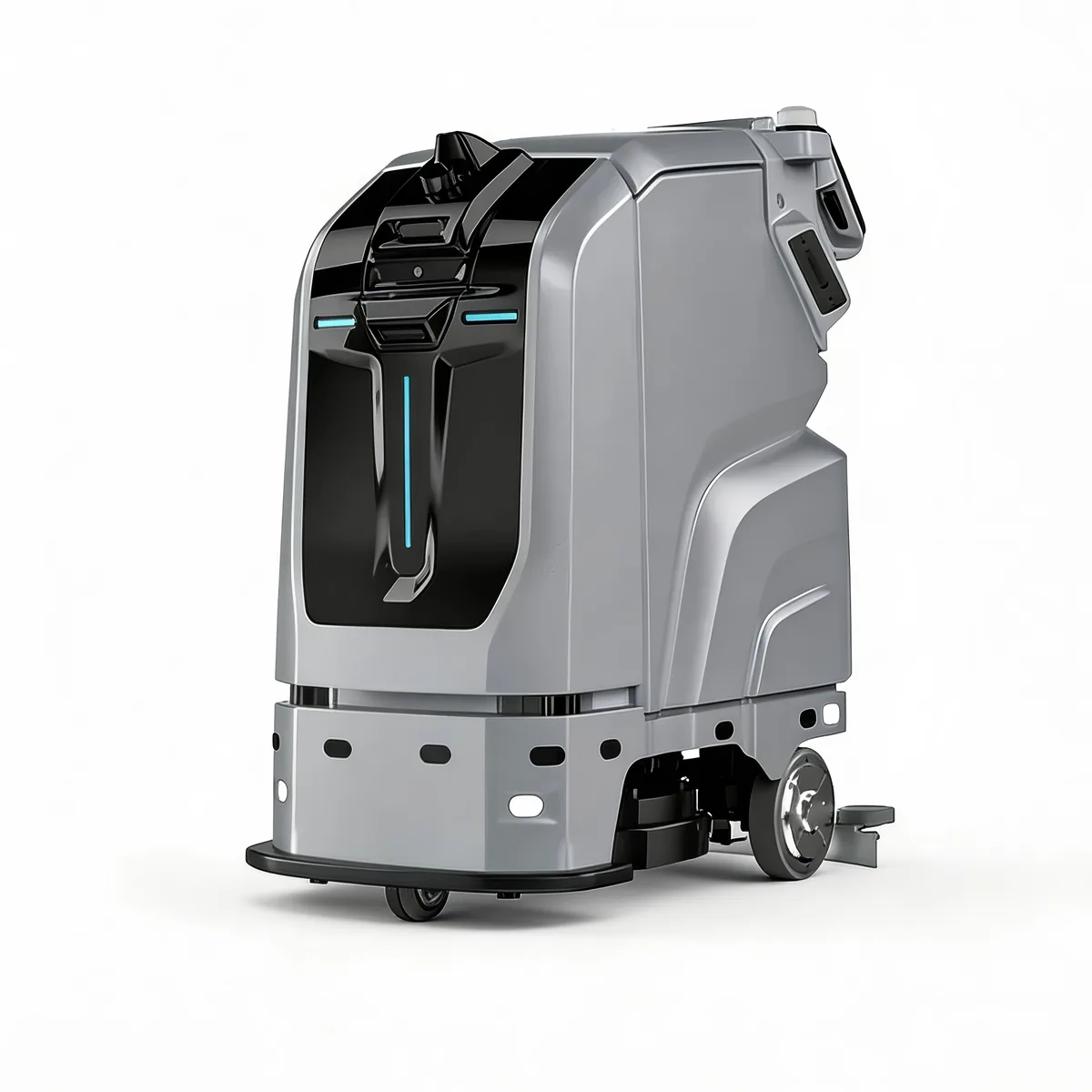
A 4,800 m² furniture gallery outside Shenzhen ran its numbers and found the display floor was its most expensive surface per square metre: 18,000 daily shopper footsteps across showroom carpets and polished concrete, a restock pattern that sent floor staff on 31 stockroom round trips a day, and a cleaning crew of four people who could only cover the floor before opening and after close. The store's own time study measured the hidden cost precisely — 3.8 hours a day of walking between the stockroom and the showroom floor, and a dust film on the dark-wood dining displays that the opening crew had to hand-polish every morning. Large-format showrooms are low-traffic, high-ticket retail with a logistics layer, and the automotive dealerships guide documents the adjacent pattern for showrooms that sell on presentation; this guide covers the furniture and appliance version, where display-floor care, stockroom-to-floor delivery and the first 30 seconds of the customer visit are the three highest-value robot roles.
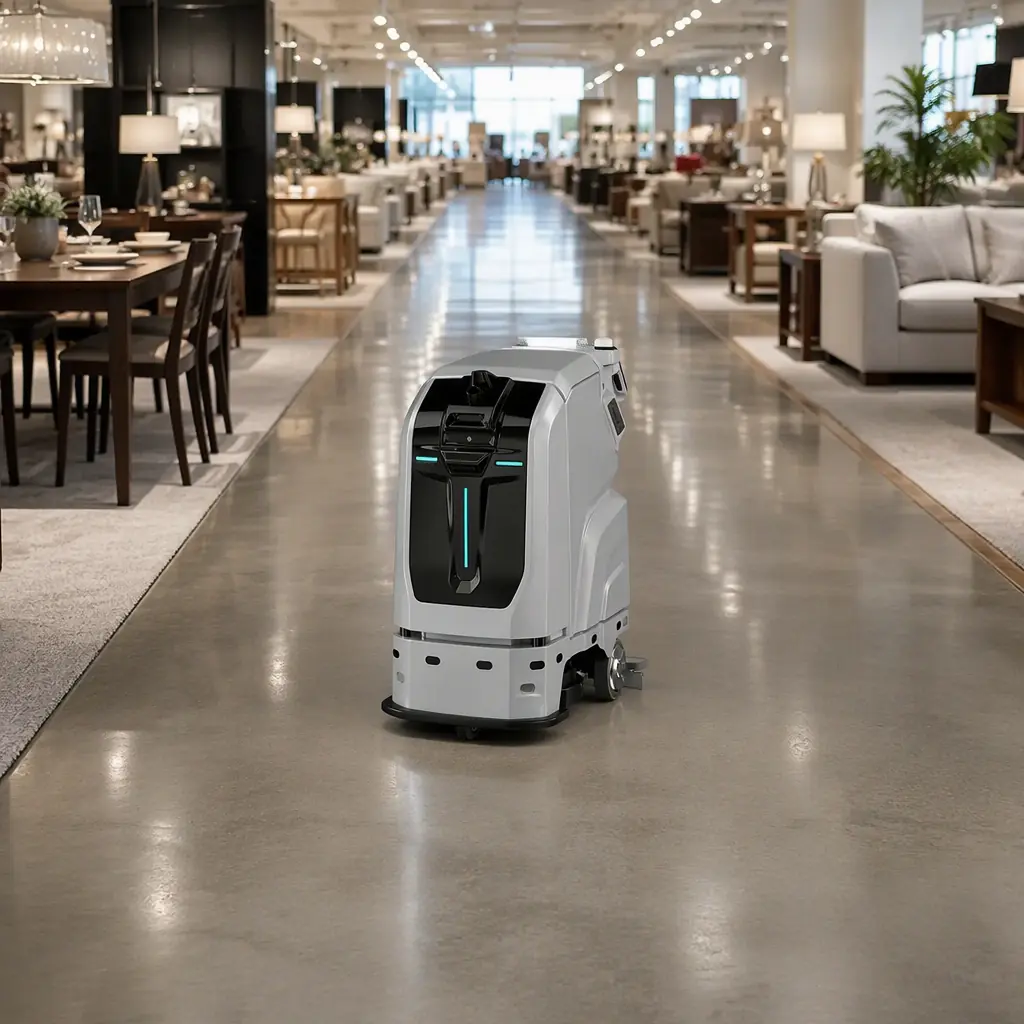
The Display-Floor Standard: 50,000 Sq Ft of Dust-Sensitive Surfaces
The showroom floor is where a furniture retailer makes or loses the sale, and it carries a cleaning load that conventional retail never sees: polished concrete that shows every scuff, dark wood displays that show every dust mote, and mattress galleries where the product is literally the surface customers lie on. The CLEINBOT M79 covers the display-floor loop: single-pass scrub, vacuum and mop at up to 2,000 m²/h — a 4,800 m² gallery floor in about 2.5 hours — on a 45L tank with adjustable water output, so the robot can run a dry microfiber pass on the dark-wood displays and a wet scrub on the polished-concrete aisles in the same schedule. The specification framework in the commercial cleaning robot buyers guide applies; the showroom-specific rule is the display-floor sequencing: the M79 runs the wood-finish zones with the dry pass before opening, the concrete aisles with the wet scrub after close, and the mattress gallery on the low-traffic weekday window — the same "clean the high-traffic zone when the traffic isn't there" logic the home improvement stores guide documents for 100,000 sq ft big-box floors, applied to a floor where the displays themselves are the merchandise.
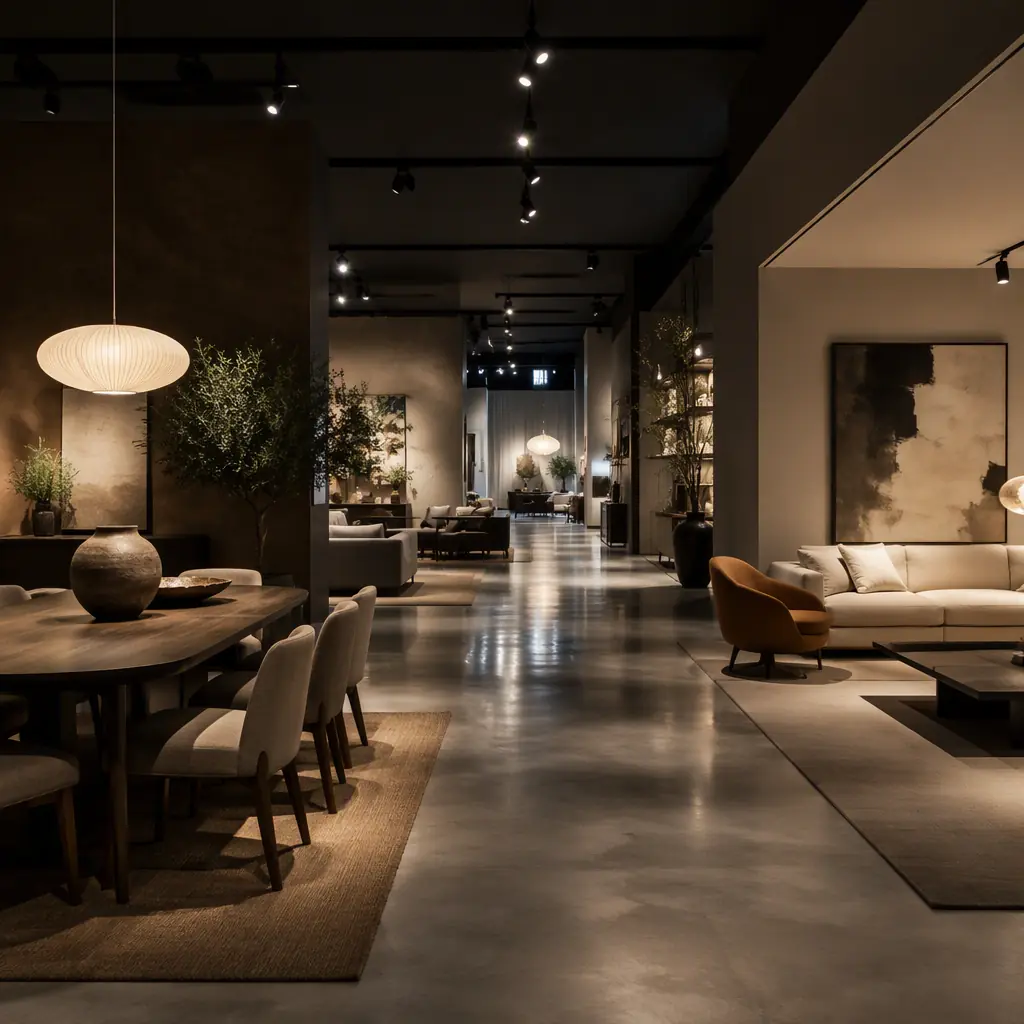
Stockroom-to-Floor Delivery: Floor Models Without the Walking
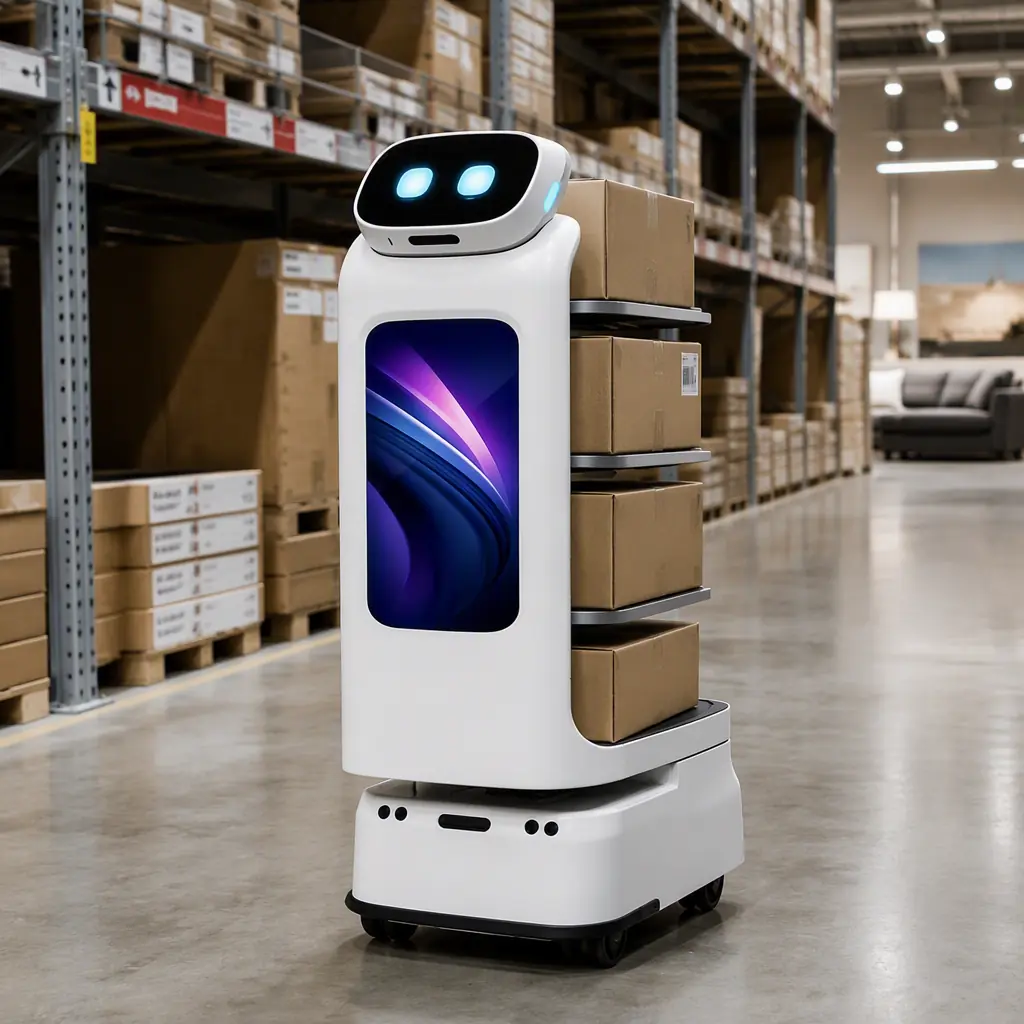
The most expensive walking in a showroom is done by floor staff leaving the sales floor: retrieving floor-model stock, carrying ticketing and spec sheets, and delivering purchased items from the stockroom to the loading dock or the customer's car. The CADEBOT L100 covers the logistics loop: a 400 mm platform with four trays rated for 15 kg each and a 40 kg total payload, clearing the 900 mm stockroom aisles and returning 6–8 trips per hour — carrying the small-part stock, the ticketing bundles and the accessory items while the staff handles the large furniture pieces that stay on the human side of the split. The same pattern the delivery robot selection guide documents for single-cabin versus dual-cabin design applies: for showroom stockroom runs, the L100's open four-tray layout wins because a single trip can carry four different orders. The showroom-specific rule is the floor-crossing protocol: L100 routes run the stockroom corridor and the service aisle behind the displays, never the main customer walkway during peak hours — the same zone logic the supermarkets guide applies to restocking during trading hours.
Showroom Greeting & Wayfinding: The First 30 Seconds
A furniture store's conversion economics start at the door: a customer who finds the dining department in the first two minutes behaves differently from one who wanders a 4,800 m² floor for ten. The CRUZR covers the entrance loop: greeting customers with 50+ language support and sub-second language switching for international retail districts, wayfinding to departments, and the visitor-interaction pattern the reception & concierge robots guide documents for lobbies — applied to the retail version where the robot's job is to compress the time between entry and the first product interaction. The humanoid presence works in furniture retail the way the humanoid retail robots guide describes: it answers the "where is the mattress gallery" question instantly, logs the visit, and hands the customer to a floor associate already told which department they asked about — so the associate opens with the product, not with the store directory.
Weekend-Peak Scheduling: Clean Before the Traffic, Deliver During It
Showroom traffic is violently weekly: Tuesday through Thursday a gallery might see 400 visitors a day; Saturday it sees 3,000, and the floor takes the combined load of strollers, coffee cups and the shoes of every family in the catchment. The weekend-peak schedule is the showroom version of the shopping malls guide pattern: the M79 runs the full display-floor pass Thursday night and Friday night, the weekend daytime windows are restricted to the dry spot-clean pass on the concrete aisles, and the stockroom loop runs continuously because Saturday is when floor models move. The fleet management guide covers the operational layer — every M79, L100 and CRUZR on one cloud dashboard with per-store schedules — and the RaaS financing guide covers the subscription structure that fits showroom budgets: most galleries start with one M79 on the display floor and one L100 in the stockroom, run one quarter with the documented numbers, and add the CRUZR at the entrance when the first-30-seconds question becomes the conversion bottleneck.
Deployment Table for Facility Types
| Facility type | Floor-care fleet | Delivery & greeting fleet | Monthly cost (RaaS) | Staff hours returned |
|---|---|---|---|---|
| Furniture gallery (2,000–5,000 m²) | 1 × M79 (display floor) | 1 × L100 (stockroom) | $1,800–3,000 | 150–260/month |
| Appliance showroom (1,500–4,000 m²) | 1 × M79 (aisles + warehouse floor) | 1 × L100 (stock + ticketing) | $1,600–2,600 | 130–220/month |
| Mattress store chain (5+ locations) | 1 × M79 per store | 1 × L100 per store | $6,000–10,000 | 500–900/month |
| Multi-brand retail complex | 2 × M79 + 1 × CRUZR (entrance) | 2 × L100 | $4,800–7,600 | 400–660/month |
A showroom sells with its floor and its service, and both run on the same clock: the display floor has to look perfect when the doors open, and the stockroom has to keep up when the weekend traffic starts moving floor models. The M79 keeps 50,000 sq ft of dust-sensitive surfaces presentable on the before-and-after schedule, the L100 keeps stock moving so staff stay on the sales floor, and the CRUZR compresses the first 30 seconds of every visit. That is the automation pattern that fits a showroom budget, and it starts with the same step every successful deployment starts with: a walk-around audit of where the dust, the stockroom walking and the entry-to-first-product time actually are.