A 120,000 sq ft home improvement store in the Atlanta metro runs 14,000 SKUs across 24 departments and sees about 4,500 customers on a normal Saturday. Its operations manager ran a floor-care audit in early 2026 and found the store's two rider scrubbers consumed 34 labor-hours per week — split across an 11 pm-to-6 am night crew that was chronically short-staffed — and that the selling floor still looked "acceptable at arm's length" on only about three days a week. The audit's second finding was the slip-and-fall ledger: nine claims in the trailing 24 months, with two resolved above $30,000 including defense costs. The third finding was the outdoor ring: the garden center, lumber yard and front parking lot were swept on an ad-hoc schedule that fell to pieces every October.
Hardware retail is a different floor-care problem than general retail, and the commercial cleaning robot buyers guide documents the specification framework that applies: the format difference is scale and dirt. A shopping mall or retail complex has broad polished floors; a hardware store has 100,000 sq ft of sealed concrete, a mulch-and-pallet garden center, and departments like lumber and plumbing that generate their own debris on the sales floor.
Floor Care at Big-Box Scale: Matching Robot Width to Aisle Duty
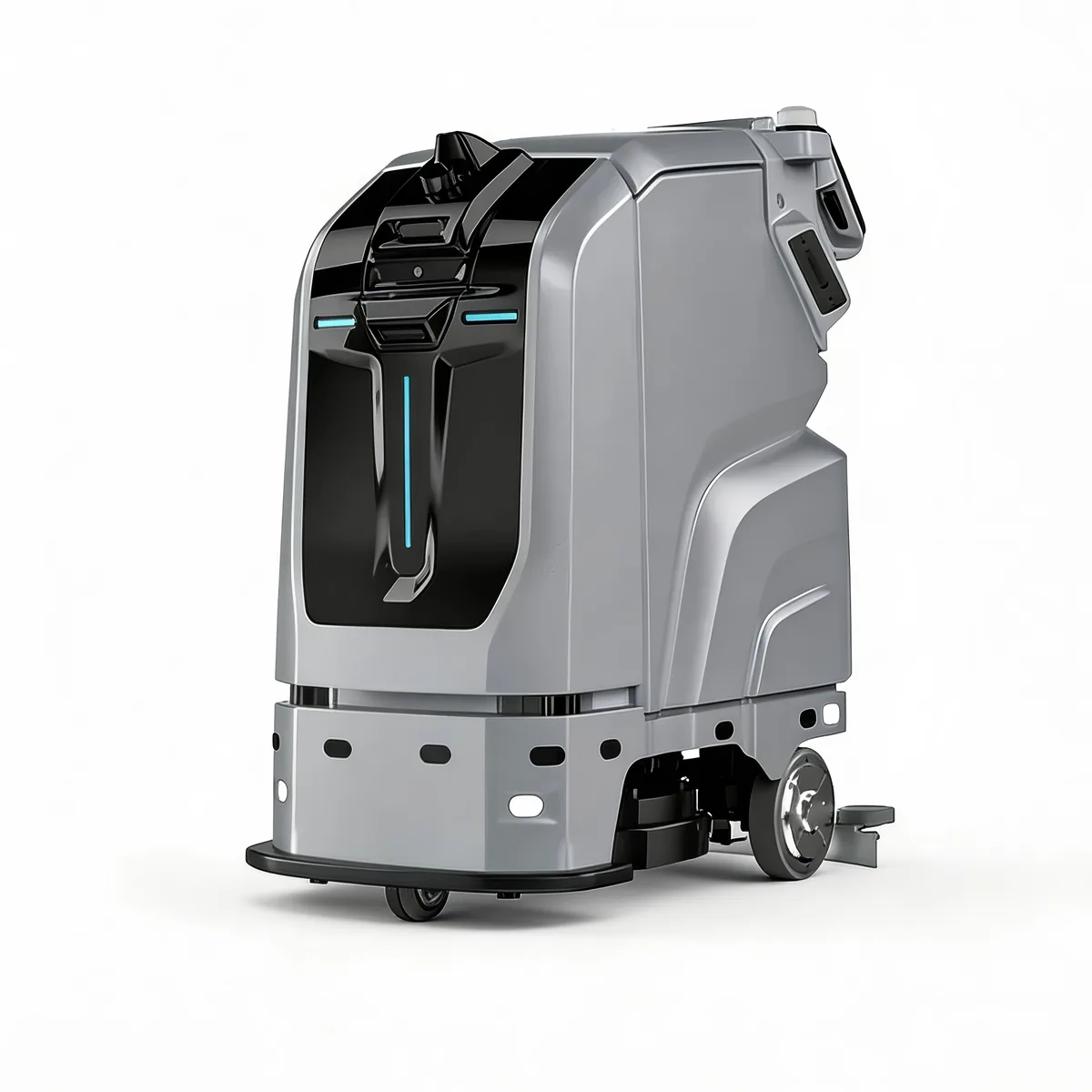
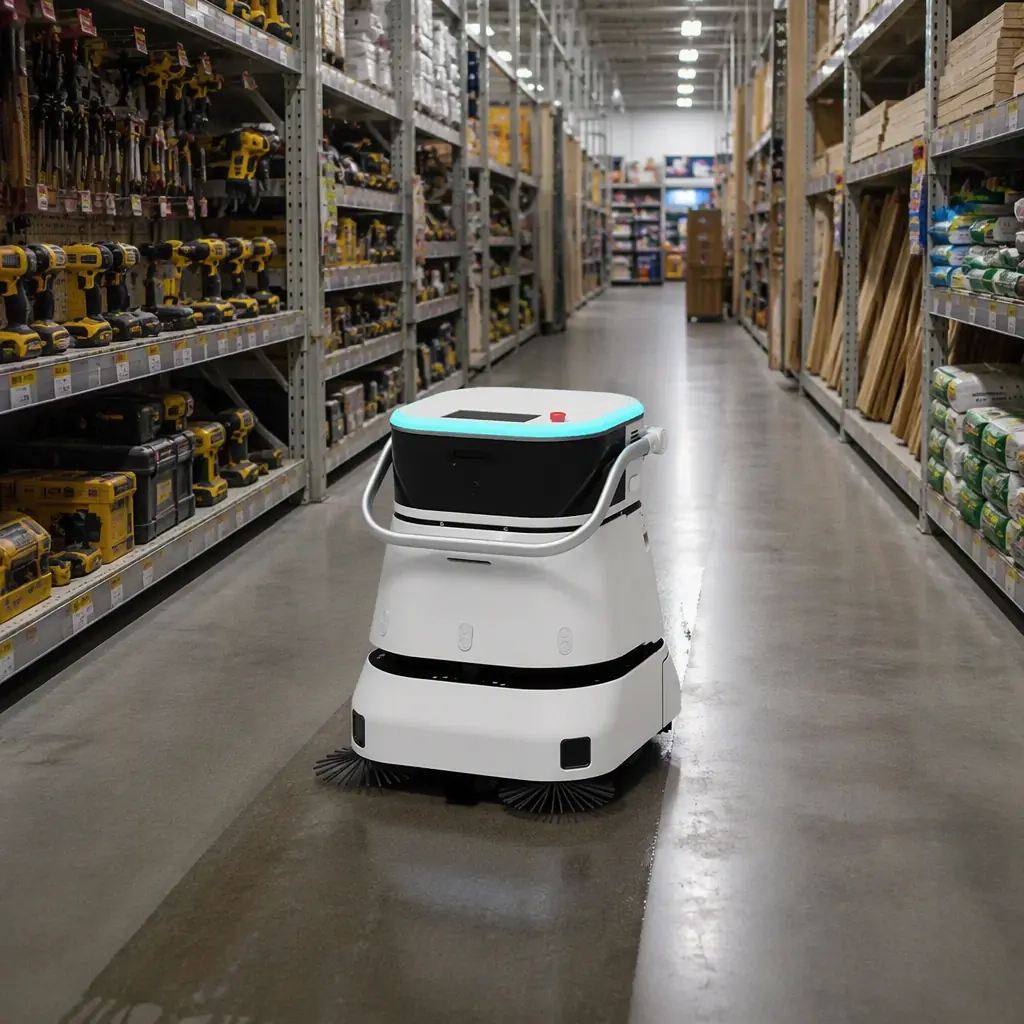
The first design rule in hardware retail is to match the robot to the aisle, not the store. The CLEINBOT M79 is the main-aisle machine: a 720 mm cleaning width at 2,000 m²/h with a 45L clean / 40L dirty tank pair, which covers a 100,000 sq ft selling floor in roughly 4.5 hours of scrubbing — a realistic overnight program for one machine. Its wet-scrub sequence handles the concrete-and-tire-track grime of main aisles, and its 0.2–0.8 m/s operating speed is calibrated to run safely around pallet staging in the 5 am window before associates open the doors.
The tight departments are a different geometry. Tool corrals, plumbing aisles and the fastener wall have 1.2–1.8 m gaps between gondolas, which is where the CLEINBOT C2 Pro earns its place: a 440 mm cleaning width at 500–800 m²/h, 20 kPa of suction for the dust-and-debris that settles under pegboards, and a 503×503 mm footprint that turns in the endcaps. The split assignment — M79 on main aisles, C2 Pro on departments and restrooms — is the same pattern the AMR vs AGV guide describes for self-navigating fleets: both robots re-map overnight when the store resets aisles, and neither needs tape or guide wire on a floor that gets re-merchandised every quarter.
The labor math is the part that survives a district manager review: the audit's 34 weekly scrubber-hours at $16–18/hour is $2,200–2,400 per month of labor, before overtime. An M79-plus-C2 Pro pair under a RaaS subscription lands at $1,800–2,800 per month with the scrubber-hours moved to robot runtime — and the slip-and-fall ledger is the second line item, because a documented nightly floor-care log is the first thing a defense attorney asks for.
Pro Desk & Special-Order Delivery: The Back-Room Run
Hardware stores run a quiet logistics loop that general retail doesn't: special orders, will-call pickups, tool rental returns and cut-lumber tickets all move between a back room and a counter, and the trip is walked by a $15–18/hour associate who is also the only person who knows where the special-order cage is. The AOMAN DOUBLE delivery robot takes the run: its 70L dual cabin (40L upper + 30L lower) carries special-order boxes and rental returns, its 420 mm width clears the stockroom aisles, and its fingerprint-authenticated cabins keep high-value tools and keys access-controlled in the back room — a real advantage in a store where open will-call racks invite shrink. The CADEBOT L100 covers the lighter loop with four open trays (15 kg each, height-adjustable over 10 cm) sized for returns tubs and cut-lumber tickets moving from the lumber desk to the pickup corral.
The economics are the walk-time math documented across this site's retail pharmacy deployment: one delivery robot returns roughly 90 minutes of associate time per shift — about 375 hours per year at $16+/hour, which is $6,000+ of labor returned to the floor per robot. The RaaS financing guide covers the subscription structure that fits store cash flow, and the fleet management guide documents how a multi-store chain runs the delivery and floor-care fleets from one dashboard.
The Outdoor Ring: Garden Center, Lumber Yard & Parking Lot
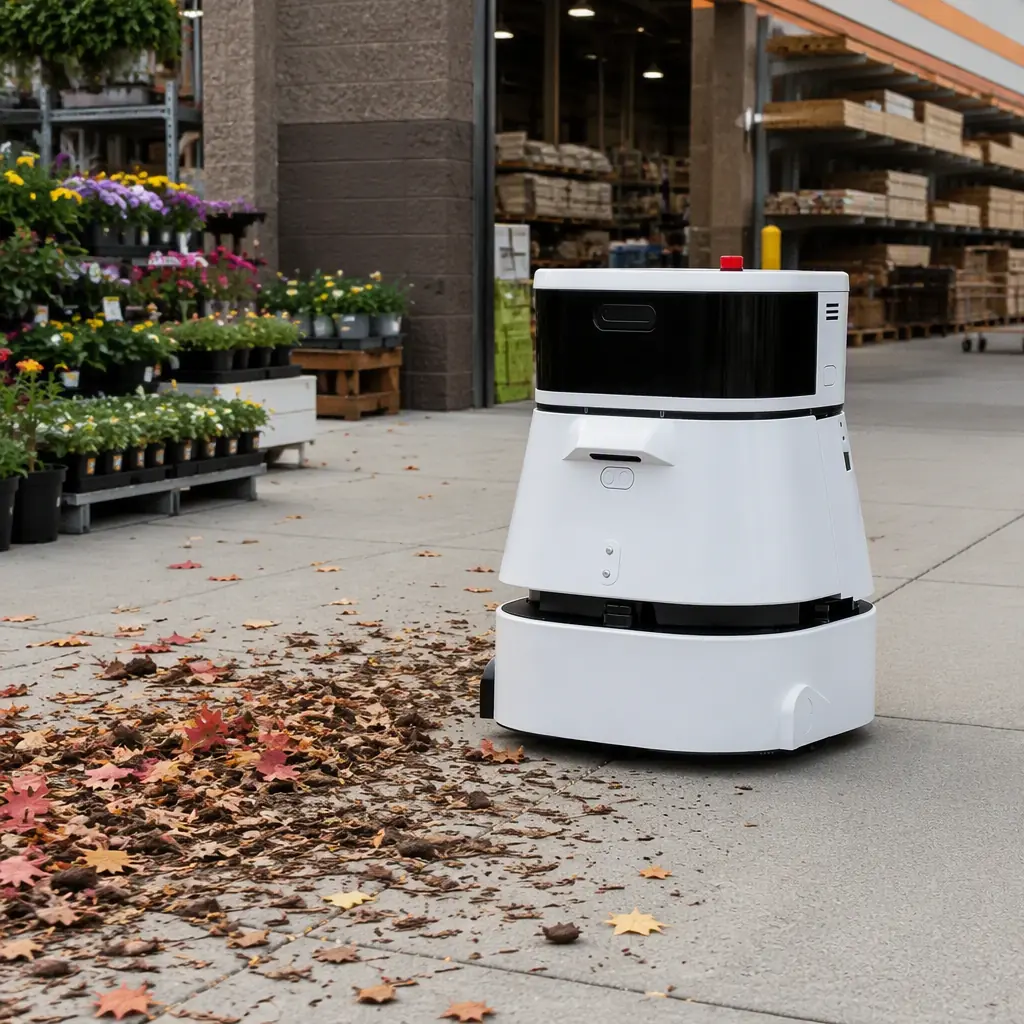
The outdoor ring is where hardware retail is unique. The garden center and lumber yard track in mulch, soil, wood fiber and leaves; the parking lot collects the same plus litter; and every one of those materials ends up on the selling floor on a work boot — the audit's rejected-lot problem in reverse. The CLEINBOT CC201 outdoor sweeper holds the ring: a 1,020 mm sweeping width at 3,000 m²/h, a 130L dust container that auto-empties into an 800L station (full-shift unattended operation), IP67 sealing that shrugs off the garden-center hose, and a rain sensor that reroutes around puddles instead of pushing them. Its GPS + LiDAR + IMU navigation handles the open yard and the parking lot, and its 10-hour battery covers a full overnight ring program — the same pattern the outdoor autonomous cleaning guide documents for exterior space.
The seasonal reality is that October is the stress test: leaf volume triples the debris load, and the CC201's 3,000 m²/h rate holds the lot and garden center on a daily program that the ad-hoc schedule never managed. The safety standards guide covers the pedestrian-safety case for outdoor robots in customer areas — ultrasonic plus 3D LiDAR detection at up to 15 meters, with automatic slowdown around shoppers.
Wayfinding & the "Where Is It" Problem
Hardware stores answer more location questions per hour than any retail format: where is the drywall, which aisle is the PVC glue, do you carry a 12 mm masonry bit. The CRUZR concierge robot at the entrance handles the loop with 50+ languages and a 14-inch facial LED array, and its 0.3-second face recognition lets a returning pro member start a loyalty lookup without a card — the same engagement pattern documented in the reception and concierge guide.
Deployment Table for Hardware Retail
| Store format | Floor-care fleet | Delivery fleet | Monthly cost (RaaS) | Labor hours returned |
|---|---|---|---|---|
| 30,000–60,000 sq ft independent | 1 × C2 Pro | 1 × CADEBOT L100 | $1,400–2,200 | 250–400/year |
| 60,000–120,000 sq ft big-box | 1 × M79 + 1 × C2 Pro | 1 × AOMAN DOUBLE | $2,800–4,200 | 700–1,100/year |
| 120,000–150,000 sq ft superstore + garden center | 1–2 × M79 + 1–2 × C2 Pro + 1 × CC201 | 1–2 × delivery robots | $5,500–8,500 | 1,500–2,600/year |
The budget planning framework walks through the full comparison, and most hardware chains start the way the Atlanta store did: one floor-care pair on the night program, a stopwatch audit of the pro desk runs, and a CC201 added when the garden center season hits. A hardware store's margin lives in shrink, labor and liability — the floor-care log addresses the liability, the robot hours replace the scrubber shifts, and the delivery robots give the pro desk back its people.