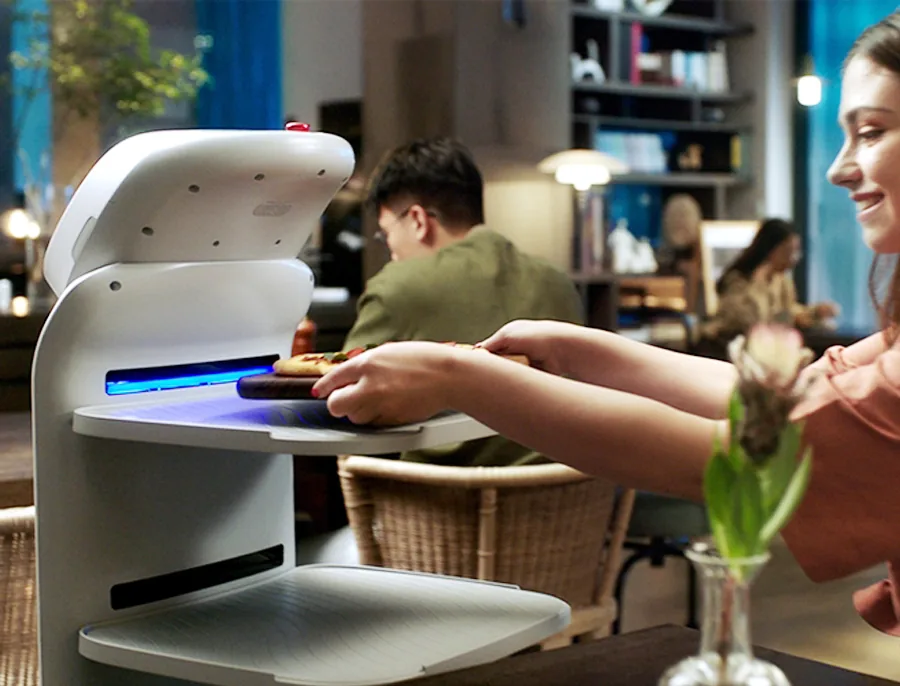
Service Robot Noise Levels, What dBA Actually Means and How to Specify It
At a glance: A vendor's "≤62 dB" line is unreadable without a distance and an operating mode. This guide explains what A-weighted decibels measure, separates the four acoustic sources inside one robot, gives target noise levels by site class, and converts the whole question into a single clause you can put in a contract.
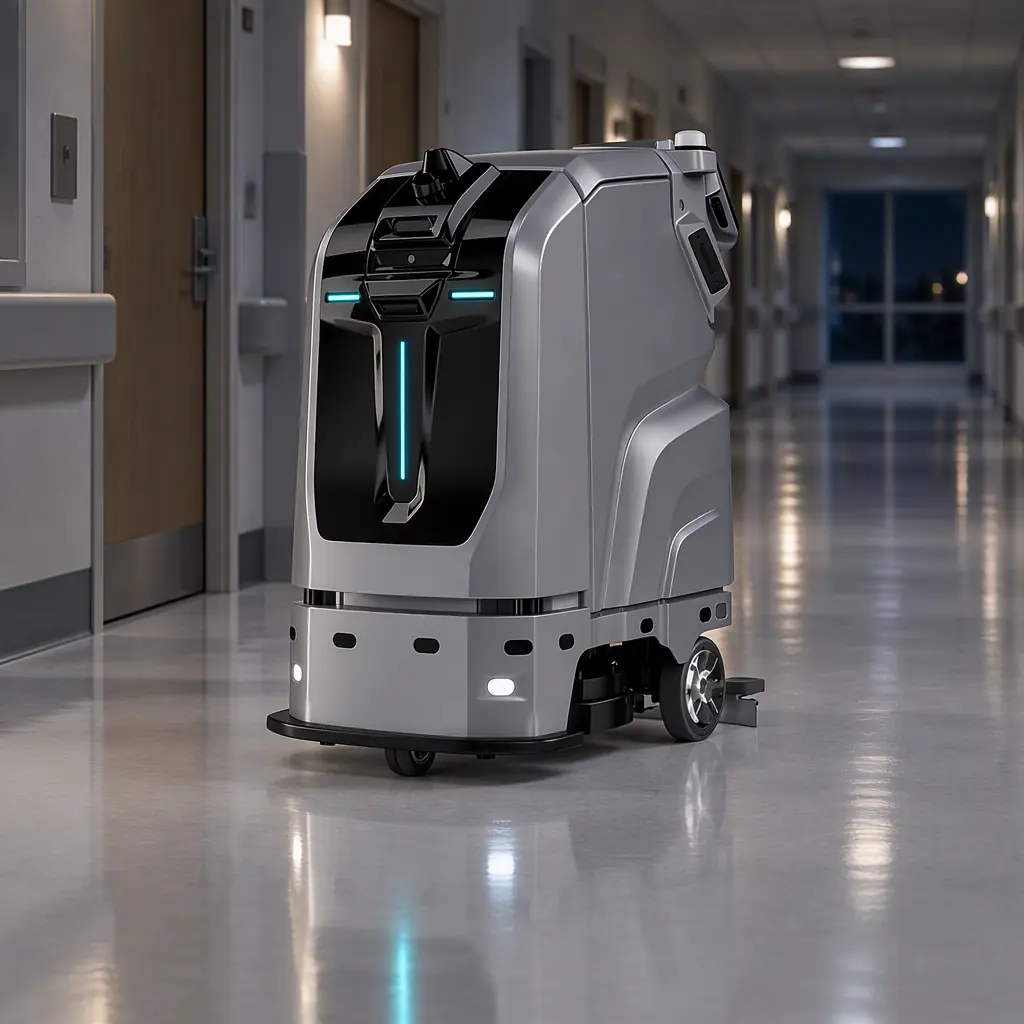
A facilities team specifies a robot for a hospital wing, checks the datasheet, reads "noise level: ≤62 dB," and signs. Three months later the night-shift nurses are filing complaints, because the number on the datasheet was measured on a different surface, in a different mode, at an unspecified distance, and no one can reconstruct what it referred to. The robot is not unusually loud. The specification was simply unverifiable.
Noise is the least-discussed and most-frequently-litigated operating characteristic of a service robot, because it is the one that affects people who never signed the purchase order. This guide covers what a decibel figure actually measures, where the sound comes from inside a robot, what target to hold for each type of site, how to test a unit yourself in one afternoon, and the single contract clause that makes the number stick.
Why a Single "dB" Number Tells You Nothing
Decibels are logarithmic and need a reference before they mean anything. A 3 dB increase doubles the sound energy but is only just perceptible; a 10 dB increase is roughly what listeners describe as twice as loud. That arithmetic matters because the difference between a pleasing and an unacceptable machine is often only 6 to 8 dB, a range that feels trivial on a datasheet.
Two conventions appear on robot specifications, and they are not interchangeable. The first is the A-weighted scale, written dB(A) or dBA, which filters frequencies the way human hearing does and is the scale used for noise-at-work and environmental-noise limits. The second is the unweighted linear scale, dB or dB(Z), which counts energy across the whole spectrum and will typically read several decibels higher, particularly for machines with strong low-frequency components such as vacuum pumps and brush motors. When a vendor quotes a bare "dB" with no A, the honest reading is that the number has not been normalised to how the sound is heard.
Two further variables disappear from a bare figure. Distance: sound falls by roughly 6 dB for every doubling of distance in a free field, so a value taken at 1 metre is not the value at the desk 4 metres away. And mode: a scrubber running its brush and vacuum is a fundamentally different acoustic event from the same machine driving empty between zones. A specification that does not state scale, distance, surface and mode is not a specification. It is a marketing number.
The Four Noise Sources Inside One Robot
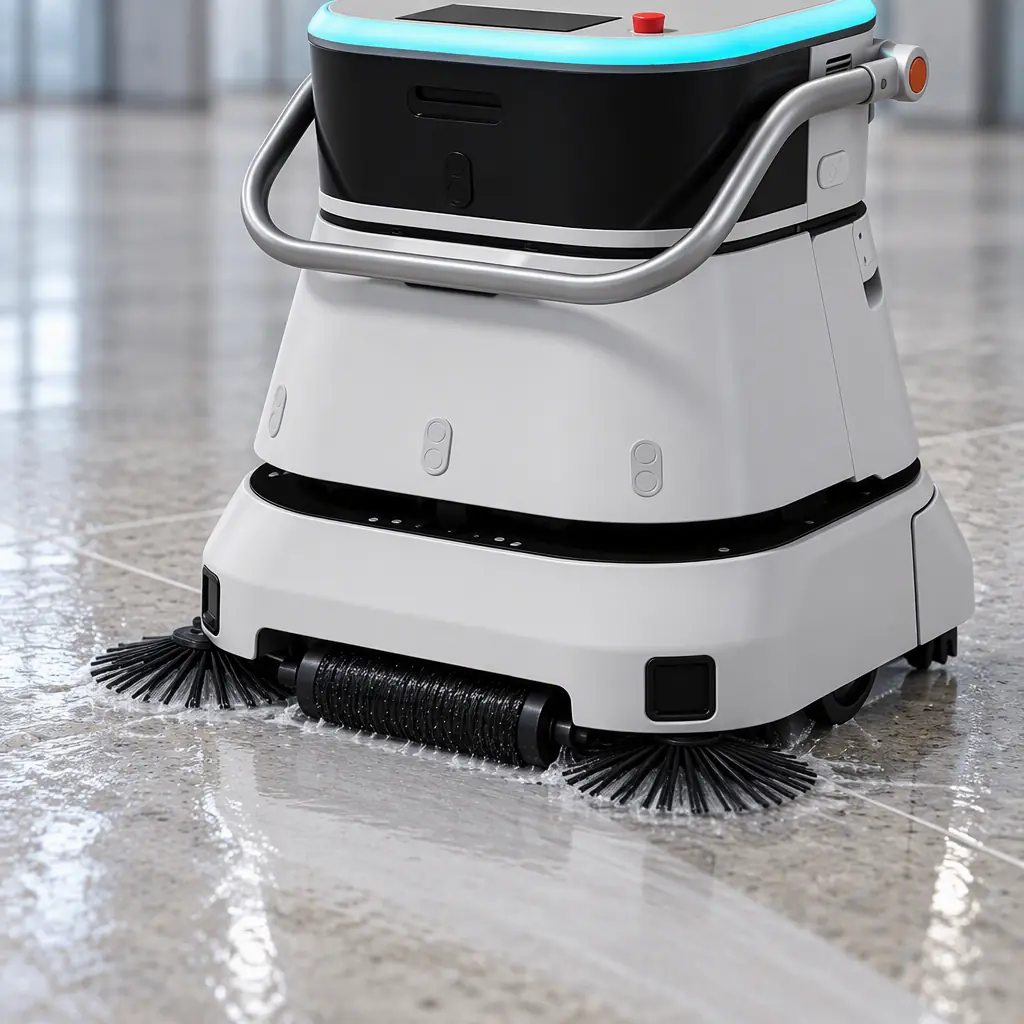
Treating a robot as a single noise emitter is why buyers get surprised. In practice four independent sources contribute, each dominant in a different situation, and each with a different remedy.
| Source | When It Dominates | Typical Character | What Reduces It |
|---|---|---|---|
| Drive and navigation | Transit between zones; any glossy or hard surface | Low hum, occasional motor whine; usually the quietest source | Brushless hub motors, compliant tyres, route smoothing to avoid hard acceleration |
| Brush deck | Scrubbing hard floor at speed | Broadband mechanical roar; often the loudest mode | Lower brush pressure, matched brush stiffness to floor type, reduced rpm in sensitive zones |
| Vacuum and recovery | Sweeping and any mode that lifts debris | Higher-frequency whine, strongest low-frequency content | Acoustic enclosure, tuned impeller, isolating rubber mounts |
| Alert chime and speech | Any interaction with the public | Discrete tones, deliberately audible | Night-mode profile, volume scheduling, disabling speech outside service hours |
The practical consequence: a robot can be well within tolerance in transit and well outside it while scrubbing, and the second number is the one that governs a night operation. Ask separately for transit noise and working noise. Ask which mode the datasheet figure refers to. If the answer is "the quiet one," the specification is incomplete.
Target dB(A) by Site Class
There is no universal target, because acceptable noise depends entirely on what happens in the space. The table below gives working ranges that hold across mixed commercial deployments, expressed as the maximum continuous level measured at 1 metre from the unit in its loudest normal operating mode. Treat these as specification targets, not as certified limits for any given machine.
| Site Class | Target Max dB(A) at 1 m | Why This Threshold |
|---|---|---|
| Hospital ward and clinical spaces, night | 55–60 | Patient sleep disruption is the governing constraint; nursing-station conversation sits near 55–60 |
| Hotel corridor, guest floors | 58–62 | Guest-room doors are thin; a corridor machine is audible through them |
| Open-plan office, occupied hours | 60–65 | Above this, speech intelligibility at 3 m degrades and complaints follow |
| Library and study space | 52–58 | The bar is conversational quiet; scrub modes are usually scheduled outside hours |
| Retail trading floor | 65–70 | Ambient music and footfall mask the machine; a higher level is operationally tolerable |
| Warehouse and back-of-house | 70–75 | Protective equipment is already in use and exposure is intermittent |
One nuance that decides real projects: ambient baseline. A robot at 58 dB(A) in a corridor with a 35 dB(A) night baseline is conspicuous, because the *increase* is what people notice, not the absolute figure. The generally accepted guideline is that a continuous source should not raise the ambient level by more than about 5 dB at the nearest sensitive location. Measure your baseline first, then set the specification ceiling as baseline plus a small margin.
How to Measure a Robot's Real Noise Level
You do not need an acoustics laboratory to reject an unsuitable machine. One afternoon with a sound-level meter and a floor plan will settle the question. Run the procedure below on the unit you intend to buy, on the surface it will actually work on.
- Measure the baseline first. Record the ambient level at the sensitive location with the building in its normal night state, no robot running. This number sets your ceiling.
- Test in the loudest normal mode, not a demo mode. Run scrubbing or sweeping at the speed and brush pressure the site will use. Demo profiles are frequently configured for a trade-show floor.
- Take the reading at the two distances that matter. One metre from the machine gives a comparable specification figure; four metres gives the level at the nearest occupied desk, ward or room door.
- Test on the real floor surface. A machine that is acceptable on carpet can be 6 to 10 dB(A) louder on polished stone or bare concrete, because hard surfaces reflect rather than absorb.
- Test loaded and unloaded. Recovery tanks change the mass and the vacuum load; a half-full machine is not the same acoustic event as an empty one.
- Time the alert chimes. Count how often the unit sounds a tone or speaks during a normal pass, and measure the level of the chime separately from the motors.
- Compare the increase, not just the absolute. If robot-plus-ambient exceeds baseline by more than about 5 dB at the nearest sensitive point, the site needs a quieter mode or a different schedule.
Standards and the Contract Language That Makes a Number Stick
Formal measurement standards exist and are worth naming in a specification, because they remove argument later. For machinery sound-power and sound-pressure measurement the relevant families are the ISO 3740 series, with ISO 3744 covering an essentially free field over a reflecting plane and ISO 3746 covering a survey-grade method using an enveloping surface. For workplace noise assessment, ISO 11202 provides a survey method suitable for comparing a machine against an exposure limit in a real room. A supplier that can name the standard and the mode behind a figure is a supplier you can hold to it.
The clause itself should be short. Specify a guaranteed maximum A-weighted sound pressure level at a stated distance, in a stated operating mode, on a stated floor type, measured to a named standard, with a defined remedy if the delivered unit exceeds it. A worked example: "The unit shall not exceed 62 dB(A) at 1 metre, measured to ISO 3744 in full scrub mode on polished stone, averaged over a 60-second pass; units exceeding this level on commissioning shall be remediated or replaced at the supplier's cost."
For the wider structure of that document, including the definition annex and stabilisation period that make any performance figure enforceable, see how to write a service robot RFP. Noise belongs in the same annex as utilisation and cleaning coverage, because all three are performance characteristics that a datasheet alone cannot promise. The overlapping occupational-safety requirements for robots sharing space with workers are covered in service robot safety standards and compliance.
What AOMAN's Platforms Do About Noise
The AOMAN cleaning range approaches noise as a per-mode characteristic rather than a headline figure. The C1 large-format scrubber and the C2 Pro compact cleaner both use brushless drive motors, which removes the brush-gear whine that dominates older scrubber designs during transit. The recovery squeegee is mounted on isolating compliant elements, which reduces structure-borne vibration into hard floors, the noise path that a hard-surface site feels most.
The scrub deck is the honest limitation. Any machine that scrubs hard floor at production speed generates broadband mechanical noise at the brush, and physical brush contact with stone cannot be made silent. AOMAN addresses this operationally rather than by pretending otherwise: zone-level scheduling lets a sensitive area run at reduced brush pressure and lower speed outside peak exposure hours, and the chime profile can be configured so that alert tones are suppressed or attenuated during night windows. The D1 delivery platform follows the same approach, with muted transit audio and a separate interaction volume for its guest display.
If your site has a hard noise constraint, the useful conversation is not "how quiet is it" but "what is the measured level in each mode on my floor." We run that test against the customer's own floor sample where one is available, and report transit and working levels separately. To arrange it, request a per-mode noise measurement and tell us the floor type and the ambient baseline at your most sensitive location.
A One-Page Noise Specification You Can Paste Into an RFP
The following is a complete, self-contained specification block. It is deliberately short, because a clause nobody can measure is a clause nobody will enforce.
- Metric. A-weighted sound pressure level, dB(A), measured to ISO 3744 (or ISO 3746 survey grade where a certified field is unavailable).
- Distances. Reported at 1 m (specification figure) and 4 m (nearest-occupant figure).
- Modes. Reported separately for transit, scrub, sweep and idle-with-chime.
- Surface. Measured on the floor type of the deployment site; hard-surface figures stated explicitly where they differ from carpet figures.
- Ceiling. Maximum continuous level in the loudest normal operating mode shall not exceed [site-class target] dB(A) at 1 m, and shall not raise the ambient level at the nearest sensitive location by more than 5 dB.
- Chime control. A configurable night profile shall suppress or attenuate alert tones and speech below [site target] dB(A).
- Remedy. On commissioning, any unit exceeding the stated ceiling shall be remediated at supplier cost, or replaced, within an agreed window.
That is the whole framework: a metric that means something, three variables that must be stated with it, a ceiling derived from your own ambient baseline, and a remedy. Everything else in the acoustic question is commentary on those four things.