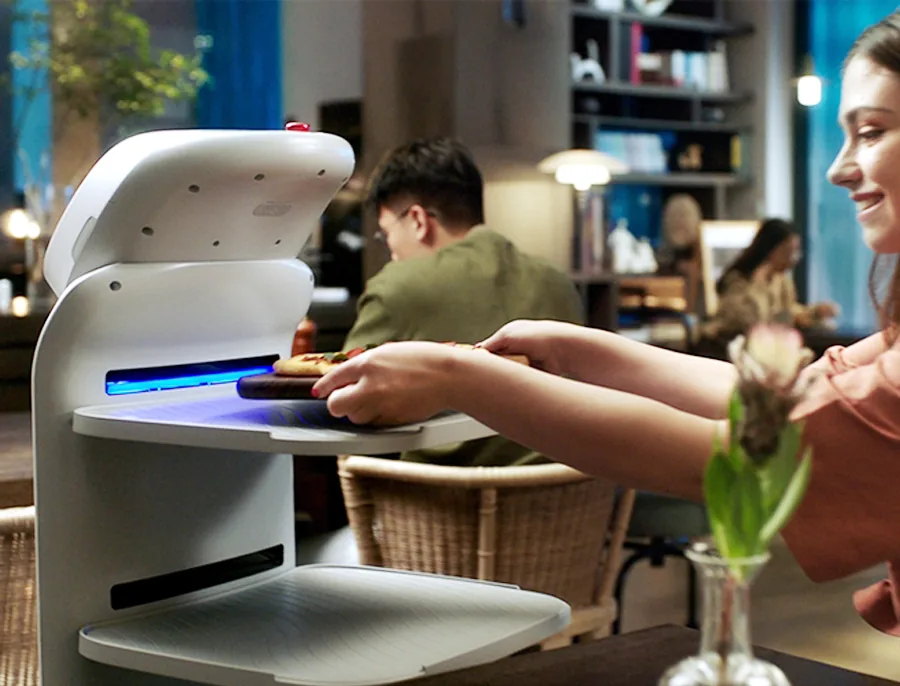
Hotel Guest-Room Delivery Robots: The Door Handoff
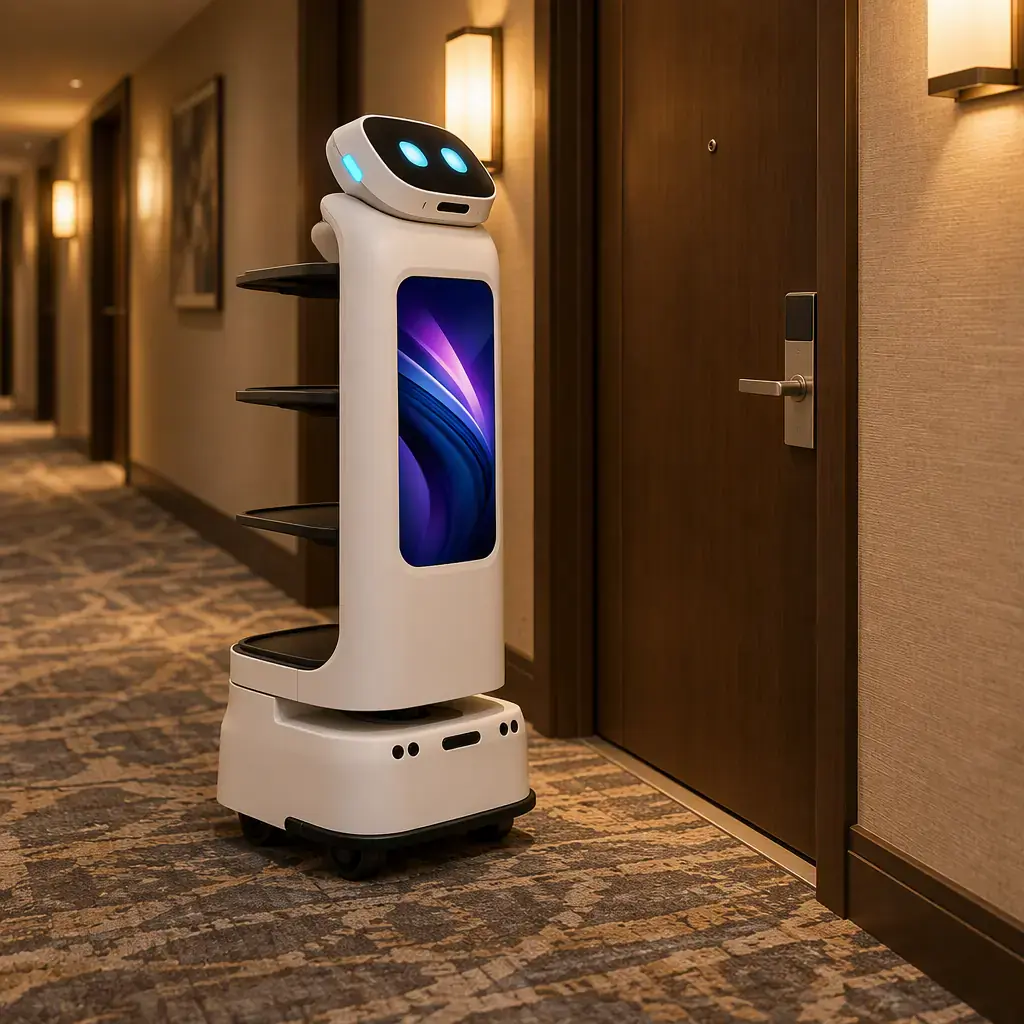
The Last Three Metres Decide the Whole Project
Hotel delivery robot projects are usually sold on the route: it can cross the lobby, call the lift, navigate a guest floor and stop outside room 412. All of that is true and none of it is the hard part. The hard part is the three metres between the corridor and the guest's hands.
A guest in a bathrobe at 23:40 does not want to open a door to a machine and then work out how to retrieve a tray. They want the thing they ordered, with the minimum of exposure and no instructions. A hotel that designs the corridor route beautifully and leaves the door handoff to the guest has built a demo, not a service.
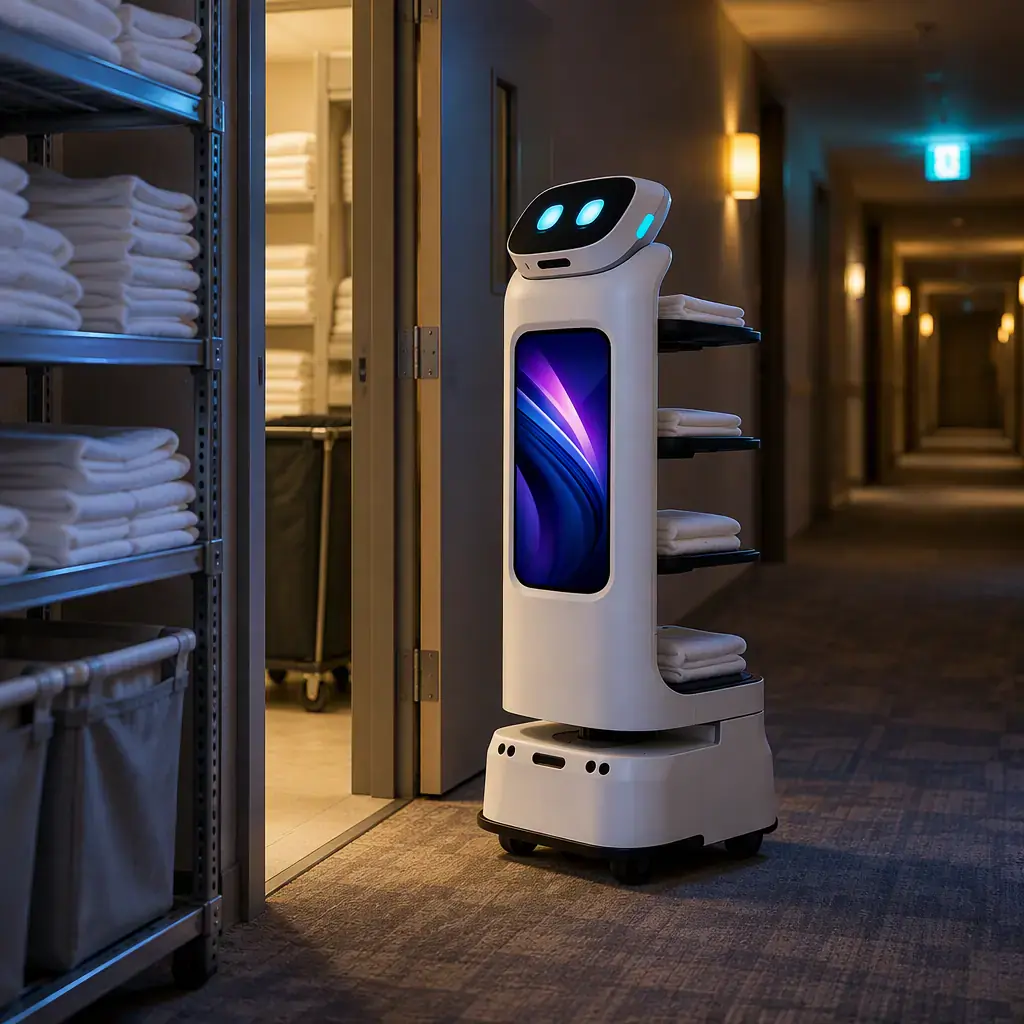
This article works through the handoff in the order it fails: the door itself, the corridor space needed to stop at it, the lift that deposits the machine on the floor, and the handling of the trip that does not work. The platform figures used throughout are from the AOMAN D1 class: 1,265 x 484 x 551 mm, 55 kg, 40 kg payload across four 10 kg tray positions, 270-degree opening trays, a 257-degree front and rear LiDAR ring, a 650 mm minimum aisle and a 15 mm curb or 5-degree slope rating.
Four Door Types and What Each Requires
A hotel has at most four door conditions on guest floors, and each one produces a different handoff design. There is no single answer that covers all four, and the procurement mistake is specifying a machine against whichever door type was tested during the pilot floor.
| Door type | Typical in | Machine access | Handoff design |
|---|---|---|---|
| Manual swing, corridor-side hinge | Older mid-market and heritage properties | Cannot open; must stop clear of the swing arc | Guest opens, machine presents the tray at 270 degrees, guest takes items, machine withdraws after a fixed dwell |
| Manual swing, inward-opening with a closer | Most 3 and 4 star builds | Cannot open; closer force and latch are irrelevant | Same as above, but the arc is inside the room so the machine can stand closer to the threshold |
| Sliding or pocket door | New-build and renovated upscale | Cannot open; a slide needs a motor or a person | Machine squares up to the opening, not the wall, or the guest reaches around a panel |
| Automatic or accessible door with operator | Accessible rooms and upscale corridors | Can trigger via a door interface where fitted | Machine can present into the doorway, but must not hold the leaf open against a closer |
Only the fourth row involves the machine in the door at all, and even there the integration is usually a trigger rather than a control. Everywhere else the machine is a presenter, and the design question becomes how far from the threshold it stops and how long it waits.
Two details cause most of the complaints in practice. First, the swing arc. A 900 mm door swinging outward into a 1.5 metre corridor leaves 600 mm of clear passage, and a machine stopped inside that arc blocks the corridor for anyone walking past. Stop the machine short of the arc, not at the door. Second, the peephole and the chain. Guests habitually open a door on the chain first. A machine that has already withdrawn on a short timer is more reassuring than one that waits silently, because the guest can see it leave.
Accessible rooms need separate attention, because a door held open by a machine or an obstruction creates a compliance problem rather than a convenience. The corridor clearance and obstruction rules that apply to shared pedestrian space are set out in pedestrian traffic management for service robots.
Corridor Space: The Number Nobody Measures
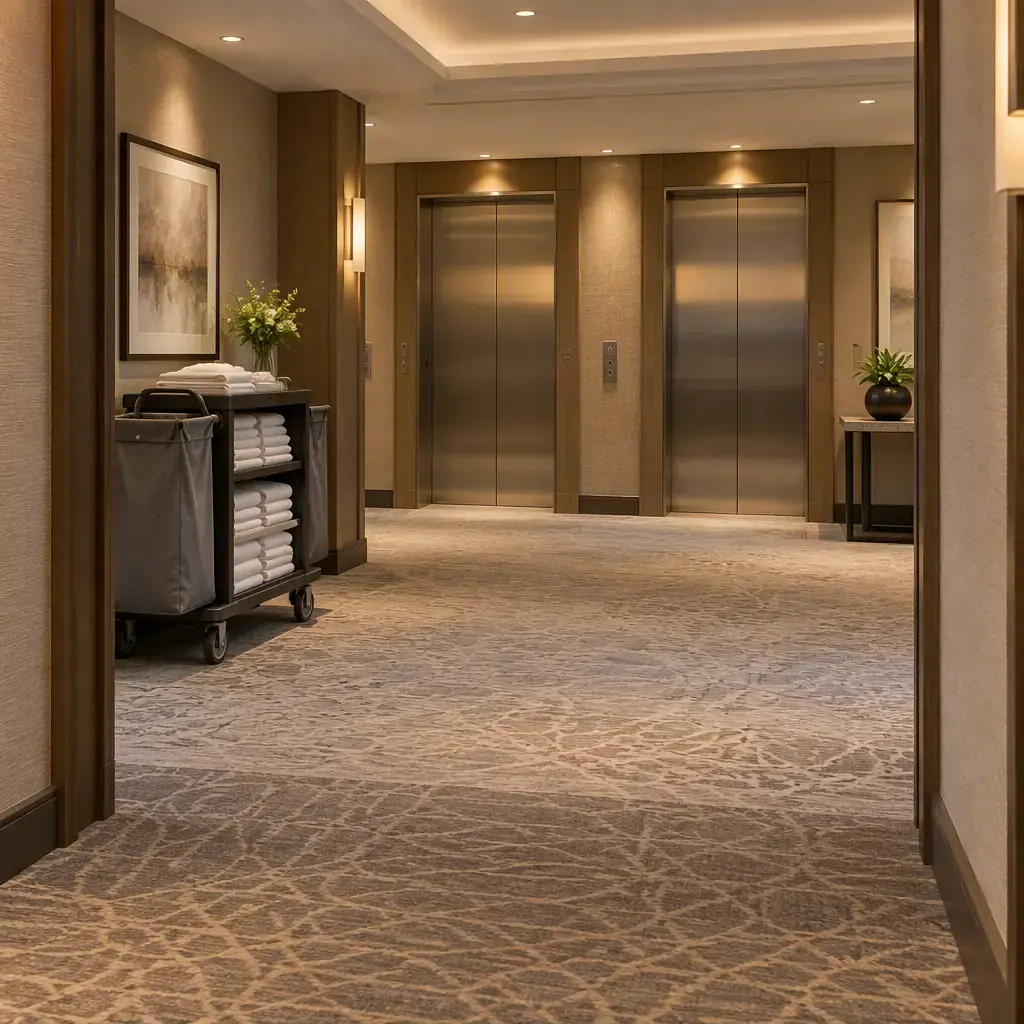
A guest-floor corridor is the narrowest space the machine will ever operate in, and it is simultaneously the space most likely to contain a housekeeping cart, a linen bag and a departing guest with a suitcase. Three measurements decide whether stopping at a door is even possible.
- Body width against aisle. A 484 mm wide platform needs 650 mm of clear aisle to pass, which a 1.2 metre corridor satisfies easily. But a corridor with a housekeeping cart on one side drops to about 700 mm of clear width, and while the machine still fits, a guest cannot pass it at the same time.
- Stopping depth. Presenting to a door needs the machine to stand roughly square to the threshold, which means about 550 mm of depth plus a working margin. In a 1.2 metre corridor that leaves 600 mm of passage beside the stopped machine, which is enough for one person but not for a trolley.
- Turn-around room. A dead-end corridor requires the machine to reverse or rotate. A machine with a 257-degree sensor ring can reverse with confidence, but reversing 20 metres of guest corridor at night is a service risk, so a loop or a lift-lobby turning point is worth designing in.
The practical rule is that the machine should never stop where a guest would have to step into the roadway of the corridor to get past it. On a 1.2 metre corridor that means leaving the machine against the wall and presenting sideways, not blocking the centre line. It also means the delivery time matters: a 19:00 turndown delivery competes with guests going to dinner, while the same delivery at 22:30 competes with almost nobody.
Timing the Dwell Window
The dwell window is how long the machine waits at the door after announcing itself. It is the single most guest-experienced parameter in the whole deployment and it is almost never specified.
| Dwell window | Guest experience | Corridor cost | Fit |
|---|---|---|---|
| Under 60 s | Arrives as a surprise; guest often misses it entirely | Near zero | Only for guests who requested an immediate drop |
| 90 to 150 s | Comfortable for a guest already in the room and expecting the item | One stopped machine for two minutes | Standard amenity and room-service drop |
| 180 to 300 s | Enough for a guest in the shower or on a call to respond | Contention with housekeeping and other deliveries | Night deliveries where a missed trip means a complaint |
| Over 300 s | Machine becomes furniture in the corridor | Blocks a second delivery to the same floor | Not recommended without a per-floor staging bay |
A 90 to 150 second window plus a second attempt is almost always better than a single 300 second wait. Two attempts cost the same total corridor time and recover the guests who were genuinely unavailable on the first, while the abandoned-wait case still returns the machine to service.
The announcement channel matters as much as the duration. A phone notification is the only channel that reaches a guest who is in the bathroom or wearing headphones, so the room telephone and the guest app should both carry the arrival message, not just one.
The Elevator Handoff
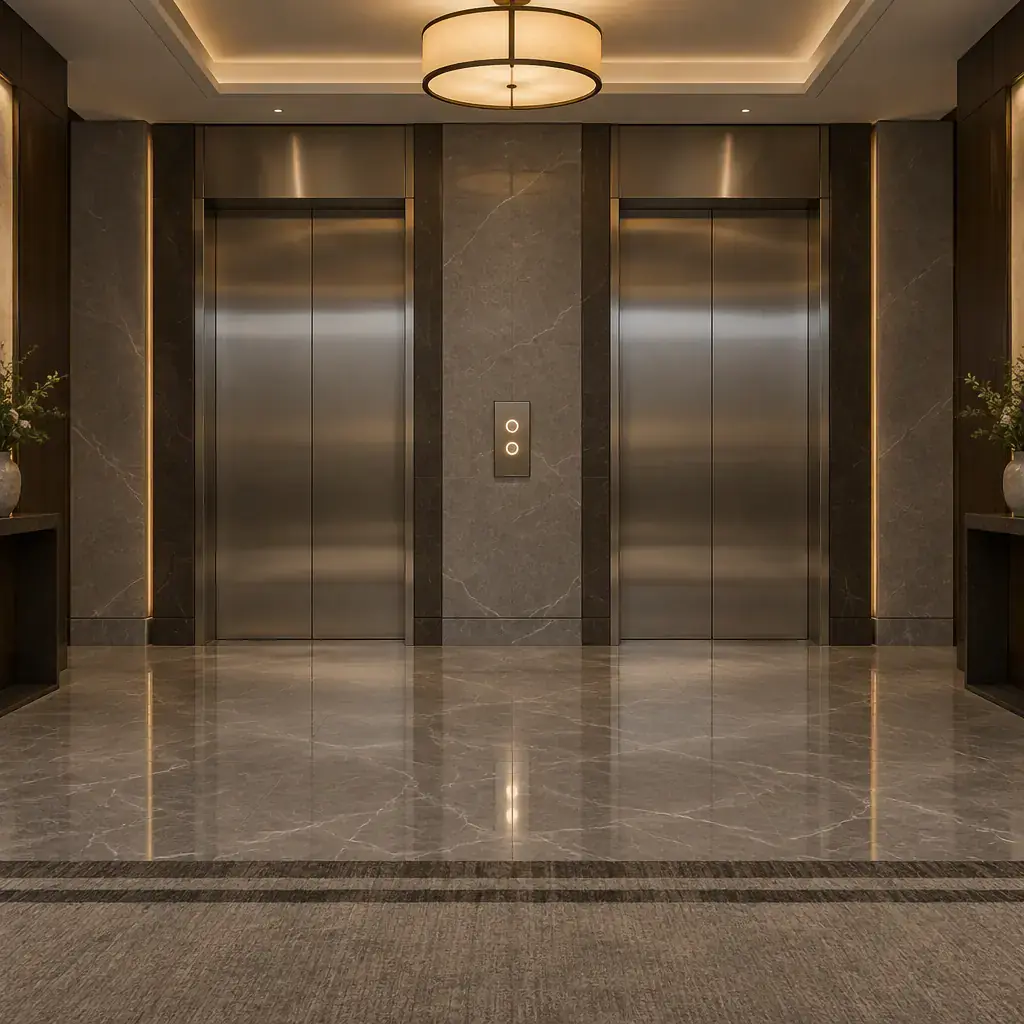
Almost every guest-room delivery in a multi-floor hotel involves two elevator events: one up, one down. They are the most expensive part of the trip in time and the most likely to fail in a way a guest notices.
Which lift. Guest lifts are often the only lifts that reach guest floors, and a robot sharing a guest lift is sharing it with people who did not expect to meet it. A machine rated to carry 40 kg in a lift carrying six guests is fine as a payload question and awkward as an experience question. Where a service lift exists, route the machine through it even at the cost of a longer walk.
The call and the hold. Elevator integration works either through the building's lift API or through a retrofit controller that emulates a call button. Both need the same three behaviours specified: the call, the confirmation that the machine is aboard, and the release so the doors are not held. A machine that holds a lift door while it negotiates with a floor map is holding the door on a car full of guests.
The failure mode. Lift integration is the most common single point of failure in hotel delivery robots. When the integration drops, the machine stops at the lift lobby and waits, and the guest's item does not arrive. That is why the trip should always have a defined escalation: if the machine has not boarded within a stated window, a staff member completes the delivery and the machine returns. The integration route and its fallbacks are set out in elevator integration for multi-floor deployments.
Floor sequencing also matters for throughput. One machine serving four floors with 30 deliveries a night spends a meaningful share of its time in vertical transit. Grouping deliveries by floor into batches of two or three, rather than dispatching one at a time, typically cuts lift cycles by a third and is the single easiest throughput gain available without buying a second machine.
The Trip That Fails: Rules That Protect the Guest Experience
The moment a guest does not answer, the trip becomes a service event. Hotels that handle this well write four rules before go-live, not after the first complaint.
- Two attempts, then escalate. A second attempt after 4 to 6 minutes covers the guest who was in the shower. After that, staff take over rather than the machine making a third round.
- Never leave an unattended tray at a door. An item left in a corridor is a security, hygiene and theft problem, and in a fire evacuation it is an obstruction. Return it, or hand it to a staff member.
- Log the abandonment, not just the delivery. Every failed handoff should record the room, the time, the number of attempts and the escalation outcome, because that log is the evidence for how many deliveries genuinely need a human last metre.
- Decide the policy for repeat rooms before launch. A guest who does not open the door twice in a stay is telling you something, and a machine that keeps trying is the wrong answer.
Handover to staff is not a failure of the robot project. In most hotel deployments a 10 to 20 percent human-completion rate is normal and healthy, and the business case should be built on 80 to 90 percent of trips completing without a human leaving the desk.
What the Guest Actually Judges
Guest satisfaction with a delivery robot is not driven by navigation quality, which they cannot see. It is driven by four things, and all four are handoff design decisions.
| What the guest notices | Design lever | Common failure |
|---|---|---|
| How long the wait felt | Dispatch time plus lift batching | Single-trip dispatch queueing behind earlier deliveries |
| Whether they had to bend or reach | Tray presentation height and 270-degree opening | Trays that only open toward the corridor side |
| Whether the machine felt in the way | Stopping position relative to the door arc | Machine parked on the centre line of a narrow corridor |
| Whether it felt secure | Dwell window, withdrawal behaviour, camera and privacy disclosure | Machine lingering at the door with no indication it will leave |
The fourth row carries legal weight in some markets. A camera-equipped platform standing outside a guest room door is collecting images in a place where guests have a reasonable expectation of privacy, and the property's privacy notice has to describe it. The documentation requirements sit alongside the general compliance framework in service robot safety standards and compliance.
Specifying the Handoff in the Purchase Order
Six items belong in the specification rather than in the deployment plan, because they are the ones a supplier will otherwise decide for you.
- Stopping distance from the threshold. Give a number in millimetres and state that it must be outside the door swing arc. Test it on your narrowest corridor, not your widest.
- Dwell window and attempt count. Specify 90 to 150 seconds and two attempts as the default, configurable per delivery type.
- Announcement channels. In-room telephone plus guest messaging, with the message content approved by the front office before launch.
- Lift integration behaviours. Call, board confirmation, door release, and a stated timeout that triggers staff escalation.
- Failed-trip policy. Two attempts, no unattended tray, logged abandonment, human escalation path.
- Privacy disclosure. What the machine records at the door, how long it is retained, and where the guest-facing notice lives.
A property that specifies these six items before signing will still have handoff problems, but they will be engineering problems with the supplier rather than service problems with guests. That is the difference between a robot that is still running in year three and one that was quietly moved to back-of-house by month four.