
Electronic Shelf Labels With Robots
At a glance: Electronic shelf labels and shelf-scanning robots are sold as answers to the same question, and they are not. ESL changes what the shelf edge displays; a robot verifies what the shelf actually holds against what the system believes. A 24,000-SKU store can spend $168,000 on tags and still have no idea that 6% of its facings are wrong. This article puts both options on the same arithmetic and describes the hybrid stack that most large-format operators converge on within two years.
The confusion is easy to understand. Both product categories promise "price accuracy" and "labour savings", both are sold to the same buyer in the same meeting, and both quote payback periods between 18 and 30 months. Once you strip the category language away, what remains is a simple division of labour: one system displays, the other audits. Buying the display expecting the audit is the standard six-figure mistake in this category.
A useful way to frame the decision is to ask what your last pricing incident actually cost. If the answer is "customers complained at the till", you have a display problem. If the answer is "we do not know how many shelves were wrong last Tuesday", you have a verification problem, and no tag on earth fixes that.
What Each System Physically Does
The distinction that matters operationally is which direction the data flows.
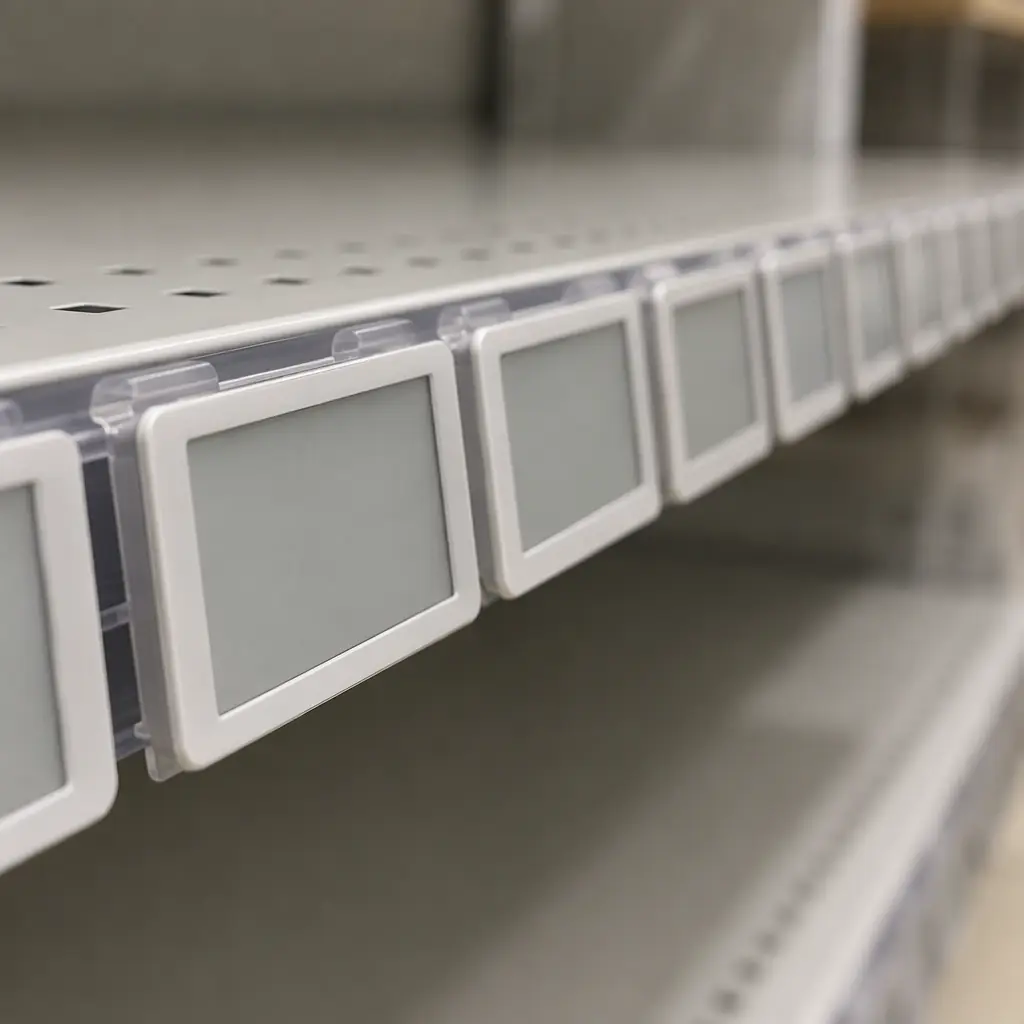
An electronic shelf label is a display endpoint. It receives a price from a head-end system and shows it. It does not know what product sits behind it, whether the facing count matches the planogram, whether the item is in stock, or whether the neighbouring tag belongs to the same promotion. It is a very good screen with a seven-year battery, and it is exactly as accurate as the data pushed to it. When the price file contains an error, all 24,000 tags display that error simultaneously, at machine speed, with perfect typography.
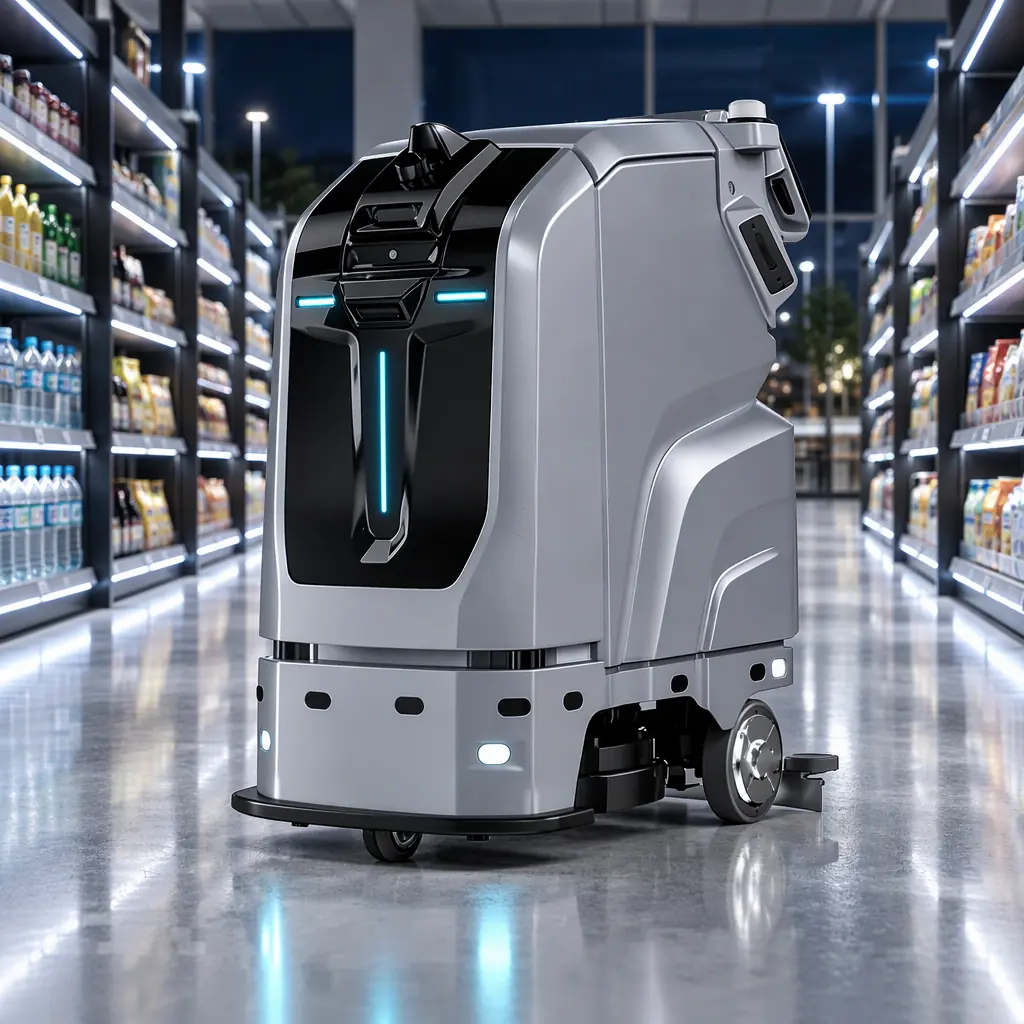
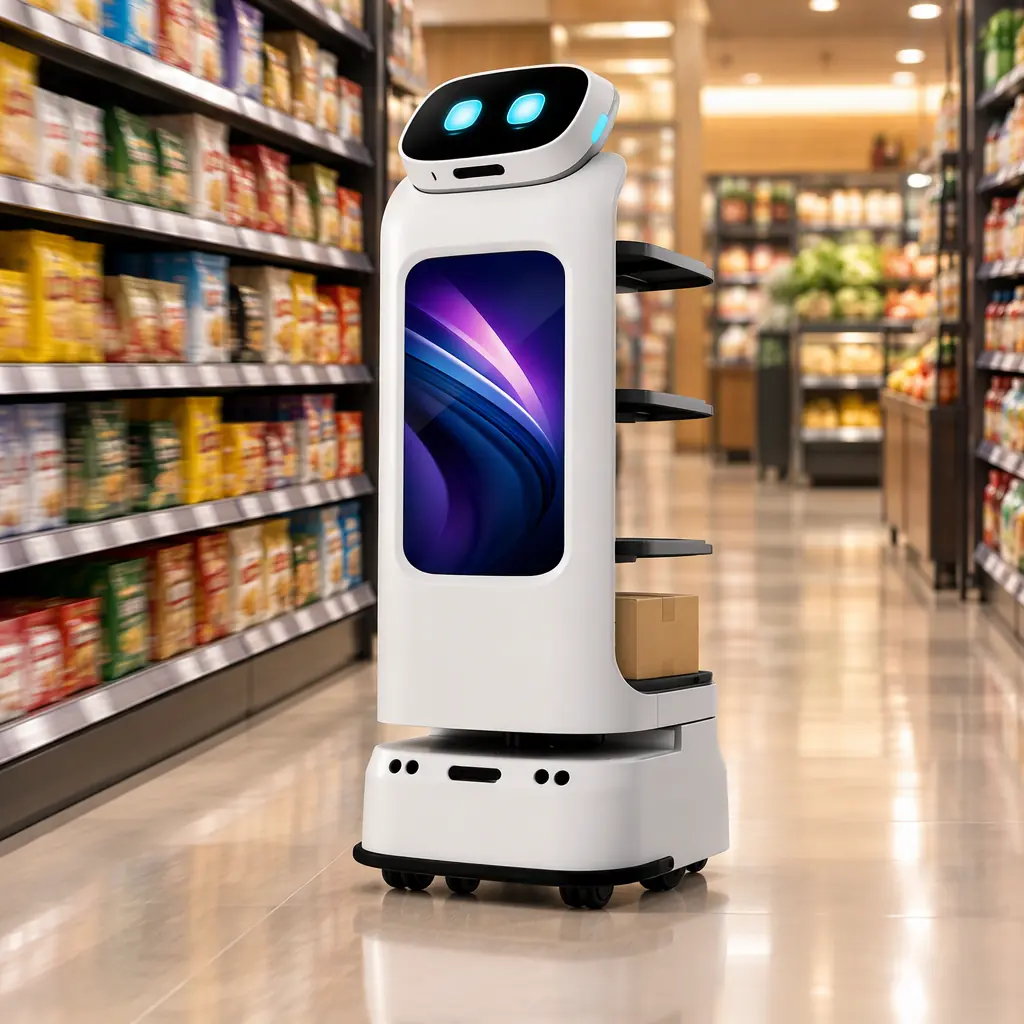
A shelf-scanning robot is a measurement instrument. It carries cameras and a positioning stack, drives a route at a defined cadence, and compares the physical shelf against the expected state: tag value, tag-to-product association, facing count, share of shelf, gap detection. It does not change anything. Its output is a reconciliation report, and its value is entirely in the quality of that report and the speed with which someone acts on it.
That asymmetry explains a pattern that surprises first-time buyers: ESL deployment makes a scanning robot more useful, not less. Once every tag is electronic, the robot's tag-reading pass becomes near-perfect, because it is reading a consistent display rather than a mixed population of printed paper strips, promotional cards, and handwritten corrections. The two systems compound rather than compete.
The Cost Arithmetic Per Store
Take a mid-size supermarket with 24,000 active SKUs across 18 aisles, trading seven days. Planning numbers below are indicative of 2026 European and North American pricing and should be replaced with your own quotes before any decision.
| Line item | Electronic shelf labels | Scanning robot |
|---|---|---|
| Unit cost driver | $6 to $11 per tag at volume, plus rail | $28,000 to $45,000 per unit, plus docks |
| Coverage needed | 24,000 tags + 2,000 spare | 1 unit per 1,200 to 1,800 m² of sales floor |
| One-off capex | $156,000 to $286,000 | $30,000 to $90,000 for a two-unit store |
| Install labour | 300 to 500 hours, usually outsourced | 2 to 3 days commissioning |
| Recurring annual | Head-end licence, RF infrastructure, tag replacement at 2% to 4% per year | $4,800 to $9,600 service and software per unit |
| Energy | Negligible | $380 to $700 per unit per year at three charges per day |
| Labour displaced | Weekly paper strip printing and clipping, roughly 3 to 5 hours per store per week | Manual compliance audit, 6 to 10 auditor hours per store per week |
| What it cannot do | Detect a missing product, a wrong facing, or a mispositioned item | Correct a displayed price |
Put in payback terms, the ESL line is a pure labour substitution play: it displaces tag printing and clipping, and it eliminates the class of error where a paper strip is never changed. Against 4 hours per week at a $22 loaded rate, that is roughly $4,600 a year, which against a $200,000 capex is not a compelling standalone business case unless you also count the revenue effect of correct promotional pricing. That revenue effect is real but hard to isolate, and vendors who lead with it are typically asking you to accept their model of your own price elasticity.
The robot line has a different payback structure, because its output is measurement rather than substitution. Its case rests on the value of knowing which shelves are wrong, and that value only exists if someone acts on the report. A store that runs a robot and files the report is paying for a subscription to guilt.
Where Electronic Shelf Labels Win Outright
There are store formats where the tag layer is the right first purchase, and in these the robot decision can wait a year or two.
- High-tag-density, small-format stores. Convenience and drug formats with 4,000 to 8,000 SKUs in 300 m² have a tag capex under $70,000 and almost no aisle length for a robot to patrol efficiently. The tag economics work, the robot economics do not.
- Fresh and ultra-fresh departments. Where prices change daily or intraday, the labour of re-ticketing is the dominant cost, and a robot that reports errors faster than staff can re-ticket them adds nothing.
- Regulated price-display environments. Where unit-price display is a legal requirement per line rather than per shelf, the tag is the compliance artefact.
- Sites with no overnight operating window. A robot needs a clear floor. A store that trades 24 hours and never has an empty aisle cannot run a scanning route without a daytime accommodation that costs more than the audit saves.
Where a Scanning Robot Wins Outright
Big-box grocery, hypermarkets, and any store where the shelf is managed by someone other than the person who sets the price.
- Planogram-heavy categories. Where share-of-shelf is contractually agreed with suppliers, the robot produces the evidence that settles the argument. Paper audits sample; a robot censuses.
- High out-of-stock exposure. The gap detection loop is the highest-value output, because an empty facing is a lost sale today rather than a compliance issue next quarter.
- Competitor price collection. A route that leaves the store is a separate capability that no tag can provide.
- Multi-supplier promotional execution. When three suppliers' promotional displays compete for the same end-cap, the robot is the referee.
The Hybrid Stack and Who Owns Price Truth
The architecture that large operators converge on within about two years is a three-layer stack, and the layer that decides whether it works is the one nobody sells.
Layer one is the product information system. A single master record per SKU, holding the price, the description, the unit-price basis, and the planogram position. This must be the only writer. In practice it is usually a PIM or the ERP's item master, and the single most common failure is that the promotion engine writes prices directly to the tag head-end while the item master continues to hold the base price.
Layer two is the display. The tag head-end reads from the master and pushes to the shelf. It holds no independent price state.
Layer three is the auditor. The robot reads the shelf and compares against the master, not against the head-end. This detail is where deployments quietly go wrong: if the robot is configured to compare the shelf to what the head-end thinks it sent, it will happily certify a shelf that displays a wrong price perfectly. The reconciliation target must be the same master record that the point of sale uses.
When all three layers point at one record, the failure mode changes character. Instead of "the tag was wrong", you get "the tag did not receive the update", which is a discrete, fixable, auditable event with a timestamp. That is the real product being bought: not accuracy, but a bounded and attributable error surface.
Battery, Refresh and the Hidden Tag Labour Line
Electronic shelf label vendors quote a five to seven year battery life, and it is broadly honest under specified conditions: a defined number of display refreshes per day, a defined temperature band, and a defined RF retry rate. What the specification does not tell an operator is what the battery replacement programme costs to run.
Work the arithmetic on the 24,000-tag store. At a five-year nominal life and a 2% annual failure rate, year five is a 24,000-tag replacement event, not a 480-tag one. Finding, opening, swapping, and re-associating a tag takes 2 to 3 minutes including the walk and the head-end rebind. That is 800 to 1,200 technician hours concentrated into one budget year, plus the tag cost. Operators who model replacement as a smooth percentage rather than a cliff are routinely surprised in year five, and the same cliff arrives again at year ten.
A scanning robot interacts with this. Once tags are electronic and read reliably, the robot's pass can report a dead or blanking tag within one cadence, which converts a customer-facing error into a maintenance ticket. That is a genuine and underrated benefit of the hybrid stack, and it is the strongest argument for sequencing the robot after, not before, the tag rollout.
A Decision Rule You Can Apply in One Meeting
Buy electronic shelf labels when the dominant cost is re-ticketing labour and prices change daily. Buy a scanning robot when the dominant cost is not knowing what the shelf actually looks like. If both are true, sequence the tags first, then the robot, and point both at one master price record.
The sequencing matters more than the calendar gap between them. A robot deployed into a mixed paper-and-tag estate spends much of its read budget compensating for unreadable strips and ambiguous associations, and the operator concludes the robot is unreliable when the shelf is what is unreliable.

Deployment Notes for a Robot Fleet in an ESL Store
Three practical frictions recur when a scanning route is added to a tag-equipped store, and all three are engineering problems rather than commercial ones.
- Read angle and shelf occlusion. Tags mounted on a rail pivot up to 15 degrees away from the aisle centre, and a robot camera on a low mast sees them at a shallow angle. Test the actual mount before committing to a route, and expect the first pass to under-read the two lowest shelves.
- Radio contention. The tag head-end transmits on a fixed duty cycle and the robot's own telemetry competes for the same band. On sites with dense access-point coverage this shows up as slow uploads rather than missing reads, and it is fixed with channel planning rather than with a bigger antenna.
- Shelf-edge lighting. Where stores have swapped to high-CRI LED strips with strong downward spill, tag screens look washed out to a wide-angle camera. A polarising filter solves it far more cheaply than a sensor upgrade.
None of these is a reason to avoid the combination. They are the reason a pilot should run on one aisle in a live trading week rather than in a vendor's demonstration space.
If you are planning a shelf-intelligence programme and want the robot layer specified against your existing tag estate, send us your aisle layout and tag system and we will return a route and cadence plan. For the hardware side of this decision, the scanning hardware comparison covers mounts and sensors, and the pricing integrity audit method covers what to do with the report once you have it. If your priority is the empty-shelf problem rather than the price problem, start with out-of-stock detection in practice, and the supermarket fleet model shows how the unit count is derived from sales floor area.
What Changes in Year Three
The reason operators end up with both systems is not that either disappoints. It is that the first system changes the questions the business asks.
Once every shelf edge is electronic, price-accuracy complaints stop, and the merchandising team starts asking about share of shelf and promotional compliance instead. Those questions cannot be answered by the tag layer, so the robot arrives. Once the robot is running, the store discovers that the reconciliation report is also the most reliable source of truth about which SKUs are systematically mis-set, which feeds back into the planogram and the item master. Each layer makes the next one worth buying, and the payback on the second is usually faster than the first because the labour substitution is already banked.
The operator who buys only the tag layer and stops gets a cleaner shelf edge and the same blind spots. The operator who buys only the robot gets a report describing an environment that is harder to fix than it needed to be. The order of purchase is negotiable; the pairing is not.
Get a Quote
Tell us about your space and workload, we reply within 24 hours.