
Delivery Robot Fleet Maintenance, The Service Schedule the Datasheet Leaves Out
At a glance: A delivery robot that stops mid-route does not fail the way a floor scrubber fails. It fails at a latch, a lid actuator, a lift interface or a payload sensor, and those components are absent from the maintenance table that ships with the unit. This guide builds the service schedule from the parts that actually break, prices it per robot per year, and sets out the contract terms that decide whether a spare reaches you in three days or three weeks.

Why Delivery Robots Fail Differently
A cleaning robot spends its life doing one repetitive motion over a flat floor, so its wear concentrates in the brush deck, the squeegee and the drive wheels. A delivery robot does something else. It opens and closes a cargo compartment several hundred times a week, docks against elevators, negotiates thresholds and door frames with a loaded cabinet, and reads a payload sensor every time someone loads or unloads it. The wear moves into the cabinet hardware and the interface electronics.
That distinction decides the whole service plan. A schedule copied from a scrubber will check the wrong parts and miss the ones that actually stop a route.
What Actually Wears Out, Component by Component
The table below is the component list we see drive most unplanned stops on a working delivery fleet. Each row carries a realistic interval, and the intervals assume a single-shift duty cycle of roughly six to eight hours of active running per day.
| Component | Typical failure mode | Inspect / service interval | Field-replaceable |
|---|---|---|---|
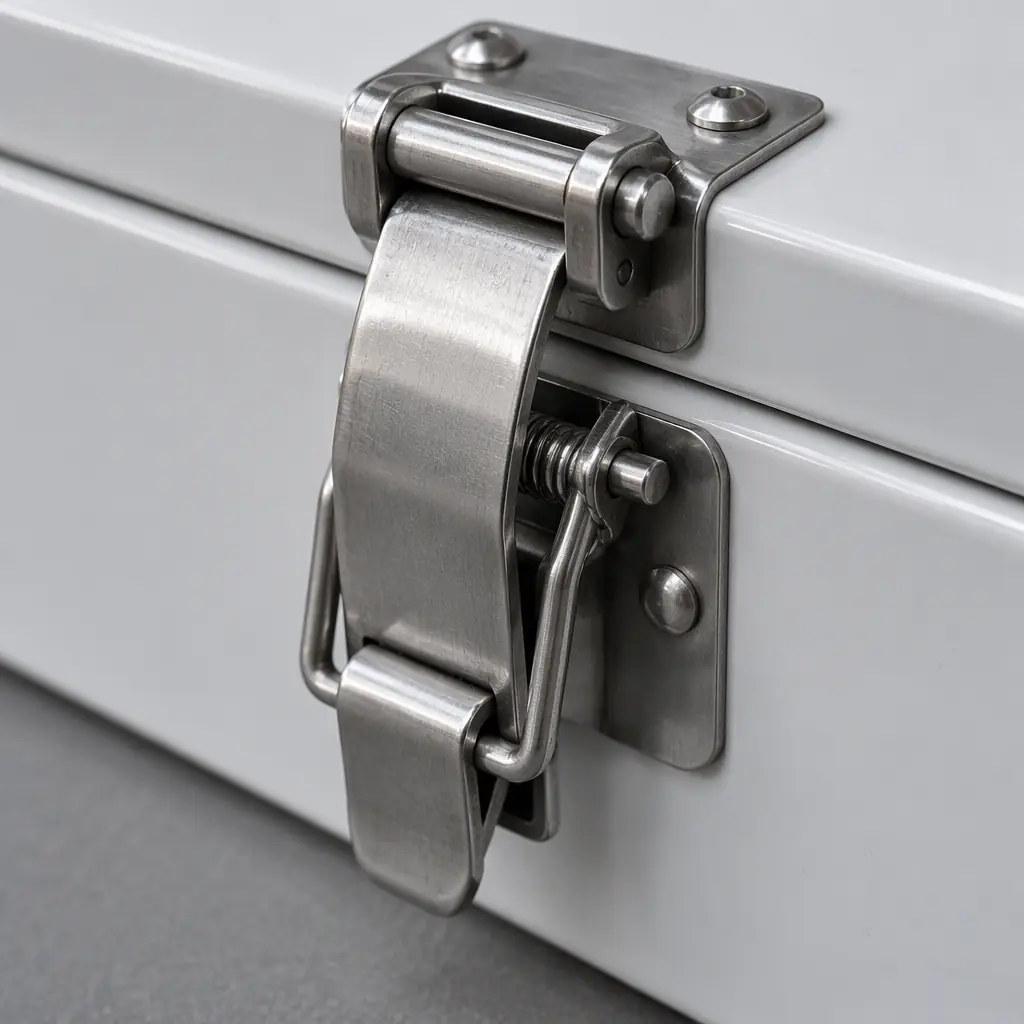
| Cargo lid latch and hinge | Latch spring fatigue, hinge pin play, misalignment after impacts | Monthly inspect, replace latch at 12 to 18 months | Yes, 15 to 30 min |
| Lid actuator or damper | Slowed or incomplete open, motor stall | Quarterly inspect, expected life 18 to 24 months | Yes, 30 to 45 min |
| Payload / load sensor | Drift, false empty or false loaded readings | Quarterly recalibrate, replace as readings drift | Yes, 20 min plus calibration |
| Drive wheels and tyres | Tread wear, flat spots from hard braking | Monthly inspect, replace at 12 to 24 months | Yes, 20 to 40 min each |
| Lift interface module | Communication drop, alignment sensor fouling | Monthly clean, firmware-verify quarterly | Yes, 30 min |
| Caster and suspension bushings | Play, vibration, tracking drift | Quarterly inspect, replace at 24 months | Yes, 30 to 60 min |
| Battery pack | Capacity fade below shift requirement | Monthly health check, plan replacement year 3 to 4 | Yes, 45 to 60 min |
| Lidar and camera lenses | Dust film, scratches from cleaning | Weekly wipe, deep clean monthly | Clean only, swap at 3 to 5 years |
The pattern is worth reading twice. Three of the top four items live in the cargo compartment, and the compartment is the part of a delivery robot that a generic AMR service plan ignores. If your schedule only covers the drivetrain, you are servicing the half of the machine that rarely stops the route.
Turning Intervals Into a Visit Schedule
Component intervals are useless until they are converted into the number of service visits a site will actually see. The arithmetic is straightforward once you separate the fleet into two groups, because a site with twelve robots does not need twelve times the visits of a site with one.
Work the numbers for a fleet of ten robots on a single shift:
- Monthly items (latch, wheels, battery health, lift interface): the interval is per robot, but a technician clears all ten in one site visit, so this is one visit per month plus the labour hours the components consume.
- Quarterly items (actuator, sensor recalibration, casters, firmware check): one visit per quarter, again fleet-wide, with hours scaling by robot count.
- Unscheduled repairs: budget from field failure rates, not from a wish. At a realistic two to three percent monthly failure rate, ten robots generate roughly two to four unplanned service events a year.
Put plainly, a ten-robot site on a preventive programme sees about fifteen scheduled visits a year plus a small number of repair calls, not one hundred and twenty visits. That is the number to put in the contract, and it is roughly an order of magnitude lower than what a naive per-robot-per-month reading of the interval table suggests.
The Spare Parts Arithmetic
Of everything in the table, the latch and the lid actuator are the parts most likely to leave a robot out of service, because a delivery robot with a cabinet that will not latch or latch shut cannot carry a load at all. The economic question is simple: how many do you hold on site?
A defensible stock for a ten-to-fifteen-unit fleet is one spare latch assembly per five robots, one spare actuator per eight robots, one spare lift interface module per ten robots, and a shared wheel and caster set. That kit covers the great majority of stops without tying up capital in parts that will sit on a shelf past their own service life. For the parts you do not stock, what matters is the lead time and the guaranteed ship window in the service contract, a point we return to below.
Who Owns the Robot During a Fill-In
Maintenance planning is not only about parts. A delivery robot on a route is doing work that a person or another robot must absorb while it is down. Sites that get this right define the cover rule in advance: for a fleet above a threshold size, hold a spare unit, and for smaller fleets, contract a response time that matches how long the operation can tolerate the gap. Our staging depot and spare-unit planning guide works through where that spare lives and what ratio to keep. For the cost side of holding a unit versus renting cover, see spare parts and consumables planning.
Contract Terms That Keep Parts Flowing
The single best predictor of delivery-fleet uptime is not the robot's build quality, it is what the service agreement commits the vendor to. Five clauses matter more than the rest, and each should be written with a number rather than an intention.
- Response time, not repair time. A four-hour acknowledgement and next-business-day on site beats a vague pledge of prompt service. Match the response window to the longest gap your operation can run with one fewer robot.
- Guaranteed parts ship window. Critical spares should ship within a fixed number of business days, or the vendor supplies a loaner. This is the clause that converts a three-week wait into three days.
- Consumables and wear parts defined. Latch, actuator, wheel and battery must be named as either warrantied or conspicuous by absence, so there is no argument at year two.
- Firmware and diagnostic access. You need the ability to read fault codes yourself, or a written diagnostic service level, so a fault is identified before a technician is dispatched.
- End-of-term parts continuity. If the model is superseded, the vendor should commit to parts availability for a stated period, typically five years after last shipment.
These terms are the delivery-fleet version of the general guidance in our uptime and SLA contract guide and the wider service contract versus warranty economics breakdown.
Running the Schedule Without Letting It Slip
An interval table that lives in a PDF and never reaches a ticket system is decorative. The fleets that stay up tie maintenance to telemetry: run hours, lid-open counts, and battery health are all logged by the robot, so the schedule can be driven by actual usage rather than the calendar. A robot that opened its cabinet twelve thousand times this quarter is due for a latch check regardless of the date, and one that ran half the expected hours is not. Pairing usage-driven intervals with the daily cleaning and inspection rituals in our preventive maintenance interval guide keeps the programme honest.
The other discipline is a simple shutdown log. Every time a robot is taken out of service, the reason, the part and the hours down are recorded. Three months of that log tells you which component to stock more of and which vendor commitment is being missed, and it turns the next contract negotiation from an opinion into a data argument. For a wider view of what downtime actually costs per hour, see downtime cost and OEE.
The Five-Line Maintenance Plan
Strip everything back and a delivery-fleet maintenance plan is five decisions:
- Service the cargo compartment, not just the drivetrain.
- Convert component intervals into fleet-wide visits, then staff to that number.
- Stock the three parts that stop a route, and contract the lead time for the rest.
- Write response time, parts ship window and parts continuity into the agreement.
- Drive intervals from telemetry and log every shutdown.
Get those five right and a delivery fleet becomes a scheduled cost line rather than a source of surprise outages.
Continue Reading
Get a Quote
Tell us about your site and workload and we will size the fleet, the accessories and the service plan around your actual operation. Request a quote or email [email protected].

Get a Quote
Tell us about your space and workload, we reply within 24 hours.