The San Diego Zoo Wildlife Alliance operates two facilities — the 100-acre San Diego Zoo (4,000+ animals, 650 species) and the 1,800-acre Safari Park (3,000+ animals, 300 species) — with a combined annual attendance of 5.5 million visitors and a facilities maintenance budget of $8.7 million. The zoo's operations director identified that 42% of the facilities budget — $3.65 million — was consumed by cleaning labor across three categories: indoor exhibit floor maintenance (reptile house, insectarium, aviary corridors), outdoor pathway and plaza cleaning (18 miles of visitor pathways), and post-peak-day deep cleaning (summer weekends, holiday periods). The indoor exhibits posed the hardest challenge: reptile and amphibian enclosures require stable humidity (70-85% RH) and temperature (24-32°C), which means cleaning equipment cannot introduce moisture fluctuations or chemical residues. Traditional mopping with diluted disinfectant — the standard method — requires 2-3 hours of ventilation per exhibit zone before animals can be safely returned, during which time the exhibit is closed to visitors.
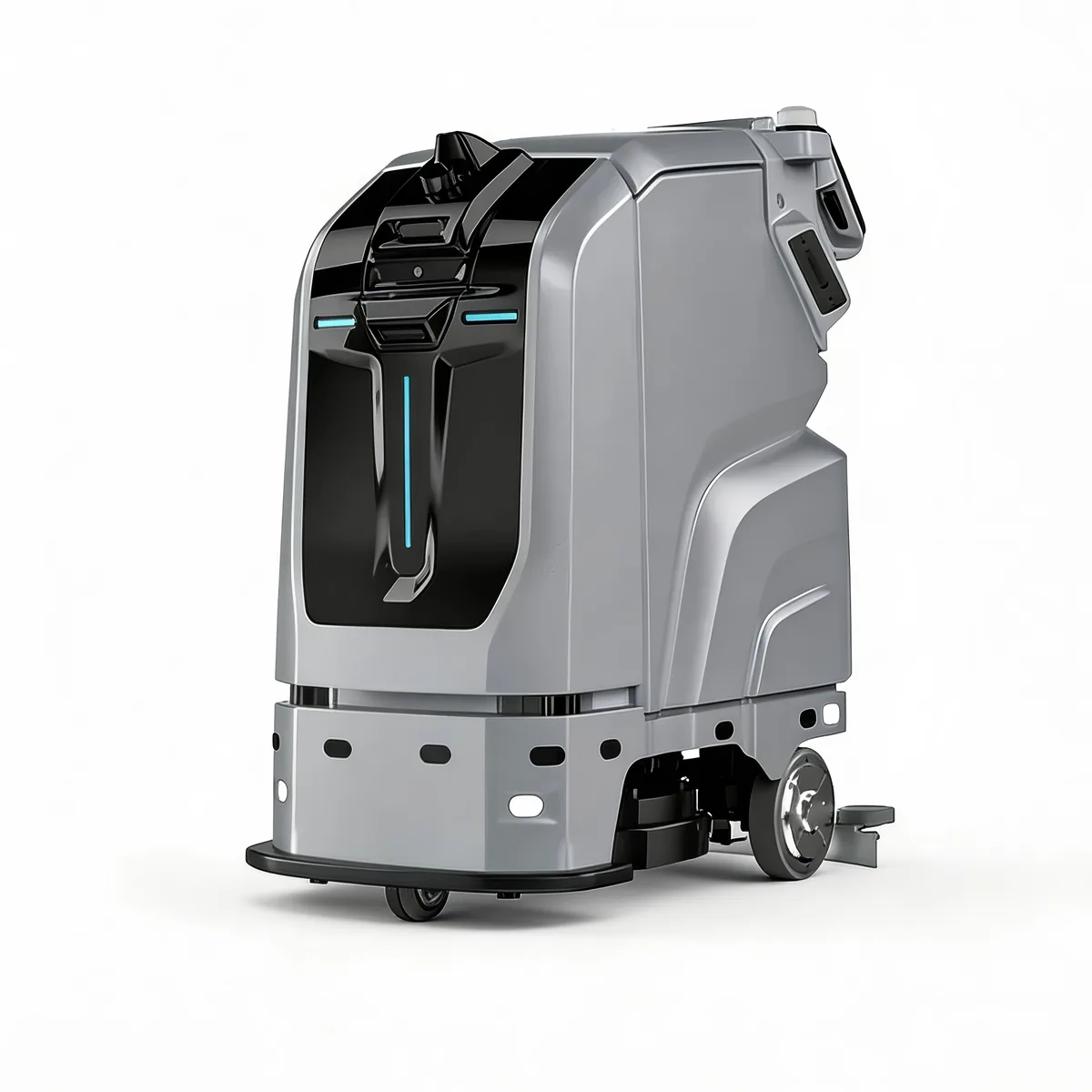
The operations director deployed CLEINBOT C2 Pro units in the reptile house (12,000 sq ft of visitor corridor and keeper-access flooring) and the insectarium (8,500 sq ft). The robots use microfiber pad-based cleaning with a dry-scrub mode that removes particulate without introducing moisture — critical for exhibits where a 3% RH spike during cleaning can trigger amphibian stress responses. The robots run on a 2-hour cycle during operating hours, maintaining floor surfaces without exhibit closures. The result: each exhibit zone that previously required 90 minutes of daily closure for cleaning now closes for zero minutes. Visitor throughput in the reptile house increased 12% (approximately 140 additional visitors per day) because the exhibit is continuously accessible. The labor savings — 1.5 FTE of keeper time previously consumed by floor maintenance — was redirected to animal enrichment programs, directly contributing to AZA accreditation criteria for behavioral husbandry.

The Indoor Exhibit Challenge: Humidity, Chemical Sensitivity, and the 78% RH Floor
Indoor zoological exhibits — reptile houses, amphibian galleries, butterfly conservatories, nocturnal mammal houses — share a common constraint: the internal climate is an engineered system maintained within narrow tolerances. A typical reptile house operates at 78% RH ±5% and 28°C ±2°C for tropical species. Any cleaning process that introduces water vapor — wet mopping, steam cleaning, pressure washing — temporarily elevates RH in the treated zone by 6-12% for 30-90 minutes depending on HVAC recovery rate. For species like dart frogs (Dendrobatidae) and day geckos (Phelsuma), this humidity spike triggers a physiological stress cascade — increased cutaneous water absorption, elevated corticosterone levels, and suppressed immune response — that can increase susceptibility to chytridiomycosis, the fungal infection responsible for amphibian population declines globally.
The CLEINBOT C2 Pro addresses this with a dry-cleaning-first protocol: the robot's primary pass uses electrostatic microfiber pads that capture 94% of particulate matter (tested to PM2.5) without moisture. A secondary optional pass applies a metered, atomized disinfectant at 0.08 mL per sq ft — less than 2% of the moisture introduced by traditional mopping — and the HVAC system recovers to baseline RH within 4-7 minutes versus 30-90 minutes. The robot's onboard sensors continuously log temperature and humidity at floor level, creating an audit trail that satisfies AZA accreditation documentation requirements for environmental monitoring. This is the same sensor-driven compliance model used in pharmaceutical GMP cleanroom deployments, where environmental parameter logging is a regulatory requirement, and in laboratory and cleanroom automation for semiconductor and biotech facilities.

Aquarium Galleries: The Wet-Floor Liability and 1.2 Million Annual Visitors
Public aquariums — from the 6.3-million-gallon Georgia Aquarium in Atlanta to the 80-plus smaller municipal aquariums worldwide — operate in a permanent state of wet floors. Splash zones at touch tanks, condensation dripping from acrylic viewing panels, and visitor-tracking water from exhibit to exhibit create a continuous slip hazard across 40,000-120,000 sq ft of gallery flooring. The Monterey Bay Aquarium, hosting 2 million annual visitors across 322,000 sq ft, employs 8 full-time floor attendants whose sole function is to squeegee and dry-mop gallery floors on a continuous 20-minute rotation during operating hours. The annual labor cost for this function is approximately $312,000.
CLEINBOT C2 Pro units, deployed in aquarium galleries, operate on a 45-minute continuous cycle with a squeegee-and-vacuum attachment that removes standing water and applies a thin, fast-evaporating drying agent. The robot covers approximately 18,000 sq ft per cycle — meaning 2-3 units can maintain a 55,000 sq ft gallery at dry-floor standard throughout operating hours. The continuous-cycle approach mirrors the deployment logic used in hotel lobby and resort corridor maintenance, where high-traffic surface areas require near-continuous cleaning attention. The operational benefit extends beyond safety: dry gallery floors retain 40% less tracked particulate from outdoor shoes, reducing HVAC filter replacement frequency from monthly to quarterly — a maintenance cost reduction of approximately $8,400 annually per 50,000 sq ft of gallery space.
Outdoor Pathways and Exhibit Perimeters: The 120-Acre Paved Surface Problem
Large zoological parks — particularly safari parks like Disney's Animal Kingdom (580 acres, 250 acres developed) and open-range facilities like the San Diego Zoo Safari Park — maintain 18-45 miles of visitor pathways, paved exhibit perimeters, picnic areas, and parking facilities. These surfaces accumulate a distinctive contaminant mix: animal-origin organic matter (fecal residue tracked by exhibit-cleaning equipment, feather dander from aviaries, hay and browse spillage from feeding stations), seasonal leaf litter from landscaped exhibit perimeters (6-12 tons per autumn season at a 100-acre facility), and standard visitor-generated debris (food packaging, spilled beverages, chewing gum). The outdoor cleaning burden at a 100-acre facility typically requires 6-9 FTE of grounds maintenance staff dedicated to pathway cleaning, at an annual labor cost of $270,000-405,000.
CLEINBOT CC201 outdoor scrubbers, deployed on paved pathways and exhibit perimeter surfaces, operate on a 3-hour cycle covering approximately 60,000 sq ft per cycle per unit. Three units, operating on staggered 3-hour cycles across a 10-hour operating day, can maintain 540,000 sq ft of paved surface — roughly 12.4 acres, sufficient for the primary visitor pathway network of a 100-acre zoo. The outdoor cleaning model integrates with the approach proven in construction site and outdoor facility management, where autonomous outdoor scrubbers handle heavy particulate loads on paved surfaces, and in stadium concourse and plaza maintenance, where large-scale outdoor paved surfaces require continuous cleaning across event cycles.

Keeper Station Logistics: The 18-Zone Delivery Network
A medium-to-large zoo operates 18-35 animal care zones (primate house, big cat grottoes, elephant barn, veterinary hospital, quarantine facility, commissary kitchen) distributed across the site, connected by a network of keeper-access roads and pathways that are often not accessible to standard delivery vehicles. The daily logistics burden includes: prepared animal diets (1,200-2,500 lbs of produce, meat, and formulated feed transported from central commissary to individual keeper stations), veterinary supplies (medications, syringes, bandaging materials), enrichment items (puzzle feeders, scent markers, browse branches), and inter-departmental paperwork (daily welfare logs, medical observation notes, diet adjustment sheets). At a 100-acre facility, keeper staff spend an estimated 4-6 person-hours per day on inter-station transport — walking or driving golf carts between zones — time that could be redirected to direct animal care and behavioral observation.
CADEBOT L100 delivery robots, operating on keeper-access pathways and service roads, transport up to 22 lbs of supplies between commissary and keeper stations. The robot navigates pre-mapped keeper routes that exclude public visitor pathways, operating during pre-opening hours (6:00-9:00 AM) when diet preparation and distribution is most time-sensitive. A fleet of 3 CADEBOT units, each completing 6-8 deliveries per morning shift, can redistribute approximately 4.5 person-hours of keeper time from transport to animal care — equivalent to adding 0.6 FTE of animal-care capacity without hiring. The delivery model follows the logistics automation pattern seen in courier and express logistics hub operations and multi-site deployment strategies, where distributed-facility logistics benefit from autonomous point-to-point transport.
Visitor Experience: Multilingual Wayfinding at the 8-Language Entrance Plaza
Major zoos and aquariums serve an international visitor base. The San Diego Zoo reports that 22% of annual visitors are international, representing over 90 countries, with the top five origin markets being China, Japan, Mexico, Canada, and the United Kingdom. The entrance plaza must accommodate visitors who speak limited English, need directions in their native language, and are navigating a 100-acre site with over 40 exhibit zones and 8 food-service locations — a wayfinding challenge that far exceeds the capacity of static signage (which typically supports 2-3 languages at most).
CRUZR humanoid reception robots at the entrance plaza provide multilingual greetings and wayfinding in 8+ languages (English, Mandarin, Japanese, Korean, Spanish, French, German, Arabic), handle RFID ticket scanning at 4 seconds per visitor, and deliver personalized exhibit recommendations based on real-time data: "The tiger feeding is at 2:15 PM at Tiger River, currently a 10-minute walk from here, and the orangutan enrichment session starts at 2:45 PM — you can see both if you head to Tiger River now." The robot absorbs 65-75% of entrance-plaza interactions — ticket validation, map distribution, directional queries — allowing human guest services staff to handle the 25-35% of interactions requiring complex problem-solving (lost children, accessibility accommodations, membership disputes). This is the same service model used in hotel front desk operations and airport terminal passenger assistance, where robots handle high-volume transactional interactions while humans focus on exception cases.
ROI Framework: The 2.5 Million Visitor Model
For a mid-size zoological institution hosting 2.5 million annual visitors across 100 developed acres with 35 animal care zones and 6 indoor exhibit buildings:
| Line Item | Pre-Robot Annual Cost | Post-Robot Annual Cost | Annual Savings |
|---|---|---|---|
| Indoor exhibit floor maintenance (6 zones) | $187,000 (2.5 FTE) | $75,000 (0.9 FTE + robot lease) | $112,000 |
| Aquarium/exhibit gallery wet-floor maintenance | $312,000 (8 FTE) | $156,000 (3 FTE + 3 robot lease) | $156,000 |
| Outdoor pathway and plaza cleaning | $338,000 (7.5 FTE) | $185,000 (4 FTE + 3 robot lease) | $153,000 |
| Keeper station logistics (daily transport) | $72,000 (1.8 FTE equivalent) | $48,000 (3 robot lease) | $24,000 |
| Visitor entrance services (peak hours) | $144,000 (3 FTE) | $96,000 (2 FTE + 2 robot lease) | $48,000 |
| Total | $1,053,000 | $560,000 | $493,000 |
The total annual robotics cost — hardware lease, maintenance, software, and integration — under a 36-month RaaS contract is approximately $340,000 for a 12-robot fleet. The 12-month net savings after RaaS costs: $153,000, with an additional estimated $210,000-280,000 in indirect benefits (increased exhibit throughput, reduced HVAC maintenance, improved AZA accreditation scores). The payback period is approximately 27 months on direct savings alone, and 16-19 months when factoring indirect benefits — consistent with the ROI patterns documented in the service robot investment returns guide across high-traffic public venues.
For institutions evaluating vendors, the 12-point vendor evaluation framework provides a structured assessment methodology, and for operations teams planning the deployment, the 30-60-90 day pilot program guide offers a phased implementation roadmap tested across multiple facility types.
Implementation Roadmap: 5 Phases Over 8 Months
Phase 1 (Month 1-2): Environmental assessment. Map all indoor exhibit HVAC specifications (RH range, recovery rate, chemical sensitivity). Deploy temperature/humidity sensors at floor level in 6-12 target exhibit zones. Map 120 acres of outdoor pathway network. Duration: 8 weeks.
Phase 2 (Month 3): Indoor exhibit pilot. Deploy 2 CLEINBOT C2 Pro units in reptile house and aquarium gallery. Run 30-day trial. Measure: exhibit closure minutes eliminated, RH stability during cleaning cycles, visitor throughput change. Success threshold: ≥90% reduction in cleaning-related exhibit closures, ≤3% RH variance during robot operation.
Phase 3 (Month 4-5): Outdoor pathway deployment. Deploy 3 CLEINBOT CC201 units on primary visitor pathway network. Stagger cycles across operating hours. Measure: pathway cleanliness scores (visual inspection scale), grounds crew hours reallocated. Target: 50% reduction in manual pathway cleaning hours.
Phase 4 (Month 6-7): Logistics and visitor services. Deploy 3 CADEBOT L100 units for keeper-station delivery and 2 CRUZR units at entrance plaza. Integrate with zoo scheduling system (species360 ZIMS or equivalent) for real-time exhibit information.
Phase 5 (Month 8): Full-fleet optimization. Coordinate all 10 robots through fleet management system. Establish KPI dashboard: exhibit uptime, pathway cleanliness index, keeper time reallocation, visitor satisfaction scores. Annual review cycle aligned with AZA/EAZA accreditation calendar.