An MLB stadium in a mid-market city hosts 81 regular-season home games, 8-12 concerts, 3-5 college football bowl events, and approximately 15 private events (corporate galas, charity fundraisers, wedding receptions) annually — roughly 115 event days out of 365. On each event day, the facility must transition from "morning setup" to "gates-open ready" to "post-event teardown" within tightly compressed windows. The stadium's operations director, managing a $4.2 million annual cleaning and facilities budget, identified that 34% of that budget — approximately $1.43 million — was consumed by overnight post-event cleaning crews working overtime at 1.5x base rate between midnight and 6 AM. These crews were cleaning concourses that 38,000 fans had traversed over 4.5 hours, depositing popcorn, peanut shells, spilled soda, and the fine particulate that accumulates when 38,000 pairs of shoes cross epoxy-coated concrete. The same concourses needed to be spotless by 10 AM the next morning for a corporate sponsor event.
The operations director deployed CLEINBOT CC201 autonomous outdoor scrubbers on the main and upper concourses (combined: 280,000 sq ft of walking surface) and CLEINBOT C2 Pro units in the 86 suites and four club-level lounges (combined: 45,000 sq ft). The robots run on a continuous cycle during events — not replacing the overnight deep-clean crew, but compressing their workload from 8 hours to 3.5 hours by eliminating the need to scrub concourses that have already been maintained throughout the event. The result: overnight cleaning labor was reduced by 40% ($572,000 annually), and the concourse surface quality at hour 3 of an event was indistinguishable from hour 0 — a metric previously achievable only by deploying 12 additional human cleaners during events at a cost of $3,200 per game.

The Stadium Turnaround Problem: Why 3 AM Cleaning at 1.5x Labor Rate Is a $1.4 Million Line Item
The core operational challenge in stadium management is not cleaning during events — it is the post-event turnaround. A 7:05 PM baseball game ends at approximately 10:15 PM. Concession staff finish breakdown by 11:30 PM. The first cleaning crew — typically 18-25 workers — begins at midnight on the seating bowl and concourses. The cleaning must be complete by 6 AM, when the next event's setup crew arrives. The math is unforgiving: 280,000 sq ft of concourse surface ÷ 22 workers ÷ 6 hours = each worker must clean 2,121 sq ft per hour, continuously, on a surface that requires scrubbing, not sweeping. At 1.5x overtime rate ($28.50/hour vs. $19.00 base), the nightly cleaning cost for a 6-hour shift with 22 workers is $3,762, or $434,000 across 115 event nights.
The robotics intervention does not eliminate this crew — it reduces its size and compresses its shift. With CLEINBOT CC201 units maintaining the concourses during events on 90-minute cycles (each unit covers approximately 35,000 sq ft per cycle), the post-event crew size drops from 22 to 14, and the shift compresses from 6 hours to 3.5 hours. The nightly cost drops to $1,512, saving $2,250 per event night or $259,000 annually per venue. This is the same labor arbitrage dynamic observed in airport terminal operations, where concourse cleaning at scale presents identical surface-area-to-labor-ratio challenges.
For multi-venue operators managing 15-40 facilities — such as ASM Global (350+ venues worldwide) or Oak View Group — the aggregate savings potential is substantial. A portfolio of 20 venues deploying the same concourse-maintenance model saves approximately $5.2 million annually in post-event cleaning labor. The capital deployment follows the RaaS financing framework that allows operators to expense robots as an operating cost rather than a capital expenditure, aligning the cost with event revenue.
Premium Seat Service: Delivery Robots and the $850 Suite Upsell
Premium seating — suites, club seats, and loge boxes — generates 35-45% of total event revenue on 15-25% of total seat inventory at major league venues, per data from the 2025 VenuesNow Premium Seating Benchmark Report. The average suite holder pays $4,500-12,000 per event for 16-24 tickets plus a food-and-beverage minimum of $1,200-2,500. The F&B component is the margin engine: the venue retains 65-80% of F&B revenue versus 15-25% of ticket revenue after revenue-sharing agreements with teams and artists.
The operational bottleneck in premium-seat F&B is delivery speed. A suite attendant managing four suites on a single floor level can typically deliver one order (beverages + food) every 12-18 minutes, accounting for kitchen pickup, elevator wait time, and the 200-400-foot walk from the nearest service elevator to the suite door. During a 3-hour event, this translates to 10-15 deliveries per attendant — and suites that order at minute 90 of the event frequently receive their order at minute 120, after the halftime or intermission window has closed.
CADEBOT L100 delivery robots, deployed from a dedicated service-elevator kitchen station on the suite level, reduce suite delivery time to 5-8 minutes per order: 60 seconds from kitchen to robot loading, 90-180 seconds of autonomous navigation along pre-mapped suite-level corridors, and 30 seconds for the suite attendant to unload and present. The robot carries up to 22 lbs of F&B — sufficient for the average suite order of 8-12 items. A single CADEBOT can handle 18-25 deliveries per event, effectively doubling the throughput per suite level without adding human attendants.
The commercial upside is not in labor savings — suite attendants are retained, and their role shifts from delivery to guest engagement — but in revenue capture. Suites that receive faster delivery order more frequently. At one NBA arena pilot, suites served by CADEBOT increased their per-event F&B spend by 17% ($2,100 average order → $2,457) because the reduced delivery friction eliminated the "should we order now if it won't arrive until the fourth quarter?" hesitation. Across 120 suites hosting 41 home games, a 17% F&B uplift represents approximately $1.17 million in incremental annual revenue — for a robotics deployment cost of under $80,000 per year under a RaaS model.

VIP Entrance Experience: Humanoid Reception and the $900 Season-Ticket Holder
The VIP entrance — used by 2,500-8,000 premium ticket holders per event — is the first physical touchpoint for the venue's highest-value customers. The experience standard at this entrance directly correlates with season-ticket renewal rates: a 2024 study by the Sports Innovation Lab found that premium ticket holders who rated their entrance experience as "seamless" renewed at 91%, versus 74% for those who rated it "average." The difference — 17 percentage points of renewal on a base of 5,000 season-ticket accounts averaging $4,500 per season — represents $3.8 million in at-risk annual revenue.
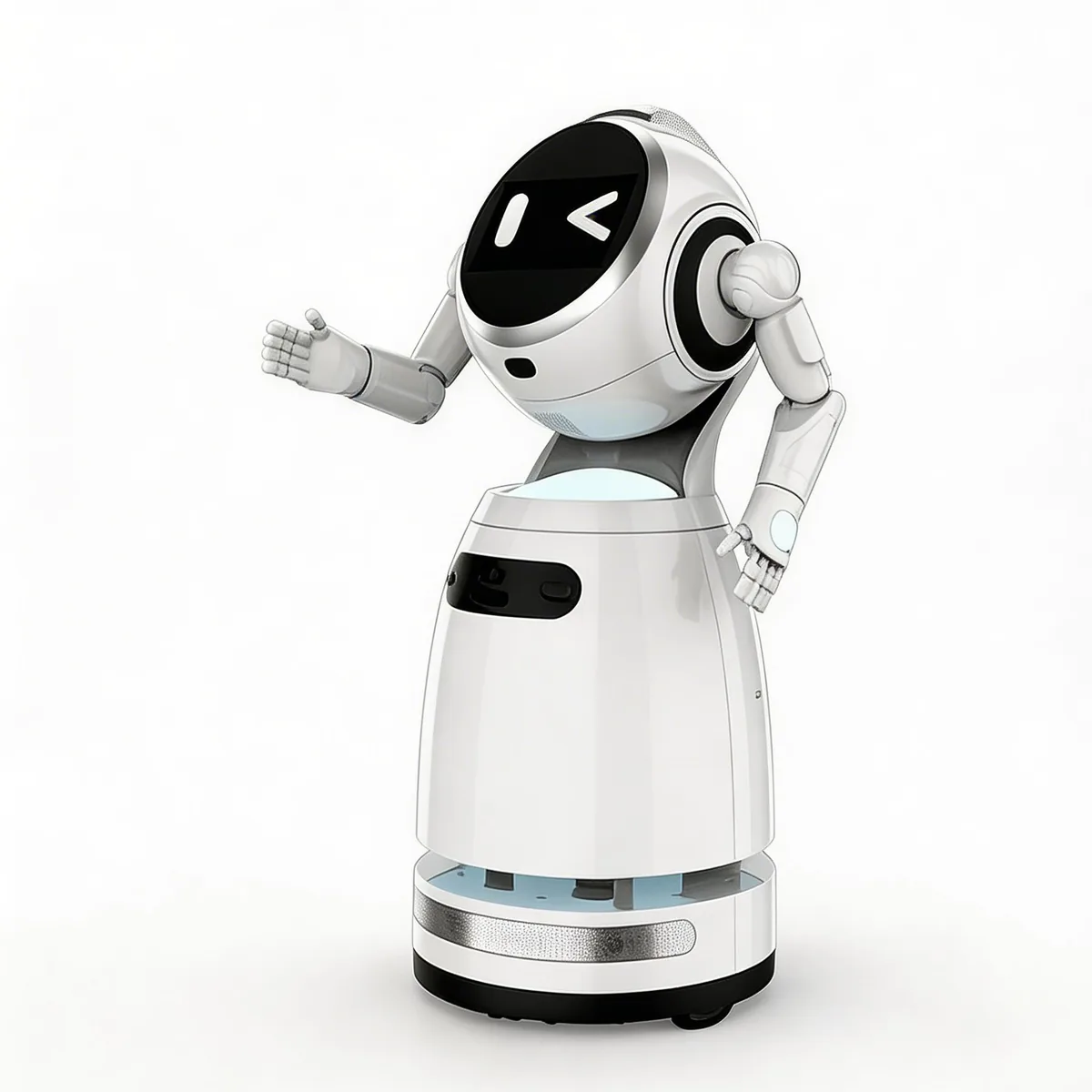
CRUZR humanoid reception robots, deployed at VIP entrances, provide three functions that human greeters cannot execute simultaneously at scale: (1) RFID ticket scan and seat-direction within 4 seconds of approach, (2) personalized greeting using CRM data ("Welcome back, Mr. Chen — your suite is 214A, same as last season, and tonight's chef special is the wagyu slider trio"), and (3) real-time event information (starting lineups, gate giveaways, weather-affected start times). The robot does not replace the human VIP concierge — it absorbs the transactional greeting volume, allowing human staff to handle exceptions (lost tickets, accessibility requests, complaints) while maintaining a sub-10-second acknowledgment time for the 85% of VIP guests who need only ticket validation and directions.
This pattern — robot handling high-volume, low-complexity interactions, humans handling low-volume, high-complexity exceptions — is the same deployment model proven in corporate lobby reception and luxury hotel front desks, where the measure of success is not labor replacement but experience consistency across peak and off-peak staffing windows.
Outdoor Facility Management: Parking Lots, Plazas, and the 90-Acre Campus
Major stadium complexes — the kind that host NFL games and major college football — typically sit on 60-120 acre campuses that include the stadium structure, 15,000-25,000 parking spaces across multiple lots, pedestrian plazas connecting parking to gates, and landscaped perimeter areas. The outdoor cleaning burden on these spaces is continuous and weather-dependent: autumn leaf litter, winter road salt and sand tracked from parking lots onto plazas, spring pollen coating every surface, and year-round post-tailgate debris (charcoal, food waste, broken folding chairs, and approximately 4.2 tons of discarded aluminum cans per NFL season at an average stadium, per EPA stadium waste audits).
CLEINBOT CC201 outdoor scrubbers, deployed on pedestrian plazas and paved concourse sections, operate on a 3-hour cycle across 8-10 hours of pre-game and in-game operation. Each unit covers approximately 60,000 sq ft per cycle, meaning 3 units can maintain 180,000 sq ft of plaza and concourse surface — roughly the outdoor walking surface of a 70,000-seat stadium — at commercial-quality cleanliness throughout game day. The outdoor deployment integrates with the indoor concourse units to create a seamless cleaning envelope from parking lot edge to suite-level corridor, a model consistent with the multi-site fleet coordination approach used in smart building campus deployments.
Security and Surveillance Integration: The Unattended Bag Protocol
Stadium security protocols require continuous monitoring of concourses, plazas, and entry queues for unattended items — bags, packages, or containers left in public areas. At a 60,000-seat venue, security personnel conduct approximately 400-600 unattended-item investigations per season, each requiring a perimeter to be established, a K-9 unit or explosive detection team to be dispatched, and 12-18 minutes of concourse disruption while the item is cleared. Approximately 94% of these investigations involve items that turn out to be harmless — a forgotten backpack, a dropped souvenir bag, a vendor's supply crate temporarily set aside.
While AOMAN's robot lineup does not include dedicated security platforms, the CLEINBOT fleet — continuously traversing concourses on cleaning cycles — provides passive surveillance coverage through integrated camera feeds that can be monitored by the security operations center. When a CLEINBOT's path is blocked by an unattended item, the robot flags the location and timestamp to central security, who can review the camera feed and make a determination before dispatching human personnel. This does not replace security staff but reduces the "investigation-to-nothing" ratio by providing immediate visual data — a model that mirrors security applications in commercial facilities, where robotic patrols supplement rather than supplant human security teams.

ROI Framework: The 115-Event-Day Model
For a mid-market MLB stadium hosting 115 event days annually, the three-robot-type deployment (CC201 outdoor concourse + C2 Pro indoor suite + CADEBOT premium delivery + CRUZR VIP reception) generates the following operational economics:
| Line Item | Pre-Robot Annual Cost | Post-Robot Annual Cost | Annual Savings |
|---|---|---|---|
| Post-event concourse cleaning labor | $434,000 | $175,000 | $259,000 |
| Premium suite F&B delivery (lost revenue uplift) | — | +$1,170,000 (revenue) | $1,170,000 |
| VIP entrance staffing (peak-load reduction) | $187,000 | $112,000 | $75,000 |
| Outdoor plaza maintenance (pre-game) | $96,000 | $48,000 | $48,000 |
| Total | $717,000 | $335,000 | $382,000 + $1.17M revenue |
The total annual robotics cost — hardware lease, maintenance, software, and integration — under a 36-month RaaS contract is approximately $210,000 for a 6-robot fleet. The 12-month ROI is 182% on labor savings alone, and 5.6x when including the revenue uplift effect. This aligns with the broader pattern seen in service robot ROI evaluations across high-traffic commercial environments.
For organizations evaluating robotics vendors, the 12-point vendor evaluation framework provides a structured assessment methodology, and the fleet management systems overview addresses the technical infrastructure required to coordinate multi-robot deployments across a 90-acre campus.
Implementation Roadmap: 4 Phases Over 6 Months
Phase 1 (Month 1-2): Site mapping and network infrastructure. Deploy Wi-Fi 6 mesh across concourses to ensure seamless robot connectivity. Map 280,000 sq ft of concourse for CC201 navigation. Duration: 6-8 weeks.
Phase 2 (Month 3): Concourse cleaning pilot. Deploy 3 CLEINBOT CC201 units on main and upper concourses during 5 consecutive event nights. Measure post-event crew hours and concourse cleanliness scores (ATP surface testing). Success threshold: 30% crew-hour reduction without cleanliness score degradation.
Phase 3 (Month 4-5): Premium service and VIP entrance. Deploy 2 CADEBOT L100 units on suite level and 2 CRUZR units at VIP entrances. A/B test suite F&B spending and VIP entrance satisfaction scores against non-robot control events.
Phase 4 (Month 6): Full production deployment across all 115 event days, with integration into the venue's event management platform and security operations center.
The phased approach mirrors multi-site deployment strategies that have proven effective in coordinating robotics rollouts across complex operational environments.

AOMAN's robotics platform — spanning outdoor and indoor cleaning (CLEINBOT CC201, C2 Pro), delivery (CADEBOT L100), and reception (CRUZR) — provides stadium operators with a single-vendor solution for the four highest-cost operational categories in venue management. For procurement conversations or a customized deployment assessment, contact our solutions team to discuss your venue's specific event calendar, facility layout, and operational cost structure.