The hospitality industry has always been about people serving people. But in 2026, the most successful hotels and restaurants are discovering that the best way to elevate human service is to let robots handle the repetitive tasks.
Service robots are no longer a novelty. They are a proven operational investment that reduces costs, fills labor gaps, and — counterintuitively — improves the guest experience by freeing human staff to focus on what they do best: genuine hospitality.
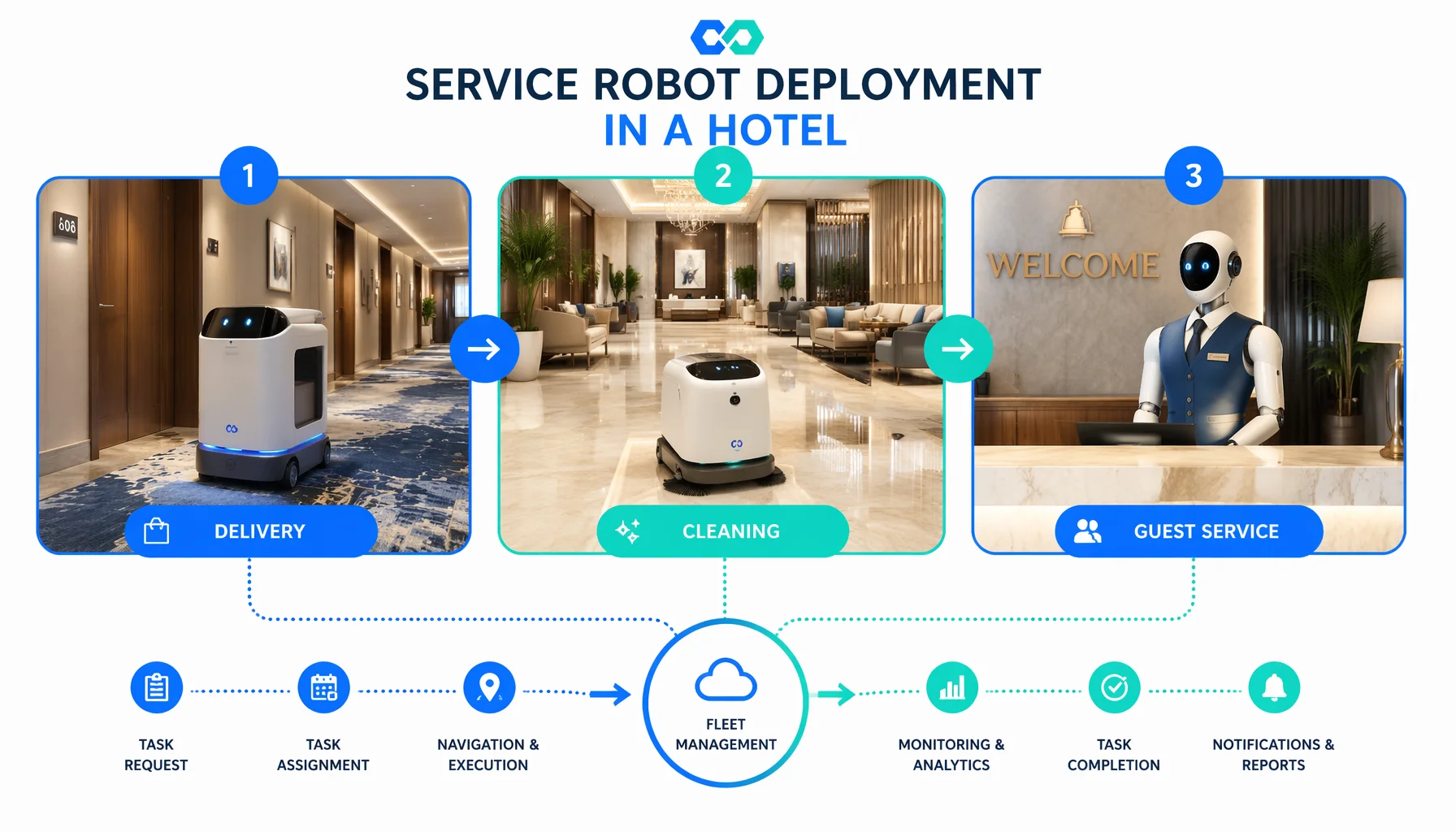
Here's how leading hospitality venues are deploying service robots today.
Delivery Robots: Room Service Without the Wait
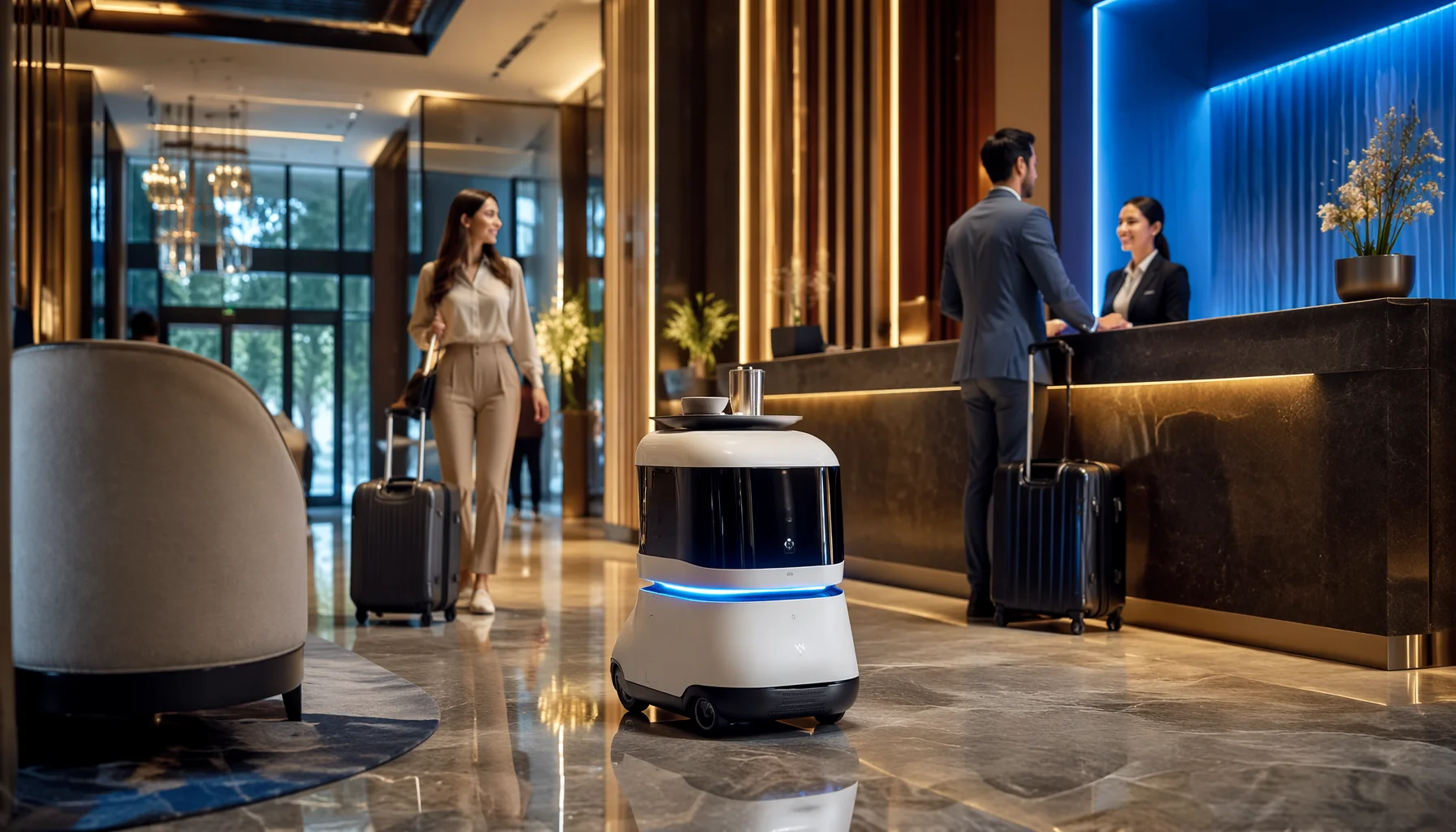
The most visible robot in hospitality is the delivery robot. From hotel room service to restaurant food running, autonomous delivery robots have become a standard sight in properties across Asia, Europe, and North America.
How they work
Delivery robots use a combination of lidar, depth cameras, and pre-mapped floor plans to navigate hallways, operate elevators, and reach guest rooms autonomously. A typical unit like the CADEBOT L100 carries up to 40 kg across multiple compartments, allowing it to serve several rooms in a single trip.
Real ROI for hotels
- Labor savings: One delivery robot can replace 1.5–2 FTE in room service delivery
- Speed: Average delivery time drops from 25 minutes to 8 minutes
- 24/7 operation: Robots work overnight shifts without overtime
- Guest satisfaction: Consistent, trackable delivery with real-time notifications
Restaurant applications
In restaurants, delivery robots handle the "last 50 meters" from kitchen to table. This reduces server walking time by 30–40%, allowing each server to manage more tables while spending more quality time with guests.
Cleaning Robots: Consistent Cleanliness at Scale
Cleanliness is the #1 factor in hotel reviews. Yet maintaining consistent cleaning standards across hundreds of rooms and thousands of square meters of common space is a constant operational challenge.
Commercial floor cleaning
Robots like the CLEINBOT M79 and CLEINBOT C2 Pro handle large-scale floor cleaning with:
- 2,000 m²/hour coverage for open lobbies and corridors
- AI-powered navigation that avoids obstacles and maps rooms
- Auto-return docking for charging and water refill
- Multi-surface support (tile, carpet, hardwood)
The hygiene advantage
Unlike manual mopping which can spread bacteria between areas, cleaning robots use controlled, consistent methods. Many models support UV sterilization and HEPA filtration, adding a layer of pathogen control that guests increasingly expect post-pandemic.
Humanoid Service Robots: The New Front Desk
Humanoid robots like CRUZR are finding their place in hotel lobbies, convention centers, and retail venues. These robots handle:
- Check-in assistance: Guide guests through self-service kiosks
- Concierge queries: Answer questions about amenities, directions, and local attractions
- Event navigation: Escort attendees to meeting rooms and exhibition halls
- Multi-language support: Communicate in multiple languages with natural voice interaction
The key insight from early adopters is that humanoid robots work best as an extension of the human team, not a replacement. They handle the repetitive Q&A and directional queries, freeing front desk staff for complex guest requests and problem resolution.
What to Consider Before Deploying
Infrastructure requirements
- Elevator integration: Delivery robots need VDV (vertical delivery vehicle) integration to move between floors
- Wi-Fi coverage: Reliable connectivity across all operational areas
- Floor maps: Pre-mapped layouts for robot navigation, updated when furniture changes
- Docking stations: Designated charging and maintenance zones
Staff training
Staff need to understand what robots can and cannot do. The most successful deployments train a "robot champion" on each shift who handles troubleshooting and battery swaps.
Guest communication
Properties that clearly communicate about robot use — through signage, room information, and staff briefings — see significantly higher guest acceptance rates than those that let guests discover robots without context.
The Bottom Line
Service robots in hospitality are not an experiment anymore. They are a mature technology with clear ROI, proven reliability, and growing guest acceptance.
For properties considering automation, the recommended approach is to start with one use case — typically delivery or cleaning — prove the ROI in 3–6 months, then expand. AOMAN FUTURE offers pilots and trials to help hospitality operators evaluate robots in their real environment before committing to scale.
Contact us to discuss a trial deployment for your property.