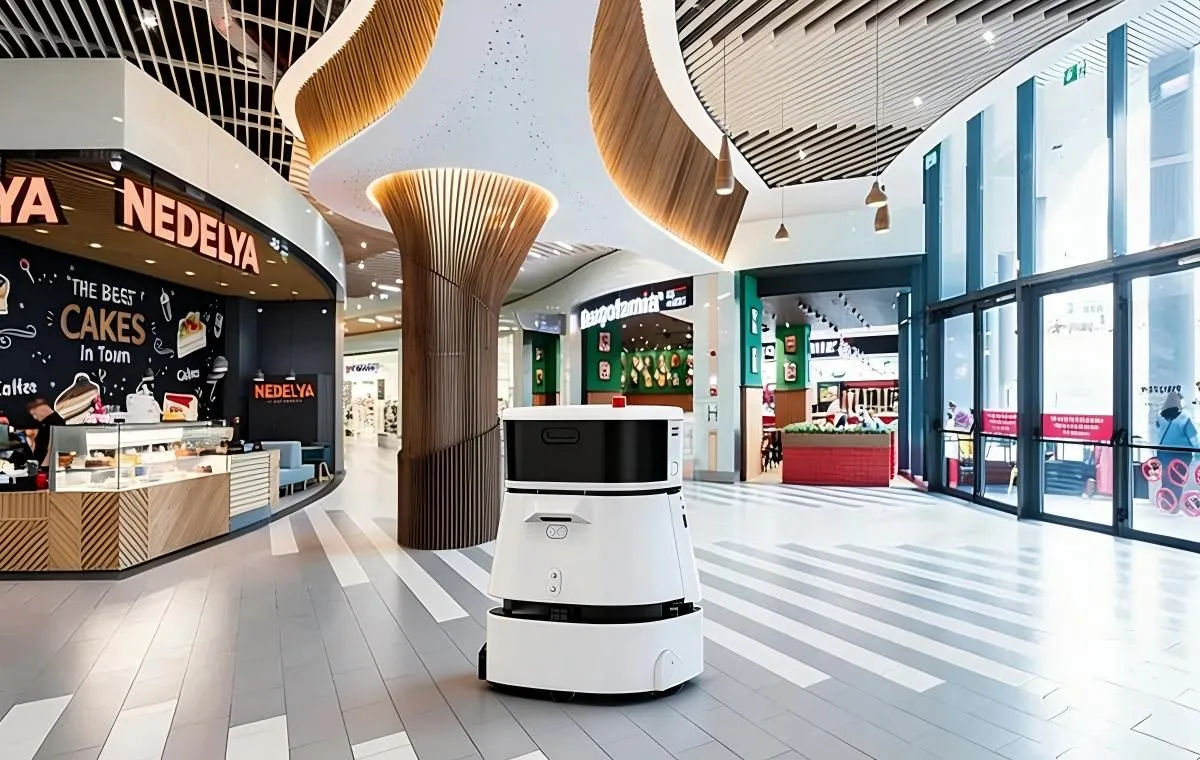
A $25,000 delivery robot sounds like a one-time capital expense — until the first motor replacement at month 14, the software license renewal at year 2, and the battery degradation that quietly cuts daily runtime by 18% by year 3. Over a 5-year lifecycle, maintenance and after-sales support typically add 25–40% to the initial purchase price. For a fleet of 10 robots, that's an unbudgeted $60,000–$100,000.
Procurement teams that treat maintenance as an afterthought — something operations will "figure out later" — consistently underestimate TCO by 30% or more. Those that bake maintenance into the RFP from day one negotiate better warranty terms, lock in predictable support costs, and avoid downtime that can idle a $30,000 asset for weeks while waiting on a spare part from overseas.
This guide maps the real cost structure of service robot maintenance and provides a TCO framework you can use in your next supplier evaluation.

What Service Robot Maintenance Actually Costs
The procurement spreadsheet typically has one line for "robot unit price." The operations spreadsheet — if it exists — has a dozen. Here's what those lines contain, based on service data from commercial deployments of delivery, cleaning, and reception robots across hotels, hospitals, and retail facilities:
Hardware Replacement (Years 1–5)
| Component | Replacement Interval | Unit Cost | 5-Year Cost (per robot) |
|---|---|---|---|
| Drive motors | 18–36 months | $400–$1,200 | $800–$3,600 |
| LiDAR sensor | 3–5 years | $1,500–$4,000 | $0–$4,000 |
| Battery pack | 2–3 years | $800–$2,500 | $1,600–$6,250 |
| Wheels/treads | 12–18 months | $80–$300 | $400–$2,400 |
| Display/touchscreen | 3–5 years | $300–$800 | $0–$800 |
| Hardware subtotal | $2,800–$17,050 |
These numbers come from field data, not spec sheets. A cleaning robot operating 8 hours daily on hard floors wears wheels faster than a reception robot standing in a lobby. A delivery robot navigating ramps and elevator thresholds stresses motors more than one on a single-level warehouse floor. The range matters: a buyer who doesn't ask about component lifecycles in their operating environment is buying the low end of the range and paying the high end.
Software and Fleet Management
| Cost Item | Annual Range | Notes |
|---|---|---|
| Fleet management software license | $600–$2,400/robot/yr | Cloud-based platforms for task dispatch, monitoring, analytics |
| Firmware/OS updates | $0–$1,200/robot/yr | Some vendors include updates in warranty; others charge per major release |
| API integration maintenance | $1,000–$5,000/yr (fleet) | Elevator control, door access, hotel PMS — integrations break when building systems update |
| Software subtotal (annual) | $600–$3,600/robot/yr |
Software costs are the fastest-growing line item in service robot TCO. Five years ago, most robots shipped with firmware that rarely changed. Today, cloud-connected fleets receive quarterly updates, and each update can introduce integration regressions that require on-site remediation. Buyers should ask: Does the annual software fee include API integration maintenance, or is that billed separately?

Labor: The Invisible Line Item
Even "autonomous" robots require human attention:
| Task | Frequency | Labor per robot/month |
|---|---|---|
| Daily cleaning (sensors, body) | Daily | 2–4 hours |
| Consumable replacement (filters, brushes) | Weekly–Monthly | 0.5–2 hours |
| Software monitoring/error response | Continuous | 1–3 hours |
| On-site troubleshooting | As needed | 0–4 hours |
| Labor subtotal (monthly) | 3.5–13 hours |
At a fully loaded labor rate of $18–$35/hour (depending on region and whether the work is done by existing staff or a third-party service provider), that's $756–$5,460 per robot per year in labor alone. Multiply by 10 robots, and maintenance labor becomes a headcount decision.
Preventive vs. Reactive Maintenance: The 3:1 Cost Ratio
Industry data from industrial automation — directly applicable to service robots — shows that reactive maintenance costs 3× more than preventive maintenance when you account for:
- Emergency shipping: Overnighting a LiDAR unit from Shenzhen to Chicago costs $200–$400 in freight alone
- Downtime: A delivery robot idled for 10 days while waiting for a part loses 80–120 hours of productive runtime
- Cascading failures: A worn wheel that isn't replaced on schedule damages the motor it's attached to — turning a $200 fix into an $800 repair
- Staff overtime: When 2 of 5 cleaning robots are down, the remaining 3 run extra shifts, accelerating their own wear

What a Preventive Maintenance Schedule Looks Like
A well-structured PM program for a commercial service robot fleet includes:
| Interval | Task | Duration | Performed By |
|---|---|---|---|
| Daily | Wipe sensors (LiDAR, depth cameras, ultrasonic), check wheel debris | 10 min | On-site staff |
| Weekly | Inspect charging contacts, clean dust filters, verify software heartbeat | 30 min | On-site staff |
| Monthly | Full sensor calibration, battery health check, motor current draw test, log review | 2 hours | Trained technician |
| Quarterly | Replace consumables (brushes, filters, seals), deep-clean drivetrain, torque check on fasteners | 4 hours | Vendor or certified partner |
| Annual | Full teardown inspection, motor bearing replacement, LiDAR accuracy verification, safety system recertification | 8 hours | Vendor technician |
Suppliers that provide a PM schedule with specific task lists, not a vague "quarterly inspection" bullet point, signal operational maturity. Suppliers that can't produce one are betting that your operations team will figure it out — and pay the reactive markup.
Service Contracts and Warranty: Read the Fine Print
Standard warranties in the service robot industry range from 12 to 36 months. But warranty coverage is not warranty coverage — the exclusions matter more than the term length:
| Warranty Type | What It Covers | What It Doesn't | Typical Premium |
|---|---|---|---|
| Standard (12 months) | Manufacturing defects, component failure under normal use | Consumables (wheels, brushes), damage from improper cleaning, software issues after warranty expires | Included |
| Extended (24–36 months) | All standard coverage + battery degradation below 70% capacity | Same exclusions as standard | 8–15% of unit price |
| Comprehensive (24–36 months) | All hardware + software updates + on-site labor + 48-hour spare parts SLA | Cosmetic damage, customer-inflicted damage | 15–25% of unit price |
| Full-Service (36–60 months) | All of the above + preventive maintenance visits + fleet management software | Negligence, unauthorized modifications | 20–30% of unit price |
The single most expensive gap in standard warranties: battery degradation. Most standard warranties exclude batteries entirely or only cover complete failure (<50% capacity). A battery that's lost 30% of its runtime — meaning a cleaning robot that used to cover a full floor on one charge now needs a mid-shift recharge, cutting effective productivity by 25% — is typically "within spec" and not covered. If battery performance matters to your operation, negotiate a degradation threshold (e.g., ≥70% capacity at 24 months) into the warranty terms.

TCO Framework: 5-Year Model
Here is a procurement-ready TCO model for a mid-range service robot (delivery or cleaning, $25,000 unit price, medium-intensity deployment):
| Cost Category | Year 1 | Year 2 | Year 3 | Year 4 | Year 5 | 5-Year Total |
|---|---|---|---|---|---|---|
| Unit purchase | $25,000 | — | — | — | — | $25,000 |
| Deployment + training | $3,500 | — | — | — | — | $3,500 |
| Preventive maintenance labor | $1,200 | $1,200 | $1,200 | $1,200 | $1,200 | $6,000 |
| Consumables | $400 | $500 | $500 | $600 | $600 | $2,600 |
| Battery replacement | — | — | $2,500 | — | — | $2,500 |
| Motor/sensor replacement | — | — | $1,500 | — | $2,000 | $3,500 |
| Software license | $1,200 | $1,200 | $1,200 | $1,200 | $1,200 | $6,000 |
| Extended warranty (Y2–3) | — | $2,500 | $2,500 | — | — | $5,000 |
| Comprehensive contract (Y4–5) | — | — | — | $4,500 | $4,500 | $9,000 |
| Annual total | $31,300 | $5,400 | $9,400 | $7,500 | $9,500 | $63,100 |
Key takeaway: The $25,000 robot costs $63,100 over 5 years. Maintenance, software, and support represent 60% of TCO — more than the robot itself.
This model assumes medium-intensity use with a comprehensive support contract in years 4–5. A low-intensity deployment (e.g., a reception robot in a low-traffic lobby) might reduce the 5-year total to $42,000–$48,000. A high-intensity deployment (3-shift warehouse delivery, abrasive flooring) could push it past $75,000. The variable that swings TCO most dramatically is operating environment — and that's the variable buyers control when they specify where and how the robot will work.

How to Evaluate a Supplier's After-Sales Capability
Before signing a purchase order, ask these seven questions. A supplier who can answer all of them with specific numbers and documented processes is ready for enterprise deployment. A supplier who hesitates on more than two is not:
- "What is your average spare parts delivery time to our region?" — Acceptable: 48–72 hours for major components. Unacceptable: "We ship from our factory, it depends on customs."
- "Do you have a trained service partner within 200 km of our site?" — Remote diagnosis can solve software issues, but a failed motor requires hands on-site. If the answer is "we'll fly a technician out," ask how long that takes.
- "What is your software update cadence, and are updates backward-compatible with our existing fleet management integration?" — Quarterly updates are standard. Updates that break API integrations are not.
- "Can I see your preventive maintenance checklist — not the brochure version, the one your technicians actually use?" — A laminated 2-page checklist with checkboxes and torque specs is a good sign. A 20-page generic document is not.
- "What is your battery degradation warranty threshold at 24 months?" — ≥70% is competitive. "We don't cover batteries" at a $25,000+ price point is a red flag.
- "How many service robots of this model do you currently have under maintenance contract, and what is your average mean time to repair?" — A supplier with 500+ units under contract has seen problems you haven't. MTTR under 48 hours is best-in-class.
- "What happens when this model reaches end-of-life?" — Spare parts availability for 3+ years after EOL is standard in industrial equipment; service robots should match that. If the answer is "we haven't thought about that," you're buying from an R&D team, not a manufacturer.
For a structured approach to evaluating suppliers across all dimensions — not just maintenance — see our delivery robot selection guide and commercial cleaning robot buyer's guide.
The ROI Connection: Maintenance Is a Multiplier
TCO analysis doesn't exist in a vacuum. A robot that costs $63,100 over 5 years but replaces $52,000/year in labor costs delivers a 312% ROI — maintenance costs barely register. A robot that costs $48,000 over 5 years but only offsets $28,000 in annual labor (because it's underutilized, deployed in a low-value task) delivers a 192% ROI — still positive, but far more sensitive to maintenance overruns.
This is why maintenance and ROI must be evaluated together. Every dollar saved on a cheaper warranty that doesn't cover batteries is a dollar that reduces ROI when the battery fails at month 30. Every day of downtime waiting for a spare part is a day of labor savings lost. For the full ROI methodology, see our service robot ROI guide.
If you're operating a fleet of robots, maintenance costs scale with fleet size — but not linearly. A fleet of 10 robots under one roof shares a technician, a spare parts inventory, and a software license. The per-robot maintenance cost drops 15–25% at fleet scale. See our fleet management guide for the operational framework.
And before you deploy any robot into a workplace — whether it's brand new or year 4 of a maintenance contract — verify that your safety certifications are current. The safety standards compliance guide covers ISO 13482, CE marking under the new EU Machinery Regulation, and what OSHA's General Duty Clause means for robot operators.
The Bottom Line
Service robot maintenance is not a cost to minimize — it's an investment to optimize. A procurement team that budgets $25,000 for a robot and $0 for what happens after installation is making a $63,000 decision with $25,000 worth of analysis. The teams that negotiate maintenance terms as aggressively as they negotiate unit prices are the ones whose robots are still running productively 5 years later — not collecting dust in a corner waiting for a spare part that's been "on backorder" since month 18.
Cover the purchase price, but budget the lifecycle. Your operations team — and your CFO — will thank you.