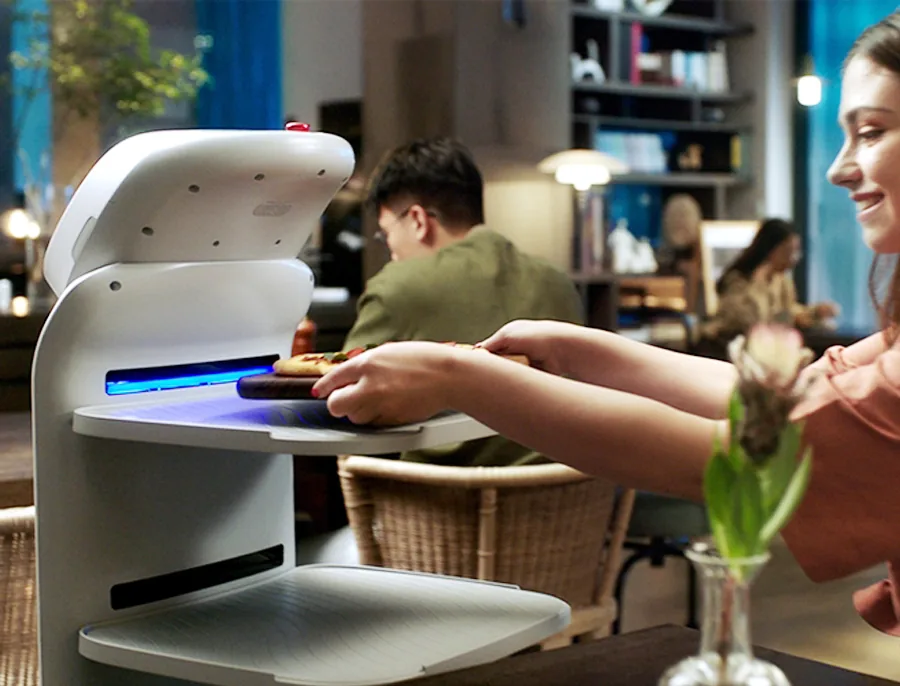
Service Robots for Rehabilitation Centers & Physical Therapy Clinics, Patient-Centered Automation
At a glance: Treatment bay turnover is a 3–5 minute wipe-down between patients, repeated ten or more times per therapist per day. AOMAN C2 Pro cleans in 85 cm aisles at 70 cm desk clearance while D1 carries the hot packs; this is the rehab playbook.
Rehabilitation facilities face an operational paradox. The work therapists are trained and licensed to do, manual therapy, exercise prescription, gait training, neuromuscular re-education, generates revenue. The work that consumes an increasing share of the shift does not: wiping tables between patients, restocking linens, fetching packs, walking paperwork.
This guide maps the three robot applications that return those hours: compact cleaning for treatment bays, large-area cleaning for the gym floor, and delivery loops for supplies.
The Hidden Labor Drain
Track one therapy day and the non-clinical time is visible. Treatment table cleaning and setup between patients. Linen and supply restocking. Moving hot packs, cold packs, and modality equipment. Walking lab orders and paperwork to the front desk. Gym floor and equipment wipe-downs. Together these tasks consume a meaningful slice of every clinician’s shift, time that is neither billable nor clinical.
Across a 20-therapist center that adds up to several full-time equivalents of licensed staff doing work requiring no clinical judgment. Three of those tasks map cleanly onto robots: bay cleaning, gym cleaning, and supply transportation.
Appointment-Driven Treatment Bay Turnover
The highest-frequency non-clinical task in any clinic is bay turnover: the window between Patient A leaving and Patient B arriving, when the table is wiped, linens exchanged, and the floor spot-cleaned. In a clinic running 14–16 patients per therapist per day, turnover repeats constantly, and every slowdown ripples into the next appointment.
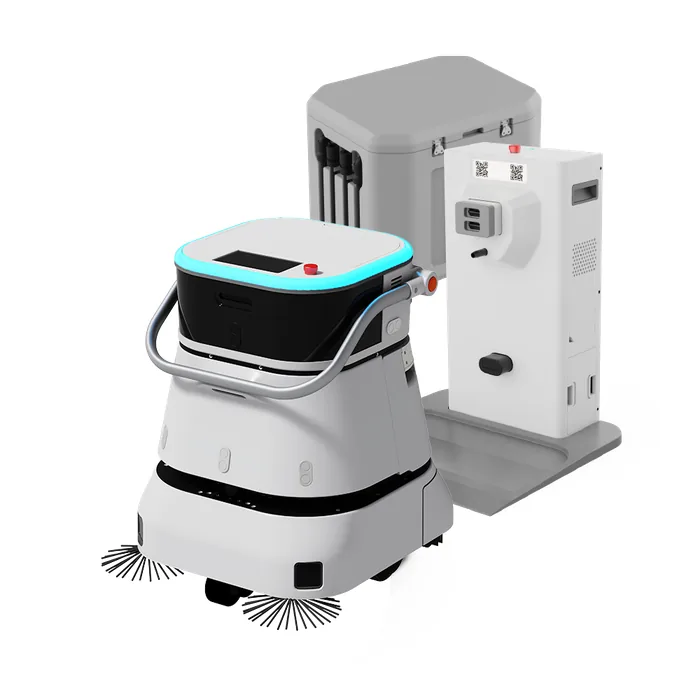
The AOMAN C2 Pro fits this job. Its compact profile cleans in 85 cm aisles and below 70 cm desk-level clearance. Treatment tables, benches, and side carts are exactly that shape. It runs quietly, which matters when the next patient is waiting in the next bay.
The higher-yield pattern is scheduling integration: when the clinic’s EMR marks an appointment complete, the robot is dispatched to that specific bay. Cleaning becomes demand-driven and synchronized to the actual appointment flow instead of running on a wall clock. Each unit should announce before entering a bay with drawn curtains and pause briefly, giving the therapist time to protect patient modesty, programmed behavior, not an afterthought.
The deeper reason the compact platform wins here is floor geometry. Rehab interiors are a maze of split hips, sliding curtains, and carts: table width plus a therapist plus a walker barely clears an 85 cm aisle. Machines larger than that buy coverage the clinic can never use, because the constrained spaces are where turnover actually happens.
For inpatient settings with the same hygiene requirements, the healthcare industry section covers the hospital variants of these workflows.
Gym Floor and Equipment Zones
The open gym is the highest-traffic zone and the hardest to clean during operating hours: mats, treadmills, and turf strips collect sweat, skin cells, and therapeutic gel residues that the next patient contacts within minutes. The AOMAN C1 covers open floor at up to 2,040 m²/h with a 790 mm squeegee and 70 L / 50 L separated tanks, one continuous pass over the mat area, then the cardio array, then the track, on a zoned schedule the facility defines.
Navigation matters more here than anywhere else: obstacle avoidance has to cope with patients mid-exercise, patients lying on floor mats, and therapists standing in close proximity. The unit slows and routes around occupied zones rather than cutting straight lines. Which is also why the first week of operation is best treated as a mapping and tuning week, not a production week.
Supply Logistics: Packs, Linens, and Modality Equipment
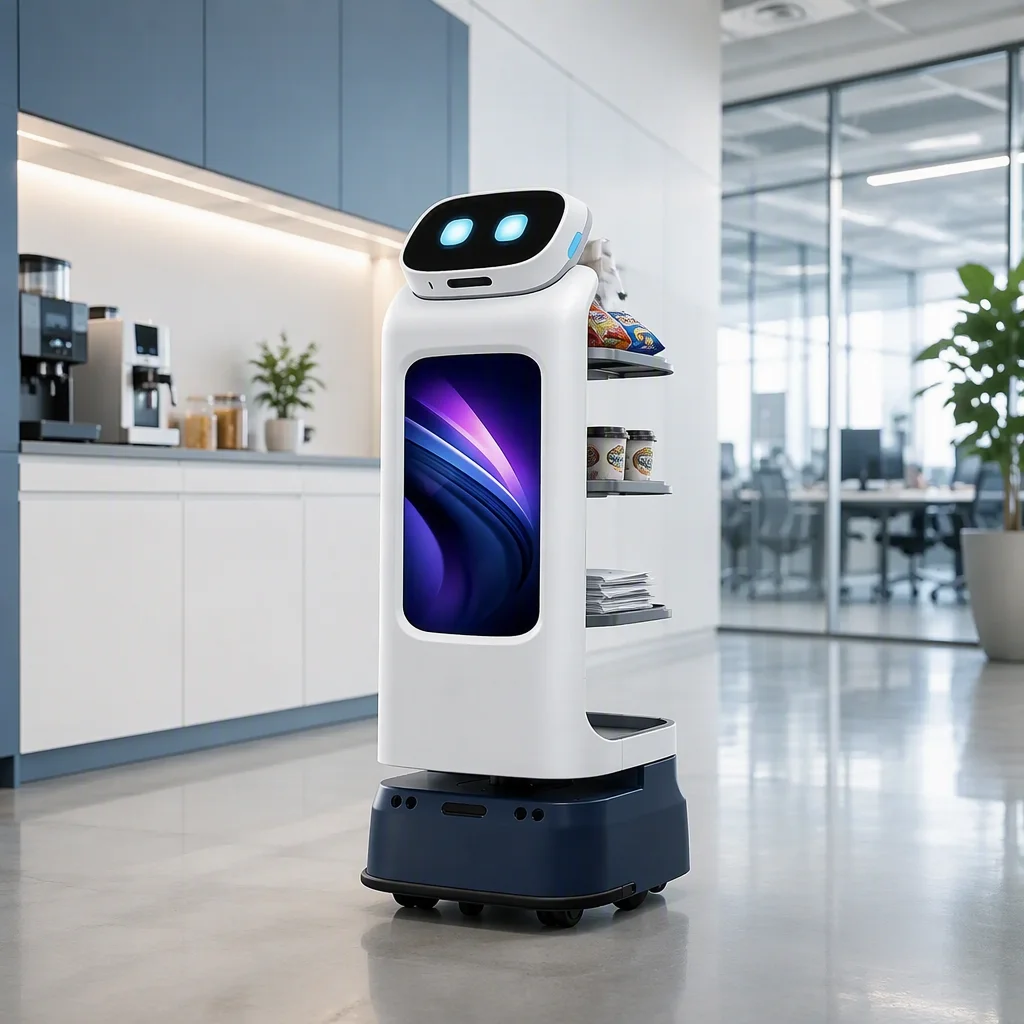
A clinic moves hot packs, cold packs, pillowcases, table sheets, and towels by the hundred each day: each item traveling from central storage to specific bays, and used items back to laundry or rethermalization. A AOMAN D1 runs the loop: 40 kg payload across four trays, clean and temperature-controlled items outbound on the upper trays, used linens and depleted packs inbound below, so clean and soiled streams never share a surface.
The effect is hard to capture in a metric and easy to feel: no therapist leaves a patient mid-session to hunt for a hot pack or a clean pillowcase.
The practical operating details are mundane and decisive: group items by bay so each stop clears one tray zone instead of fishing across four; give the return leg a planned capacity for used linen so the loop does not run full and empty unevenly; and keep any cold-chain items in the same insulated transport bins the clinic already uses for lab courier runs. Design the two flows, outbound and inbound, before the unit arrives. The robot is the easy part; the tray choreography is where pilots win or stall.

The Patient Experience Dimension
Rehabilitation patients spend more time in the facility per visit than almost any other outpatient setting: typically 45–90 minutes per session, twice a week or more, over months. They notice the facility, and they notice waiting. The transitions between modalities used to involve the therapist cleaning the previous station, fetching supplies for the next, and walking paperwork, minutes of patient idle time at each transition. With robots covering cleaning and logistics, those transitions shrink toward a minute, patients move through sessions with less dead time, and therapists report that a ready, clean clinic changes how their sessions actually feel.
Satisfaction in outpatient rehab is built on the feeling that the clinic is ready for you. A bay that is clean, dry, and stocked before the appointment starts reads as competence; it is the same signal a receptionist gives with eye contact. Cleanliness is also the most commented dimension in online reviews of physical therapy clinics, and the days-long gap between manual cleanings is exactly what reviewers notice. A robot does not have a bad week.
The Financial Picture
Illustrative example. A 20-therapist center where licensed time at a loaded rate near $85/hour sits in non-clinical tasks; the annual value of a meaningful share of that time is in the tens of thousands of dollars per therapist-cluster, against a fleet lease of two C2 Pro units plus one D1 and maintenance. How much is genuinely recoverable depends on the schedule, which is exactly what a pilot measures first. In most markets the deeper upside is capacity: recovered time converts to additional billable patient visits if the center is capacity-constrained.
Deployment Phases
- Phase 1, one clinic, one unit: C2 Pro covering treatment bays and gym floor. Map over a weekend, bay partition curtains need to be taught as pass-through barriers, not walls; start on a schedule aligned to appointment transitions.
- Phase 2, add logistics: one D1 on a continuous loop between storage, bays, and laundry. Confirm corridor widths and door thresholds against the platform footprint before ordering.
- Phase 3, network rollout: multi-site operators deploy standardized unit sets with centralized fleet management: shared updates, consolidated maintenance, and cross-site benchmarking that lets each new location reach stability faster.
And do not overlook the mundane spec items: a dock in the supply closet rather than the corridor, a spares box for brushes and squeegees on site, and a sign-up owner for consumable ordering. The equipment that breaks adoption is almost never the robot itself, it is the missing squeegee on a Tuesday.
Rehab-specific considerations
- Aquatic areas: standard floor robots stay off pool decks, slip hazards and water infiltration require a separate manual protocol.
- Privacy: announce-and-wait behavior before curtained bays, as described above.
- Scheduling integration: the EMR-to-robot dispatch hook is the single highest-yield integration in the deployment. Without it, cleaning is scheduled; with it, cleaning follows patients.
Measuring the pilot
Pick three numbers before the unit arrives and measure them to the day: minutes of therapist time spent on bay turnover and supply runs (sample a few shifts on paper if needed), appointment start delay count per day, and "not clean / not stocked" complaints per week. Run the pilot two weeks in manual baseline, then three weeks with the robot, and compare. If therapist minutes displace as expected, scale; if not, it is almost always a route or scheduling problem, fix the model before buying more units. This is the discipline that separates a robot fleet from a robot corner.
Autonomous cleaning and logistics return therapists to treatment. That is the entire business case, and it is the same logic across the AOMAN FUTURE product line. Tell us your clinic layout, appointment volume, and staffing structure; request pricing for a rehab clinic deployment. The zone-by-zone routing and cycle-time side of the same decision is worked through in the cleaning labour cost model.