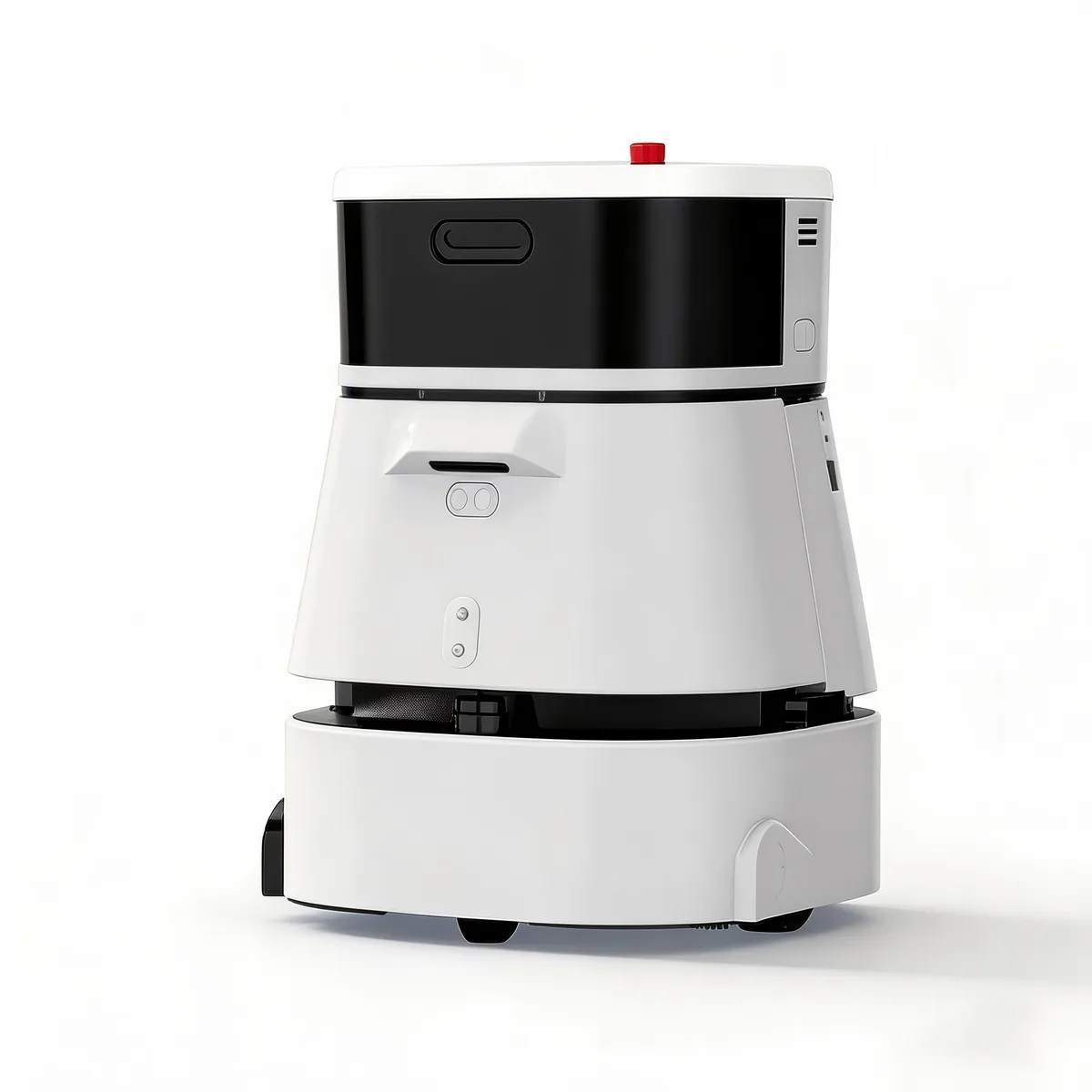
The operations manager of a regional materials recovery facility outside Chicago kept a time log for one week and found the same answer every day: the maintenance team spent 41 minutes per shift walking to the parts cage, the control-room floor was coated in dust that crossed the building every time the tipping floor door opened, and the yard — 18,000 m² of concrete that 140 collection trucks crossed daily — needed a full sweep every morning just to keep the first shift safe. Recycling facilities are industrial plants with a facility-management problem: the dirty work happens at the tipping floor and the yard, while the control room, offices and lunchrooms sit directly above it all, and the same trucks that bring the material in track the dust back out. The water & wastewater treatment plants guide documents the utility-plant pattern; this guide covers the recycling and waste-management version, where yard sweeping, control-room floor care and parts logistics are the three highest-value robot roles.
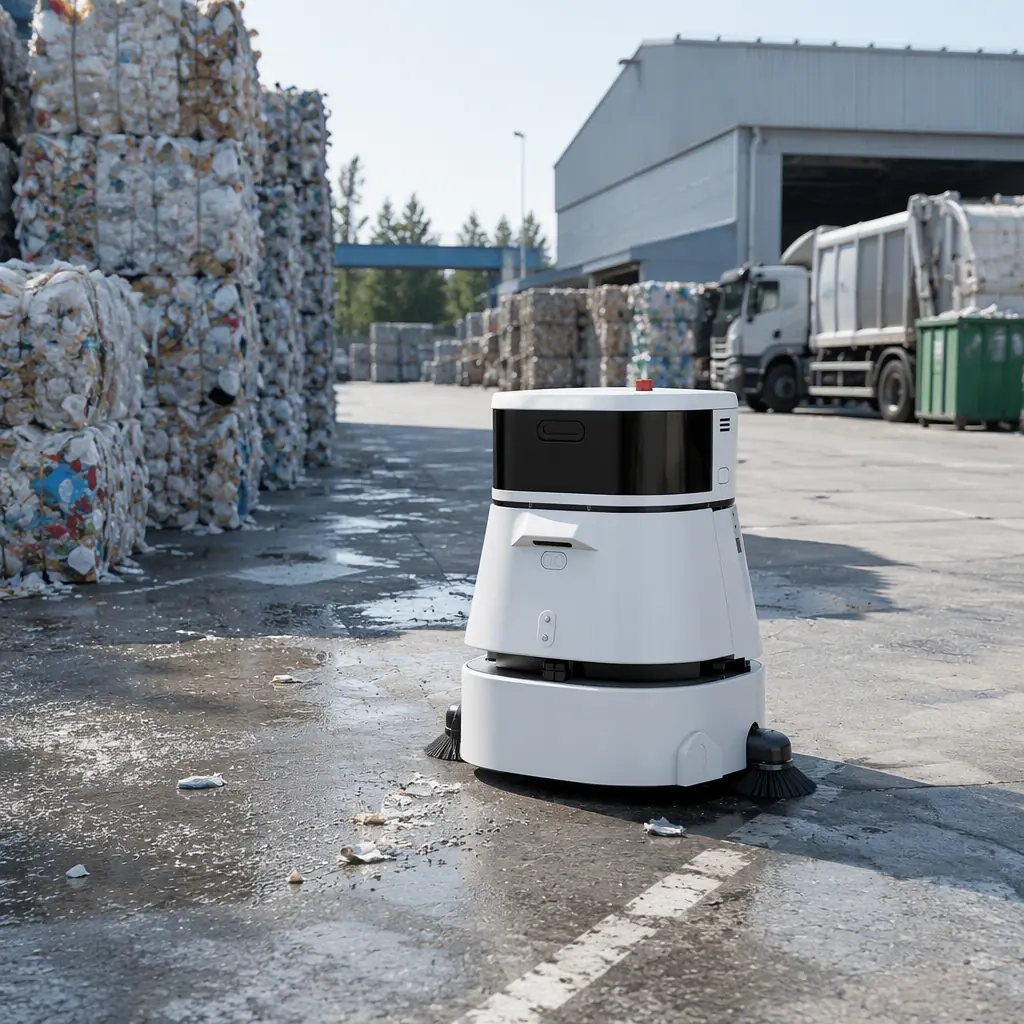
The Yard & Tipping-Floor Loop: Sweeping Where the Trucks Live
The yard of a recycling facility is a 24/7 concrete surface shared by collection trucks, forklifts and the material-handling equipment that feeds the sorting line — and everything they drop stays on the ground until someone sweeps it: shredded plastic film, broken glass, paper dust and the general debris of a facility processing hundreds of tons per day. The CLEINBOT CC201 covers the exterior loop: a 1,020 mm sweeping width at 3,000 m²/h — an 18,000 m² yard, tipping-floor apron and access-road network in under six hours — with a 130L dust container that auto-empties into an 800L docking station, IP67 sealing with a rain sensor for the outdoor load, and GPS + LiDAR + IMU navigation that follows the approved yard perimeter and truck routes. Its 10-hour battery runs the pre-dawn pass before the first collection shift and the post-close pass after the last, and the dust-suppression sweep sequence keeps the abrasive load — glass fines and paper dust — from recirculating into the building. The outdoor pattern the outdoor autonomous cleaning guide documents for industrial yards applies directly; the recycling-specific addition is the truck-corridor sequencing — the yard is swept from the gate inward so the debris tracked off the access road is pushed back toward the entrance, and the tipping-floor apron runs during the 30-minute shift-change window when the trucks are parked.
Control Rooms, Admin Floors & Lunchrooms: Indoor Floor Care Above the Dust
The interior loop is what the facility's own staff walk on every day: the control room above the sorting line, the admin offices, the lunchroom and the corridors that connect them — all of them crossed daily by dust that drifts in every time the tipping floor door opens, and by the tracked-in residue of staff walking through the yard. The CLEINBOT C2 Pro covers the interior: 800 m²/h scrub coverage with IP54-rated chassis sealing for the dust-crossed wet zones, a squeegee system that leaves floors 90% dry within 90 seconds of pass completion — important on an admin floor where a wet patch during a shift change is a slip liability — and a compact footprint that threads the control-room aisles and lunchroom seating without blocking the doorways. The specification framework in the commercial cleaning robot buyers guide applies; the recycling-specific rule is the shift-change window: the C2 Pro runs the admin and control-room floors in the 20-minute windows between shifts, when the sorting line is quiet and the corridors are empty — the same "clean the high-traffic zone when the traffic isn't there" logic the data centers guide documents for 24/7 monitored facilities, applied to a plant whose peaks are measured in shifts rather than hours.
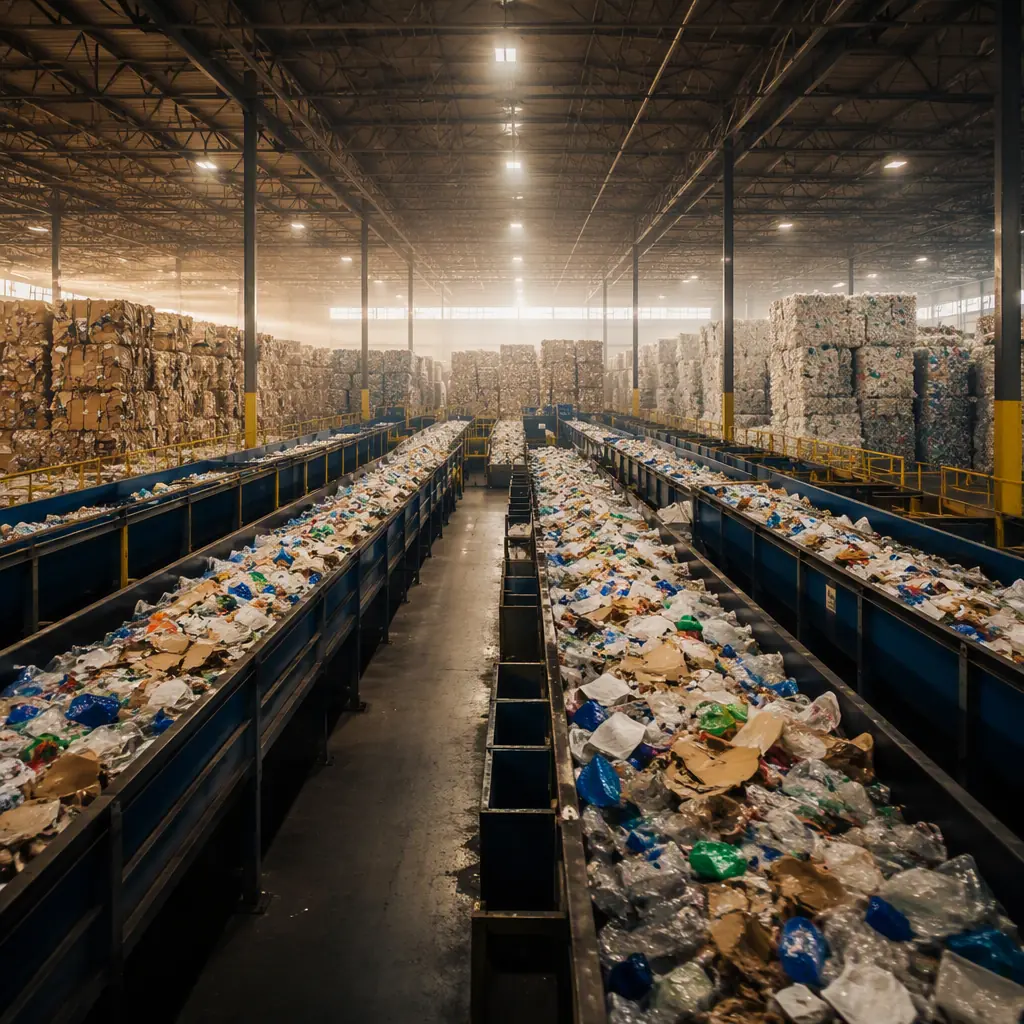
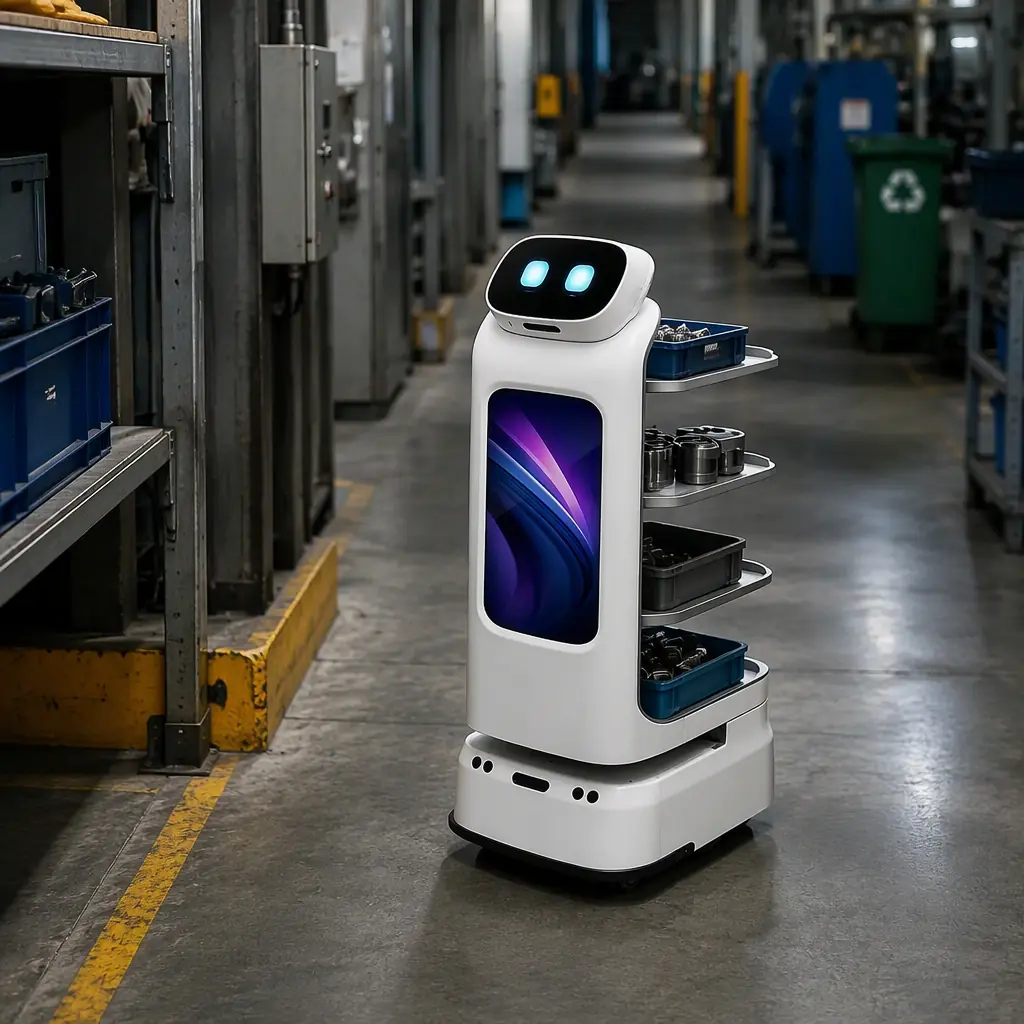
Parts, Tools & PPE Delivery Across the Plant
The most expensive walking in a recycling facility is done by the maintenance team fetching things: parts from the cage, tools for the sorting-line repairs, PPE for the crew rotation, and the consumables — filters, belts, screen plates — that a sorting line burns through daily. The CADEBOT L100 covers the logistics loop: a 400 mm platform with four trays rated for 15 kg each and a 40 kg total payload that carries a full maintenance run in one trip — 6-8 deliveries per hour across the plant, including the parts-cage run that used to cost a technician a 15-minute round trip per fetch. The choice between the single-cabin L100 and the 70L dual-cabin AOMAN DOUBLE for two-destination runs — a parts drop at the sorting line plus a PPE delivery at the break room on the same pass — follows the same decision framework the AMR vs AGV guide documents for facility logistics, and the TCO & maintenance guide covers the ownership math for fleets running in dusty, high-vibration environments: the L100's sealed chassis and swappable battery are the two features that matter most in a plant where filters clog weekly and downtime is measured in lost throughput.
24/7 Operations & Auditable Cleaning Logs
Recycling facilities operate around the clock and report to regulators, insurers and corporate sustainability teams — which means every cleaning pass and every delivery is not just an operational event but a record. The fleet management guide covers the dashboard layer: every C2 Pro scrub pass, every CC201 yard sweep and every L100 delivery is timestamped and stored, giving the facility an auditable cleaning log that documents the shift-change window coverage and the yard-sweep frequency the compliance team needs — the same record-keeping pattern the correctional facilities guide documents for auditable cleaning in regulated environments. The multi-site deployment guide covers the operator running several facilities: a regional waste-management company running four MRFs and six transfer stations configures the same yard loop, the same interior schedule and the same parts routes from one cloud dashboard, with the RaaS financing guide covering the subscription structure that fits utility-budget cycles: most facilities start with one CC201 on the yard and one C2 Pro on the interior, run one quarter with the documented numbers, and add the L100 when the maintenance-walking time becomes the staffing bottleneck.
Deployment Table for Facility Types
| Facility type | Exterior fleet | Interior fleet | Monthly cost (RaaS) | Staff hours returned |
|---|---|---|---|---|
| Transfer station (2,000-5,000 tons/day) | 1 × CC201 (yard + apron) | 1 × C2 Pro (admin + lunchroom) | $2,400-3,800 | 200-320/month |
| Mid-size MRF (5,000-15,000 tons/day) | 1 × CC201 + 1 × L100 (parts) | 1 × C2 Pro (control room + offices) | $3,200-4,800 | 280-420/month |
| Large recovery complex (15,000+ tons/day) | 2 × CC201 (yard + access roads) | 1 × C2 Pro + 1 × DOUBLE (dual-destination runs) | $5,200-7,800 | 400-620/month |
| Multi-facility operator (4+ sites) | 1 × CC201 per site | 1 × C2 Pro + 1 × L100 per site | $14,000-26,000 | 1,600-3,200/month across portfolio |
A recycling facility is judged by the tons it processes and the safety record behind them, and both run on the same surfaces: the yard has to be clear of debris before the first collection truck rolls in, and the control-room floor has to be safe for the crew that watches the line all day. The CC201 keeps the yard and tipping-floor apron clean through every shift, the C2 Pro keeps the interior floors presentable above the dust, and the L100 keeps parts and PPE moving so technicians stay with the equipment. That is the automation pattern that fits a 24/7 industrial budget, and it starts with the same step every successful deployment starts with: a walk-around audit of where the sweeping hours, the mopping hours and the parts-fetching trips actually are.