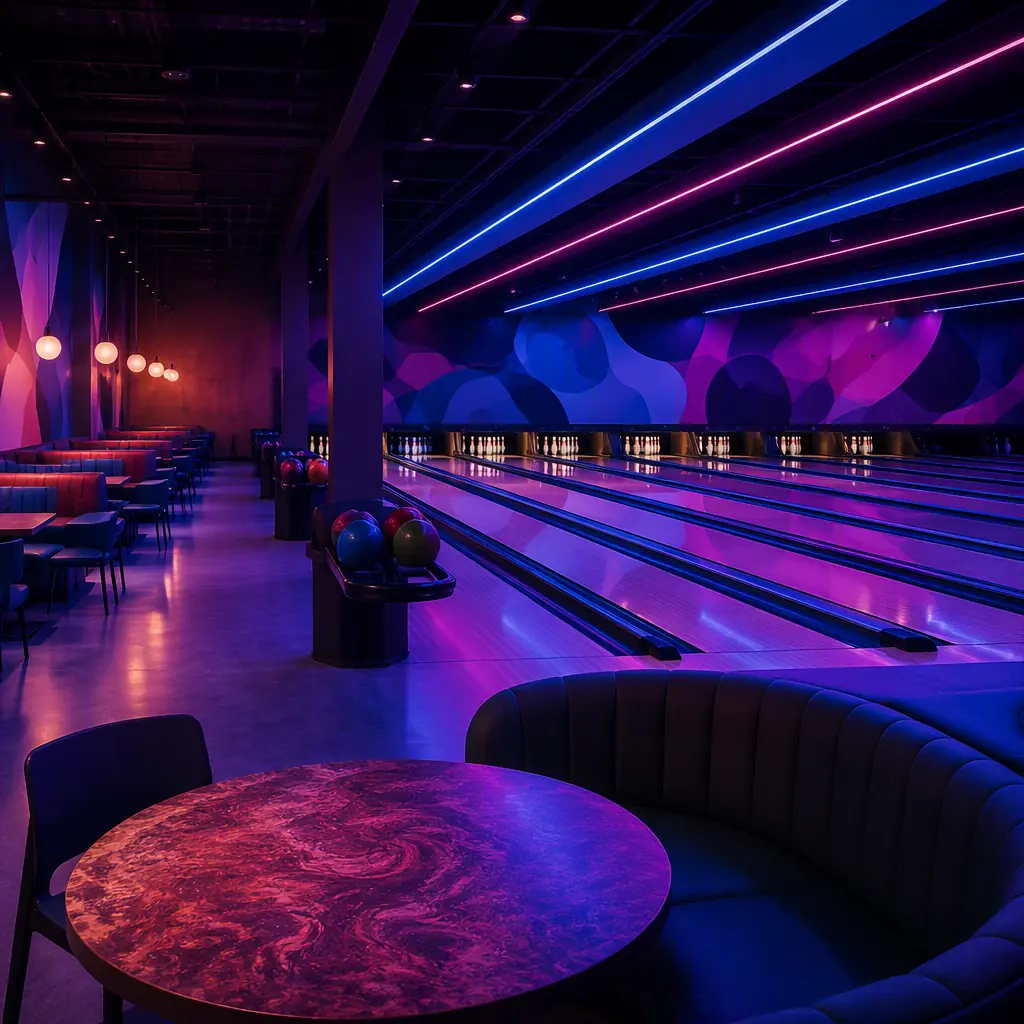
The general manager of a 40-lane center in suburban Dallas looked at her weekend close-out reports and saw the problem in numbers: Saturday's 14 birthday parties generated 1,900 food-service items, the lane-side concourse carried the combined load of nacho cheese, soda spills and shoe dust from 600 bowlers, and the parking lot — 12,000 m² serving a center that empties completely between the 7 p.m. cosmic-bowling block and the 9 p.m. close — needed a full sweep twice on weekends alone. Bowling alleys are family entertainment centers with a sports-venue schedule: league nights lock in fixed session windows, weekend parties stack back to back, and every hour of the day is either a peak or a reset. The indoor sports complexes & ice rinks guide documents the same pattern at arena scale; this guide covers the bowling and FEC version, where lane-side floor care, parking-lot sweeping and party food delivery are the three highest-value robot roles.
The Lane-Side Loop: Food-Zone Floors on League Night
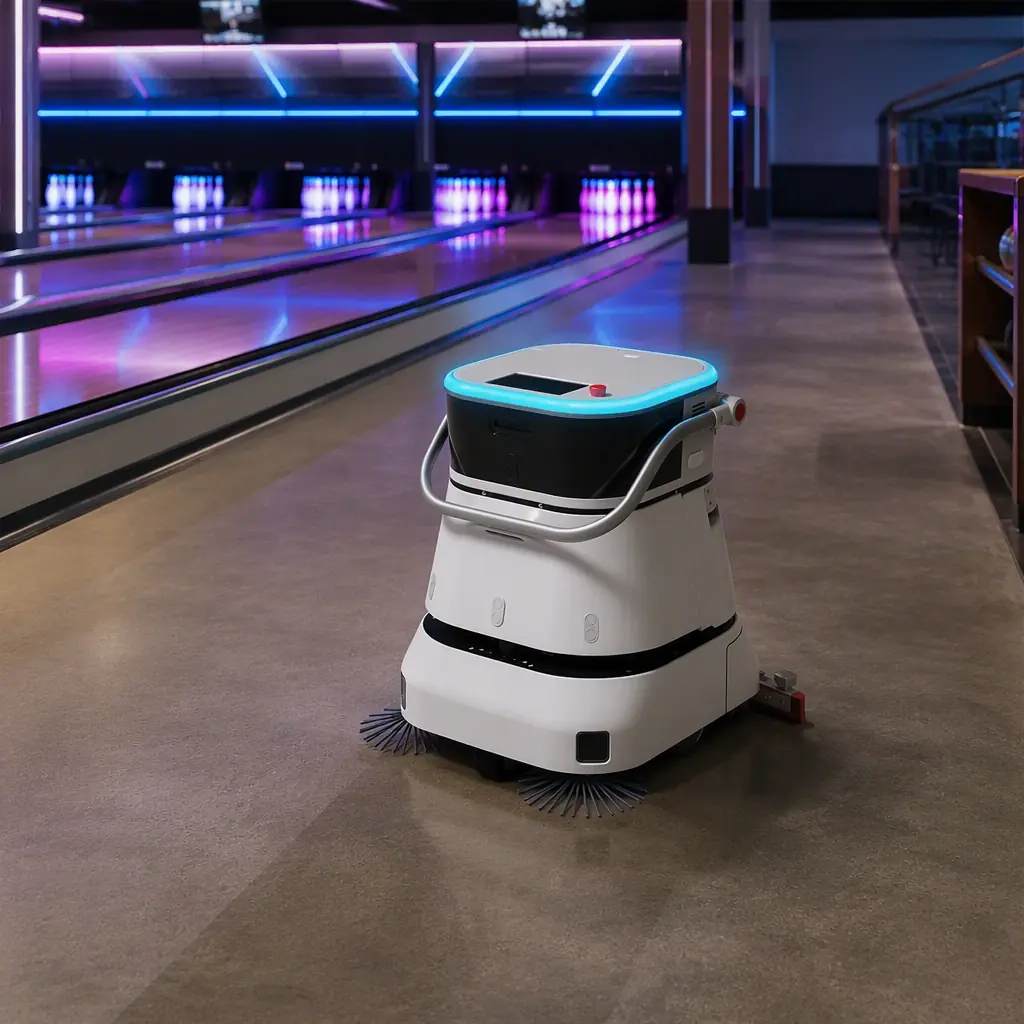
The lane-side concourse of a bowling center is the wettest and stickiest floor in recreation: every lane party carries food and drinks to the seating area, every frame of cosmic bowling adds shoe dust to the mix, and the café and party rooms add food-service traffic to the load. The CLEINBOT C2 Pro covers the interior loop: 800 m²/h scrub coverage with IP54-rated chassis sealing for the food-zone wet spots, a squeegee system that leaves floors 90% dry within 90 seconds of pass completion — the difference between a safe concourse and a slip liability when the next league block empties onto it — and a compact footprint that threads the lane-side seating, party rooms and café tables without interrupting a frame. The specification framework in the commercial cleaning robot buyers guide applies; the bowling-specific rule is the league-block schedule: the C2 Pro runs the concourse in the 20-minute windows between league blocks, when the lanes are turning over and the concourse is at its quietest — the same "clean the high-traffic zone when the traffic isn't there" logic the fitness centers guide documents for 24/7 gyms, applied to a facility whose peaks are measured in frames rather than hours.
The Parking Lot & Entrance: Weekend Crowd Sweeping
The outdoor loop is the first and last thing every customer touches: the parking lot, the entrance plaza and the perimeter walkways carry the weekend crowd load — cups, napkins, ticket stubs and the general debris of a facility that peaks in family-sized waves. The CLEINBOT CC201 covers the exterior: a 1,020 mm sweeping width at 3,000 m²/h — a 12,000 m² lot in under four hours — with a 130L dust container that auto-empties into an 800L docking station, IP67 sealing with a rain sensor, and GPS + LiDAR + IMU navigation that follows the approved lot perimeter and entrance lanes. Its 10-hour battery runs the pre-opening pass before the first league block and the post-close pass after the last party, and its -10°C to 50°C range covers both northern centers that operate through winter and southern complexes that run year-round. The outdoor pattern the outdoor autonomous cleaning guide documents for public spaces applies directly; the FEC-specific addition is the weekend-wave sequencing — the lot is swept in the 30-minute windows between the morning-party block and the afternoon block, when the cars are on the lanes instead of the pavement.
Food, Shoes & Party Supplies: The Service Loop
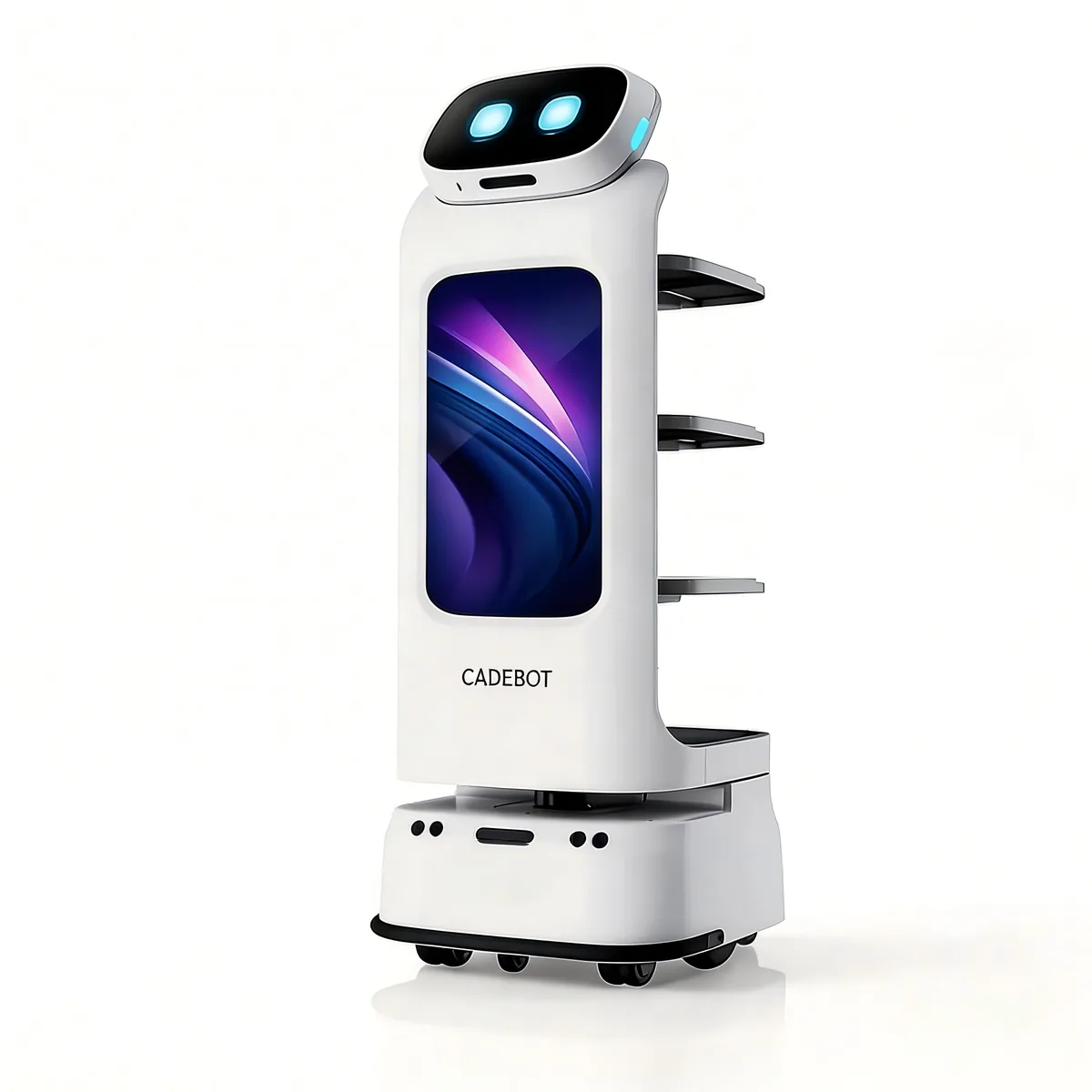
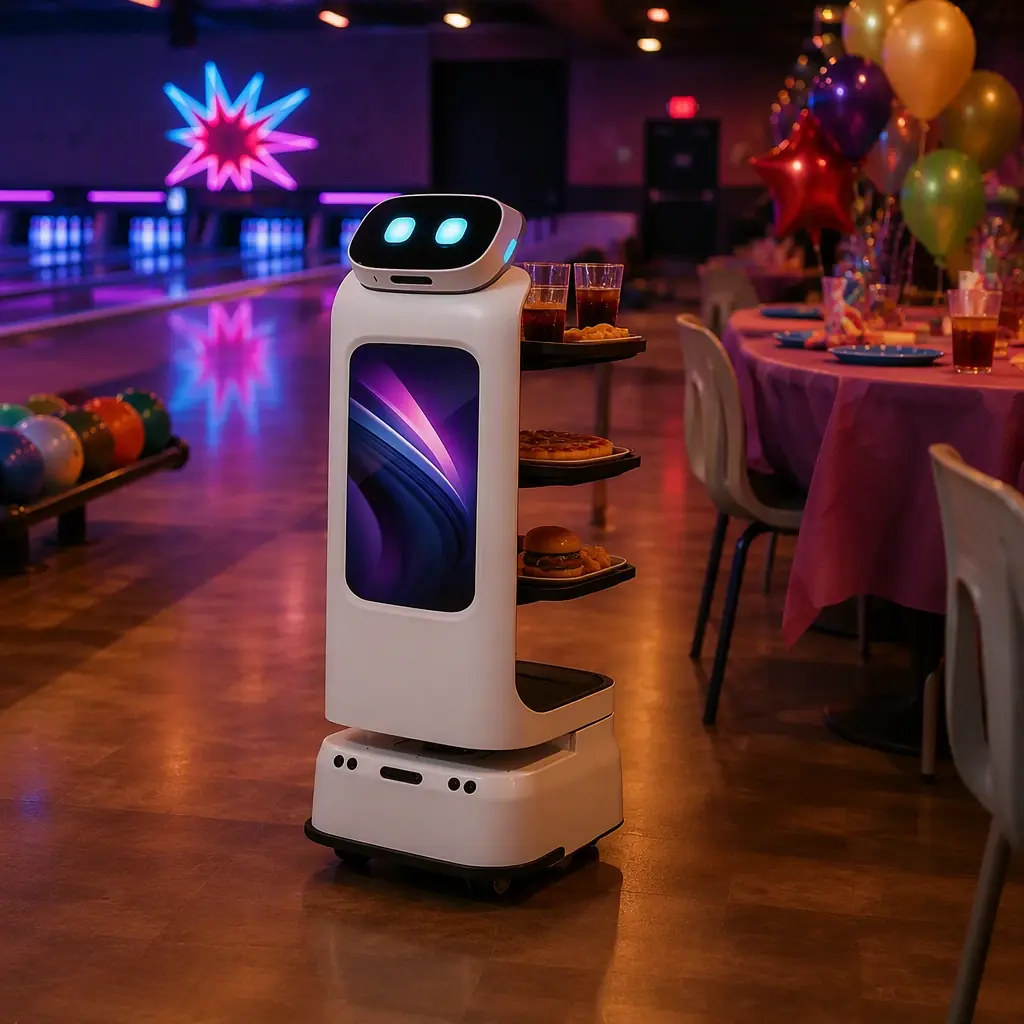
The most expensive walking in a bowling center is done by staff serving the party economy: food runners carrying trays from the kitchen to the lane parties, shoe-rental staff cycling returns back to the counter, and party hosts ferrying supplies — plates, cups, decorations — between the storeroom and the party rooms. The CADEBOT L100 covers the service loop: a 400 mm platform with four trays rated for 15 kg each and a 40 kg total payload that carries a full party run in one trip — 6-8 deliveries per hour across the center, including the nacho-and-soda run that used to cost a food runner a 12-minute round trip per party. The same pattern the restaurants & food service guide documents for kitchen-to-table delivery applies at party scale: the robot runs the route, the staff stays with the customers, and every delivery is logged by the fleet dashboard — including the shoe-rental audit the front counter's inventory records require. The delivery robot selection guide covers the single-cabin versus dual-cabin choice for centers that want to add a two-destination run — a food drop at lane 12 plus a supplies drop at the party room on the same pass.
Party & Event Operations: The Weekend Pattern
Bowling centers are event venues with a party calendar, and the robot fleet runs on the same calendar: Friday-night leagues, Saturday birthday blocks, Sunday family hours and the corporate-event bookings that fill the off-peak weekday afternoons. The events & trade shows guide documents the pattern for operators running event-driven facilities; the shopping malls guide covers the family-destination version where the weekend crowd is the revenue engine. The multi-site deployment guide covers the operator running several centers: a regional FEC chain running six locations configures the same lane-side loop, the same lot sweep and the same party-delivery routes from one cloud dashboard — with the fleet management guide covering the operational layer and the RaaS financing guide covering the subscription structure that fits entertainment-venue budgets: most centers start with one C2 Pro on the lane-side concourse and one CC201 on the lot, run one full quarter with the documented numbers, and add the L100 when the party-food walking time becomes the staffing bottleneck.
Deployment Table for Facility Types
| Facility type | Interior fleet | Exterior fleet | Monthly cost (RaaS) | Staff hours returned |
|---|---|---|---|---|
| Neighborhood bowling center (16-24 lanes) | 1 × C2 Pro (concourse + café) | 1 × CC201 (lot + plaza) | $2,400-3,800 | 200-320/month |
| Regional FEC (32-48 lanes + arcade) | 1-2 × C2 Pro (concourse + party rooms) | 1 × CC201 (lot + perimeter) | $2,800-4,400 | 240-380/month |
| Large entertainment complex (48+ lanes + arcade + food hall) | 2 × C2 Pro + 1 × L100 (party delivery) | 1 × CC201 | $4,800-7,200 | 400-620/month |
| Multi-venue operator (4+ sites) | 1-2 × C2 Pro + 1 × L100 per site | 1 × CC201 per site | $14,000-26,000 | 1,600-3,200/month |
A bowling center is judged by the parties it runs on time and the floors its customers walk on, and both run on the same clock: the concourse has to be dry when the next league block empties onto it, and the lot has to be presentable when the first weekend cars arrive. The C2 Pro keeps the food-zone floors clean between blocks, the CC201 keeps the lot and entrance clean in all weather, and the L100 keeps food, shoes and party supplies moving so staff stay with the customers. That is the automation pattern that fits an entertainment-venue budget, and it starts with the same step every successful deployment starts with: a walk-around audit of where the mopping hours, the sweeping hours and the delivery trips actually are.