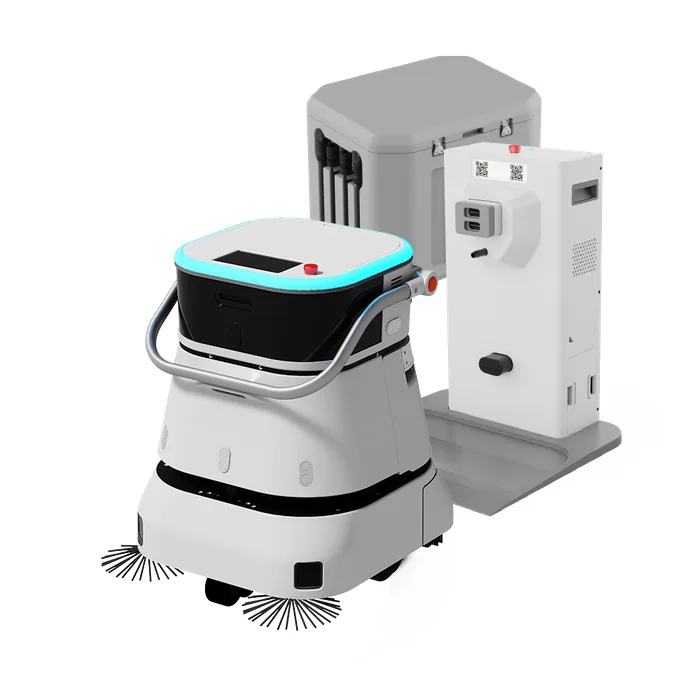
A regional ice rink outside Beijing ran its 2025 operations review and found its hardest-working surfaces were the ones the skaters never noticed. The concourse carried the combined load of wet skate boots, melted snow and concession traffic from 6 a.m. youth hockey through the 10 p.m. figure-skating session — and the floor crew was mopping it four times a day just to keep the slip risk down. The entrance plaza collected the sand, grit and leaf litter that the parking lot swept onto it every time the gates opened. And the equipment loop — skate rentals, pro-shop merchandise, team bags — sent staff on round trips between the rental counter, the locker rooms and the stands that the facility's own time study measured at 26 minutes per shift per staff member. Indoor sports complexes are event venues with a school-day schedule and a wet-zone problem, and the stadiums & arenas guide documents the pattern at 60,000-seat scale; this guide covers the community and regional version, where concourse floor care, perimeter sweeping and equipment logistics are the three highest-value robot roles.
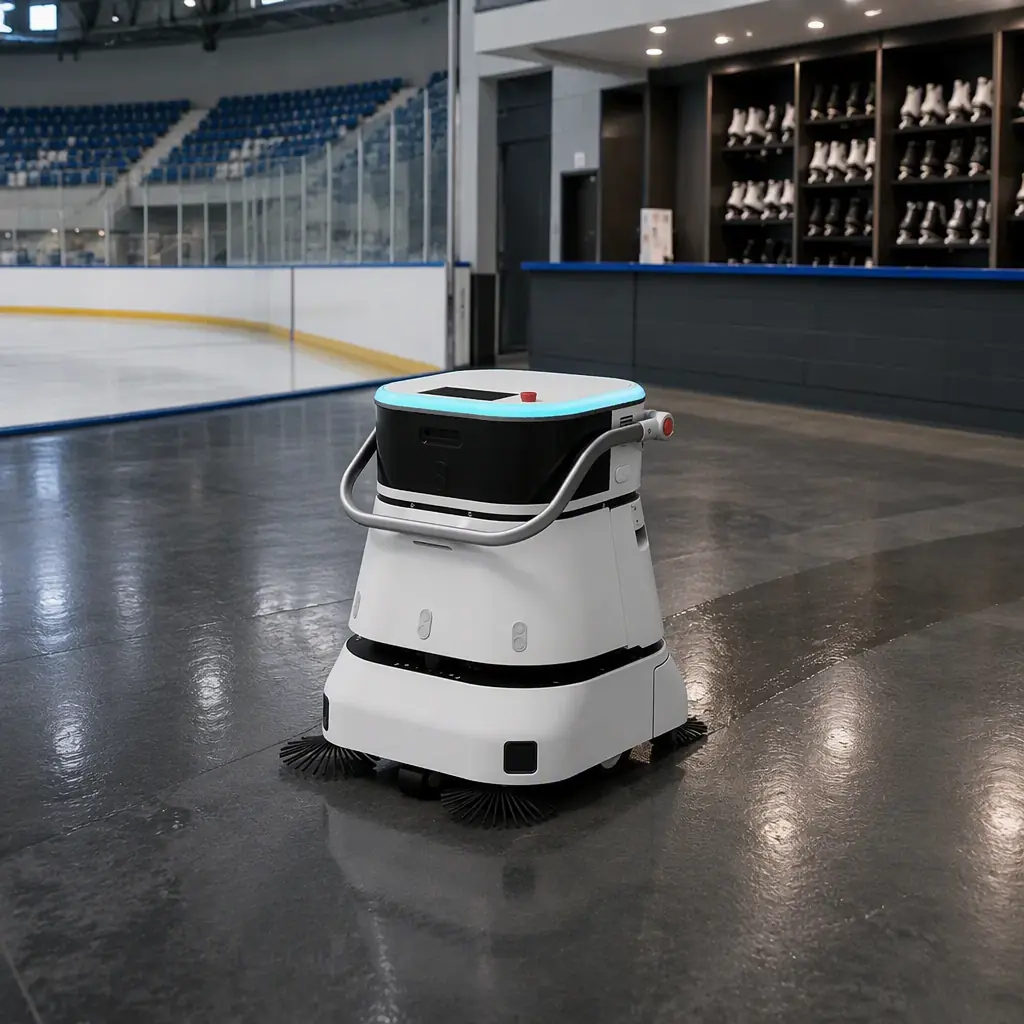
The Concourse Loop: Wet-Shoe Floors at Arena Scale
The concourse of an ice rink is the wettest floor in commercial building operations: every skater crosses it with freshly melted blades, every parent follows with snow-caked boots, and the café and skate-rental zones add food-service traffic to the load. The CLEINBOT C2 Pro covers the interior loop: 800 m²/h scrub coverage with IP54-rated chassis sealing for the wet zones, a squeegee system that leaves floors 90% dry within 90 seconds of pass completion — critical on a concourse where a wet patch during a game changeover is a slip liability — and a compact footprint that threads the rental counter, locker-room corridors and café seating. The specification framework in the commercial cleaning robot buyers guide applies; the rink-specific rule is the resurfacing-window scheduling: the C2 Pro runs the concourse in the 15-minute windows between ice sessions, when the Zamboni cycle empties the stands and the concourse is at its quietest — the same "clean the high-traffic zone when the traffic isn't there" logic the fitness centers guide documents for 24/7 gyms, applied to a facility whose peaks are measured in sessions rather than hours.
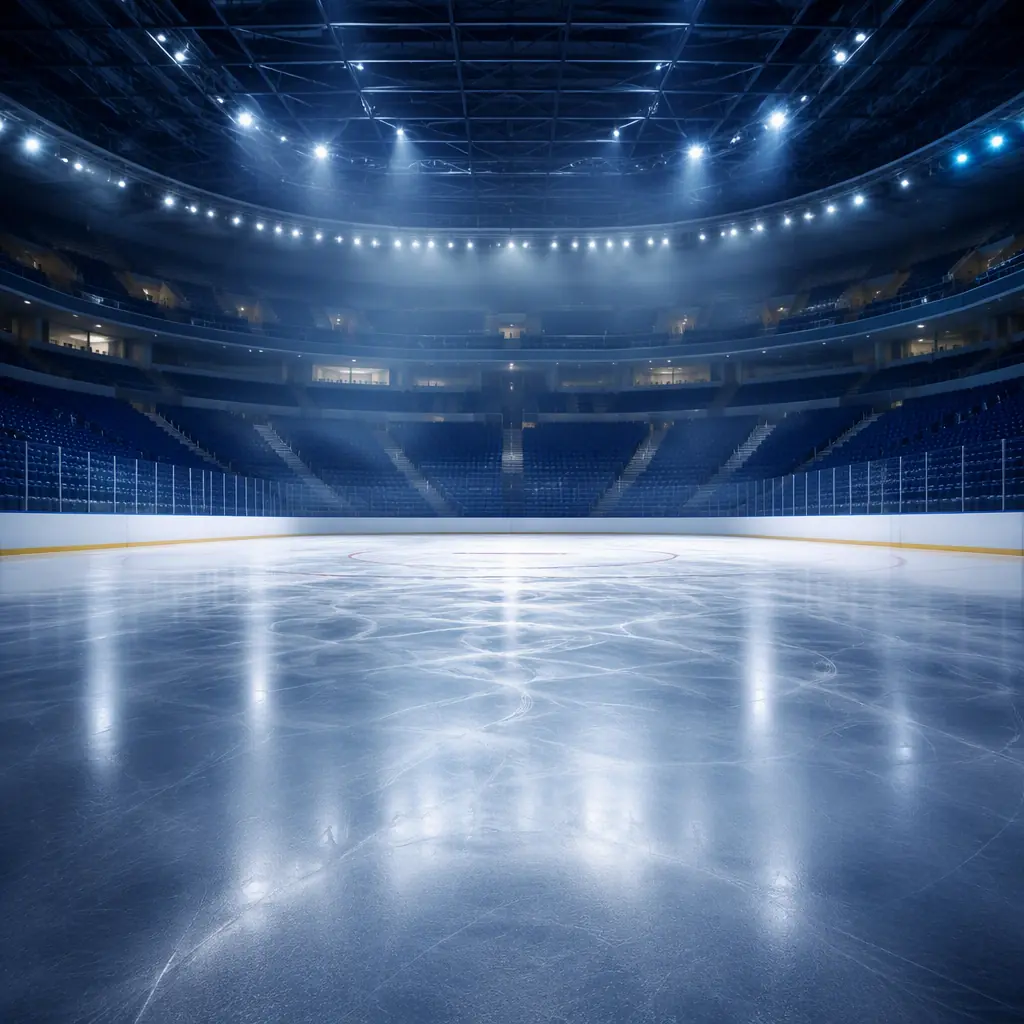
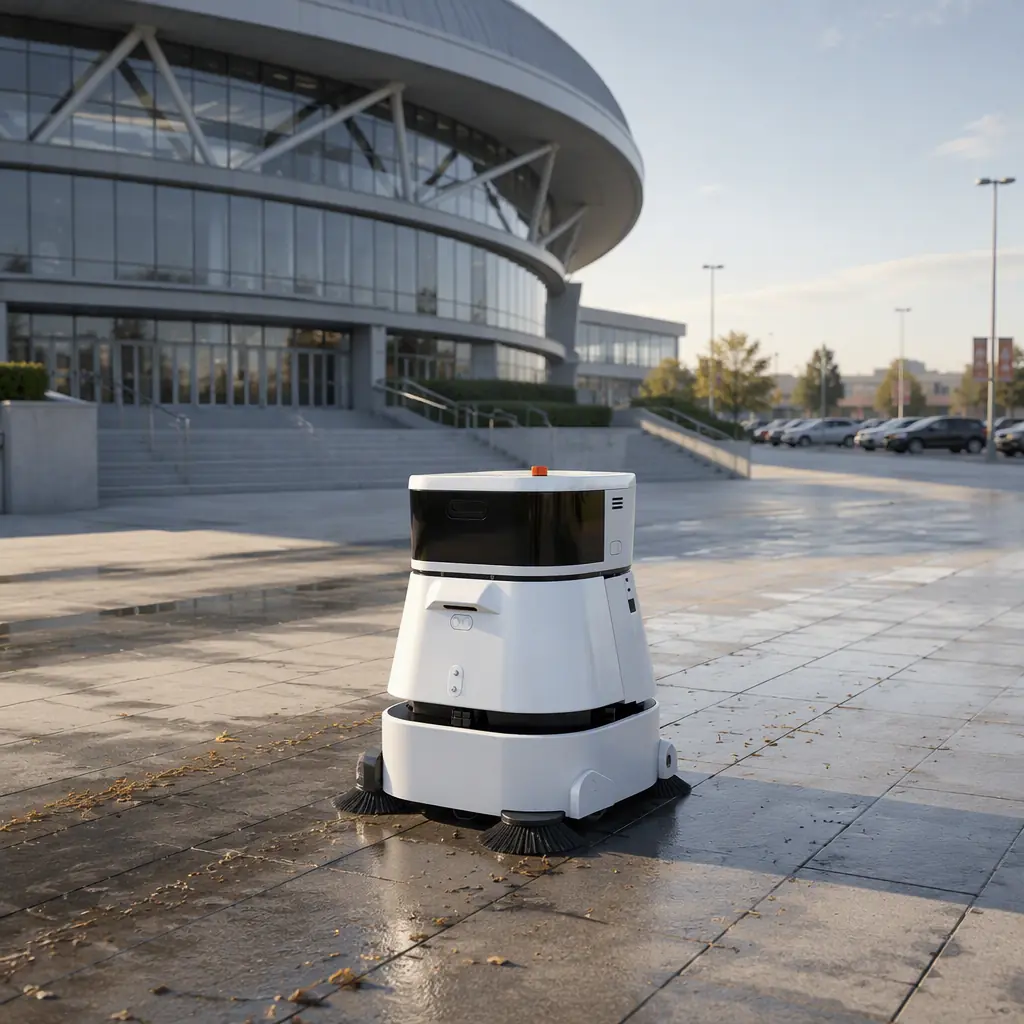
Perimeter & Entrance Sweeping: The Outdoor Face of the Complex
The outdoor loop is what visitors see first: the entrance plaza, the parking lot and the perimeter walkways collect sand in winter, leaf litter in autumn and the general debris of a facility that runs every day of the year. The CLEINBOT CC201 covers the exterior: a 1,020 mm sweeping width at 3,000 m²/h — the full entrance plaza and perimeter network in under two hours — with a 130L dust container that auto-empties into an 800L docking station, IP67 sealing with a rain sensor, and GPS + LiDAR + IMU navigation that follows the approved perimeter loop. Its 10-hour battery runs the pre-opening pass before the first session and the post-close pass after the last, and its -10°C to 50°C range covers both northern rinks that operate through winter and southern complexes that run year-round. The outdoor pattern the outdoor autonomous cleaning guide documents for public spaces applies directly; the rink-specific addition is the salt-and-sand sequencing — the plaza is swept from the building outward so the grit tracked off the parking lot is pushed back toward the source, and the perimeter walkways run on the off-peak schedule.
Equipment & Concession Logistics: Lockers to Benches
The most expensive walking in a sports complex is done by staff moving things between the rental counter, the pro shop, the locker rooms and the stands: skate rentals cycling back from the ice, merchandise restock, team bags, and concession supplies. The CADEBOT L100 covers the logistics loop: a 400 mm platform with four trays rated for 15 kg each and a 40 kg total payload that carries a full restock run in one trip — 6–8 deliveries per hour across the facility, including the skate-return run that used to cost a staff member a 10-minute round trip per bin. The same pattern the hospital delivery robots guide documents for pharmacy and lab runs applies at arena scale: the robot runs the route, the staff stays with the customers, and every delivery is logged by the fleet dashboard — including the rental audits the pro shop's inventory records require.
League-Schedule Operations: Cleaning Between the Buzzer
Sports complexes run on a schedule of fixed windows — game changeovers, session breaks, the overnight close — and the robot fleet runs on the same windows. The multi-site deployment guide documents the pattern for operators running several facilities: every C2 Pro, CC201 and L100 reports to one cloud dashboard, routes and schedules are configured remotely by the operations office, and a regional operator running four complexes runs the same concourse loop, the same perimeter sweep and the same equipment routes everywhere — with the fleet management guide covering the operational layer and the RaaS financing guide covering the subscription structure that fits community-facility budgets: most rinks start with one C2 Pro on the concourse and one CC201 on the perimeter, run one full season with the documented numbers, and add the L100 when the equipment-walking time becomes the staffing bottleneck.
Deployment Table for Facility Types
| Facility type | Interior fleet | Exterior fleet | Monthly cost (RaaS) | Staff hours returned |
|---|---|---|---|---|
| Community ice rink (1–2 sheets) | 1 × C2 Pro (concourse + lockers) | 1 × CC201 (plaza + lot) | $2,400–3,800 | 200–320/month |
| Multi-court sports complex (4–8 courts) | 1–2 × C2 Pro (concourse + café) | 1 × CC201 (perimeter) | $2,800–4,400 | 230–380/month |
| Regional sports center (2+ rinks + courts) | 2 × C2 Pro + 1 × L100 (rentals) | 1 × CC201 | $4,800–7,200 | 400–620/month |
| Multi-facility operator (4+ sites) | 1–2 × C2 Pro per site | 1 × CC201 per site | $14,000–26,000 | 1,600–3,200/month |
A sports complex is judged by the sessions it runs on time and the surfaces its members walk on, and both run on the same clock: the concourse has to be dry when the next session empties onto it, and the plaza has to be presentable when the first car arrives. The C2 Pro keeps the wet-zone floors dry between sessions, the CC201 keeps the perimeter clean in all weather, and the L100 keeps equipment and concessions moving so staff stay with the customers. That is the automation pattern that fits a community-facility budget, and it starts with the same step every successful deployment starts with: a walk-around audit of where the mopping hours, the sweeping hours and the equipment trips actually are.