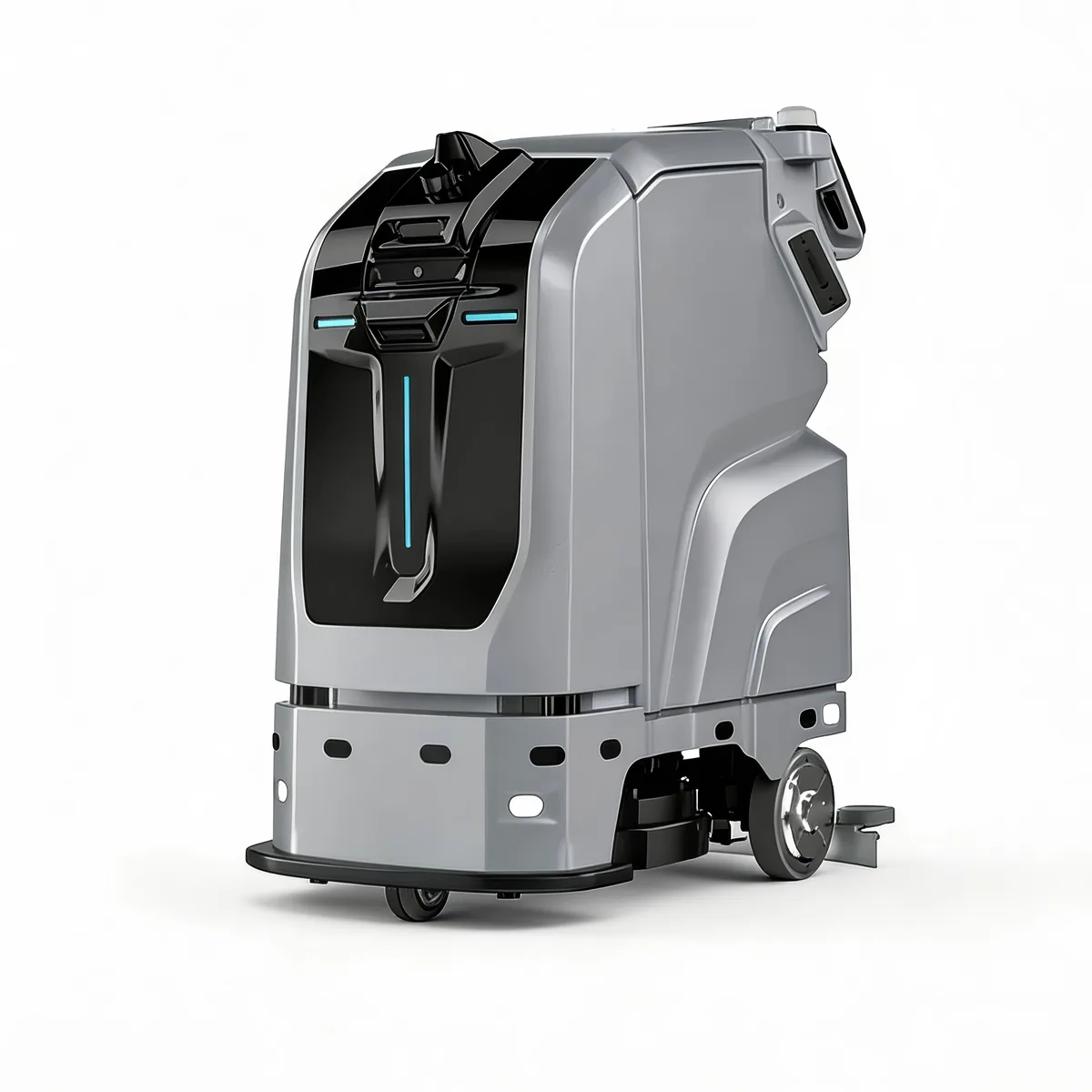
A 12-station salon in Austin, Texas, runs a 1,950-square-foot floor plan: eight styling stations, two shampoo rooms, a color bar, a retail wall and a reception area that doubles as the checkout line. The owner's time study last quarter found that floor care consumed 1.7 staff-hours per day — sweeping hair clippings from under every station after each cut, mopping the color bar twice a day to keep toner stains off the tile, polishing the reception floor before evening appointments, and spot-cleaning the shampoo rooms between clients. Across a 26-day working month, that is 44 hours of labor — more than a full week of one employee's paid time, spent on work that has nothing to do with the services clients pay for.
The same economics play out at the front desk. A two-receptionist spa in Scottsdale handles 60-80 appointments a day, and its managers measured that check-in, phone answering and retail checkout consume 4.2 combined reception hours per day — time that a single concierge robot can absorb for the repetitive 70% while the human receptionist handles exceptions. This is the pattern that makes beauty and wellness one of the fastest-growing verticals for service robot deployment in 2026: the venue is compact, the labor is expensive, and the cleanliness standard is a licensing requirement, not a preference.
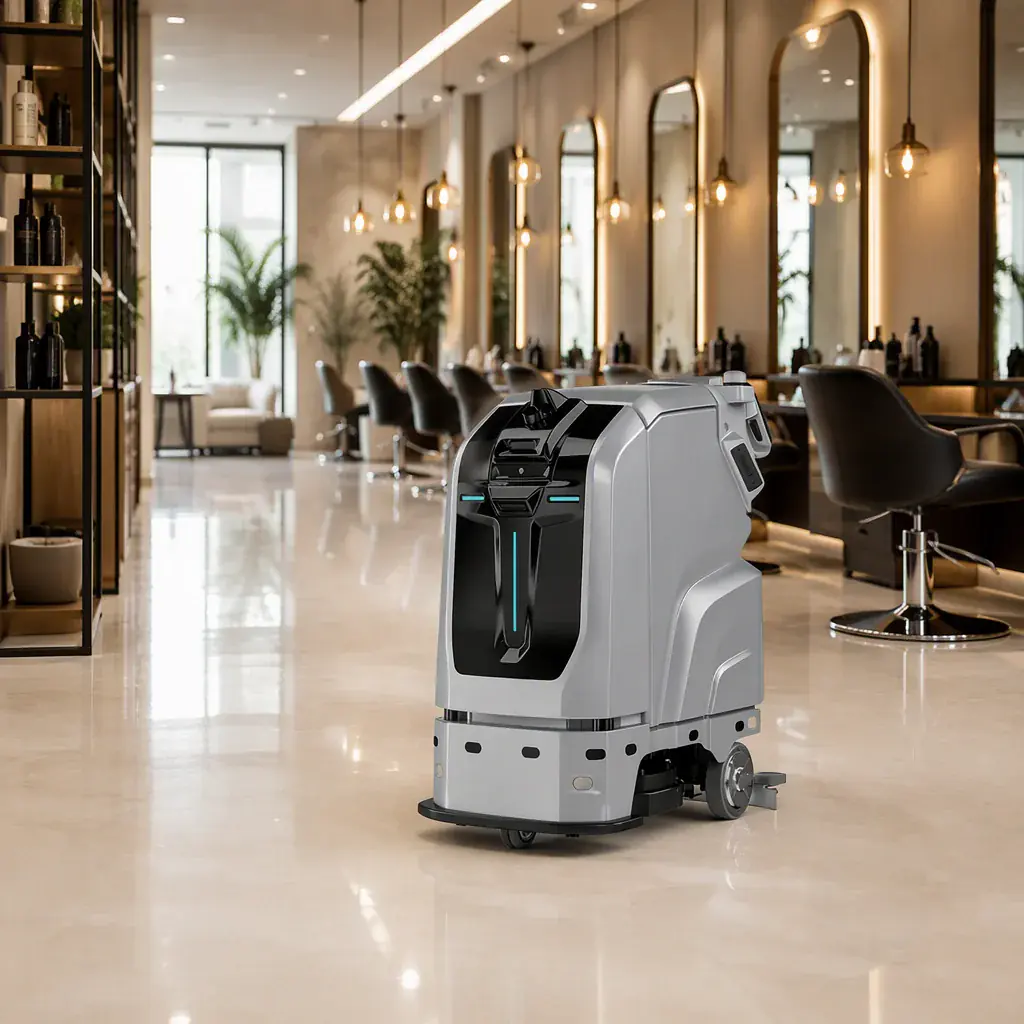
The Floor Problem Salons Don't Budget For
Salon floors are a unique cleaning problem because they accumulate three different kinds of contamination on the same surface. Hair clippings are the most visible: a single stylist generates 200-400 grams of cut hair per day, and clippings migrate under stations, into shampoo-room drains and across the retail floor. Product residue is the second layer — toner, developer, color and styling products drip, spray and dry into sticky spots that a dry sweep cannot remove. The third layer is foot traffic: a busy salon sees 150-250 client visits plus staff movement per day, and the reception area alone takes thousands of steps that track in dirt and dull polished floors.
The labor math is why manual cleaning never fully wins. The commercial cleaning robot buyer's guide documents the same finding across retail and hospitality venues: cleaning is the task most likely to be deferred when the floor gets busy, and deferred floor care shows up as visible wear. Salons typically respond by assigning "closing duties" — which means the highest-paid stylists or the newest hires sweep at the end of a 10-hour shift, when the floor is at its dirtiest and everyone wants to leave.
What an Autonomous Scrubber Changes in a Salon Environment
CLEINBOT M79 is the machine salons and spas are standardizing on because it was designed for exactly this contamination profile. Its scrub, vacuum and mop single-pass operation runs at up to 2,000 m²/h, which means a 1,950-square-foot salon floor — roughly 180 m² — is fully cleaned in under 15 minutes, including the pass under the styling stations. The adjustable water output (0-300 mL/min) is the specification that matters in a salon: operators set it near-dry for wood and laminate reception floors, and full scrub for the tile in shampoo rooms and the color bar.
The noise profile is what makes daytime operation possible. M79 operates at approximately 58 dB(A) in quiet mode — comparable to a normal conversation — so it can run during operating hours without interrupting client conversations or the ambience a spa sells. The 45L water tank supports about 45 minutes of continuous active cleaning, and auto-return docking with automated water exchange means the robot self-services between scheduled tasks. For a salon that closes at 8 PM, the standard schedule is simple: a full-floor pass at 10 PM after closing, a morning pass at 8 AM before the first appointment, and an on-demand trigger for the color bar after the lunch rush.
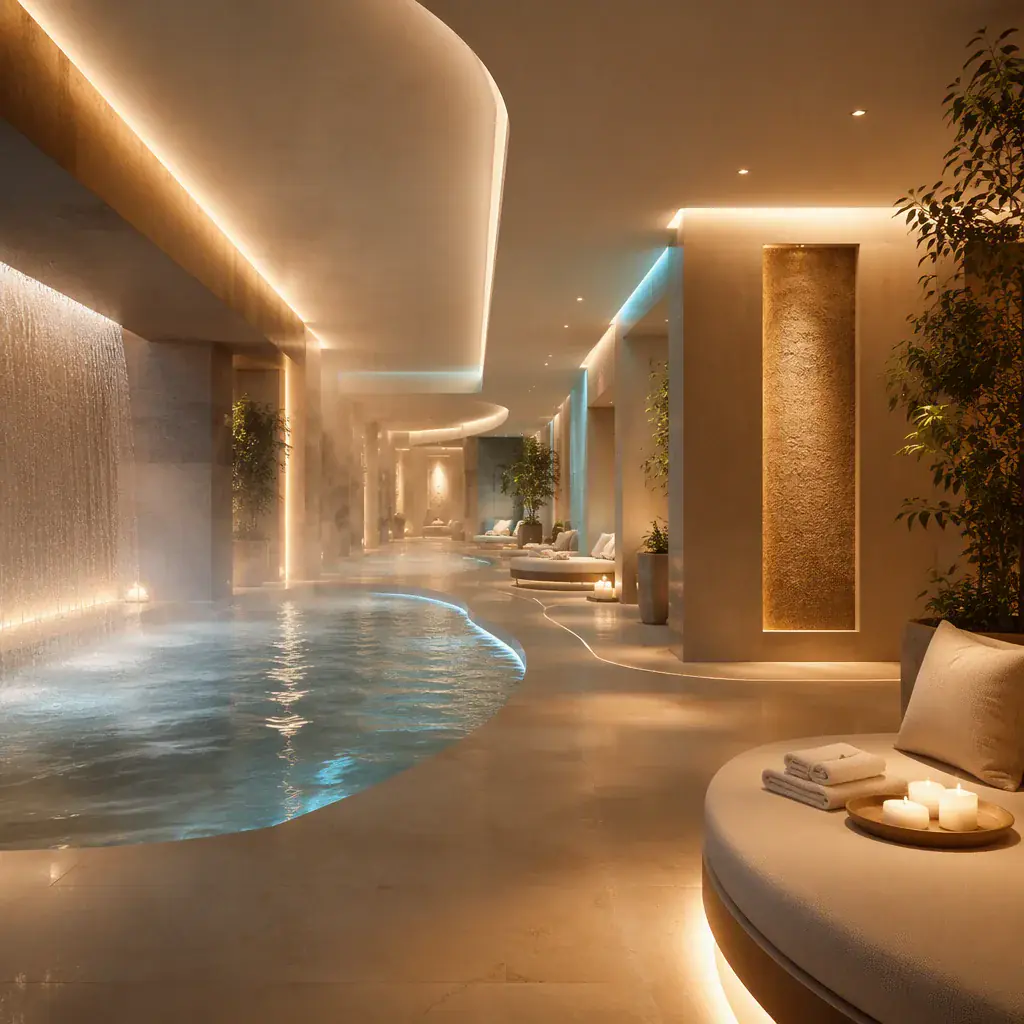
Hair clippings specifically require the vacuum component to run ahead of the scrub deck, which M79 does in single-pass mode — the same configuration documented in hospital delivery and logistics environments, where the same machine handles debris that cannot be left for a second pass. The fleet management systems that schedule robots across multi-site deployments let a two- or three-location salon group run all stores on one dashboard, with per-location schedules that match each store's peak hours.
Front Desk & Check-In: The Second Automation Layer
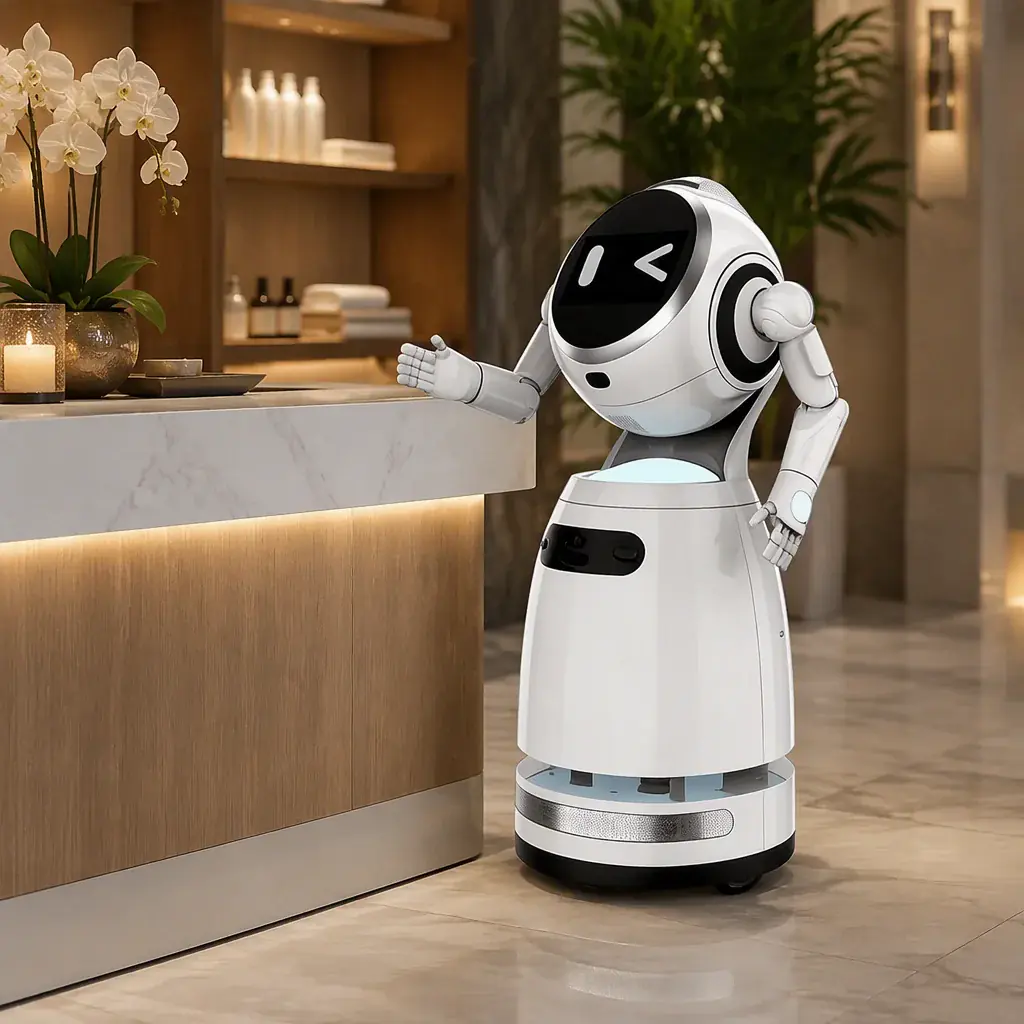
The front desk is where the second robot pays for itself. CRUZR, the humanoid service robot, is deployed at salon and spa reception desks to absorb the repetitive layer of guest interaction: greeting arrivals, confirming appointments, directing guests to the waiting area, answering the three most common questions (wait time, restroom location, product availability) and announcing when a stylist or therapist is ready. Its RGB-D cameras provide 0.3-second face recognition for repeat clients, and the 7-category emotion detection lets the system flag a guest who has been waiting past their appointment time — the exact scenario that generates negative reviews.
The reception and concierge deployment model documents the division of labor that works in practice: the robot handles the routine 80%, the human receptionist handles the exceptions — walk-ins needing same-day appointments, product returns, vendor deliveries and the owner's phone line. Spas that have deployed CRUZR report that the front desk team stops competing with the check-in queue for their own attention, and the hotels and resorts guide shows the same pattern in hospitality: guests who check in with a robot wait an average of 40% less time than guests in the manual queue, because the robot processes the routine guests while the human processes the complex ones.
Retail Restocking & Back-of-House Delivery
The third layer is the one most operators don't expect: product delivery. Salons and spas carry retail inventory — shampoos, conditioners, styling products, skincare — and the retail wall needs restocking from back-of-house storage throughout the day. A CADEBOT L100 delivery robot with its 60 kg payload and 4-layer tray system moves retail stock from the storage room to the retail floor in scheduled runs, and carries refreshments (water, coffee, tea service) from the kitchen to the treatment-room corridor in spas where guests receive beverages after services.
The delivery robot selection guide covers the payload and navigation requirements for exactly this use: a 4-layer tray robot handles the two kinds of loads a salon generates — boxed retail stock (heavy, scheduled) and service items (light, on-demand). The 8-12 hour battery life and SLAM 3.0 navigation handle a full operating day on a single charge, and the 8-language voice capability matters in tourist-heavy spa districts where guests arrive speaking different languages.
Sanitation Compliance: The License Is on the Line
Beauty and wellness venues are regulated on cleanliness in a way most retail venues are not. State cosmetology boards inspect salons on floor and surface sanitation, product storage and tool disinfection, and a failed inspection can suspend the establishment license. OSHA's bloodborne pathogen standard applies where services break the skin (nail services, waxing), and most states require documented daily cleaning schedules. An autonomous scrubber that runs a logged, timestamped floor-cleaning route every night gives the owner a defensible record: the fleet software logs each pass, and the log is exportable for the inspector.
The safety standards and compliance guide covers the regulatory framework for the robots themselves — ISO 3691-4 governs autonomous mobile robots operating around people, which matters in a salon where clients' feet and children's toys share the floor with a moving machine. The M79's 180° obstacle detection from LiDAR and ultrasonic sensors automatically slows the machine near people, which is the difference between a robot that can run in a live salon and one that must be confined to after-hours operation.
Deployment & Financing for a Single-Location Salon
The capital question is the one that stops most salon owners, and the answer is that single-location venues rarely buy robots outright. The RaaS and financing models guide shows the standard structure: an all-in subscription of $1,200-1,800 per month per robot, including hardware, software, maintenance and replacement parts — which maps directly to the labor it displaces. A salon spending 44 hours per month on floor care at $18-22/hour loaded labor is spending $800-950 per month on the task the scrubber eliminates; the budget planning framework walks through the full comparison including the front desk hours a concierge robot absorbs.
The vendor evaluation framework applies directly to beauty and wellness buyers: score vendors on cleaning throughput, noise level, water-output control, fleet software and service response — not on marketing materials. And the change management playbook covers the staff dynamic that determines success: stylists initially worry the scrubber will run during client services, then discover it is scheduled around them — and the staff training and certification guide shows how one receptionist becomes the robot operator, the same career shift documented in fitness centers and gyms.
The beauty industry sells atmosphere, and atmosphere is a cleanliness product. The salons and spas winning on reviews in 2026 are the ones that stopped asking stylists to sweep at 9 PM and started running a scrubber that logs a perfect floor every morning — a reception robot that greets guests by name, and a delivery robot that restocks the retail wall while the human staff does what only humans can do.