
Service Robot Staff Induction and Operator Training Plan
At a glance: A robot fleet that arrives without a training plan is a fleet that sits docked by week three. The units work; the crew does not. Operators who were told the robot would replace them will not report faults, will not reload the water tank, and will quietly let the unit run its battery flat. This guide sets out a phased staff induction, the certification levels that make competence visible, the change-management moves that defuse job anxiety, and the handful of metrics that tell you the team has actually taken ownership.
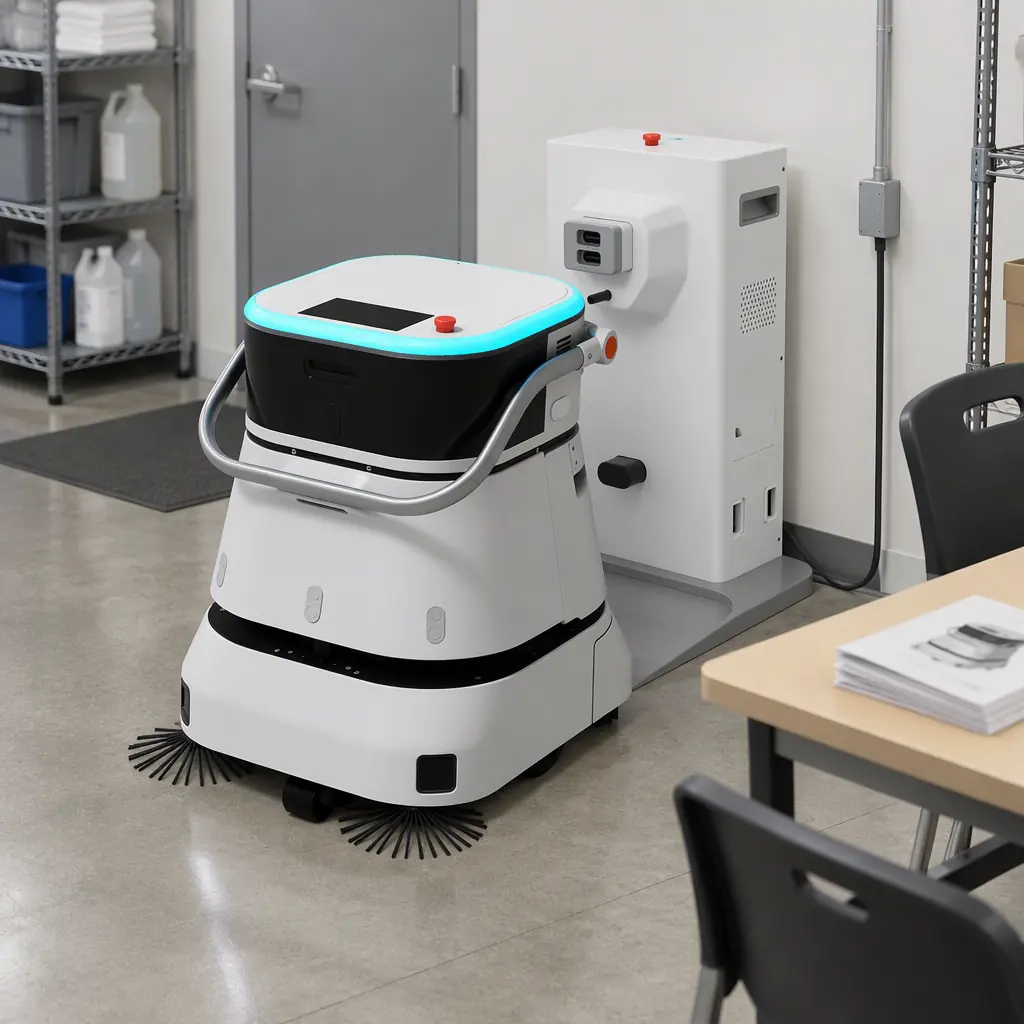
Why Training, Not Technology, Decides Adoption
Deployment reviews tend to blame the hardware. In practice, the common failure is social. A cleaning or facilities crew learns a robot is coming and reasonably asks what it means for their hours. If nobody answers that question directly, the answer they invent is the worst one. From that point the fleet is sabotaged not by malice but by apathy: a fault goes unreported because reporting it might prove the robot replaced someone.
The antidote is a structured induction that addresses the fear openly, gives each person a defined new role, and makes competence provable. Training is not a half-day video before go-live; it is a programme that runs from announcement to steady state and continues as the fleet changes. Done well it converts the crew from a risk into the most reliable fault-detection system you have.
Budget the induction properly. The cost of a stalled rollout dwarfs the cost of a training week; the arithmetic sits alongside the other operational numbers in the downtime and OEE cost model.
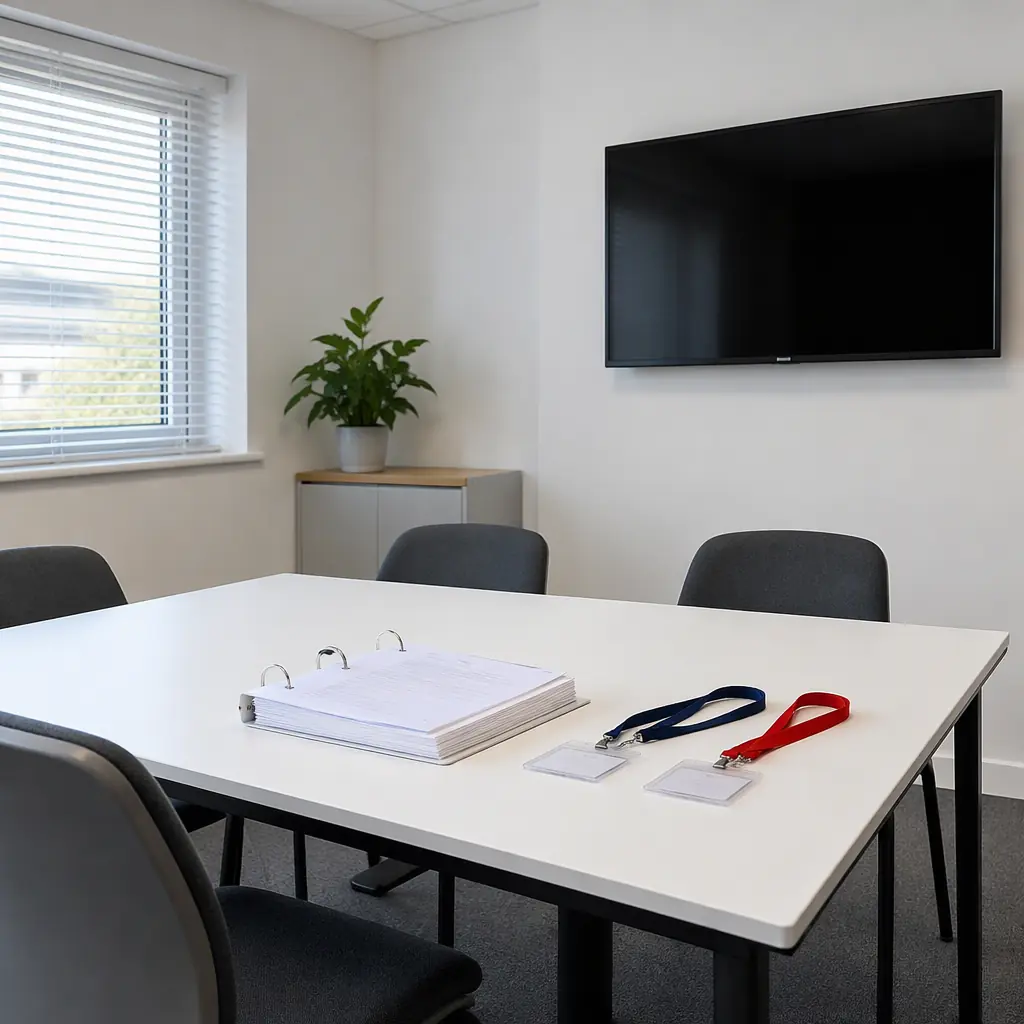
The Phased Induction Programme
Run induction in four phases, each with a gate. Do not compress them into a single day; familiarity with a robot is built by repetition across shifts, not by one briefing.
| Phase | When | Audience | Content and gate |
|---|---|---|---|
| 1. Announce and position | 4-6 weeks before delivery | Whole crew | The plan, the timeline, and an explicit statement of what changes and what does not. Gate: no role questions left unanswered. |
| 2. Hands-on orientation | 1-2 weeks before go-live | Named operators and supervisors | Physical walk-round, water tank, emergency stop, manual recovery, dock procedure. Gate: each operator performs a supervised manual recovery. |
| 3. Supervised go-live | First 2-4 weeks running | Full team | Live operation with a vendor or champion present. Gate: two consecutive weeks with no unlogged fault. |
| 4. Steady-state and refresh | Ongoing | All shifts, incl. new hires | Refreshers, firmware changes, new-zone onboarding. Gate: refresher completed within 90 days of any hardware or software change. |
Phase 1 is the one teams skip and the one that matters most. An announcement that only sets out the technology leaves the crew to fill the human gap themselves. An announcement that names who becomes an operator, who becomes a supervisor, and what happens to anyone whose role genuinely changes removes the incentive to sabotage.
Operator Certification Levels
Formal, visible certification gives the crew status and gives management a competence record. Three levels cover most facilities:
- Level 1 — Operator. Start, stop, dock, refill and drain, clear a simple obstruction, perform manual recovery, log a fault. Anyone who touches the unit on a normal day holds this level.
- Level 2 — Supervisor. Everything at Level 1 plus route and schedule edits, reading the fleet dashboard, triaging faults, and deciding when to escalate. One per shift minimum.
- Level 3 — Site champion. Everything at Level 2 plus first-line component swaps, firmware update supervision, and being the single point of contact for the vendor. One or two per site.
Issue a card or a pinned profile for each level. Visible certification is a cheap way to make the new competence part of a person's identity rather than an imposed task. It also creates a promotion path, which is the strongest single answer to the question the crew is really asking.
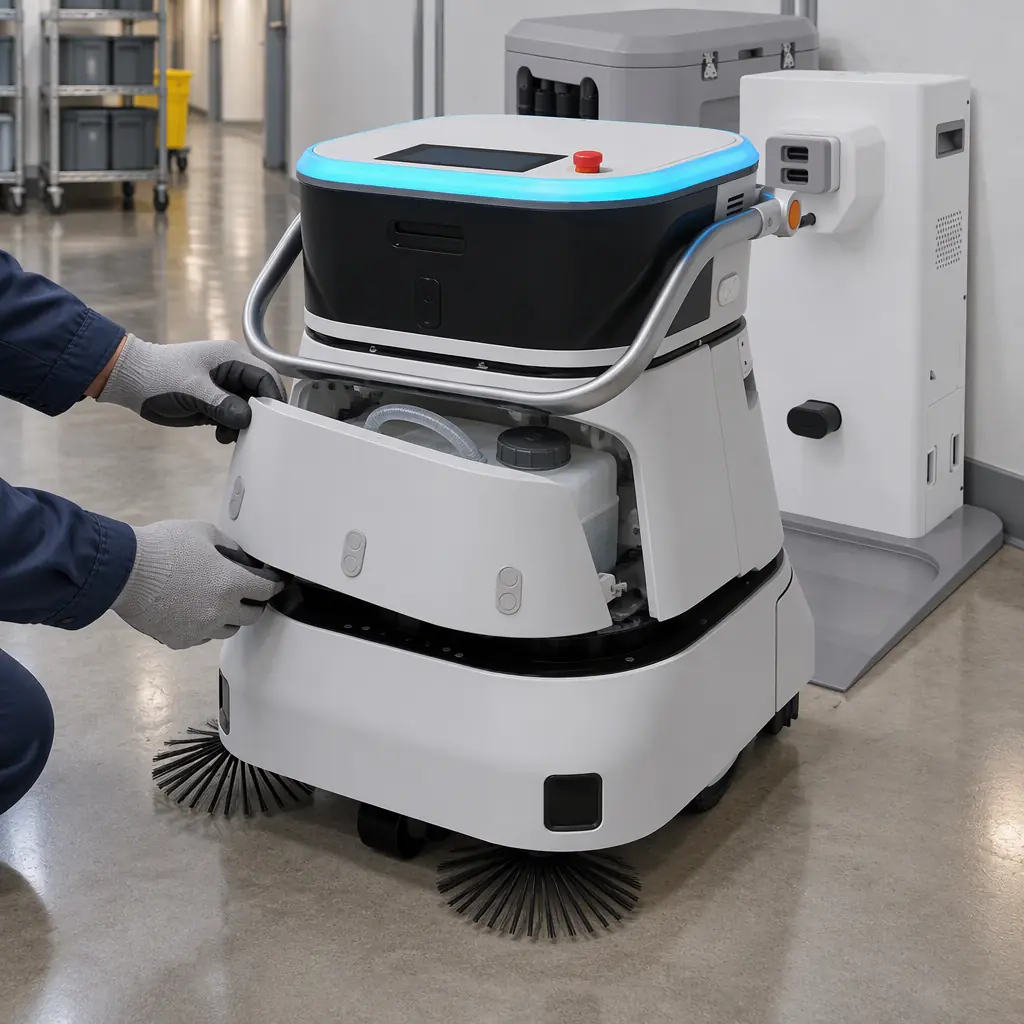
Change Management: Answering the Real Question
Training teaches the machine; change management addresses the fear. Four moves do most of the work.
- Say the uncomfortable thing out loud. If the robot absorbs the most repetitive mopping, say so, and say what the redeployed hours go to. Silence reads as a hidden plan.
- Give the crew ownership of something real. Let supervisors own the schedule and the fault log. People defend what they control.
- Make fault-reporting safe. Reward the operator who reports a genuine fault early. The first crew to game the log is the first crew to be trusted with more of the fleet.
- Show the wins they produced. Publish the utilisation and coverage numbers the crew achieved, not the vendor's promise. Ownership grows where effort is visible. The benchmark to publish against is in the utilisation rate benchmark.
Where a site has a formal HR or union channel, involve it in Phase 1 rather than after. A rollout that changes job content without consultation is a grievance waiting to happen; one that consults early turns a potential opponent into a co-designer. The broader playbook for this stage is in human-robot collaboration change management.
Metrics That Prove the Team Has Owned It
Adoption is measurable, and the numbers are the same ones that tell you whether the fleet is healthy for financial reasons.
| Metric | Healthy signal | What a bad reading means |
|---|---|---|
| Faults logged per 100 robot-hours | Stable or rising early, then plateauing | Falling to near zero means faults are being hidden |
| Manual recoveries per week | Declining after month one | Flat or rising means training did not stick |
| Utilisation rate | Above the planned effective fraction | Well below plan means the crew is not using the fleet |
| Operator certification coverage | 100% of shifts have a Level 2 | Gaps mean a shift runs unsupervised |
| Voluntary schedule improvements | Regular, from operators | None means ownership has not transferred |
Read these alongside the technical health of the units. A fleet with perfect telemetry and zero logged faults in a busy building is not a perfect fleet; it is a fleet nobody is paying attention to. The signals that predict a real failure are covered in telemetry and predictive maintenance.
Keeping It Going After Go-Live
Induction is not finished at go-live; it becomes a standing process. Fold a five-minute robot check into the daily shift handover, schedule a quarterly refresher, and re-run Phase 2 orientation for every new hire before their first solo shift. When new hardware or a firmware release arrives, treat it as a mini-Phase 4: brief the change, update the certification where competence shifts, and log it.
A site that treats induction as a programme rather than an event ends up with a crew that reports faults early, proposes better routes, and absorbs the next generation of units without a fresh crisis. That is the difference between a fleet that is installed and a fleet that is used.
Continue Reading
Get a Quote
Tell us about your site and workload and we will size the fleet, the accessories and the service plan around your actual operation. Request a quote or email [email protected].
Get a Quote
Tell us about your space and workload, we reply within 24 hours.