
Service Robot Insurance Claims: The Evidence That Decides Settlement
At a glance: Robot claims are rarely declined for lack of cover. They are declined because the operator cannot show what the unit was doing, who authorised it, or what the loss cost. Every one of those gaps is a documentation failure, and all of them are fixable before the incident.
A robot fleet policy is a promise to pay, and the payment depends almost entirely on evidence the operator produced before anything went wrong. Insurers do not decline robot claims because coverage was absent. They decline because the operator could not show what the unit was doing, who had authorised it, what maintenance it had received, or what the loss actually cost. Every one of those gaps is a documentation failure, and every one is fixable in advance.
This article is the operational counterpart to coverage design. It assumes you have a policy and focuses on the evidence that turns a claim into a settlement.

The Four Questions Every Claim Must Answer
Read any robot-related claim file and the adjuster is answering four questions, in order. If any answer is missing, the file stalls, and a stalled file in the first thirty days usually becomes a smaller settlement or a denial.
- Was the loss covered? Which peril, under which section, with which excess and sub-limit applying. This depends on the policy, but the operator must be able to point to the event date, place, and cause.
- Was the unit operating within its stated parameters? This is the question the fleet's own telemetry answers, and it is the one most often lost. Insurers price on an assumed operating envelope: hours, environment, payload, supervision level. A loss outside that envelope invites a proportionate reduction or a denial.
- Was the unit maintained as warranted? Service records, by unit serial number, with dates and technician identity. A missing maintenance record converts an otherwise valid claim into a disputed one.
- What is the quantum? Not what the asset cost, but what the loss cost: repair invoice, business interruption, third-party liability. Each needs its own evidence type.
The rest of this article works through the evidence that answers question two, three, and four, because question one is a legal review of the wording rather than an operational discipline. Coverage design itself is covered in the liability cover a fleet actually needs.
Telemetry Retention: the Single Biggest Exposure
The default telemetry retention on most fleet platforms is 30 to 90 days of detailed event data. That is sized for operations, not for claims. A liability claim for an incident in March may not be notified until June, and by then the detailed logs are gone.
Set retention against the claim notification window, not the operations window. A practical rule: retain full-resolution event data for at least the policy period plus ninety days, and retain a reduced summary dataset, consisting of operating hours, fault codes, location traces at low resolution, and firmware version history, for the asset's whole service life. The summary is small in storage terms and is what proves the unit was in its stated envelope.
Three data types are worth calling out because they are frequently deleted by routine housekeeping and frequently decisive:
- Firmware and configuration version history, with timestamps of every change and who authorised it. A claim where the unit was running unauthorised firmware is a claim with a coverage argument attached.
- Map and route versions. If the incident involved a route that had been edited the previous week, the map version at the time of loss is the central question.
- Access and authorisation logs. Who started the mission, from where, with what permission level. This answers the supervision question that liability claims turn on.
Where the telemetry sits matters too, because a claim about data ownership is a claim that cannot be answered at all. The contractual position is set out in telemetry retention that survives a claim, and it should be settled before the first unit ships, not after the first incident.
Building the Evidence Pack Before You Need It
Underwriters ask for a defined set of documents at inception and renewal. Assembling them once, properly, and keeping them current is far cheaper than reconstructing them under claim pressure. The full list underwriters request is in the evidence pack underwriters request; the operational core is as follows.
| Evidence item | Owner | Refresh cadence | What it proves |
|---|---|---|---|
| Asset register by serial, with site and commissioning date | Fleet operations | On every change | The unit existed, where, and when it entered service |
| Maintenance records per serial | Service partner | Every service event | Maintenance was performed as warranted |
| Risk assessment per site | Site operations | Annual and on layout change | The site was assessed and controls agreed |
| Operator training and induction records | Site manager | Per person, on hire and refresh | Staff were trained and authorised |
| Telemetry export schema and retention policy | Fleet platform owner | Annual | Data needed to answer causation is preserved |
| Incident log with first-response timestamps | Site operations | Per incident | The response followed procedure |
| Battery and charging room compliance records | Facilities | Per installation and annual review | Fire mitigation controls were in place |
The items that most often fail audit are the ones that belong to somebody else. Training records live with HR, maintenance records live with the service partner, telemetry lives with the platform vendor. The operator holds the policy and therefore holds the loss when any of those three cannot produce a document. Assign a named owner per item at inception and put the review in the annual calendar.
Incident Response: the First Four Hours
How the first four hours are handled sets the ceiling on the settlement. The sequence below is written for a fleet supervisor and should be part of induction, not part of a document nobody reads.
- Make the scene safe first. Stop the unit, isolate it, and preserve the physical state. Moving a unit before photographs is the single most common cause of an unprovable causation argument.
- Preserve the data before anything else touches the platform. Export the event log, the map version, the firmware version, and the mission record for the affected unit and the preceding 72 hours. Exports are cheap; reconstruction is impossible.
- Photograph and measure. The unit in position, the surrounding surface, any damaged property, any injured person's location relative to the unit. Include something that establishes scale.
- Record the witnesses. Names, roles, and a short written account while memory is fresh. Staff accounts taken a week later are worth much less.
- Notify the insurer within the policy's notification window, even if the loss looks trivial. Late notification is a coverage defence that insurers use and operators keep handing to them.
- Do not repair before the adjuster has seen it, unless the repair is required for safety. Photograph, document, and wait for authority on anything above the excess.
Write this as a one-page card and put it in the site folder. A supervisor under pressure will not read a policy schedule; they will read a card.

Quantifying the Loss So It Survives Review
Insurers settle on evidence, and quantum evidence is where operators are weakest. Three loss types need three different approaches.
Physical damage
A repair invoice or a replacement quotation from an authorised source, itemised by part and labour. A single lump-sum figure invites negotiation downward. Itemised invoices with parts numbers are accepted far more readily, and this is one more reason to have a priced spare parts list before you need one.
Business interruption
This is where robot claims are most often under-recovered. The loss is not the robot's downtime, it is the service the robot was delivering. If a cleaning robot was covering 3,200 square metres per shift, the interruption loss is the cost of covering that area by other means, times the number of shifts affected, minus costs that continued to be avoided. The measurement method is in quantifying downtime for a loss schedule, and it needs to be agreed with the insurer before the loss, because the insurer will not accept a method invented afterwards.
Third-party liability
For injury or property damage to others, the evidence is the incident record, witness statements, the site risk assessment, the training records, and the telemetry showing the unit's behaviour. The strongest defence in a liability claim is a complete, contemporaneous record that the unit was operating as designed, in an assessed environment, under trained supervision. The weakest is an assertion that the robot "should not" have done what it did.
Where a liability claim involves staff, the interaction with employer liability cover becomes relevant and is examined in employer liability when robots share the floor. Where a service credit is also owed to the end customer for the same outage, the two should not be double-counted, which is the subject of SLA credits and how they interact with a claim.
Battery and Fire Claims Need Their Own Evidence
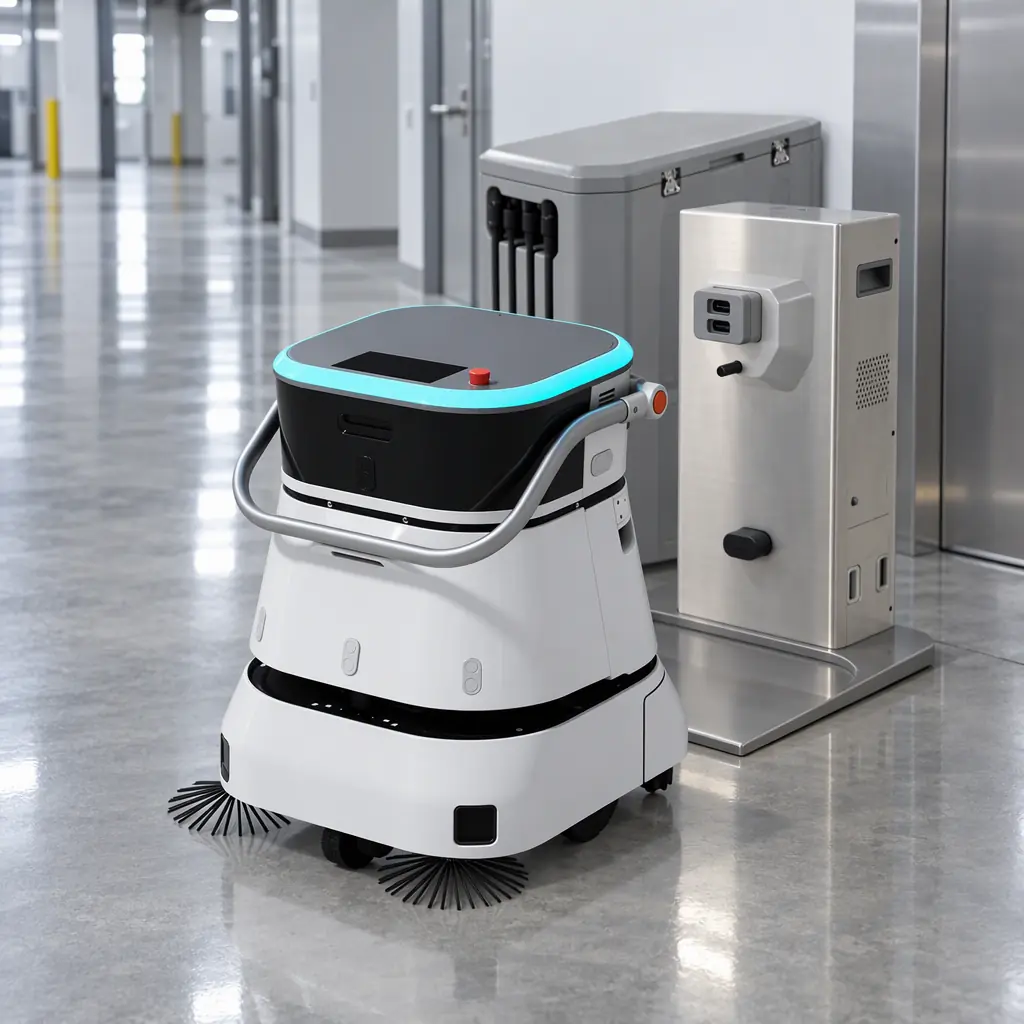
Battery thermal events are the highest-severity robot exposure and the most evidence-sensitive. Insurers will ask not only what happened but whether the installation met the standard the risk was priced against.
- Charging room design records: separation distances, detection, suppression, ventilation, and the assessed fire load.
- Charging telemetry: charge current, temperature at the pack and at the room sensor, and any alarms in the preceding 24 hours.
- Pack provenance: serial, manufacture date, cycle count, and any prior fault history. A pack with a prior over-temperature event is a different risk from one without.
- Storage and handling records: whether damaged packs were quarantined per procedure.
The controls themselves are set out in charging room fire controls. From an evidence standpoint the key point is that these records must exist before the event, because a post-event reconstruction of a fire scene proves very little about the controls that were or were not in place.
Why Claims Get Reduced, and How to Prevent It
Across fleet claims, reductions cluster around a small number of causes. Each has a specific preventive control.
- Operating outside the declared envelope: the fleet ran longer shifts, in harsher conditions, or at higher payload than the policy was rated for. Fix: declare the real envelope at inception and update it when operations change. An updated policy costs less than a reduced claim.
- Missing maintenance records: fix by making the service record a condition of unit dispatch, not an administrative afterthought.
- Undocumented firmware or configuration changes: fix by putting firmware changes behind a change-control record with an approver named.
- Late notification: fix by putting the notification deadline on the incident response card with a named person responsible.
- Quantum without itemisation: fix by agreeing the business interruption method in advance and keeping itemised repair quotations on file.
None of these controls is expensive. All of them are administrative. That is precisely why they are neglected, and precisely why the operators who do them recover far more of their losses per dollar of premium than the operators who do not.
To review fleet evidence practice against the documents your policy will actually require, send us your current asset register and retention setup and we will map the gaps before renewal.


Get a Quote
Tell us about your space and workload, we reply within 24 hours.