
Insuring a Service Robot Fleet, Who Owns the Risk
At a glance: A service robot fleet sits across three insurance programmes that were not written for it: the building policy, the general liability policy and the manufacturer's product liability cover. The gap between them is where a claim lands. This guide sets out who carries the risk under each ownership structure, what underwriters ask for in 2026, and the evidence that actually moves a premium.
Three Policies, One Fleet, and the Gaps Between Them
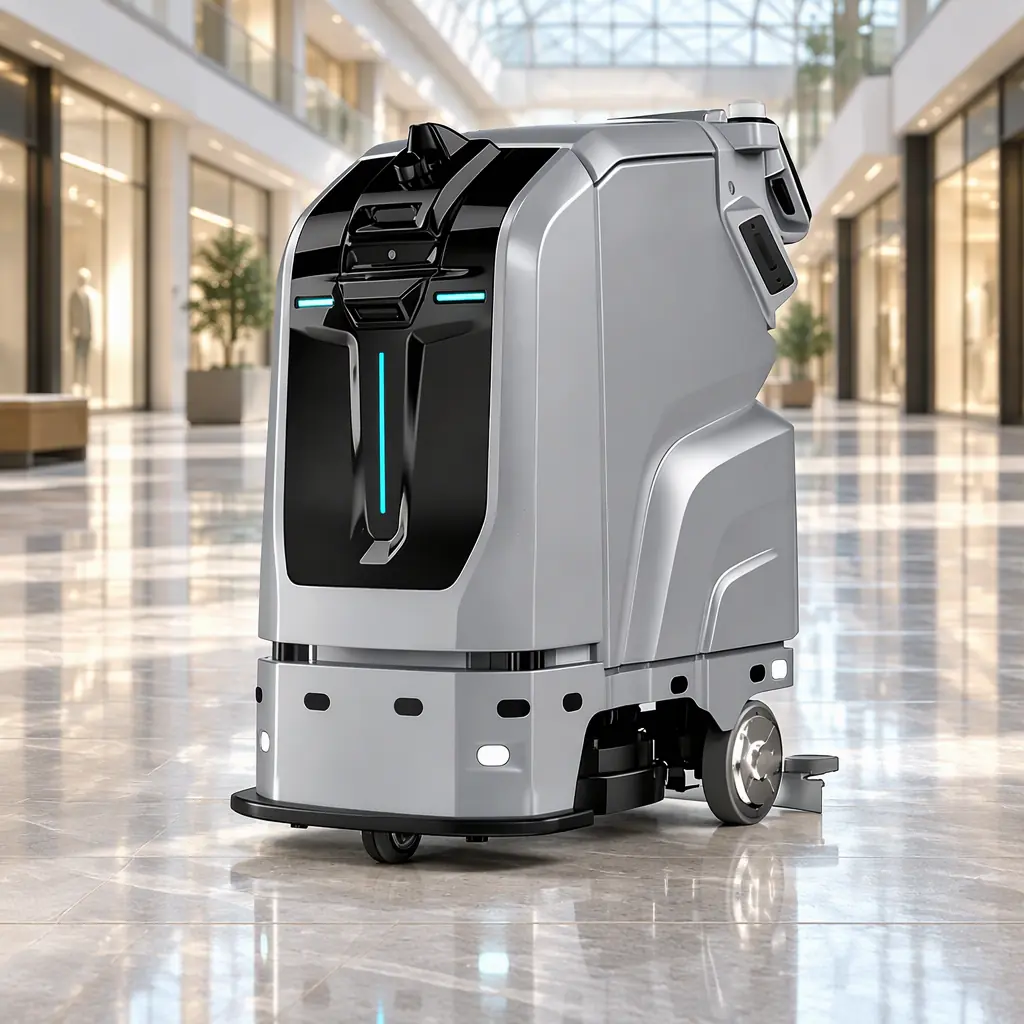
A robot moving through a shopping centre at night is simultaneously a piece of building equipment, a mobile vehicle and a product. Each of those descriptions points at a different insurance policy, and none of them was drafted with an autonomous machine in mind. The result is that the question "who pays if it injures someone" usually has three plausible answers and no clean one.
The property policy responds to damage to the building and sometimes to the robot as contents, but excludes liability arising from its operation. The general liability policy responds to third-party injury and property damage, and its exclusion schedule is where the argument starts: many policies carry a mobile equipment exclusion written decades ago for forklifts, which an underwriter can read as covering an autonomous floor scrubber. Product liability cover sits with the manufacturer and responds to defects in the product as supplied, which covers a design fault but not a site-specific route the operator configured badly.
The practical consequence is that the party closest to the operation usually carries the residual risk whether or not they intended to. Clarifying that allocation before the first unit arrives is worth more than any premium negotiation, because a disputed claim between three insurers delays remediation for months and consumes management attention disproportionate to the loss.
Who Carries the Risk Under Owned, Leased and RaaS Structures
The allocation differs materially by commercial structure, and buyers routinely assume they have transferred risk as part of a service contract when they have transferred only maintenance. The three structures distribute the exposure differently.
| Structure | Damage to the robot | Third-party injury or damage | Common gap |
|---|---|---|---|
| Outright purchase | Buyer, as own property | Buyer, as operator | Robot unlisted on the policy, or listed at an under-insured value |
| Lease or finance | Lessor owns, buyer usually liable for loss | Buyer as operator, lessor as owner | Double insurance or neither party insuring the gap |
| RaaS or managed service | Provider, unless caused by buyer negligence | Provider as operator, buyer as site occupier | Occupier's liability remains with the site, unbounded |
In a RaaS structure the provider carries the operating risk, which is the main commercial attraction beyond the accounting treatment. It does not follow that the buyer carries none. As site occupier, the buyer generally retains a duty to keep the premises safe, and a claimant injured by a robot on the buyer's premises will name the occupier regardless of who operates the machine. The insurance answer is a contractual one: an indemnity from the provider, backed by an evidence pack showing adequate cover, plus a waiver of subrogation so the provider's insurer cannot recover from the buyer after paying a claim.
For an owned fleet the reverse problem appears. The buyer is the operator and needs third-party cover that explicitly names autonomous mobile machinery, at limits consistent with the worst credible incident on site rather than the value of the robot. A fleet whose collective insured value is 400,000 and whose realistic single-incident exposure is an injured member of the public is insured backwards if the policy is written around asset value.

What Underwriters Now Ask For
Underwriting for autonomous equipment has matured quickly, and the questions asked in 2026 are more specific than they were two years ago. Most schedules now probe the same six areas, and a buyer who cannot answer them is priced as unknown risk, which is expensive. The questions are predictable enough to prepare for before the first approach to a broker.
- Operating environment and segregation. Where the robot runs, at what hours, and whether it shares space with the public or is segregated by time or barrier.
- Speed and mass. Rated travel speed and laden weight. Response to a pedestrian at 0.8 metres per second is underwritten very differently from 1.5 metres per second.
- Sensing and stopping performance. The sensor set and the measured stopping distance at rated speed, ideally with a commissioning report rather than a datasheet claim.
- Standards evidence. Conformance to the applicable safety standard for the machine type, and the risk assessment for the specific site deployment rather than the generic product assessment.
- Incident history and near-miss reporting. Whether the operator logs near misses and reviews them, which underwriters read as a leading indicator of management quality.
- Human supervision model. Whether a remote supervisor can intervene, how quickly, and what the escalation path is when the robot stops.
The last of these is frequently the differentiator in pricing. A fleet with documented remote supervision and a tested escalation path, such as the tiers described in the incident response and escalation guide, is a materially easier risk than the same hardware running unattended. Underwriters price what they can see, and what they can see is the documentation you hand them.
The Evidence Pack That Moves the Premium
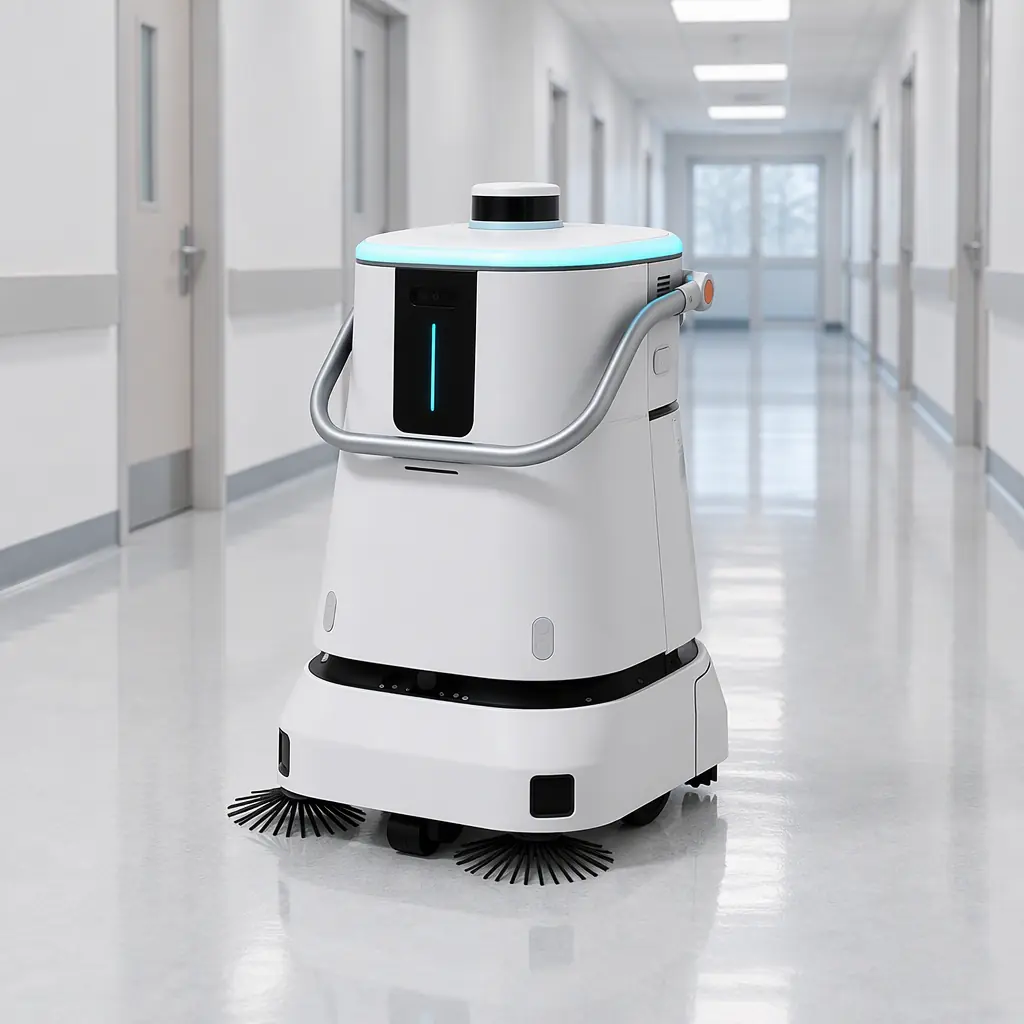
Premium for a robot fleet is not a market rate. It is a judgement built from documents, and the same fleet can be quoted at meaningfully different rates depending on how it is presented. The evidence pack below is the one that changes the conversation, ordered by how much each item tends to matter.
| Document | What it proves | Effect on underwriting |
|---|---|---|
| Commissioning and stopping-distance test report | The machine performs as specified on this site | Largest single factor; converts a datasheet claim into measured fact |
| Site-specific risk assessment | Hazards identified and controlled for this layout | Reduces perceived unknown exposure |
| Standards conformance certificate | Design meets the applicable safety standard | Prerequisite for most quotes rather than a discount |
| Near-miss and incident log | Active management, not passive ownership | Supports claims-free credibility at renewal |
| Maintenance and inspection records | The fleet is kept to the specified condition | More relevant after a first claim than at inception |
| Provider indemnity and cover evidence | A solvent party stands behind the service | Decisive in RaaS and managed-service structures |
Two of these are worth commissioning specifically for insurance. A stopping-distance test at rated speed under laden conditions, recorded with the measurement method and the site surface, is the document underwriters ask for and rarely receive. A site-specific risk assessment, distinct from the manufacturer's product assessment, is the difference between a generic quote and a rated one. The acceptance and commissioning gates that produce both are set out in the acceptance testing and commissioning guide, and they double as the evidence set for a claim.
For larger fleets it is worth assembling the pack as a standing document, updated annually. The earlier guide on the insurance evidence pack sets out the structure, and the liability side of the same question, including indemnity wording and limits, is covered in the insurance and liability guide. Between them they cover what to hold and what to sign.
Contract Clauses That Decide Who Actually Pays
Insurance limits are only as good as the contractual wording that points at them. Four clauses determine the practical outcome of a claim, and all four are routinely omitted.
A named indemnity with a defined trigger. The provider indemnifies the buyer for injury or damage arising from the operation of the fleet, subject to a negligence carve-out for the buyer. Vague indemnities promising to "comply with all applicable law" are not indemnities.
Primary and non-contributory wording. This makes the provider's policy respond first rather than sharing the loss with the buyer's own policy pro rata. Without it, the buyer's insurer pays its share and recovers through premium at renewal.
A waiver of subrogation. Both parties waive rights to recover from the other's insurer after a loss. This is the clause that prevents a post-claim dispute between two insurance companies from consuming the buyer's time for a year.
An obligation to maintain cover and evidence it annually. A certificate of insurance at signature is a snapshot. An annual certificate with a right to see the schedule, and a notice obligation if cover lapses, is a control. A provider that will not accept an annual evidence obligation is telling the buyer something useful about its own risk management.
The reason to spend negotiating capital here rather than on the liability cap is that caps rarely bind and triggers frequently do. A cap set at twelve months' fees reads as generous until the claim is an injury, at which point the manufacturer's product liability policy, not the service cap, is doing the work. The interaction between the cap, the indemnity and the warranty terms is examined in the warranty contract terms guide.

Where Robot Insurance Fits in the Total Cost Model
Insurance is typically 1% to 3% of the annualised cost of a robot fleet, which is small enough that it is usually left out of the business case. Its significance is not the premium but the tail. An uninsured or under-insured incident can exceed the entire lifetime cost of the fleet, and a claim disputed between three policies can stop a programme that is otherwise performing exactly as modelled.
The practical treatment is to include the premium in the operating model at a realistic rate from year one, and to treat the evidence pack as a maintenance obligation rather than a one-off exercise at inception. The full running-cost picture, into which this line belongs, is set out in the total cost of ownership ledger, while the operational controls that produce most of the evidence are covered in the safety standards and compliance guide and the pedestrian traffic management guide.
Buyers working through this for the first time should establish the answer to one question before anything else: under this contract, which party is the operator for insurance purposes? Everything else, from the indemnity to the evidence list, follows from that answer. We can supply commissioning test reports, the site risk assessment template and the standards documentation that underwriters ask for; they are available through the quote form or by asking on the products pages for the cleaning and delivery ranges.