
Service Robot Battery Second Life, Leasing and Residual Value
At a glance: A battery pack is the only major component of a service robot that is certain to be replaced inside a normal asset life, and the only one whose replacement cost is large enough to break a five-year business case. Its residual value at year three is a number nobody quotes at purchase, yet it determines whether leasing, buying or a battery-as-a-service structure is cheaper. This guide works the arithmetic.

The Battery Is the Only Certain Replacement in the Programme
Motors, sensors and chassis are designed to last the asset life of a service robot, and in normal duty they do. The battery is different: it is a consumable with a defined cycle life, and on a commercial cleaning or delivery duty cycle that life is typically reached between year two and year four. On a large-format scrubber running two shifts, a pack rated at 2,000 full cycles may be exhausted in under three years. On a hotel delivery robot doing short runs with long idle periods, the same chemistry may last six years. The duty cycle, not the calendar, sets the date.
That single fact reshapes the business case. A three-year model that treats the pack as part of the capital asset understates year-four cost by the price of a replacement set, which for a large scrubber is commonly 12% to 20% of the original unit price. A five-year model that includes one replacement is closer to reality. The modelling error is not large per unit, but it recurs across every unit in the fleet in the same year, because fleets are usually commissioned together.
What State of Health Actually Determines
Residual value is a function of state of health, and state of health is not a single number. It is at least three measurements that move at different rates, and which one matters depends on what the pack will do next.
| Metric | What it measures | Typical end-of-service threshold |
|---|---|---|
| Capacity fade (SOH-C) | Usable energy versus rated | 70-80% for the original duty; 50-60% often still usable elsewhere |
| Power fade (SOH-P) | Ability to deliver peak current | The binding limit for high-draw robots before capacity becomes an issue |
| Internal resistance rise | Heat generation and voltage sag under load | Drives charge-time growth and derating before capacity fade appears |
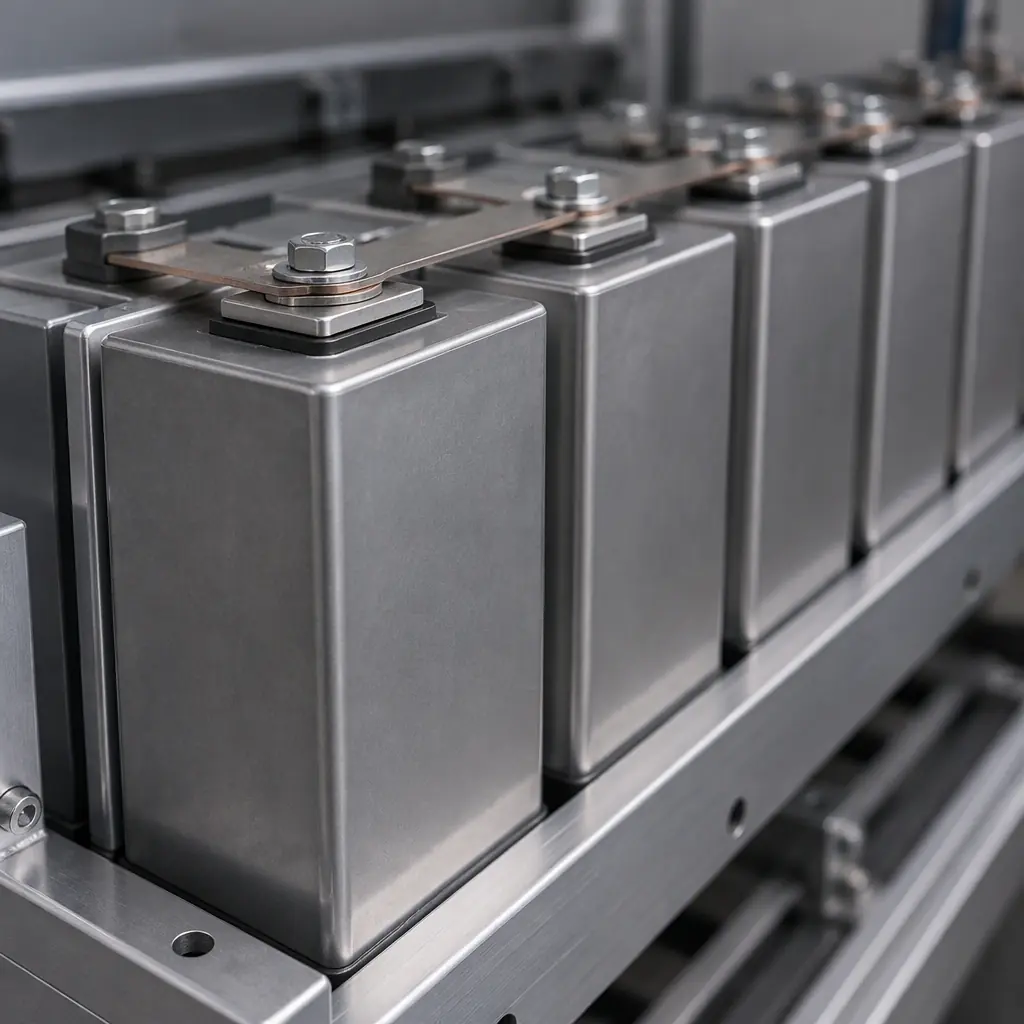
The useful consequence is that a pack rejected for the robot is frequently a good pack for something else. A pack at 65% capacity with high internal resistance is a poor fit for a scrubber that needs sustained current, and a perfectly serviceable pack for stationary storage where the current draw is gentle and space is not at a premium. This gap between the original duty and a gentler second duty is what creates second-life value, and it is the reason a pack that looks like scrap on the fleet dashboard has a market.
Capturing that value requires evidence. A pack with a logged history, cycle counts and periodic capacity tests can be valued; a pack with no records is priced as unknown, which in practice means priced at scrap. The logging requirements are the same ones described in the battery communication protocols guide, and the point at which replacement becomes cheaper than continued use is worked through in the battery health and replacement planning guide.
Residual Value: The Numbers Nobody Quotes
Residual value for a robot battery is not published anywhere, because there is no mature secondary market with transparent pricing. What exists is a set of working assumptions used by lessors and by vendors offering buy-back, and they follow a recognisable pattern. The schedule below reflects the ranges commonly used in 2026 for packs on commercial duty; they are indicative rather than a quotation, but they are the order of magnitude a buyer should model.
| Age and condition | Residual as % of new pack price | Where the value comes from |
|---|---|---|
| Year 1, above 90% SOH | 60-70% | Near-new pack, sellable to a same-model operator |
| Year 2, 80-90% SOH | 40-50% | Second-life storage, or a lighter-duty robot |
| Year 3, 65-80% SOH | 20-30% | Stationary storage, largely on materials value |
| Below 60% SOH or unknown history | 5-12% | Recycling value only, set by cell chemistry |
Two features of this schedule matter commercially. The first is that value falls faster than capacity, because the market discounts risk as well as degradation: a pack at 78% SOH with a documented history is worth materially more than a pack at 78% with none. The second is that the floor is set by recycling value, which is chemistry-specific. LFP packs have historically had lower recovery value per kilogram than nickel-rich chemistries, which is one reason the chemistry decision in the battery chemistry selection guide carries a residual-value consequence as well as a performance one.
The transport and certification obligations attached to moving a pack to a second-life buyer are a real cost, not a rounding error. The requirements are covered in the battery certification and transport guide, and a seller who has not planned for them will find that the shipping compliance consumes a large part of the residual.
Leasing the Pack: What It Moves and What It Costs
Battery leasing separates the pack from the platform. The operator buys the robot and leases the battery for a monthly fee that covers replacement when the pack reaches its threshold, so the year-four replacement becomes a monthly operating cost instead of a capital event. For a fleet of any size this converts the largest single lumpy cost in the programme into a predictable line.
The structure is attractive for three reasons and expensive for one. It is attractive because it removes the replacement risk from the operator, because it aligns the lessor's incentive with pack longevity, and because in most accounting regimes a genuine lease with retained residual risk can be treated as an operating cost. It is expensive because the lessor prices the risk it is taking, and the implicit interest rate on battery leasing is typically higher than the operator's own cost of capital. On a like-for-like basis, owning and replacing the pack yourself is usually cheaper in nominal terms; leasing buys predictability and balance-sheet treatment, not savings.
Whether the accounting treatment is genuinely off-balance-sheet depends on the lease classification rules in the operator's reporting framework, and on whether the arrangement transfers substantially all the risks and rewards of ownership. A "battery lease" that obliges the operator to pay for a replacement at end of term, or that fixes the term at the pack's expected life with a nominal purchase option, may well be treated as a finance arrangement regardless of its name. This is a question for the operator's finance team, not the vendor, and it should be settled before the structure is chosen rather than after signature. The purchase-versus-lease arithmetic for the platform itself is set out in the lease versus buy guide.
Buy-Back and Guaranteed Residual Clauses
The middle path between buying and leasing is a buy-back commitment from the vendor or a guaranteed residual written into the finance agreement. Both put a floor under the pack's value at a defined date, and both are worth less than they appear unless four conditions are met.
- The measurement is defined. Buy-back priced against a stated SOH measurement, taken with a named method, not against an undefined "end of useful life".
- The duty is defined. A guarantee written for a two-shift operation should not be voided by ordinary use, and a guarantee written for light duty should not be claimed against heavy duty. State cycles, depth of discharge and ambient temperature in the clause.
- The counterparty is sound. A residual guarantee from a thinly capitalised distributor is worth very little at year four. Ask for the entity, not the brand.
- The exit is priced. What happens if the buyer wants to keep the pack past the guaranteed date, or return it early, should be a stated formula rather than a negotiation.
A guaranteed residual without these four conditions is a marketing number. With them it is a genuine risk transfer, and it is often the most valuable concession available on a battery that will otherwise be replaced on the vendor's timetable rather than the operator's.

A Worked Five-Year Battery Ledger
The comparison below uses a 24-pack fleet of large-format scrubbers, a new pack price of 4,200 per unit, a three-year replacement cycle and a 6% cost of capital. The figures are illustrative and rounded, but the shape of the answer is consistent across the fleet sizes we see.
| Line | Buy and replace | Lease the pack |
|---|---|---|
| Initial pack cost (24 units) | 100,800 | 0 |
| Monthly pack fee, years 1-5 | 0 | 24 x 118 x 60 = 169,920 |
| Replacement set in year 3 | 100,800 less residual on old set | Included |
| Residual recovered on old set (year 3) | 24 x 1,050 = 25,200 | Not applicable |
| Net cash over five years | 176,400 | 169,920 |
| Cash timing | Two large lumpy payments | Flat monthly |
On these assumptions the two routes land within a few percent of each other, which is the honest finding: battery leasing is not usually cheaper or more expensive, it is a trade of a lumpy capital profile for a flat operating one. The route with the lower cost of capital wins on cash, and the route with the tighter working capital constraint wins on predictability. What changes the comparison decisively is residual value capture. An operator who recovers 25% of new price on the outgoing set at year three shifts the owned case by roughly 25,000 on a 24-unit fleet, which is the whole margin between the two structures.
The corollary is that residual value is not a detail to negotiate at the end; it is the variable that decides the structure. Operators who plan the disposal route before they buy, with a documented pack history and a second-life buyer identified, routinely beat the leasing rate. Operators who discover at year three that the packs have no records receive scrap value and conclude, wrongly, that ownership was the expensive choice. The wider lifecycle picture, including depletion and disposal at end of asset life, is covered in the decommissioning and end-of-life guide.
Buyers who want the replacement reserve modelled against their own duty cycle can work from the battery replacement reserve planning method, and the whole cost sits inside the total cost of ownership ledger. The packs we ship, and the warranty terms that attach to them, are described on the cleaning robots range page, and a fleet-specific replacement schedule can be requested through the quote form.