
Extended Warranty and Protection Plans for Service Robots
At a glance: A standard service robot warranty covers 12 to 24 months. The failures that hurt arrive at month 26, when the drive assemblies are worn, the first battery pack is cycling down, and the asset is off the balance sheet but not off the payroll. An extended plan is a bet on that window. This article sets out how to price the bet, what a credible plan must cover, and where plans quietly fail.
An extended warranty is not insurance in the consumer sense. On a service robot it is a maintenance cost you pay up front in exchange for a cap on the tail of the failure distribution. That distinction matters, because it tells you what a fair price looks like: the premium should approximate the expected repair spend in the covered window, plus the seller's administration and risk margin, plus a discount for the fact that you are paying early.
Most operators get this wrong in the same direction. They compare an extended plan premium against the sticker price of a robot and conclude it is expensive, when the correct comparison is against the fleet's actual out-of-warranty repair invoices from the previous year.
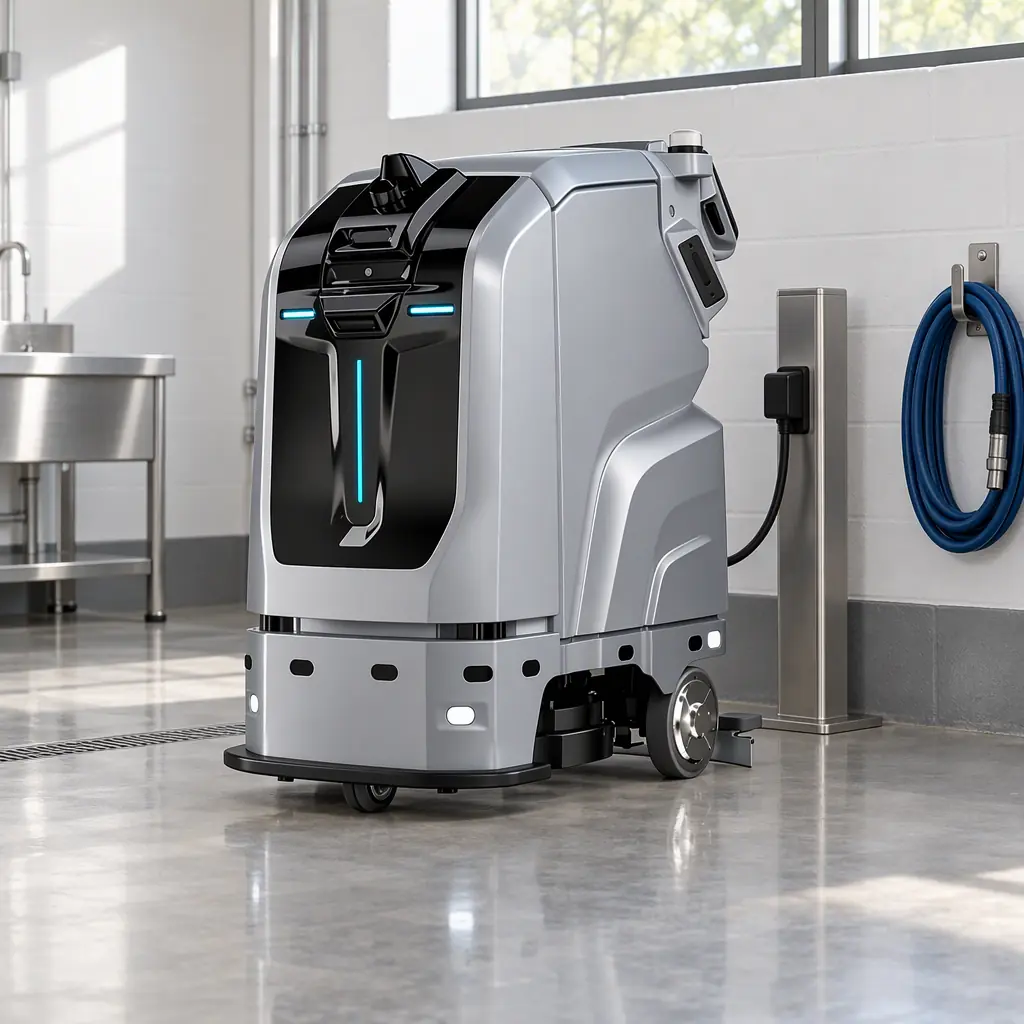
Why the Second and Third Year Cost More Than the First
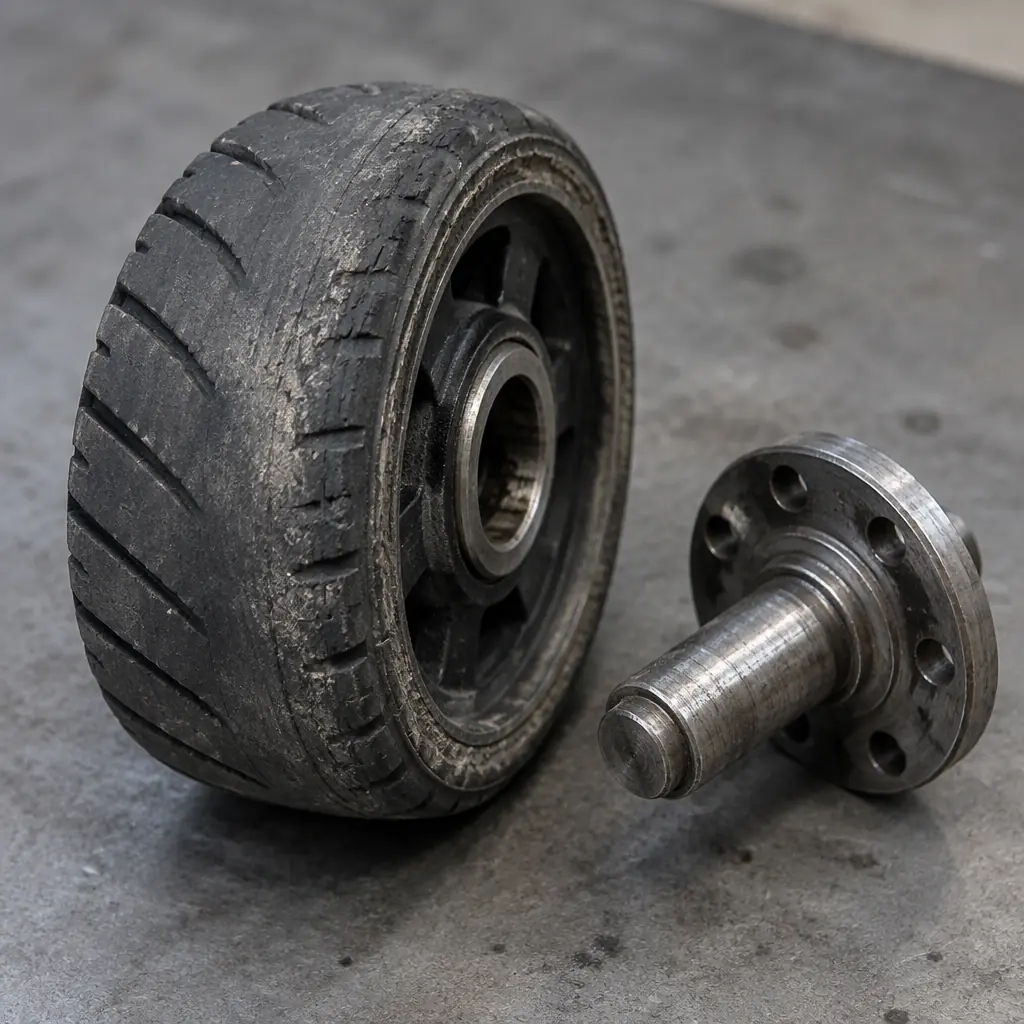
Service robot failures follow a bathtub curve, but the left side of the tub is unusually short. Manufacturing defects that survive the factory acceptance test and the first 500 operating hours rarely surface later. What does surface later is wear, and wear is dominated by four assemblies that carry almost all the motion in the machine.
- Drive wheels and tyres: the highest-wear item on any wheeled platform. On a scrubber running two shifts, tyre replacement lands between 1,200 and 2,000 operating hours. A delivery robot on polished floors lasts longer, typically 2,500 to 4,000 hours, because the floor is less abrasive than a car park.
- Gear motors and gearboxes: sealed units with a rated life, but the rating assumes the specified duty cycle. A fleet that runs 20% above rated payload or accelerates aggressively on ramps will see gearbox noise and backlash at 60 to 70% of the rated hours.
- Battery packs: the single largest line item. A lithium pack reaches 80% of original capacity somewhere between 1,500 and 3,000 full cycles depending on chemistry and depth of discharge, and capacity fade is what turns a nine-hour shift into a seven-hour shift.
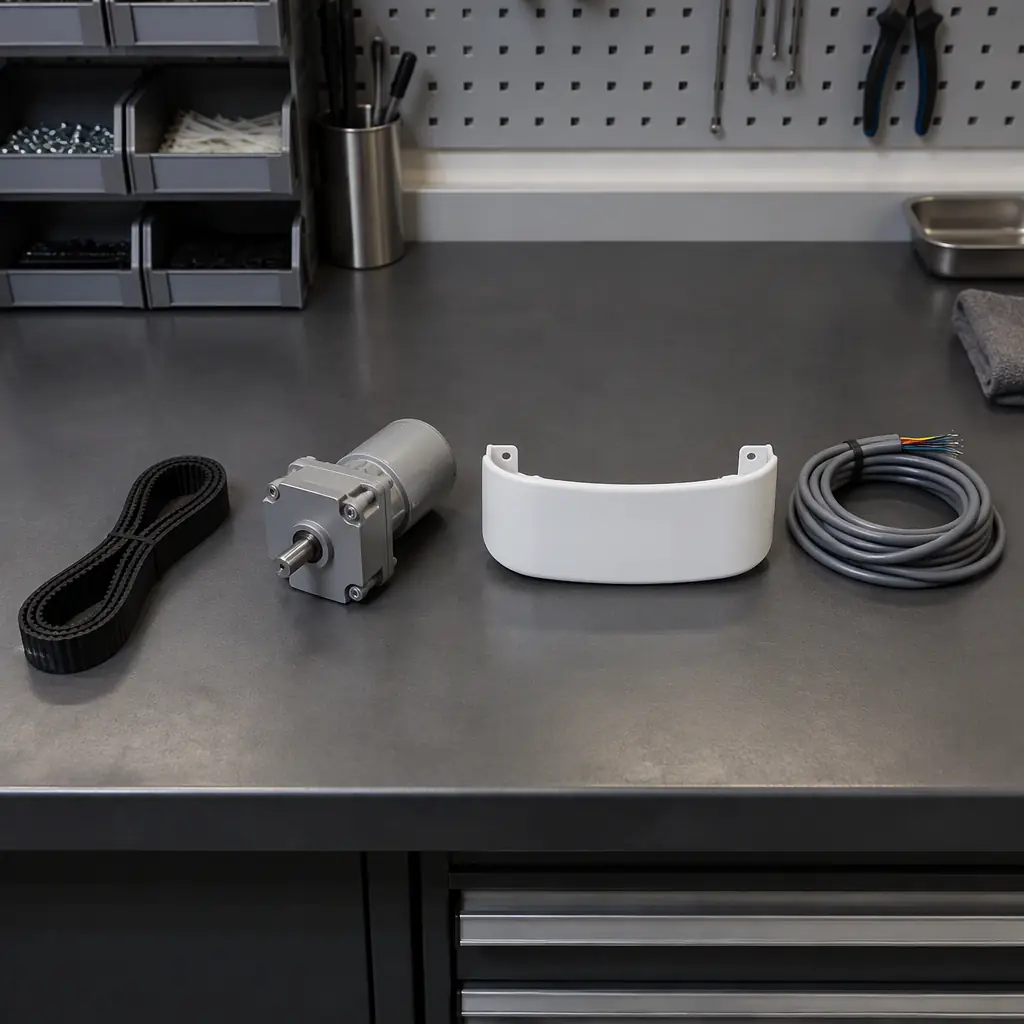
- Sensors and their mounts: LiDAR units do not usually fail outright, but bumper switches, ultrasonic rings and the cabling that feeds them do, particularly on machines that operate in crowded public spaces.
These four categories account for the overwhelming majority of out-of-warranty spend in years two to five. Any extended plan that does not name them explicitly in its coverage schedule is not pricing the real risk, it is pricing a marketing story.
The Three Cost Pools a Plan Must Cover
A credible protection plan has to answer three separate financial questions. Bundling them into one vague "comprehensive coverage" line is where disputes come from.
Pool one: parts
Parts are the most visible and the easiest to price. Ask the supplier for a priced spare parts list with the four wear categories broken out, and compare the sum of a nominal annual replacement set against the plan premium. If the premium is more than about 1.4 times the parts value of a nominal annual set, you are paying heavily for something else.
Pool two: labour and travel
This is where extended plans diverge most. A plan that covers parts but charges labour at a field rate is only half a plan. Field labour on a service robot typically runs between $85 and $180 per hour depending on market, and a drive assembly swap on a large scrubber is a two to three hour job with travel on top. One such call can exceed the annual premium. Insist on a written statement of whether labour and travel are included, capped, or excluded.
Pool three: downtime
Almost no extended plan covers lost service. That is defensible, because downtime is not a repair cost, but the operator must price it themselves. If a unit earns $70 per operating day in avoided labour or service revenue, a five-day parts wait costs $350, which frequently exceeds the parts invoice. This is the argument for a plan that includes an advance-replacement or loaner commitment rather than a pure repair promise.
Pricing Arithmetic That Holds Up
Here is a working model an operator can reproduce with their own numbers. Take a mid-size cleaning robot with a list price of $28,000 and a fleet of eight units. Assume the following annual failure profile after the base warranty ends.
| Cost category | Expected events per unit per year | Average cost per event | Annual expected spend |
|---|---|---|---|
| Drive wheel and tyre set | 0.5 | $420 | $210 |
| Gear motor or gearbox | 0.15 | $1,150 | $173 |
| Battery pack (amortised) | 0.45 | $2,400 | $1,080 |
| Sensor, bumper and cabling | 0.6 | $310 | $186 |
| Field labour and travel | 1.1 | $390 | $429 |
| Total expected | $2,078 |
$2,078 against a $28,000 unit is 7.4% of list price per year in expected repair spend. Add an administration load of roughly 12% and a risk margin of 15% to 20% for the seller, and a premium of 10% to 12% of unit price per year is not gouging, it is close to actuarially fair. That is why quotes in the 8% to 12% band are worth examining seriously and quotes above 18% usually mean the plan is bundling consumables, software subscriptions, or a service contract you may already be paying for.
The battery line is what moves the number. Notice that the battery pack alone is 52% of expected spend. If the plan excludes the pack, the fair premium falls to roughly 5% of unit price. If it includes the pack but the plan provider assumes a gentler duty cycle than the fleet actually runs, the provider will lose money and will eventually tighten the terms. Operators who disclose their real shift pattern get better plans than operators who quote nameplate duty cycle, because the underwriter prices what it is told.
What a Plan Should Say in Writing
Use this list as a comparison sheet across three or four providers. A plan that cannot answer every line in writing is a plan that will be argued about at the worst possible moment.
- Covered components, named by assembly, with an explicit statement on the four wear categories and the battery.
- Labour and travel treatment: included, capped per event, capped per year, or excluded.
- Consumables boundary: brushes, squeegee blades, filters, water tanks, and cleaning detergent are consumables on a scrubber and should not sit inside a protection plan premium. Paying a warranty premium for consumables is the most common overpayment.
- Response time commitment: hours to first response, hours to on-site, and whether that clock pauses for parts availability.
- Advance replacement or loaner: whether the provider ships a unit before the failed one is returned.
- Transferability: whether the plan follows the unit if you sell it. This materially affects resale value and is discussed in what a used unit is actually worth.
- Exclusions that matter: water ingress beyond the IP rating, damage from unauthorised firmware, operation outside the specified temperature range, and failures caused by non-approved consumables.
- Escalation and renewal: whether the premium is fixed for the term or indexed, and what happens at renewal after a claim-heavy year.
- Claim mechanics: what the operator must submit, and in what timeframe. The procedural detail is covered in the RMA claim flow step by step.
Where Extended Plans Quietly Fail
Three failure modes recur across fleet operators, and all three are avoidable at the negotiation stage rather than the claim stage.
The duty cycle mismatch
The plan is priced on an assumed shift pattern and the fleet runs harder. When a pack fails at 1,100 cycles instead of the assumed 1,800, the provider points to telemetry and declines the claim as out-of-specification use. The fix is to agree in writing that the plan is priced for the fleet's actual measured duty cycle, and to attach ninety days of telemetry as the pricing basis. If the provider will not accept measured duty cycle as the basis, the plan has a built-in dispute.
The consumables creep
Over three renewals, the plan absorbs more categories, the premium climbs, and the operator ends up paying an 11% premium that includes items they would have bought anyway at list price. Keep consumables in an operating budget line and keep the plan focused on the four wear categories plus electronics. The five-year ledger in the five-year cost of ownership model separates these two budgets for exactly this reason.
The maintenance-record exclusion
Almost every plan requires that scheduled maintenance was performed, and almost every operator under-documents it. A claim that depends on a service record the operator cannot produce is a declined claim. The intervals themselves are set out in preventive maintenance intervals that protect the asset, and the records should be kept per unit, not per site.
Buy the Plan, or Self-Insure?
For a single unit, self-insuring is usually rational: the expected annual spend is around $2,000 on a $28,000 machine, and a competent operator with a local service partner can absorb that. The calculus changes with fleet size for a simple reason. The variance of repair spend scales with the square root of unit count while the expected spend scales linearly, so a twenty-unit fleet has a much tighter repair budget than twenty independent one-unit operators. Predictability, not expected cost, is what you are buying.
There is also a financing argument. A plan premium is an operating expense that can be bundled into a lease or a RaaS rate, which smooths the cash profile. Out-of-warranty repairs arrive as lumpy capital calls. If the fleet is financed, the plan premium is often the cheaper way to present the cost to the lender.
There is one case where the plan is close to essential: units deployed at customer sites under a service agreement with an uptime commitment. There, the downtime is not yours to absorb quietly, it is a contractual liability with credits attached. This is examined in SLA credits and how they interact with a claim. In that setting the advance-replacement clause is worth more than the parts coverage.
How to Negotiate the Second-Year Term
The strongest lever is information. Come to the negotiation with three numbers the provider rarely receives: measured operating hours per unit per year, the actual duty cycle depth of discharge from telemetry, and the previous year's repair invoices by category. Providers price against uncertainty, and every number you supply removes some.
Trade coverage breadth for response speed. A plan that covers everything but commits to a five-day response is worse than a narrower plan with a 48-hour on-site commitment and a loaner clause, because on a producing fleet the downtime dominates the repair cost. Then hold the term to the expected asset life rather than renewing annually, so the premium is fixed while the wear curve is still steep on the right-hand side.
Finally, price the exit. Ask what happens if you sell two of the eight units in year three. A plan that cannot be transferred or partially cancelled is a plan that penalises fleet right-sizing, and fleet right-sizing is normal. The residual value consequences are set out in depreciation and residual value curves.
To have extended coverage and protection plan terms priced against your own fleet's duty cycle and maintenance history, send us the operating profile and we will return a term sheet mapped to the four wear categories.


Get a Quote
Tell us about your space and workload, we reply within 24 hours.