
Buy or Lease an Advertising Robot: Payback on a Retail Media Asset
At a glance: An advertising robot is bought to earn, not to save, so the buy-versus-lease decision hinges on utilisation rather than on labour offset. This guide builds the payback from the rate card up: the impression base a screen robot must clear each month, how utilisation risk sits between owner and lessor, and the sensitivity that tells a retail operator whether to own the asset or rent the right to place it.
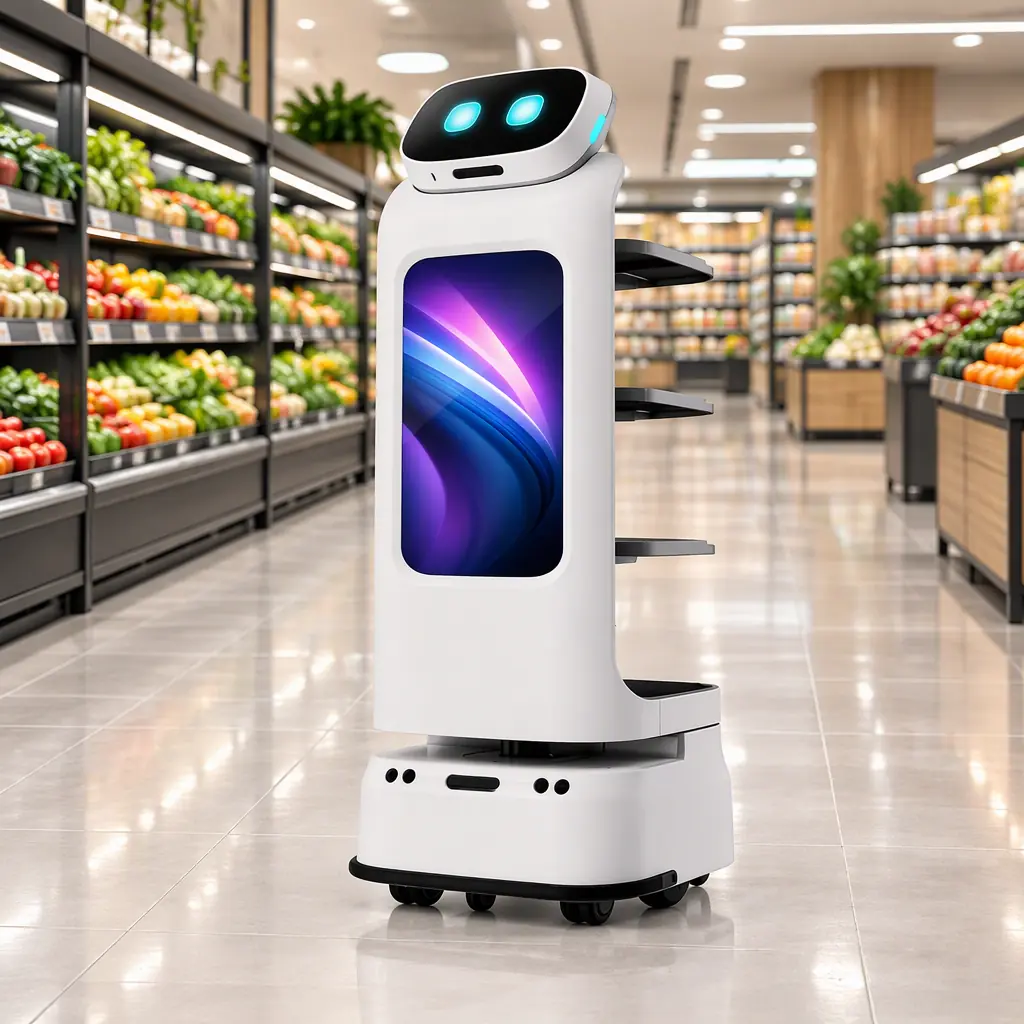
An Advertising Robot Is a Media Asset, Not Equipment
Every other service robot on a supermarket floor is justified by a labour or service saving. The advertising robot is different: it exists to place a screen in front of shoppers in a location where signage is scarce and attention is high, and its business case is a media case. That distinction changes the acquisition decision completely. A cleaning robot's payback depends on the hours it displaces, which the operator controls. An advertising robot's payback depends on the impressions it delivers, which depend on footfall, dwell time and where the robot is routed on any given day, none of which the robot owner fully controls once the unit is on the floor.
Because the revenue is media revenue, the acquisition question is not "does it save money" but "does the impression base clear the payment with margin for the days it does not". That is an asset-utilisation judgement, and it is the reason buy, lease and revenue-share structures produce very different answers for the same robot in the same store. The underlying media economics, including how the rate card is built from impressions and dwell, are set out in retail advertising robots in supermarkets. This guide takes those economics as given and uses them to decide who should own the asset.

The Impression Base Is the Revenue Engine
Advertising revenue is impressions delivered times an effective rate. Before comparing financing structures, build the monthly impression base for the specific store, because every structure is tested against it and a store with the wrong footfall profile cannot carry any of them.
| Input | Example: mid-size supermarket | Source |
|---|---|---|
| Daily footfall | 3,200 shoppers | Door counter, two-week average |
| Robot active hours per day | 9.0 | Operating window minus charging and cleaning duty |
| Location changes per hour | 3 | Route plan, high-traffic zones |
| Average viewable exposure per location change | 60 impressions | Trial measurement or vendor data |
| Deliverable impressions per day | 9 x 3 x 60 | 1,620 gross |
| Deliverable impressions per month | x 30 x 0.85 fill factor | Approx. 41,300 net |
| Effective CPM | GBP 6.00 | Local retail media benchmark |
| Gross monthly media value | 41,300 / 1,000 x 6.00 | Approx. GBP 248 |
The figure that matters is not the gross media value but the sellable fraction of it. A robot screen only earns when a brand has bought the slot. In a new advertising deployment the sell-through in the first months is rarely above 40 to 60 percent, because the inventory must be sold before it is filled, and the sales effort is the operator's or the network's. A store that can only sell 50 percent of its inventory earns roughly GBP 124 a month from the base above, which is the number the financing decision must clear. Programmatic and network-sold inventory can raise sell-through, but it also changes who holds the sales risk, which is exactly the variable the financing structures divide.
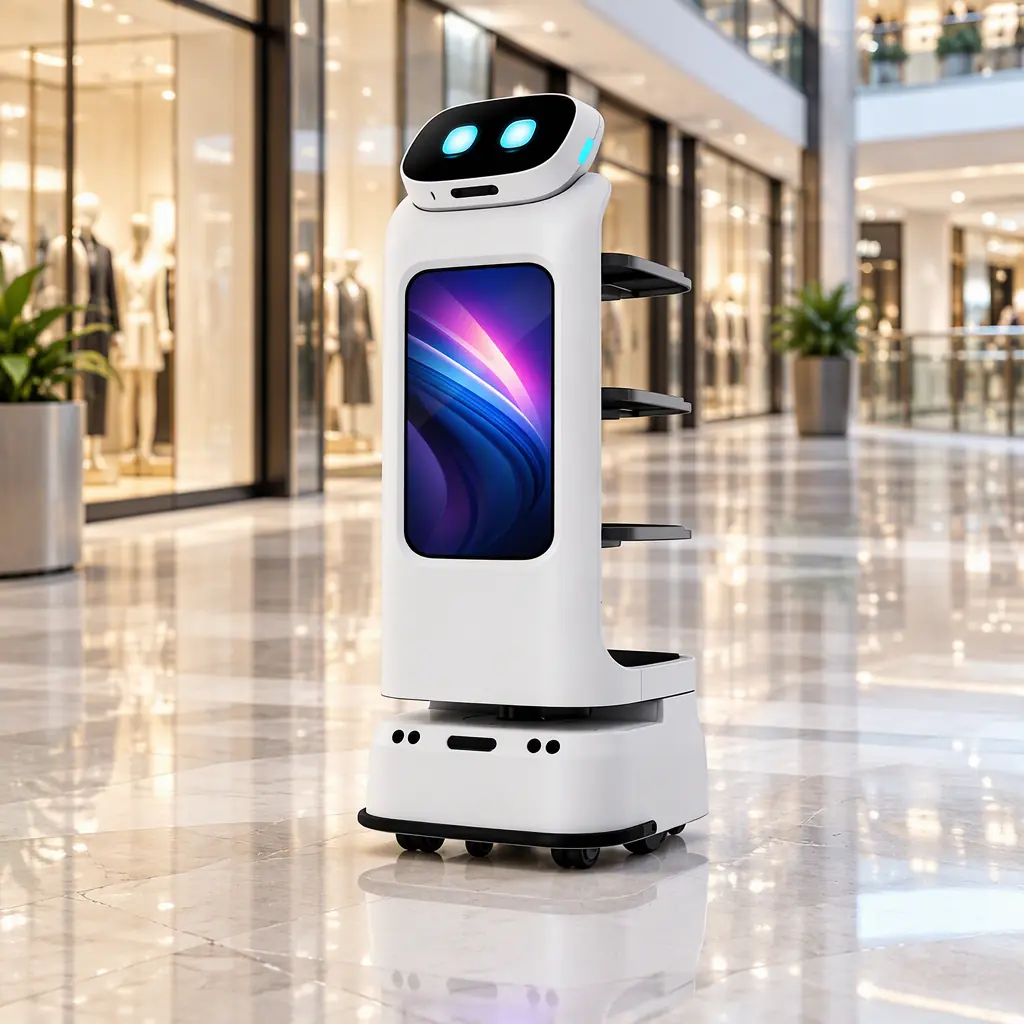
How the Structures Divide Utilisation Risk
The question that separates buy, lease and revenue-share is simple: who carries the risk that the screen is not sold, not routed, or not noticed. That risk is worth more than the payment schedule, because in a media asset the revenue variance is large and a bad quarter can wipe out a good year.
| Structure | Who holds the robot | Who holds sell-through risk | Best for |
|---|---|---|---|
| Outright purchase | Operator or retailer | Operator, fully | Chains with their own media sales team and many sites to amortise the risk |
| Lease | Lessor | Operator, but exit is bounded | Single sites testing the channel without capital outlay |
| Revenue share | Vendor or media network | Vendor | Retailers who want income with no hardware and no sales burden |
| Screen-space rental | Operator (robot only) | Network | Operators who want a fixed rental income per screen slot, no media exposure |
Outright purchase concentrates the entire utilisation risk on the owner, which is only rational at scale, where ten stores average out the variance of one. A single-site purchase is a bet that the store can hold sell-through near its best case, and most first-year deployments do not. Lease bounds the downside: the operator still earns the media revenue but the loss is capped at the lease payments rather than the full purchase price. Revenue share and screen-space rental move the media risk to the party that can sell the inventory, in exchange for a smaller share of the upside. The general economics of shifting equipment risk to a per-outcome structure are the same as in RaaS financing models, applied to a revenue-generating asset rather than a labour-replacing one.

The Payback Sensitivity
The value of an advertising robot is unusually sensitive to two figures, and a buyer should run the sensitivity before choosing a structure. The table below holds the example store constant and moves sell-through and the effective CPM.
| Sell-through / CPM | GBP 4.00 | GBP 6.00 | GBP 8.00 |
|---|---|---|---|
| 30% | GBP 50/mo | GBP 74/mo | GBP 99/mo |
| 50% | GBP 83/mo | GBP 124/mo | GBP 165/mo |
| 70% | GBP 116/mo | GBP 173/mo | GBP 231/mo |
| 90% | GBP 149/mo | GBP 223/mo | GBP 297/mo |
A GBP 24,000 advertising robot financed over four years carries a capital cost of GBP 500 a month before maintenance, and a lease of the same asset runs near GBP 550 including service. Against the table above, no cell in the mid-range clears that payment, and only the top-right corner comes close. That is not a reason to reject the asset; it is the reason the financing structure has to be revenue-share or screen-space rental, or the deployment has to be at a store whose footfall is materially higher than the example. The sensitivity is the whole argument: at this store the media revenue alone does not carry an owned asset, so the rational buyer either does not buy, or does not own. Where a fleet does clear the payment, the incremental economics resemble the payback discipline used in payback period calculation, with media revenue substituted for labour saving.

What Else Decides the Deal
Four operating clauses move the outcome as much as the payment schedule, and all are specific to a screen-carrying robot on a public retail floor.
- Screen and content liability. The operator controls what runs on the screen and therefore carries brand-safety and advertising-standards exposure. A revenue-share agreement should state who approves creative, who holds the advertising licence, and who indemnifies whom for a non-compliant placement.
- Uptime and the exposure guarantee. Media buyers buy impressions, not machine-hours, so the contract must define what happens when the robot is down or the screen is dark. An uptime guarantee denominated in deliverable impressions, not in days, keeps the operator honest with the advertisers.
- Route and content control. Who decides where the robot stands and what it shows, and can a brand require a specific zone at a specific time. Zone-level control is where the premium inventory sits, and it is where the money is.
- End-of-term ownership. If the store buys after leasing, the residual price and the state of the screen and battery at handover. Screen degradation and battery health both affect a media asset's value more than its mechanical condition.
Two smaller points: the robot must not obstruct the store, so the route plan is also a safety and accessibility plan, and the screen brightness and orientation determine whether the impressions counted on paper are actually delivered. An advertising robot that is dim or badly angled delivers fewer real impressions than its counter reports, which is why the vendor's impression methodology deserves a look before any rate card is signed.
The Takeaway
An advertising robot is a media asset and should be financed like one. Build the impression base for the specific store, apply a realistic first-year sell-through, and compare the resulting media revenue against the capital or lease cost before deciding anything else. If the mid-range sell-through does not clear an owned asset, the correct structures are revenue share or screen-space rental, which move the utilisation risk to the party that can sell the inventory. Buy only where the operator has the footfall, the scale and the sales capability to hold sell-through near the top of the range; otherwise rent the placement and let the network carry the risk. The decision is a utilisation question, and the store's footfall profile answers it before any financing schedule does.
Tell us your store count, footfall and screen locations, and we will build the impression base and the payback sensitivity with you. Contact us.
Continue Reading
Get a Quote
Tell us about your space and workload, we reply within 24 hours.