
Swimming Pool and Aquatic Facility Robots, Deck Cleaning, Water Treatment and the Case for Automation
At a glance: A swimming pool facility is two cleaning problems wearing one roof. The water is handled by filtration and dosing, and the deck is handled by people pushing a mop through puddles for hours. Only the second problem is a robot problem, and it is where the labour case is clearest. This guide separates the two, sets out what a deck robot can and cannot do in a wet chlorinated environment, and works the arithmetic for a busy leisure centre.
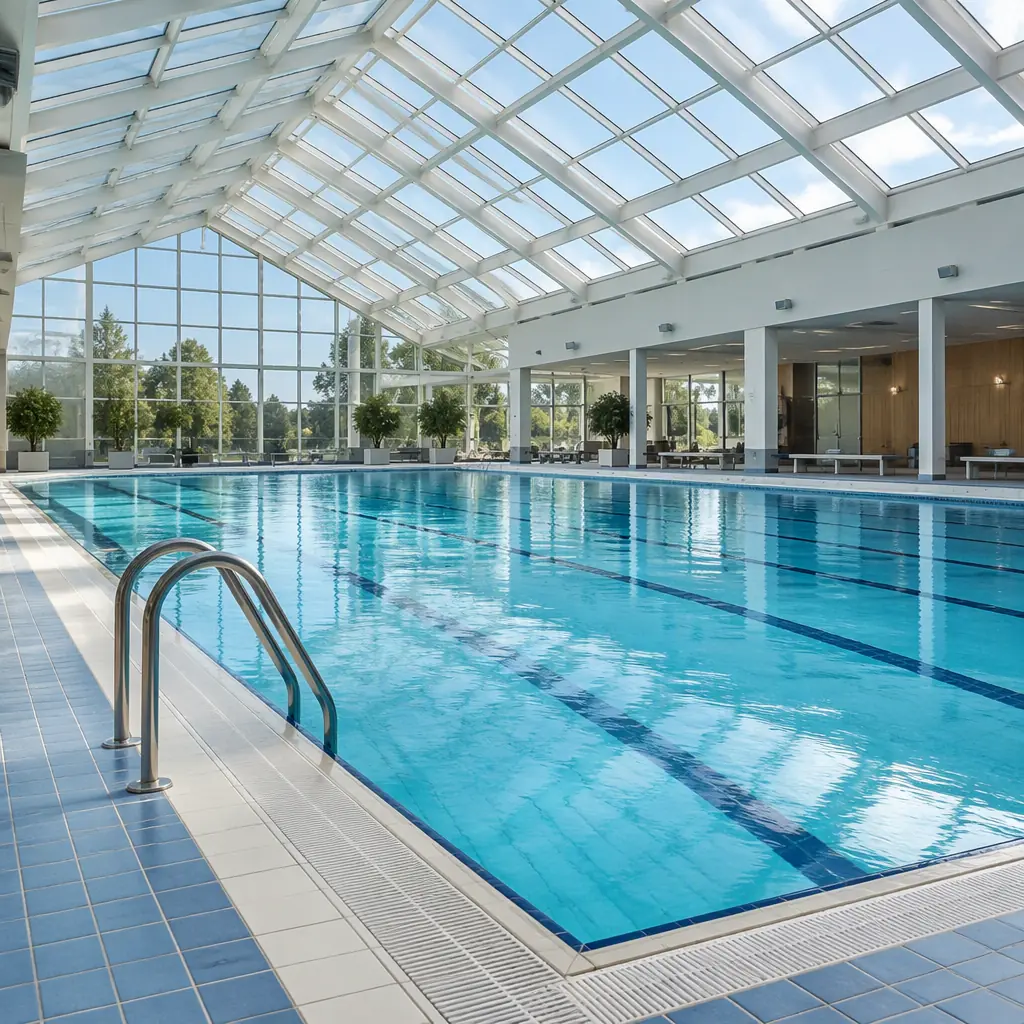
Two Cleaning Problems, Not One
The water in a pool is maintained by pumps, filters and dosing controllers, and that equipment does its work continuously whether or not anyone is in the building. The second problem is the deck: the tiles, the changing-room floors, the shower areas and the walkways that carry hundreds of wet pairs of feet a day. That is the surface a robot can take over, and it is the surface that consumes the lion's share of cleaning labour in an aquatic centre.
Keeping the two separate matters because they invite different purchases. A pool water-cleaning robot and a deck scrubbing robot do not substitute for each other, and a proposal that blurs them is hiding where the labour actually goes.
What a Deck Robot Can and Cannot Do
Wet, chlorinated, tiled environments stress a cleaning machine in ways a dry office floor never does. Before committing to a fleet, match the robot to the environment honestly.
| Task | Suited to a robot | Notes |
|---|---|---|
| Deck and walkway scrubbing | Well suited | Hard tiles, repeatable path, high frequency |
| Changing room and shower floors | Well suited | High traffic, frequent turnaround |
| Entrance and lobby areas | Well suited | Dry to damp, shared with the rest of the building |
| Standing water removal | Partially | Needs a squeegee or wet-vacuum deck, not a dry brush |
| Deep drains and gutters | Poorly suited | Manual work; access is irregular and confined |
| Water treatment and dosing | Not applicable | Handled by the pool plant, not a floor machine |
| Lane-line and pool-wall scrubbing | Not applicable | Underwater work is a separate, specialist tool |
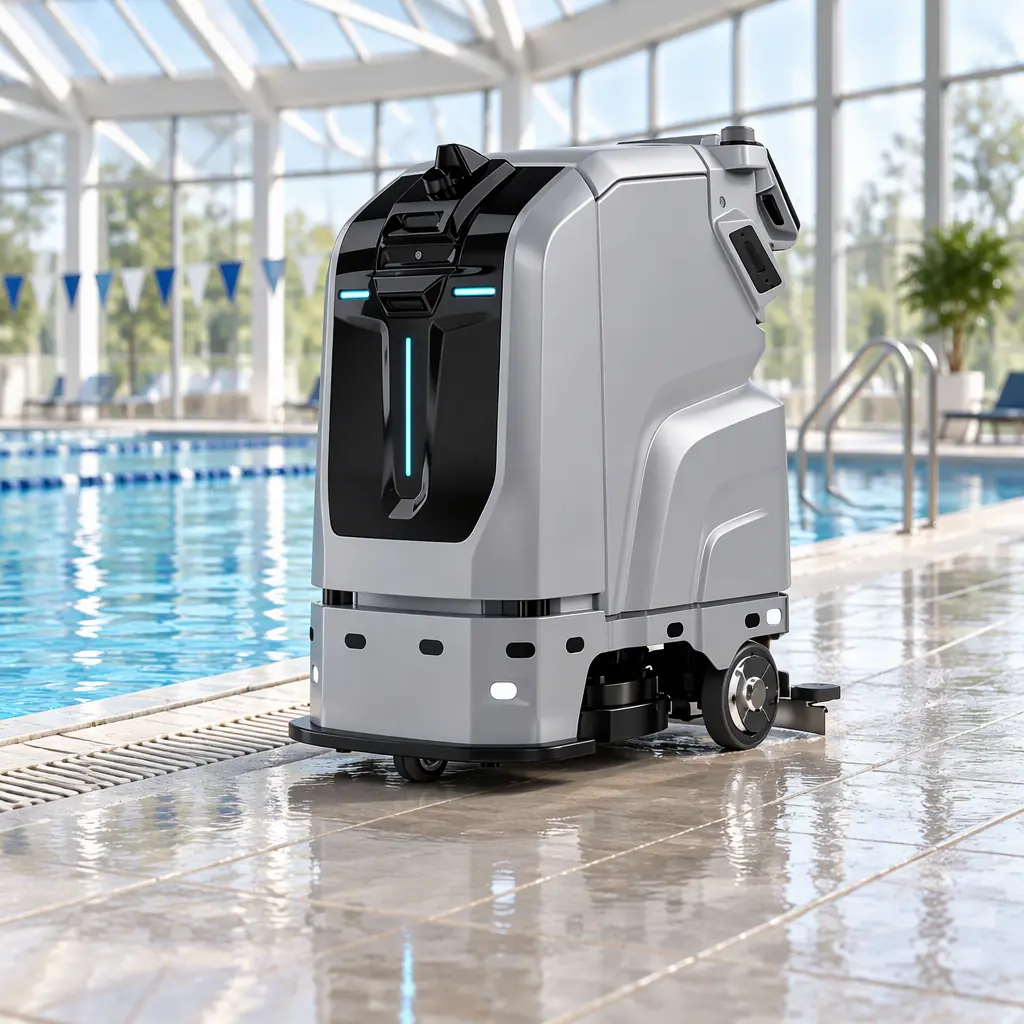
The honest conclusion is that a deck robot owns the dry-to-wet floors around the pool, not the pool. That is still a large share of the day's work, and it is the share that is hardest to staff at the times it is needed, before opening and between sessions.
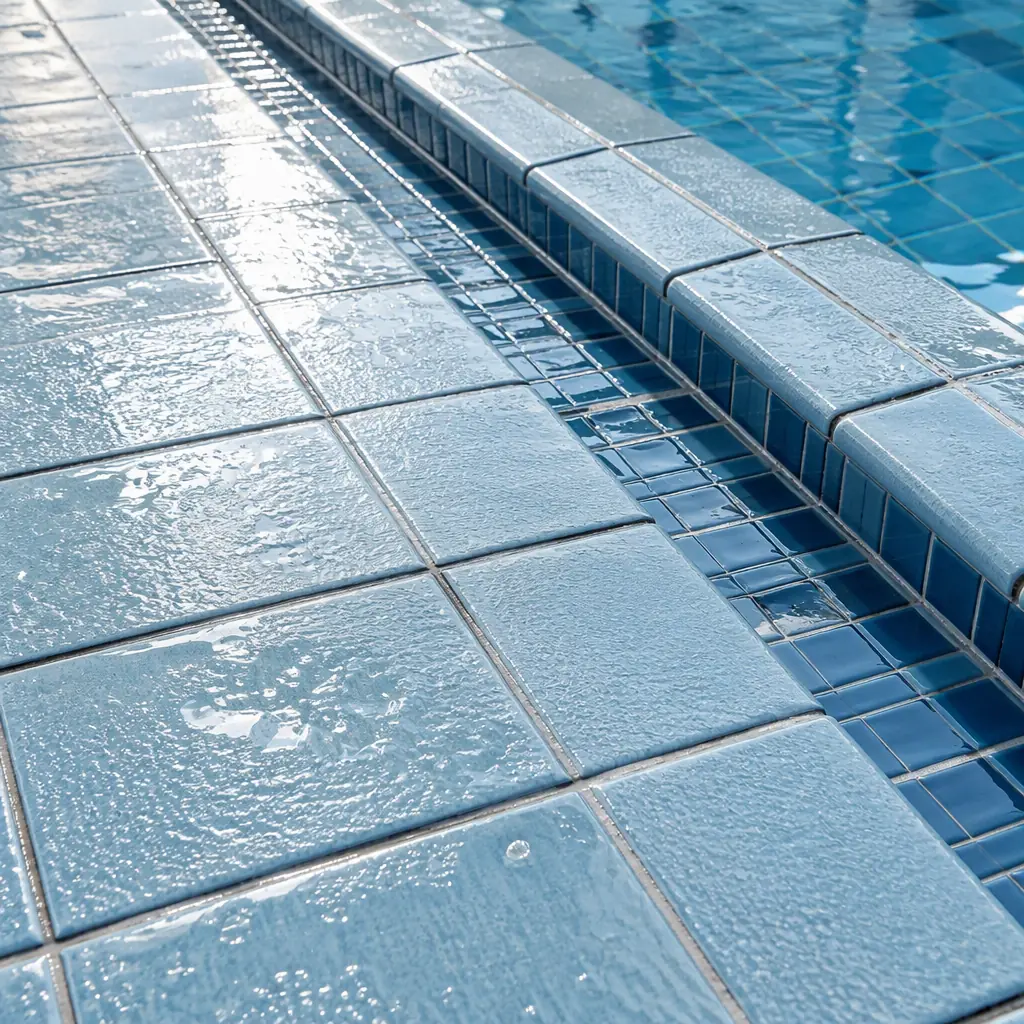
The Chemistry and Slip-Risk Constraints
Two environmental factors decide whether a deck robot survives and whether it helps. The first is the cleaning chemistry. Chlorinated splash water reaches the deck constantly, and running an aggressive acidic descaler through a machine built for neutral detergent will corrode seals, degrade brushes and void a warranty. Specify a robot whose wetted parts tolerate the mild chlorinated load, and match detergents to the tile rather than to habit. The cost of getting chemistry wrong is the subject of our water and detergent cost guide.
The second factor is slip risk, and it cuts both ways. A wet deck is where a mop crew slips, so removing standing water promptly is a safety gain, not just an appearance one. But a robot that leaves a thin, even film can be as slippery as a puddle if the wrong squeegee or brush is fitted. The rule is to pair scrubbing with squeegee or wet-vacuum pickup so the machine leaves the deck as dry as it found it, and to verify the result after the first session by walking the route, not by looking at it.
The Labour Arithmetic for a Leisure Centre
The case closes or fails on hours, so run the numbers for a mid-sized facility with two pools and a changing village. Take a deck and changing-room cleaning load of roughly eight to ten labour hours a day across morning and evening turns, most of it wet-floor mopping.
- Baseline: about ten hours a day, six days a week, is sixty hours a week of wet-floor work.
- Automation share: a deck robot can realistically absorb the walkways, the dry-to-wet zones and the routine changing-room passes, commonly sixty to seventy percent of the routine load.
- Freed labour: the saved minutes are not a headcount cut, they are hours redirected to the deep work robots cannot do, drains, grout lines, fixtures and the detail that always gets deferred.
Convert the freed minutes into an annual figure using the method in our cleaning robot labour cost model, then compare the payback against the unit price with the approach in our payback period calculation. For many leisure facilities the deciding factor is not the raw hours but the ability to have the deck clean and dry before doors open, which a crew working to the clock cannot always guarantee.
Planning the Deployment Around Opening Hours
Aquatic facilities have a narrow cleaning window, and it shapes how a robot is scheduled. The productive hours are before opening and between sessions, and those are exactly the hours when staff are busy with lifeguard rotas and reception. A robot that runs a repeatable pre-open route, deck and changing rooms first, entrance last, gives the team a clean starting point without competing for their time.
The scheduling logic is the same one that governs any after-hours cleaning schedule and, for a facility stretched across more than one building, the multi-site plan in our multi-building fleet management guide. For sports facilities more broadly, including dry-side arenas and gyms, see stadiums and sports arenas.
What to Put in the Specification
Five requirements separate a robot that suits an aquatic facility from one that does not.
- Wetted parts and seals rated for mild chlorinated water, with the chemistry window stated.
- Squeegee or wet-vacuum pickup as standard, so the machine leaves the deck dry.
- Non-slip tyres that hold on a wet tiled surface, not hard wheels that skate on the film.
- Battery runtime that covers a full pre-open route on one charge, with a docking plan that does not block the deck.
- Rinse and clean-down procedure for the machine itself, so it does not carry the pool's chemistry into the next area.
An aquatic centre is not a hard environment to automate cleanly once the wet deck is treated as its own problem with its own constraints. Get the chemistry, the pickup and the schedule right and the labour case holds on its own numbers.
Continue Reading
Get a Quote
Tell us about your site and workload and we will size the fleet, the accessories and the service plan around your actual operation. Request a quote or email [email protected].
Get a Quote
Tell us about your space and workload, we reply within 24 hours.